Denali National Park

The Denali National Park is serviced by a 91-mile road from the entrance to the mining camp of Kantishna. It runs east to west, north of and roughly parallel to the imposing Alaska Range.  Only a small fraction of the road is paved because permafrost and the freeze-thaw cycle creates an enormous cost for maintaining the road. Only the first 15 miles of the road are available to private vehicles, and beyond this point, visitors must access the interior by park bus. The Wonder Lake campground, our destination for the evening, takes six hours to reach with frequent stops for wildlife sightings (Jeanine spotted the first bear) and rest breaks along the way.

Portions of the road cling to the sides of mountains and are seemingly too narrow to support bi-directional bus traffic. Absent guard rails of any type and sheer cliff drop offs I was happy to be chauffeured by our skilled bus driver who also provided highly informative narrative during our journey.

The view from our campsite was magnificent and our preparations for the infamous mosquitoes (head nets and repellent-treated clothing in additional to normal measures) allowed us to enjoy being outside.

As soon as we established our camp we ventured out for a 6 mile hike on the McKinley Bar trail and later in the day found our way down to Wonder Lake where we relaxed in solitude.

The Denali Highway

Largely a driving day, we traversed the magnificent 135 mile long Denali Highway (110 miles of it is unpaved). Traveling west, it climbs steeply up into the foothills of the central Alaska Range. Along its length, the highway passes through three of the principal river drainages in Interior Alaska: the Copper River drainage, the Tanana/Yukon drainage and the Susitna drainage. Along the way there are stunning views of the peaks and glaciers of the central Alaska Range, including Mount Hayes (13,700 ft), Mount Hess (11,940 ft) and Mount Deborah (12,688 ft). The first 45 miles winds through the Amphitheater Mountains, cresting at Maclaren Summit, at 4,086 feet the second highest road in Alaska and the location of the Maclaren Lodge where we paused for delicious home made pies that will not soon be forgotten. The road then drops down to the Maclaren River Valley and crosses the Maclaren River, the road winds through the geologically mysterious Crazy Notch and then along the toe of the Denali Clearwater Mountains to the Susitna River. After crossing the Susitna River the road extends across the glaciers outwash plains to the Nenana River, and then down the Nenana River to Cantwell where we spent the evening at the Bluesberry Inn. Opened the year before I was born in 1957, it was the first road access to Denali National Park. Since 1971, primary park access has been via the Parks Highway, and it is now lightly traveled and a great place to encounter wildlife.

We were only slightly surprised to come across a team of sled dogs towing an ATV, no doubt in training for the Iditorad.

We saw more caribou than cars (and a single motorcycle) as we leisurely traversed this primitive landscape.

Valdez

I woke up with the sun this morning and set out to capture some final images of Cordova before joining Jeanine for breakfast. We then made a return visit to Hartney Bay for our first bear sighting and all this before arriving at the ferry terminal by 6:30am.

The three hour transit to Valdez started with great weather but degraded into a steady rain by the time we reached our destination. We arrived just in time to gather a box lunch in preparation for a 6 hour guided kayaking tour of the Shoup Glacier and adjacent Kittiwake rookery.

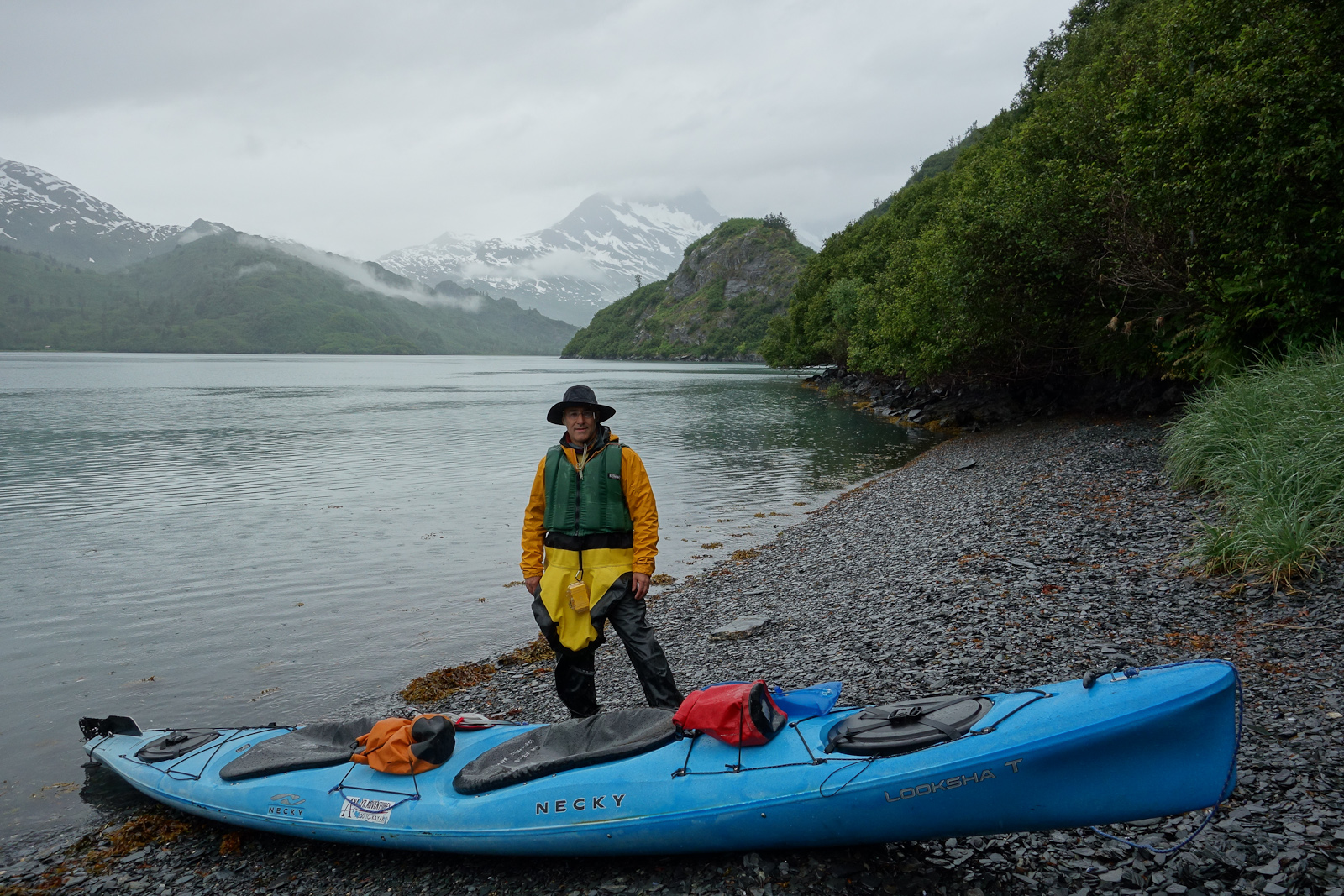
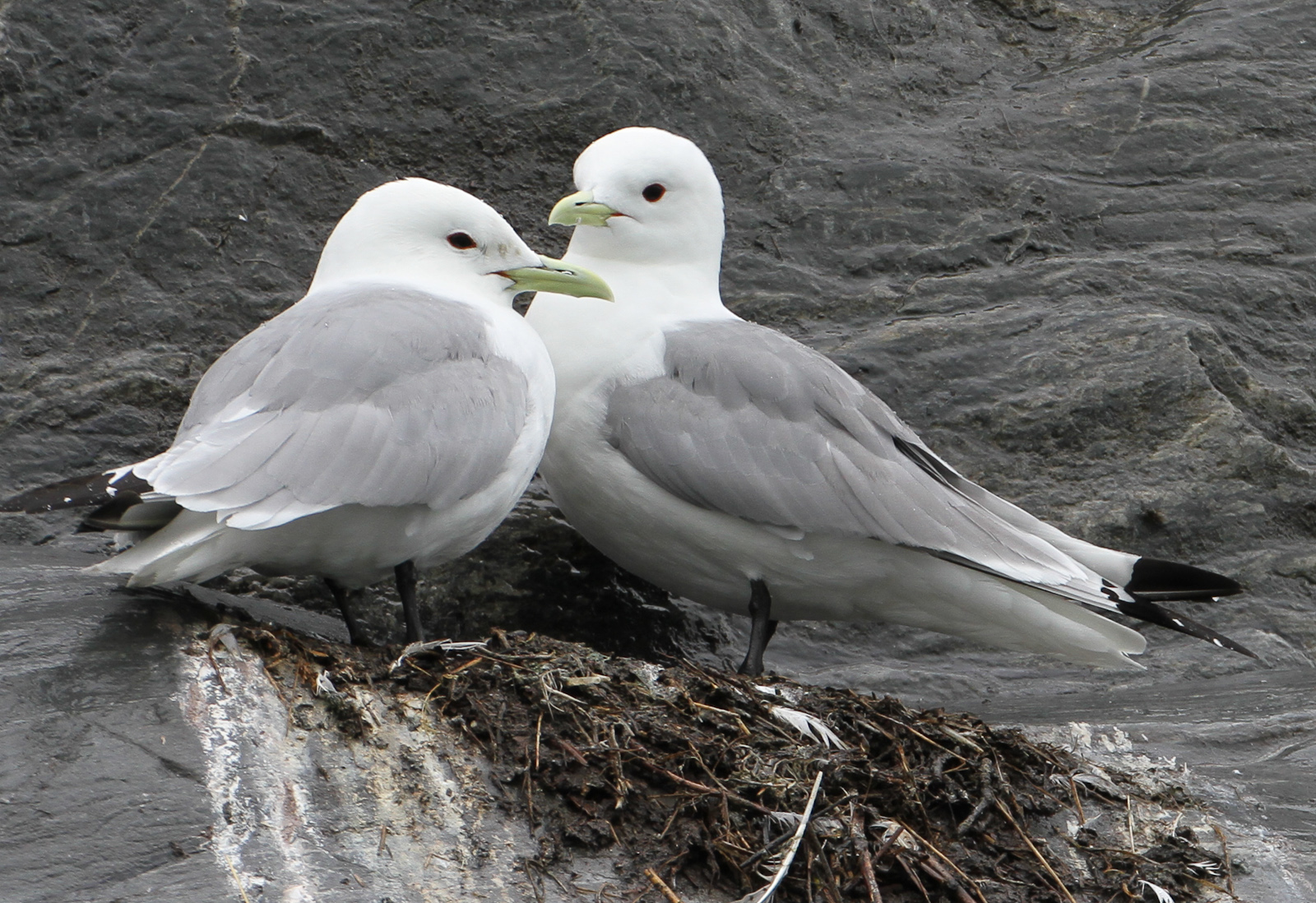
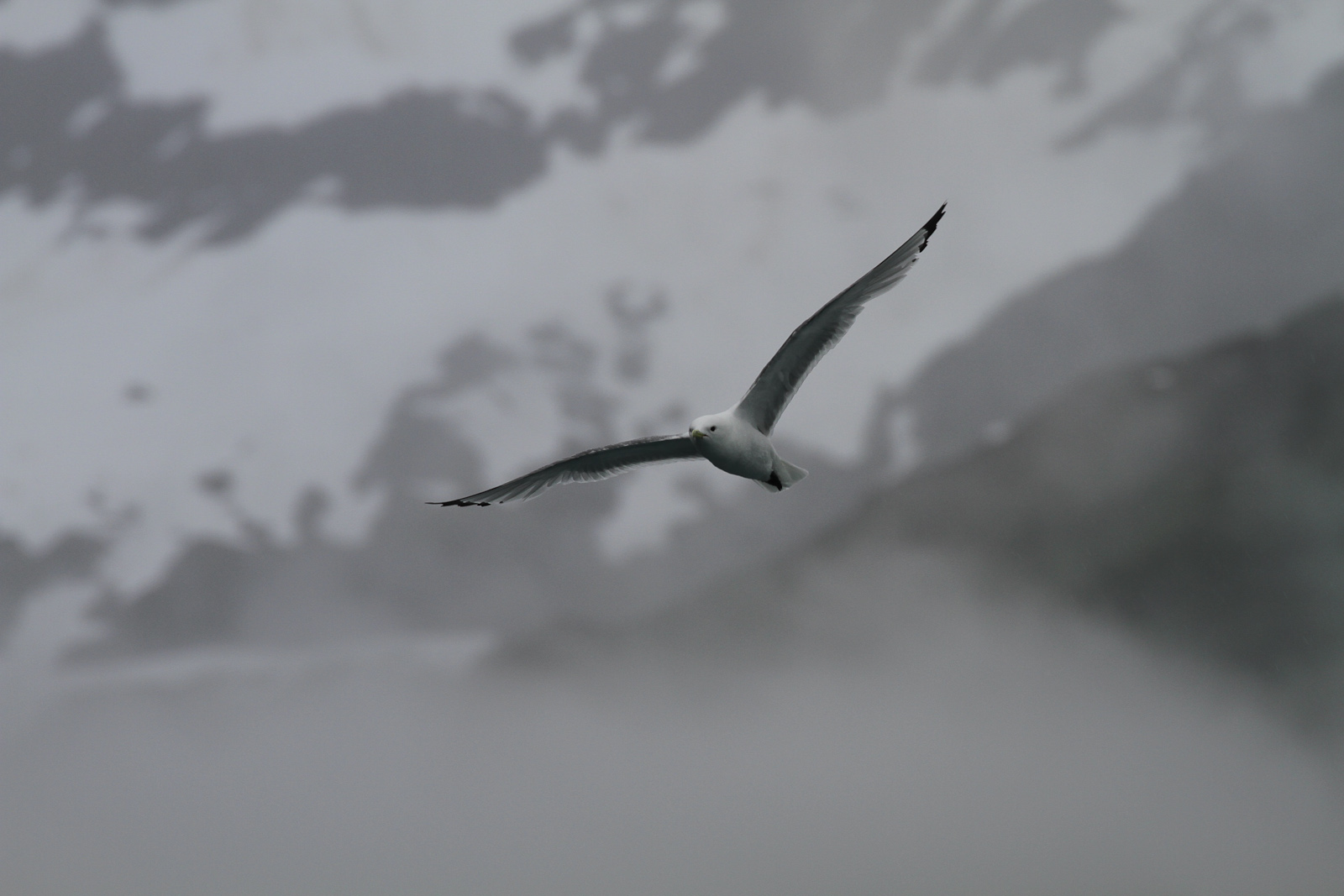
Our kayaks and group of six paddlers were taxied by small boat from the port of Valdez to the top of Shoup Bay where we off loaded onto a small beach and then put in for our day on the water. In total we were four kayaks (3 doubles and a single for our guide, Darcy). An all day slow steady rain was the price of entry for a front row seat to a Kittiwake rookery of several thousand birds. We were able to glide within feet of the nesting birds without disturbing them in the least. The presence of an opportunistic Bald Eagle in search of a baby Kittiwake snack, however, would launch the entire colony into a defensive mobbing behavior which is captured in the video below.

Kittiwakes are of two types, black-legged (this colony) and red-legged. They are the only gull species that are exclusively cliff-nesting. We enjoyed watching couples working together constructing and tending to their nests. Several newborns were also present. Shoup Bay has the fastest growing Kittiwake rookery in Prince William Sound with more than 20,000 birds and 6,000 nests. We continued to paddle taking us from the tidal basin containing the rookery to the one into which the Shoup Glacier terminates.

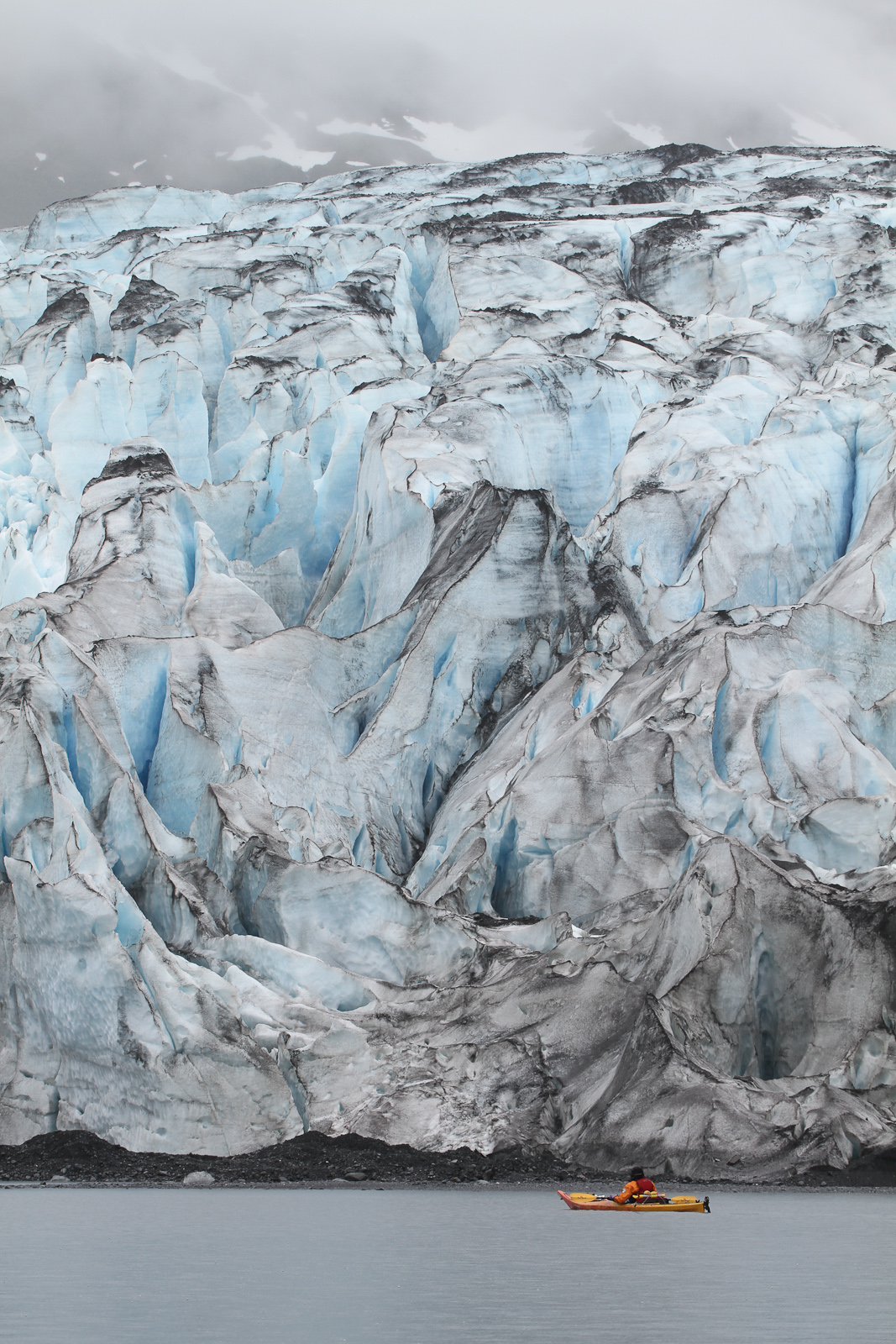
The glacier is simply beautiful, both in color and form. Two rivers carry melt water from beneath the glacier into the bay and have formed massive tunnels. Calving can occur at any moment (except while recording video in anticipation of the event). A sharp cracking noise is followed by a thunderous crash as the ice hits the water. We put ashore twice during the day, once to eat lunch and the second to walk up to and investigate the glacier. We timed our departure to catch the falling tide and had an exciting high speed white water exit as we moved from the inner to outer tidal basin where we rendezvoused with our water taxi.