Slovakia

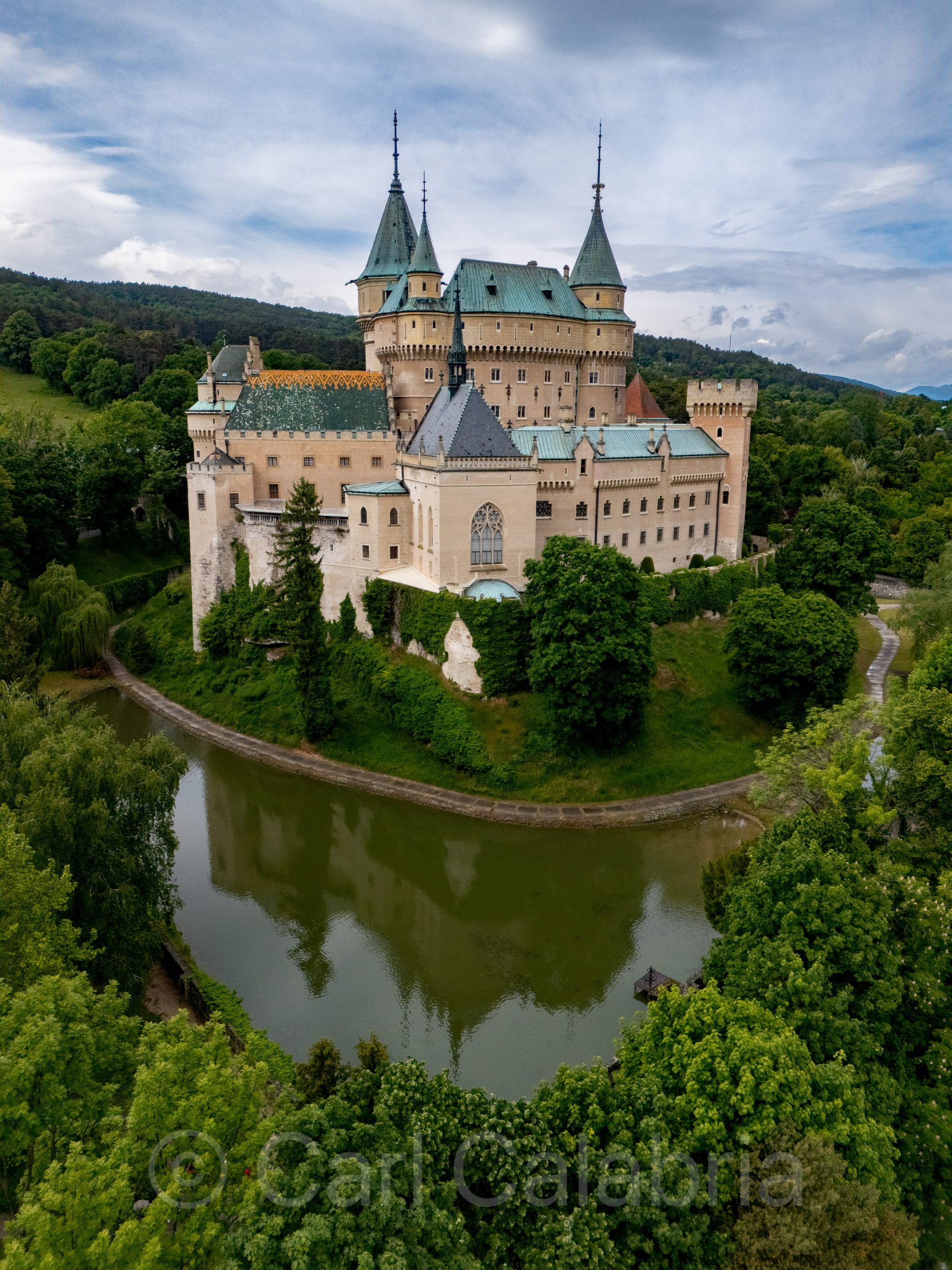
Today, I decided to make a day trip to visit the Bojnice Castle in Slovakia. It was originally built in the 12th century as a Romanesque fortress with Gothic and Renaissance elements. It stands on a travertine hill and consists of an inner and outer castle with three courtyards and is surrounded by a moat. In the late 19th century, Count Ján Pálffy extensively renovated the castle in a romantic neo-Gothic style inspired by French Loire Valley châteaux and other European castles, giving it its current fairy-tale appearance. Beneath the castle is a cave that serves as its water source. I spent a total of ten hours driving today, in large part to see this castle. On the way there, I began to question if the trip would be worth it, especially as it rained for much of the day. Miraculously it stopped half an hour before I arrived and I was able to capture what I consider to be one of my best ever aerial photos.

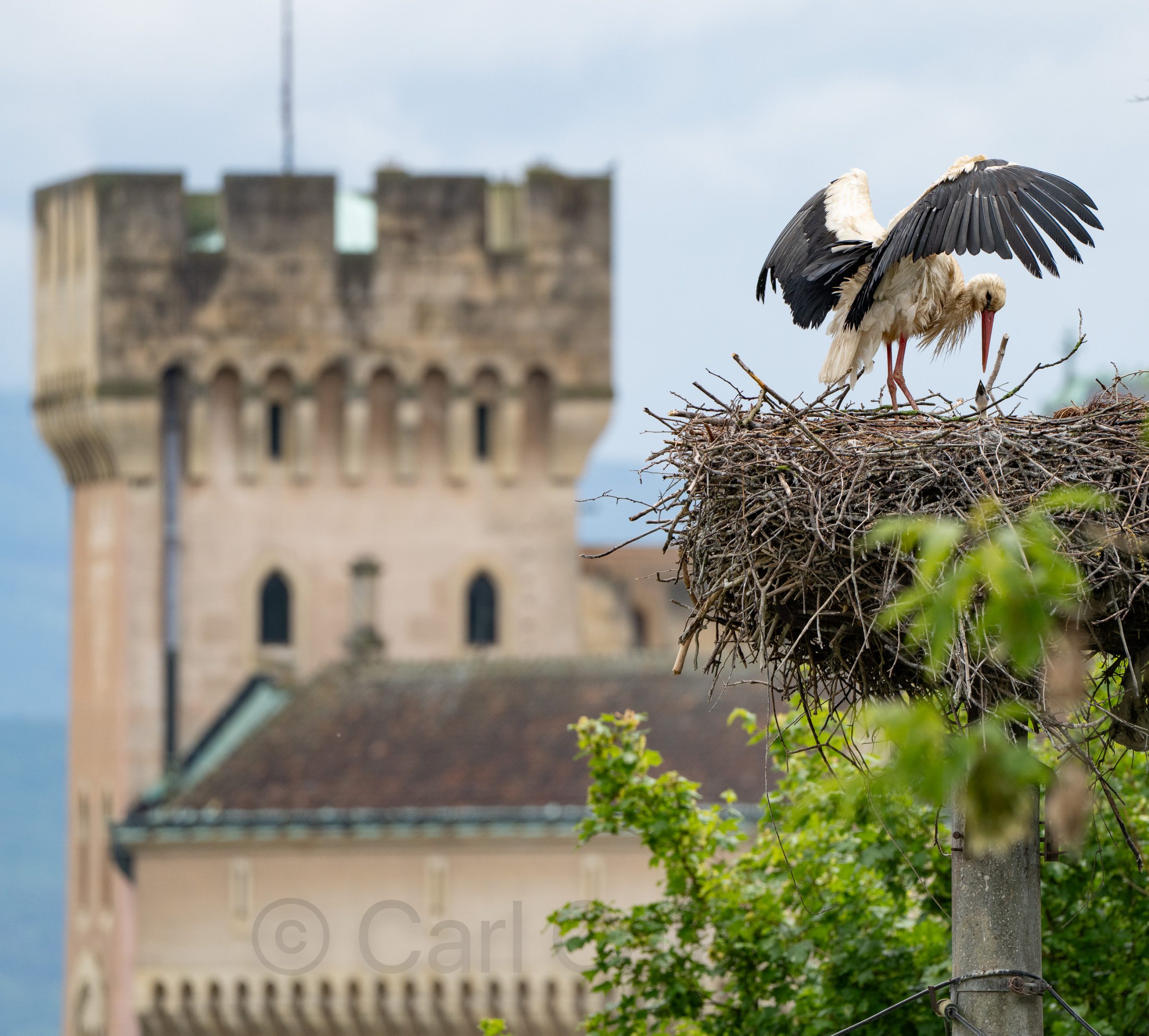
As I began my drive back to the Czech Republic, I noticed a White Stork returning to its nest to feed its young (see small head reaching up).
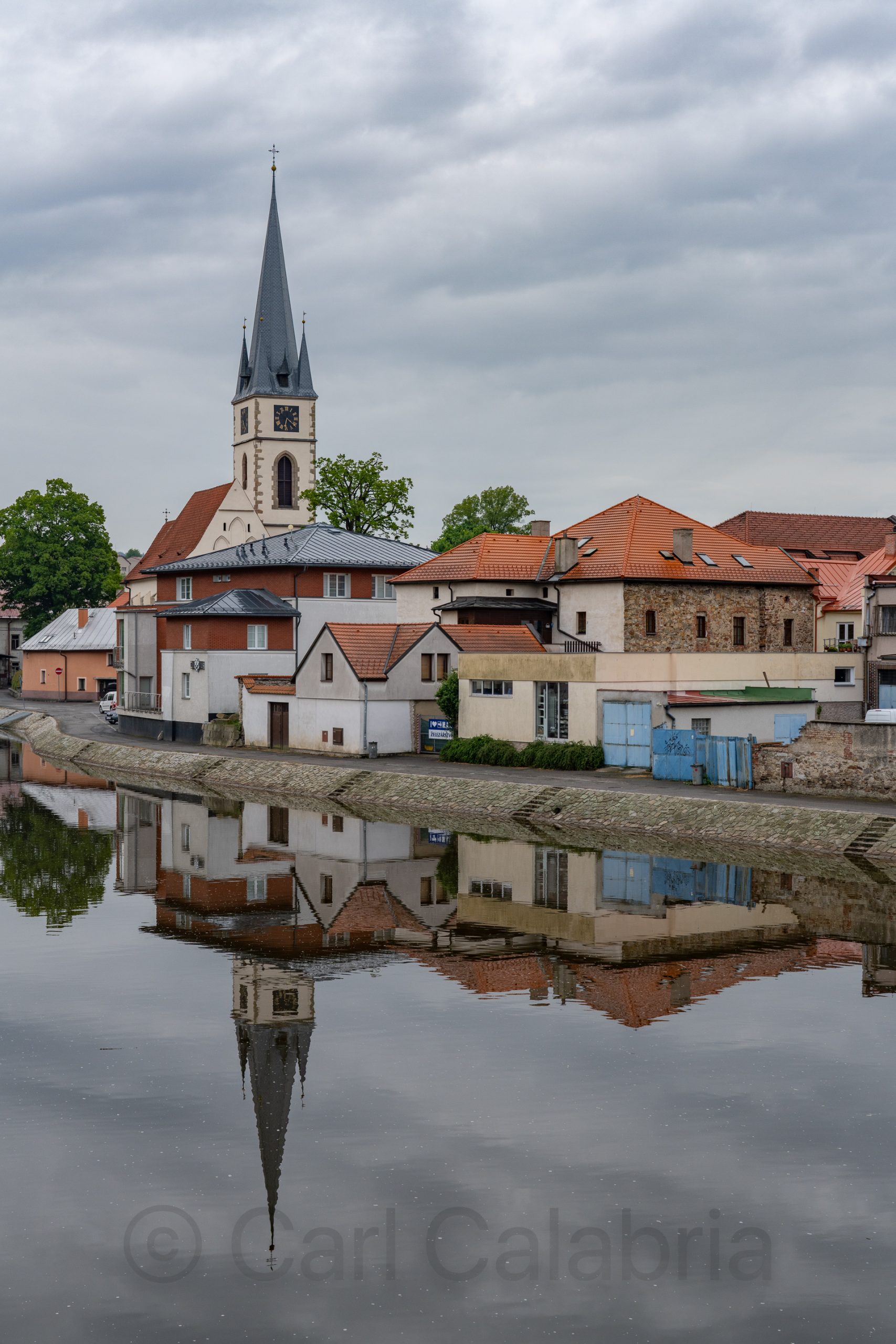
While driving to Slovakia, I made several stops along the way, some planned, some spontaneous. I took the photo below after crossing a bridge and seeing the reflection in the water. Such scenes are common in the many small towns that dot the countryside.

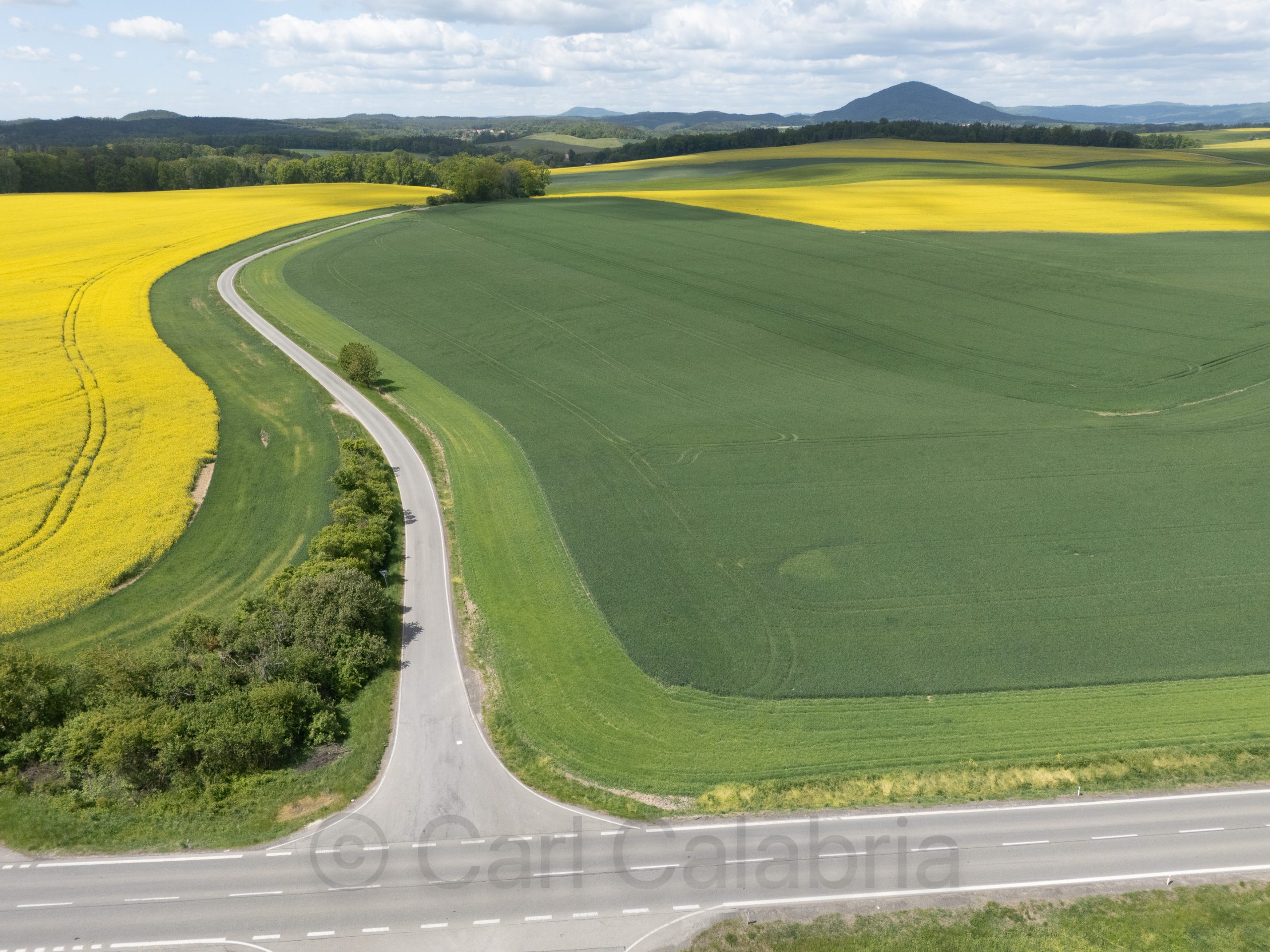
Driving here has been mostly enjoyable but very challenging. Very little of it has been on the highways, which are well-maintained and have an 80mph speed limit. The secondary roads are also in good shape, but invariably narrower than one would think reasonable and always winding. You must pay attention for every second and I often found it impossible to reach the speed limit of 55mph and when I did, it was too slow for the cars/trucks behind me. These roads connect towns and village which you reach every 2 to 5 minutes where the speed limit abruptly changes to 30mph, a speed which actually allows you to look up and enjoy the scenery. Basically, it is white-knuckle driving for several minutes interrupted by equal periods of relaxation repeated hundreds of times.
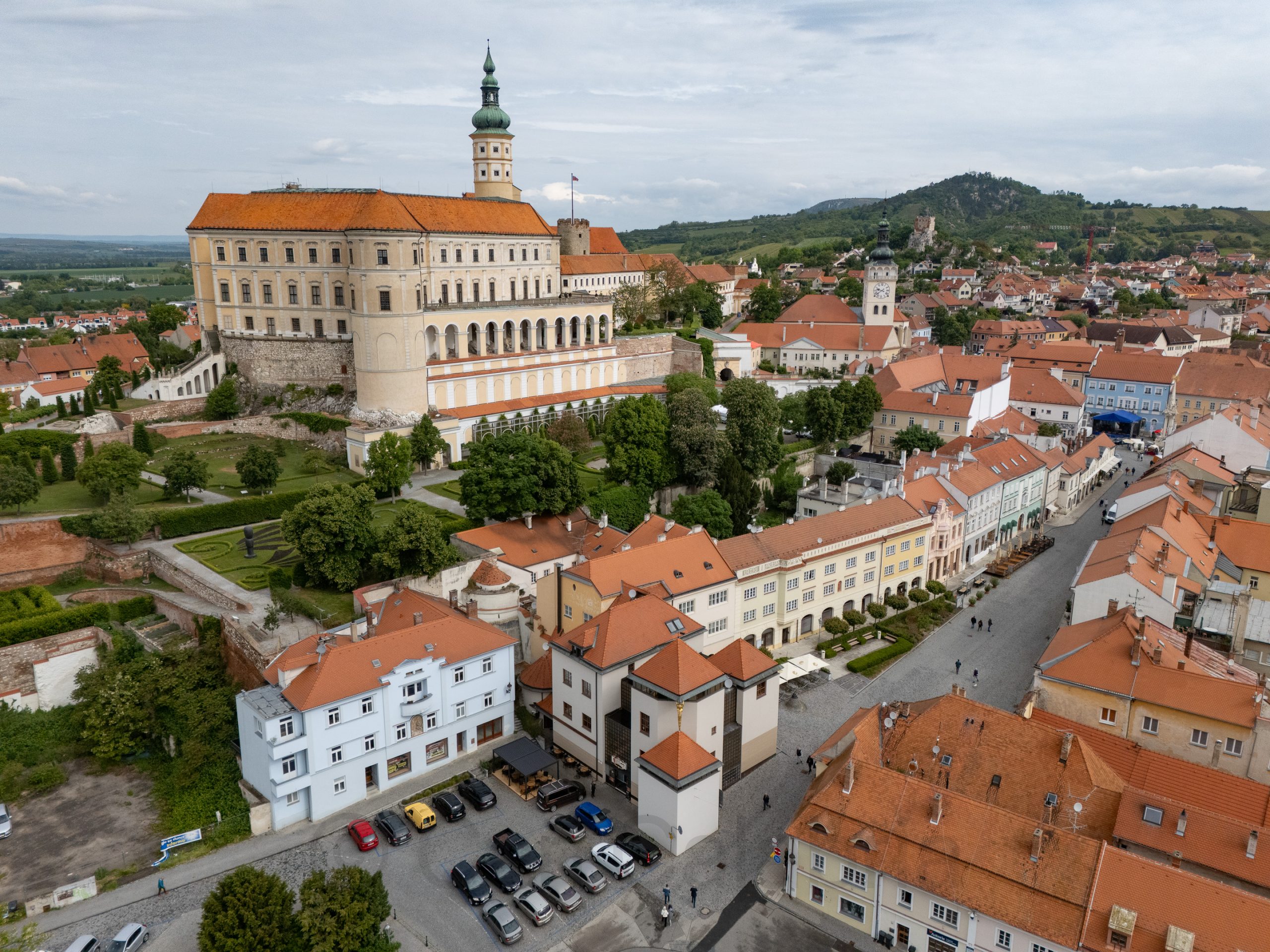
The Mikulov Castle, perched on a hill near the Austrian border, dates back to the late 13th century and was originally owned by the Liechtenstein family. In the late 16th century, it became the property of the Dietrichstein family, who transformed it into a grand Renaissance and later Baroque residence, making it a center of political and cultural life in the region. After a devastating fire in 1719, the castle was rebuilt in its current Baroque form and today houses a regional museum with exhibitions on local history, art, and viticulture, including one of Europe’s largest wine barrels.
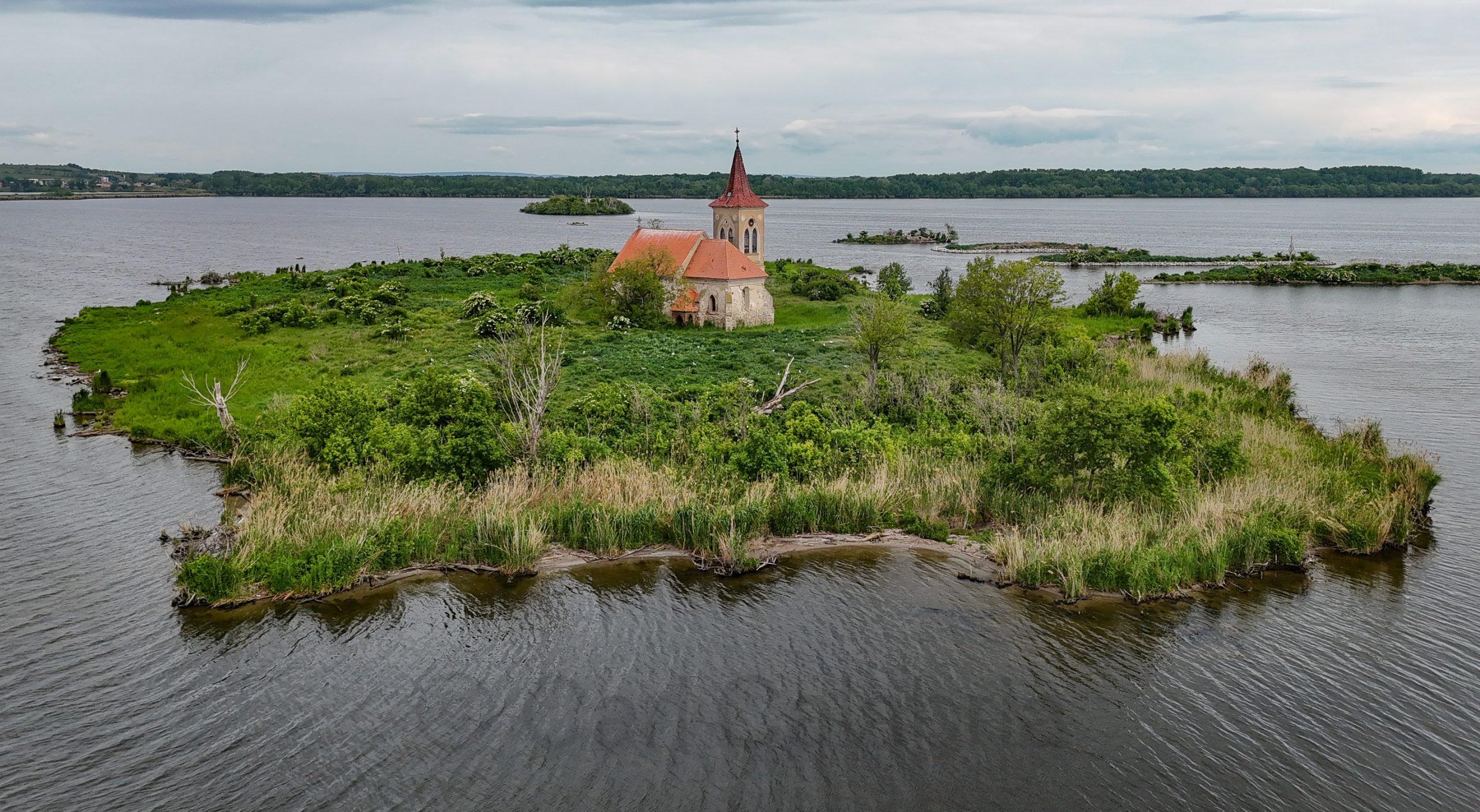
Here we have a church on an island inhabited only by birds. It is the only surviving structure of a town that was flooded to create the massive reservoir in which it sits. Churches everywhere seem to be situated on high ground (closer to God, I imagine).
Lednice Castle in South Moravia is a stunning Neo-Gothic chateau rebuilt in the mid-19th century by the Liechtenstein family as a romantic summer residence. It sits at the heart of the Lednice-Valtice Cultural Landscape, a vast designed parkland featuring gardens, pavilions, and ornamental structures. This cultural landscape is a UNESCO World Heritage Site, celebrated for its harmonious blend of architecture and nature. The property includes the lagoon pictured in the background complete with nature walking paths and a 200-foot-tall minaret that served as a lookout tower.
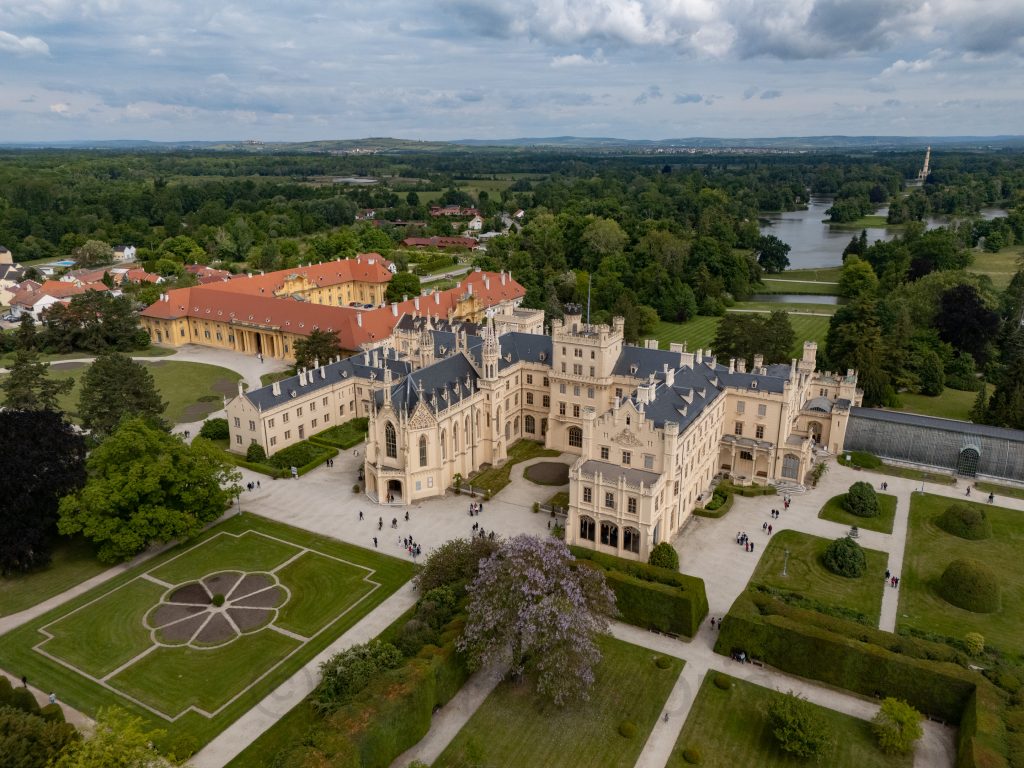
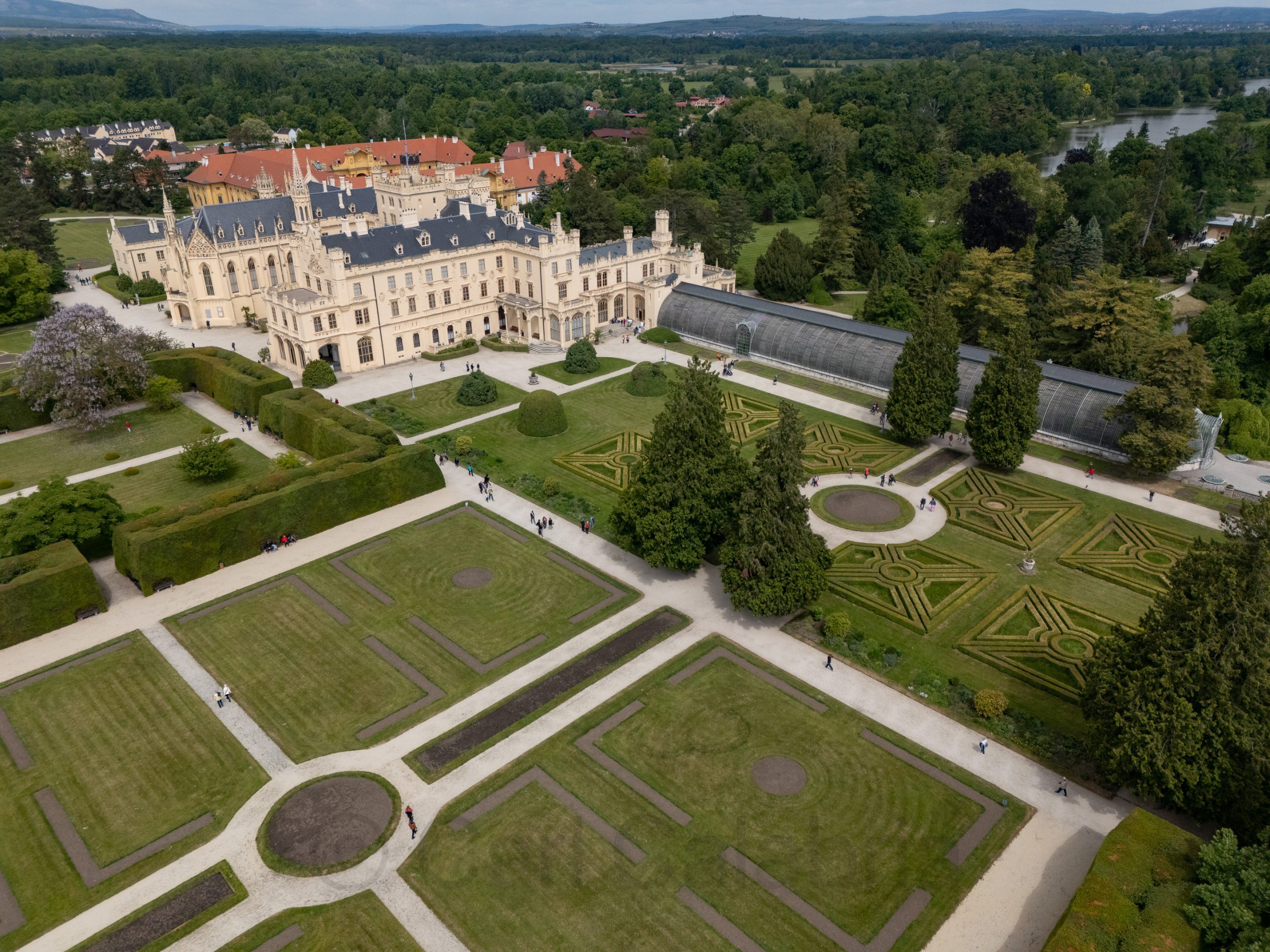
The castle includes a greenhouse (long grey tube like extension shown below) known as the Palm House. It was constructed between 1843 and 1845 as part of the estate’s transformation into a showcase of modern technology and horticultural beauty. It features an elegant cast-iron structure with bamboo-shaped columns and glass panels, designed to house exotic tropical and subtropical plants collected from around the world, some as old as 300–400 years.
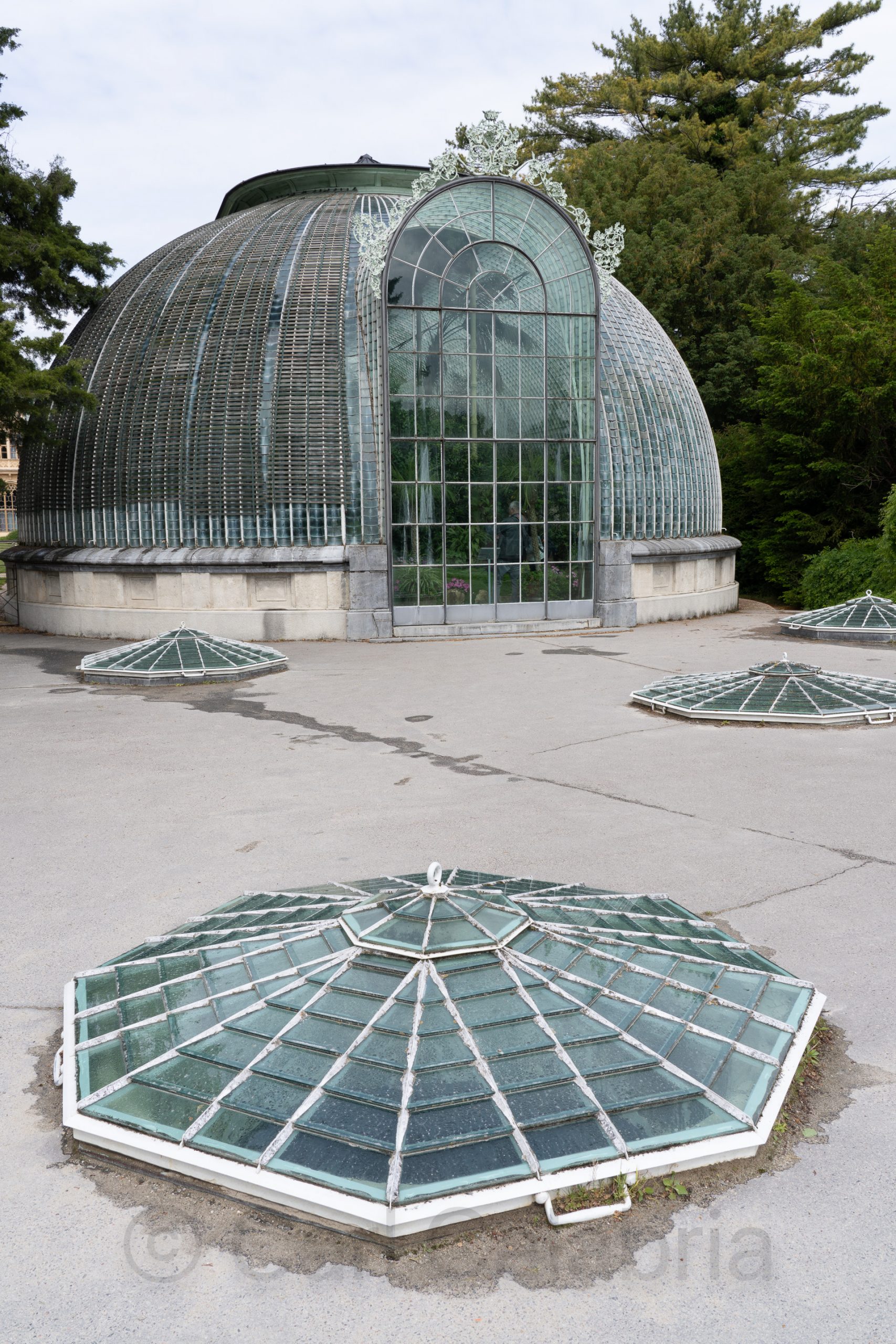
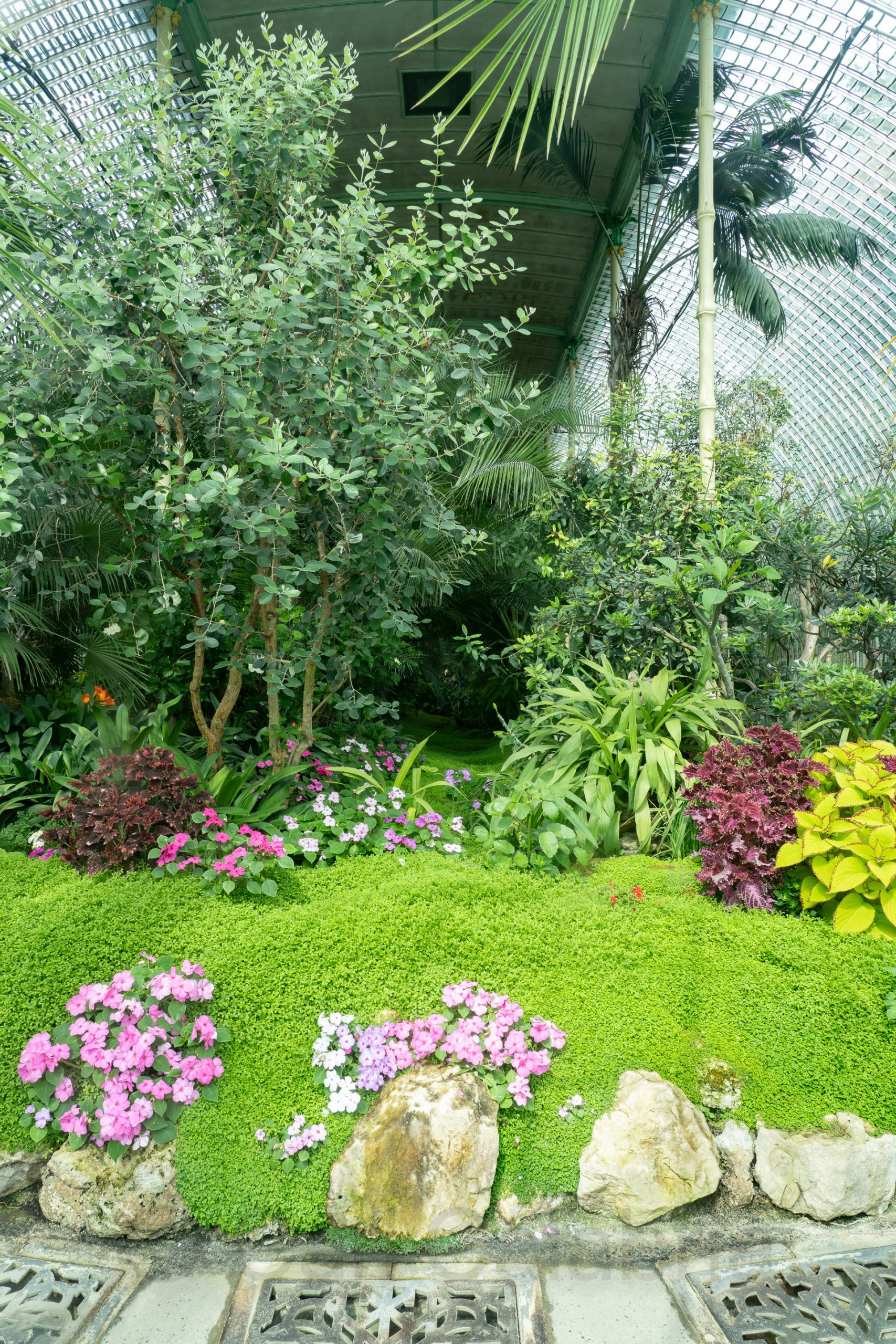
The far end of the greenhouse is pictured below, as is what I can only assume are sunlights to something magical below (I didn’t have time to investigate). The last image was shot through the greenhouse window.
Prachov Cliffs


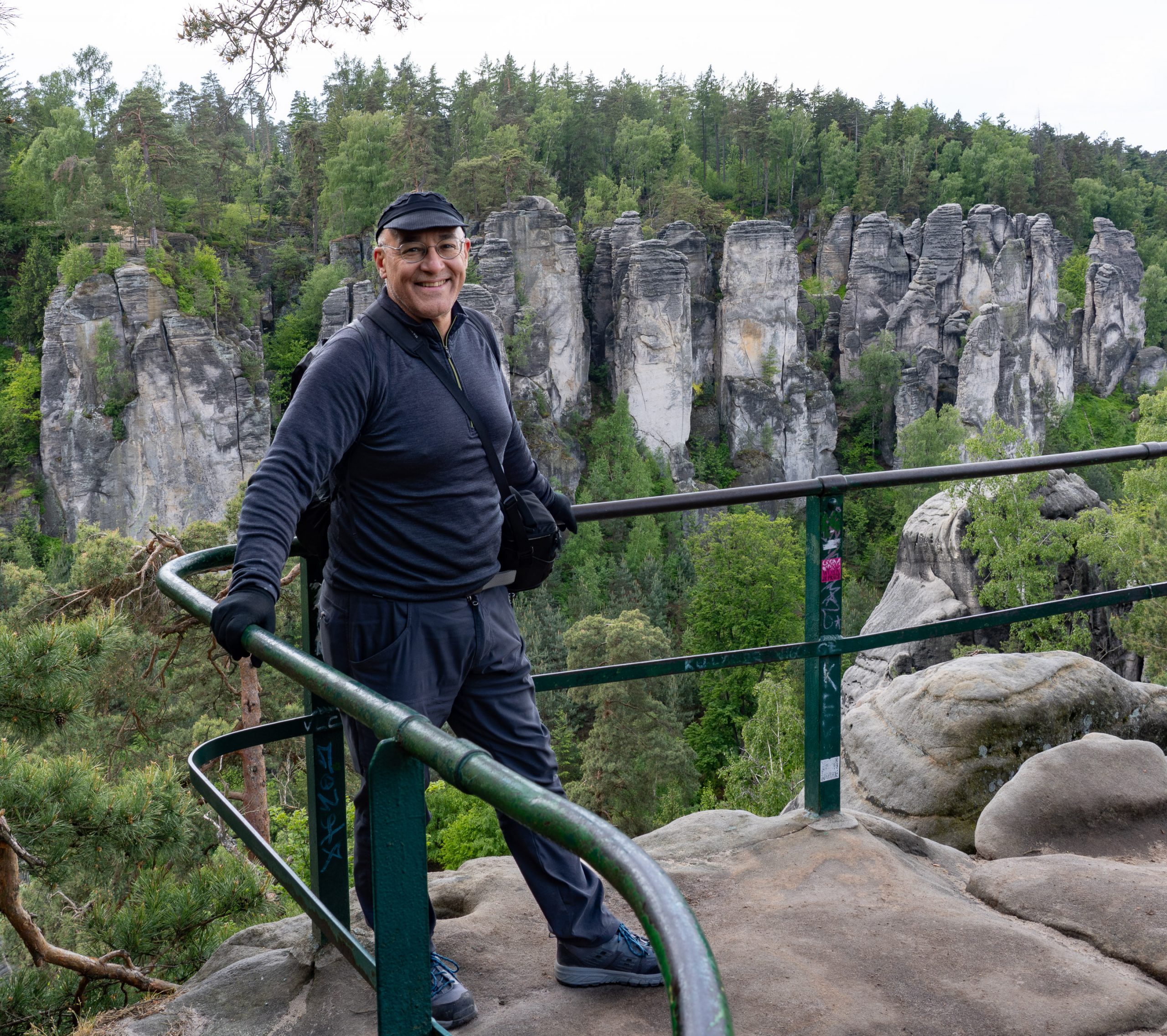
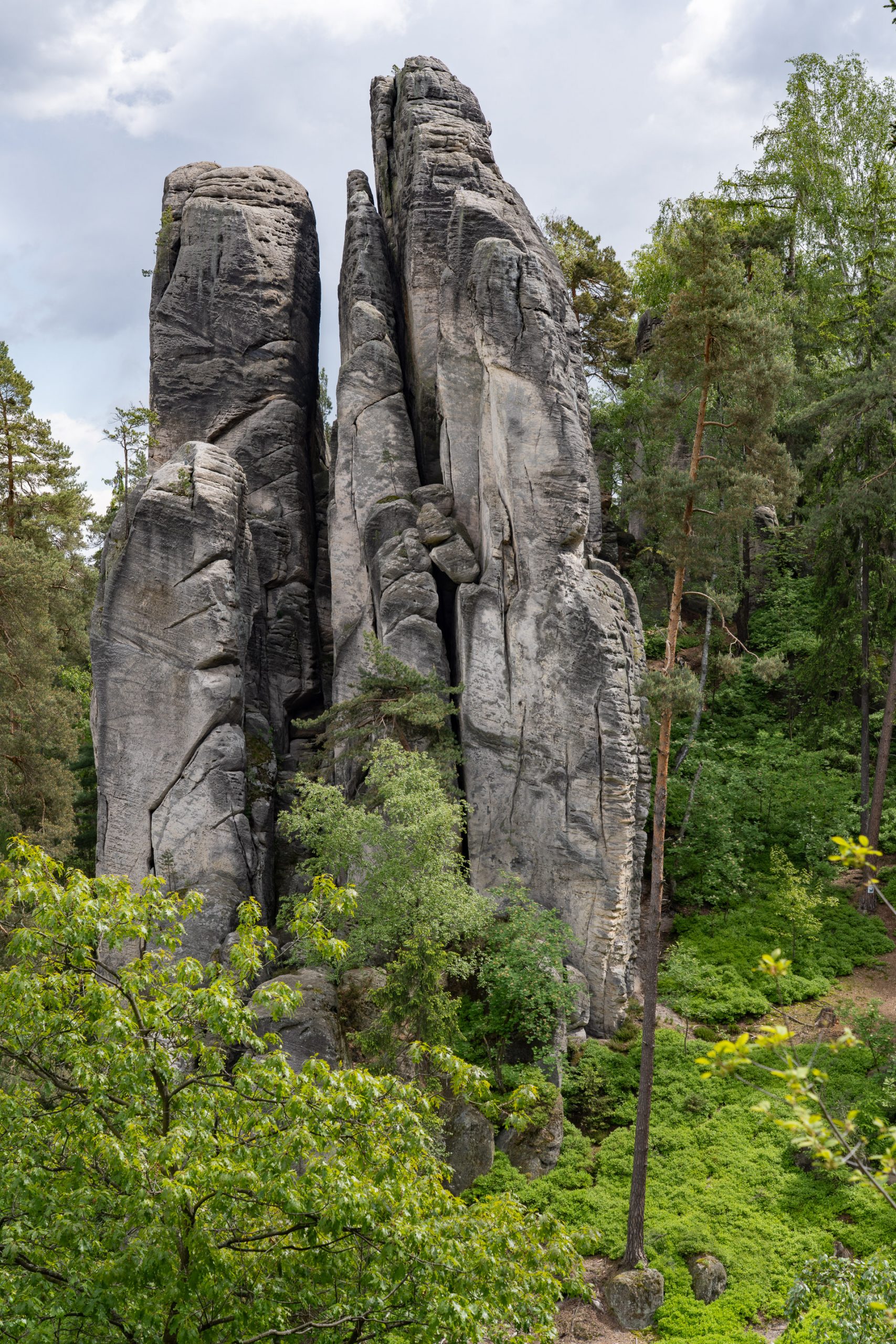
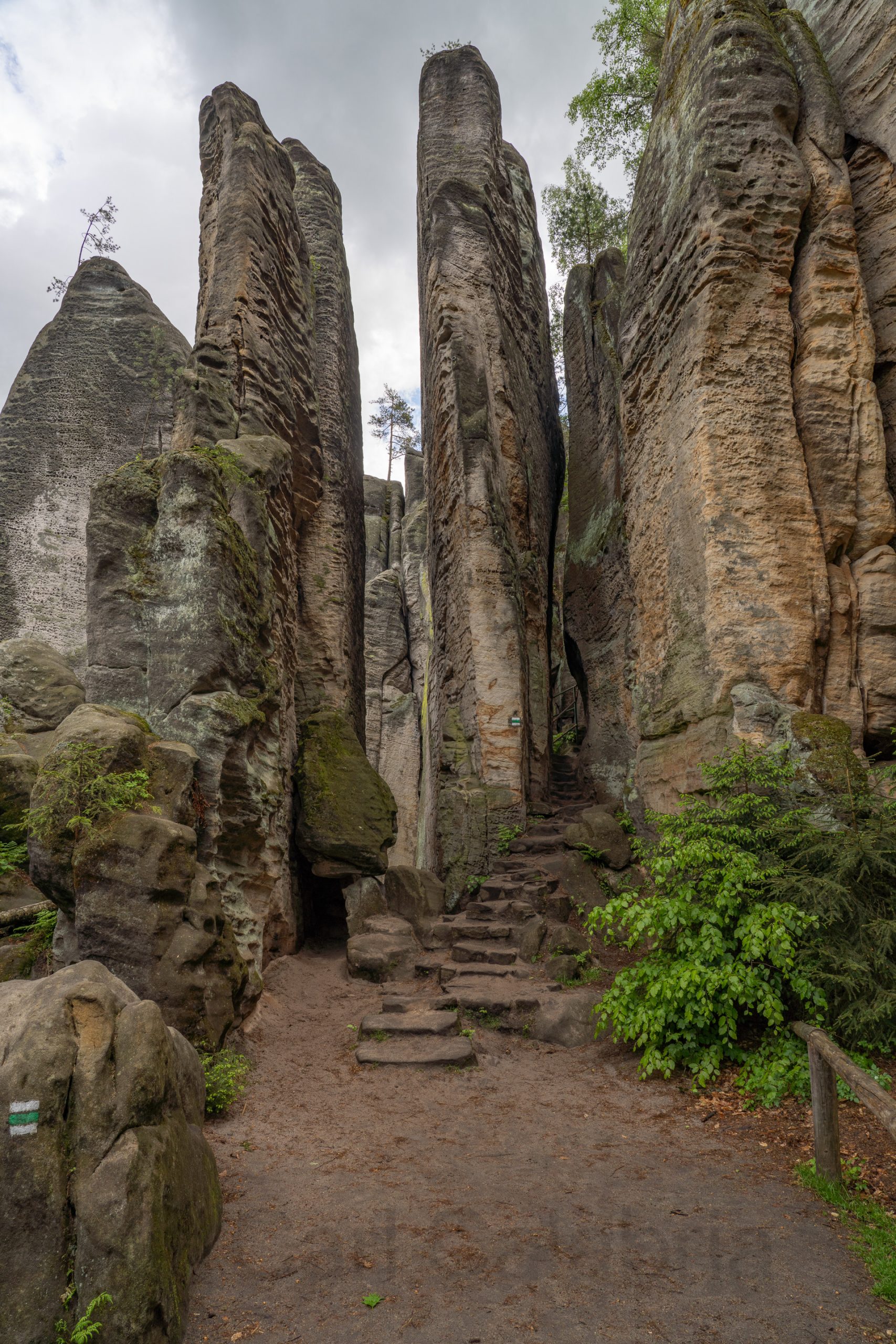
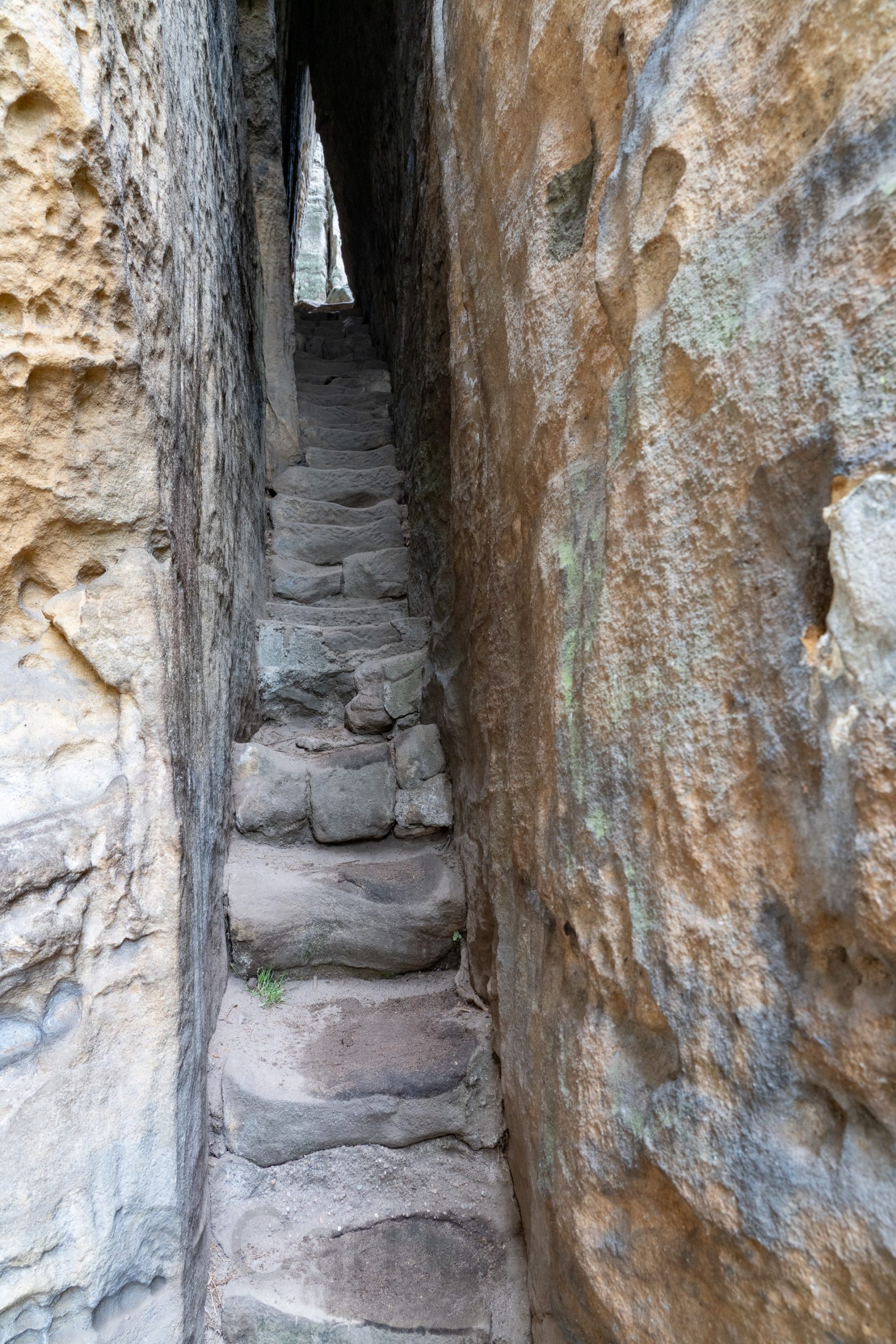
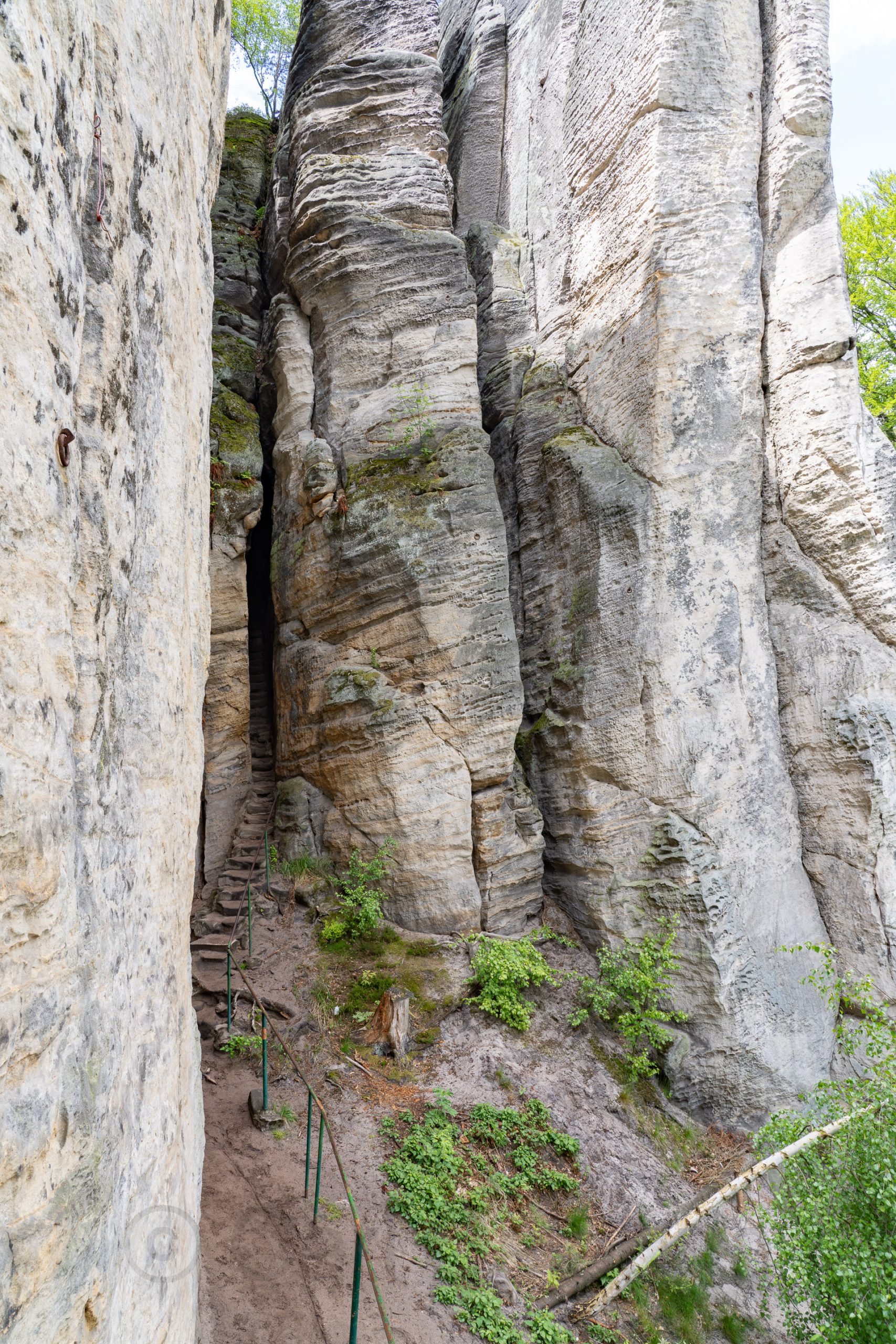
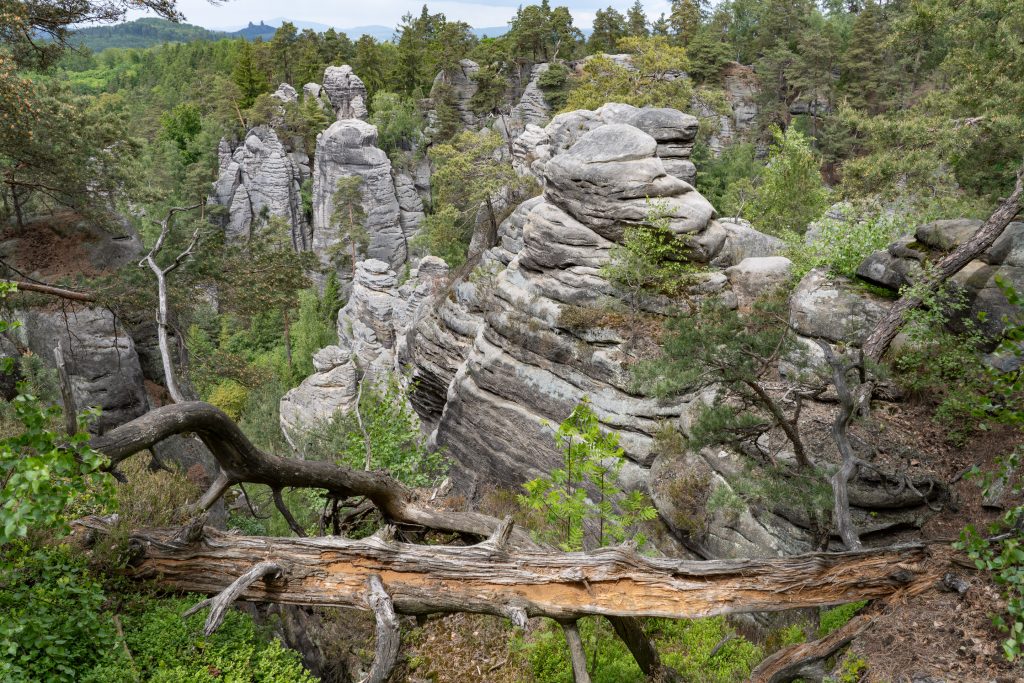
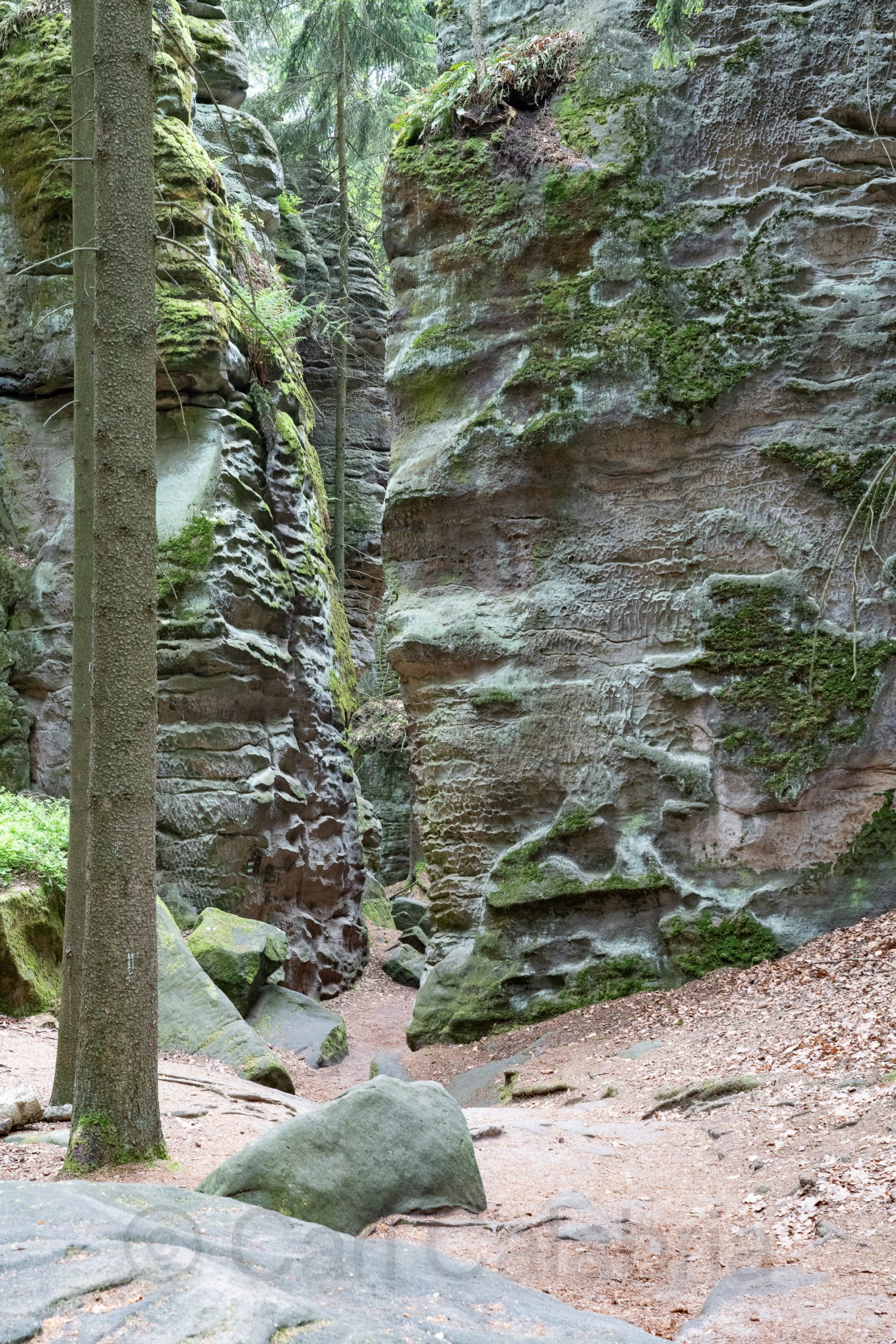
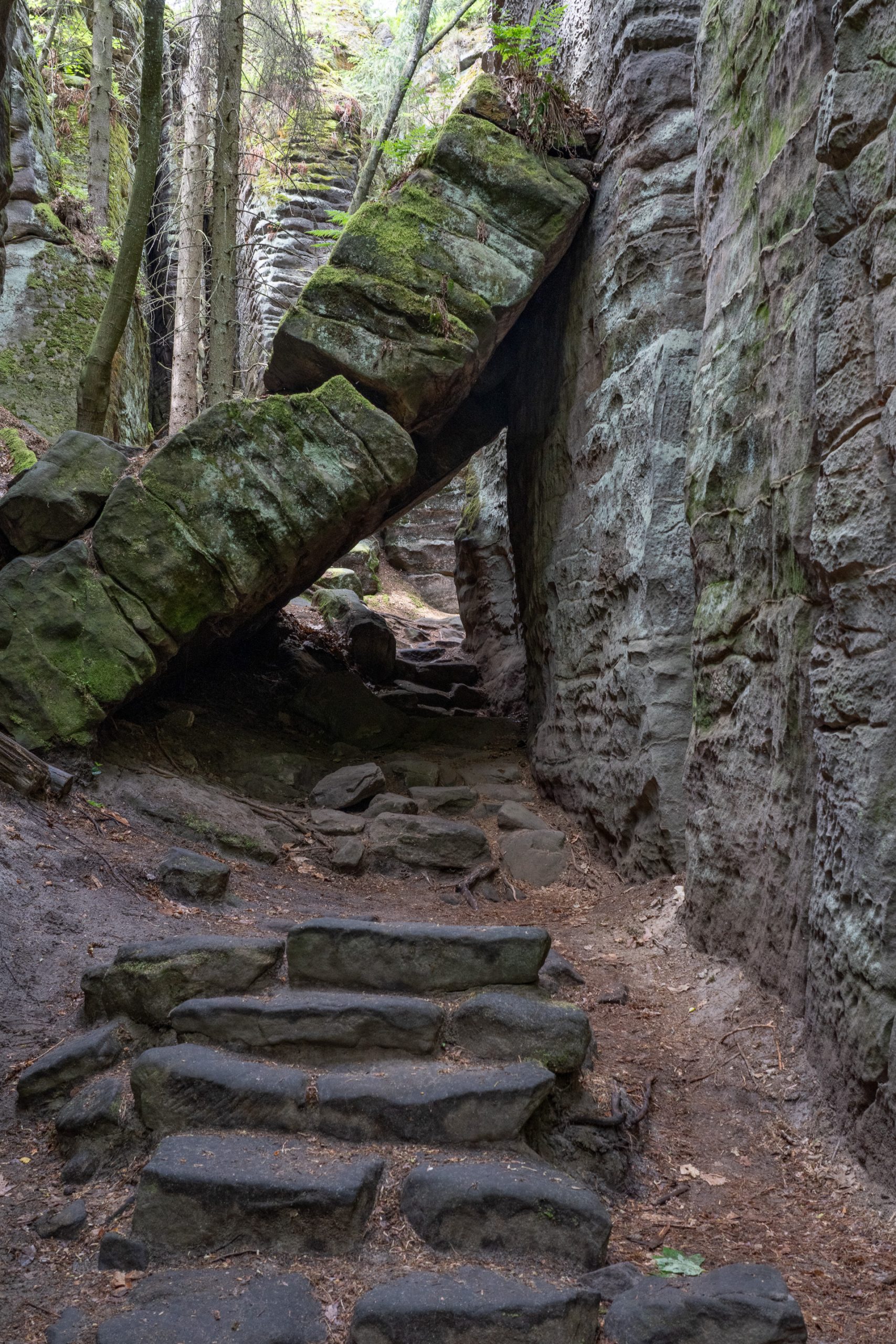
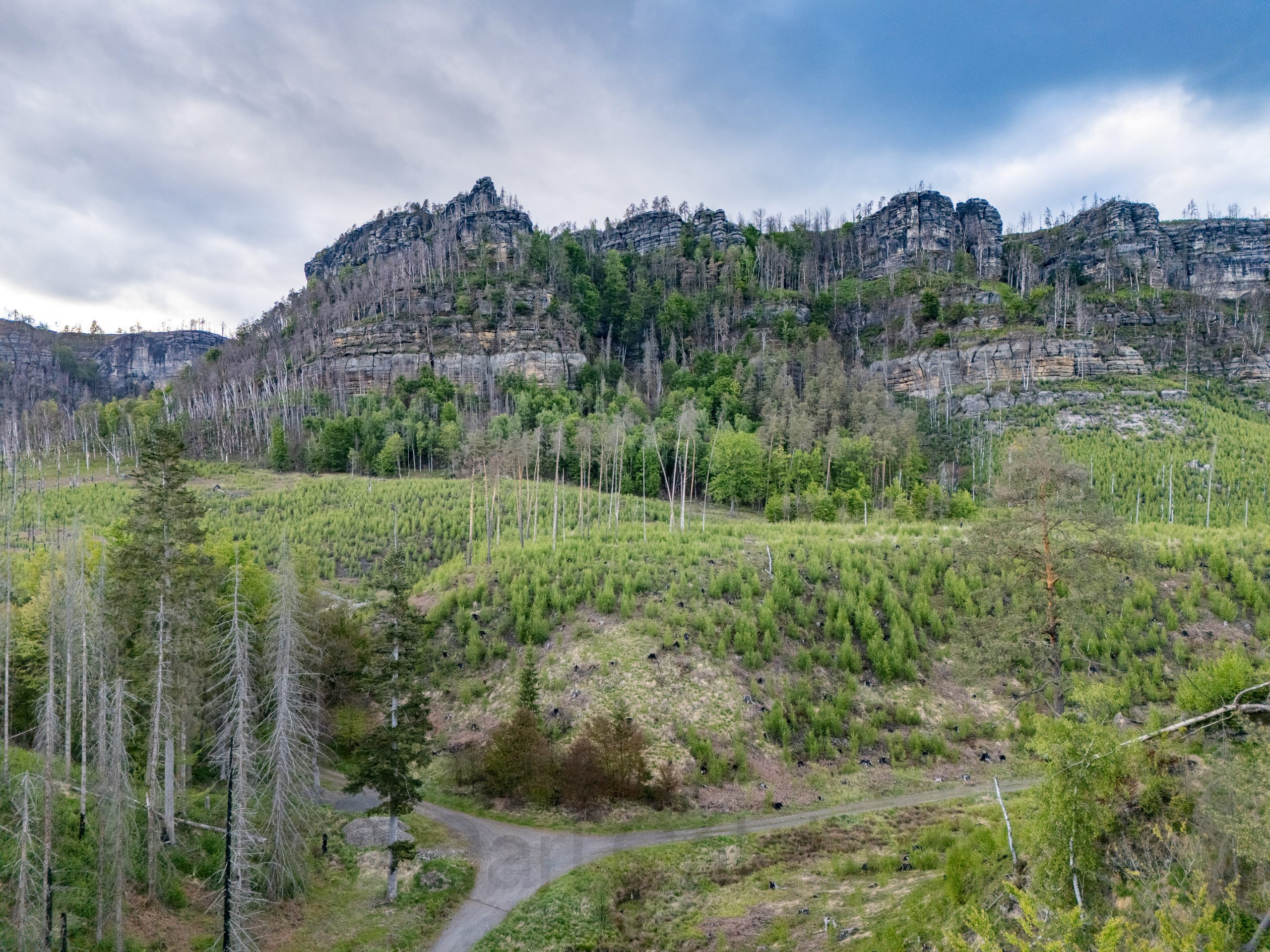
The Prachov Cliffs are a famous sandstone rock formation located about 5 km northwest of Jičín in the Bohemian Paradise (Český ráj) region of the Czech Republic. They have been a protected natural reserve since 1933 and are one of the most iconic natural landmarks of the area. The formations originated from a sandstone plateau formed over 60 million years ago and have been sculpted by wind and rain into unique shapes. The area offers numerous hiking trails with varying lengths and difficulties, featuring steep stone steps, narrow rock passages, and multiple viewpoints providing stunning panoramas of the rock town and surrounding landscape.

Fortunately, I decided to skip the hike to the Pravčická Archway after yesterday’s navigational debacle because I would have never survived the rest of the day had I made that climb as well. When I researched the Prachov Cliffs, I grossly underestimated the difficulty of the 3.5km green blaze trail I elected to take. The short linear hiking distance does not reflect the amount of continuous elevation change up and down, mostly on poorly carved stairs which were hell on my knees. Essentially you climb to the top of one formation and then back down to the ground and over to the next formation, repeat. According to my health app, I climbed the equivalent of 89 floors. That is like climbing up and down the Empire State Building. Making matters worse, I got “lost” and nearly doubled the length of my hike. The reason that “lost” is in quotes is because I diligently followed the green blaze trail which apparently has an optional detour (labeled in Czech only) to a mountainside restaurant way off the path back to my car. When I asked a waiter WTF was going on and pointed to the green blaze painted on the side of the restaurant he laughed and said this happens all the time. If my legs were not so tired from two days of abuse I would have kicked some ass.

Summing up: Czechs suck at trail marking. Despite the arduous climbing, I loved my visit to this place of natural wonder.

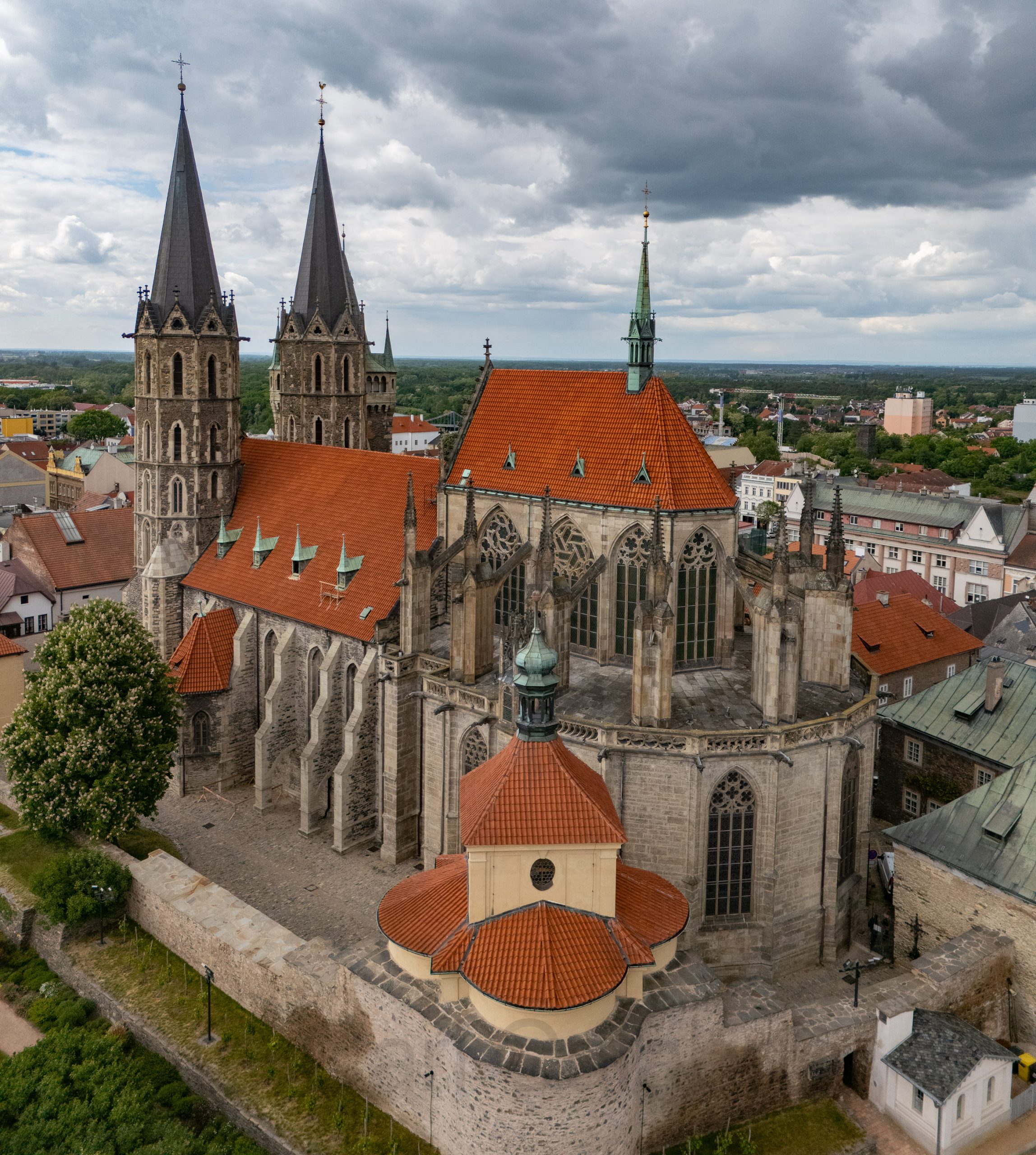
The Cathedral of St. Bartholomew is the dominant landmark of Kolín and was hard not to notice as I drove through the town. It was not on my plan to visit but I just had to stop for a drone photo. Founded in the mid-13th century under King Přemysl Otakar II, the cathedral was constructed in several stages, with significant contributions from the renowned architect Peter Parler, who also worked on St. Vitus Cathedral in Prague. Its three-nave design, original Gothic choir, and twin octagonal towers are notable features. The cathedral has survived fires, wars, and multiple reconstructions, most notably in the 19th century under Josef Mocker, who restored its Gothic character.

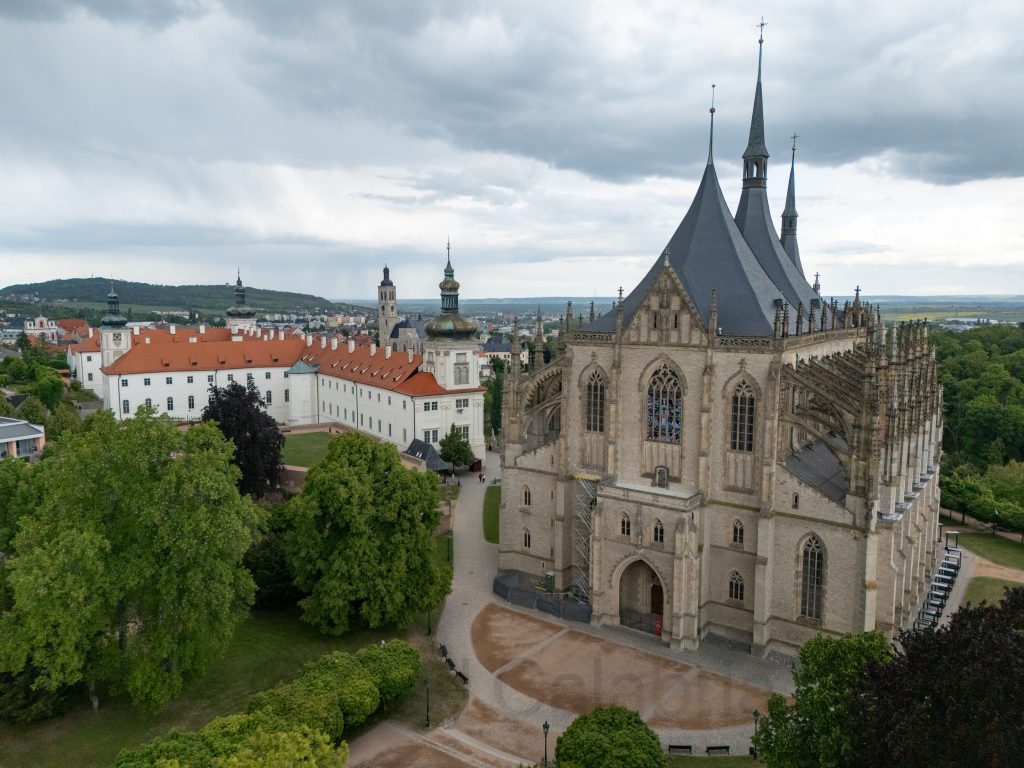
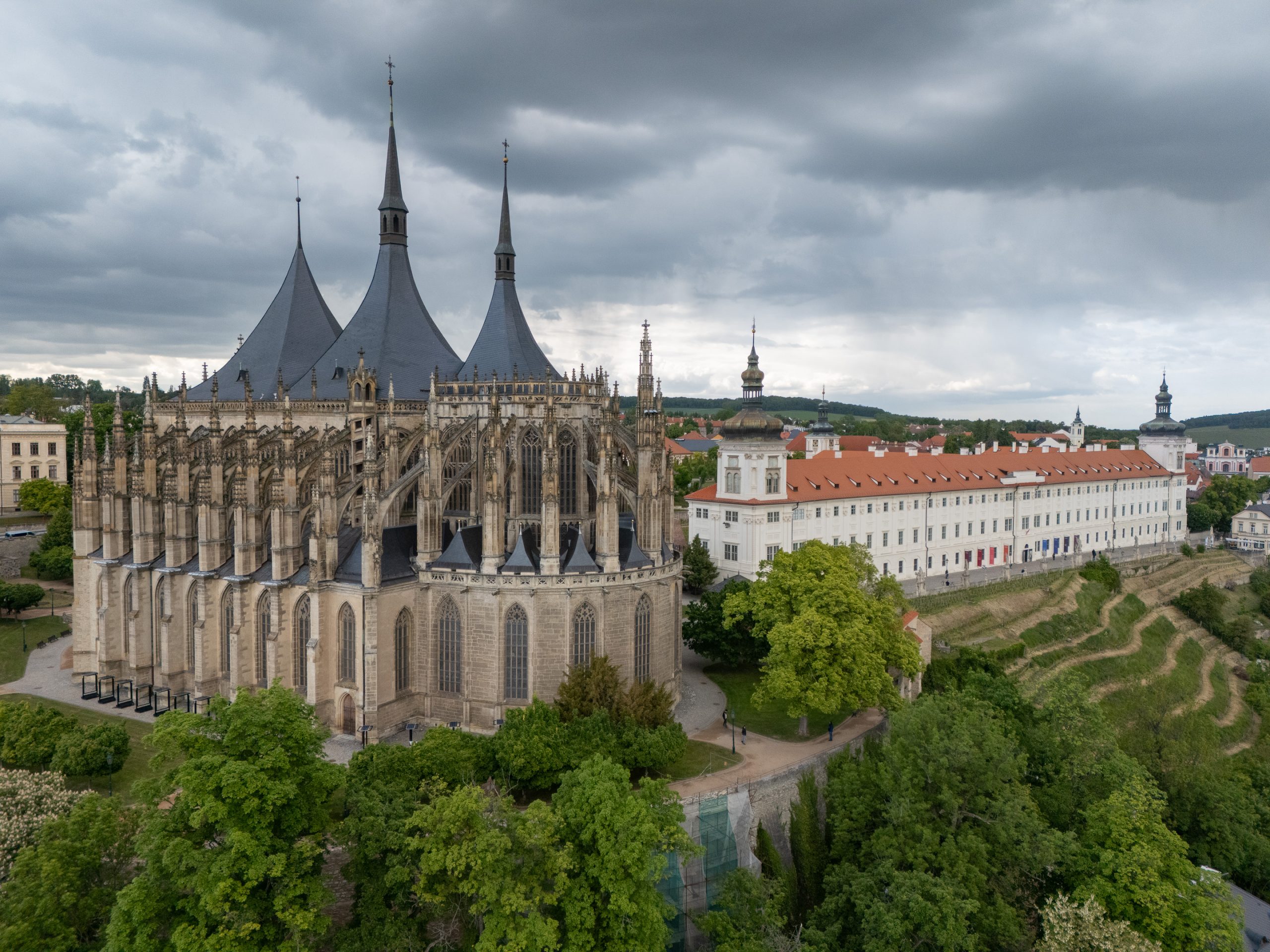
St. Barbara’s Cathedral in Kutná Hora, is a stunning Gothic masterpiece and a UNESCO World Heritage Site, renowned for its architectural beauty and historical significance. Construction began in 1388, inspired by the wealth from the town’s silver mines, with miners as its primary patrons. The cathedral is dedicated to Saint Barbara, the patron saint of miners and those with dangerous occupations. Architecturally, it is a five-aisled Gothic cathedral featuring rare Gothic frescoes, intricate stone craft, and a late Gothic ribbed vault designed by Benedikt Rejt. The cathedral underwent various phases of construction and restoration, with significant neo-Gothic revitalization completed in the early 20th century, including the addition of stained glass windows depicting Christian motifs and historical scenes.

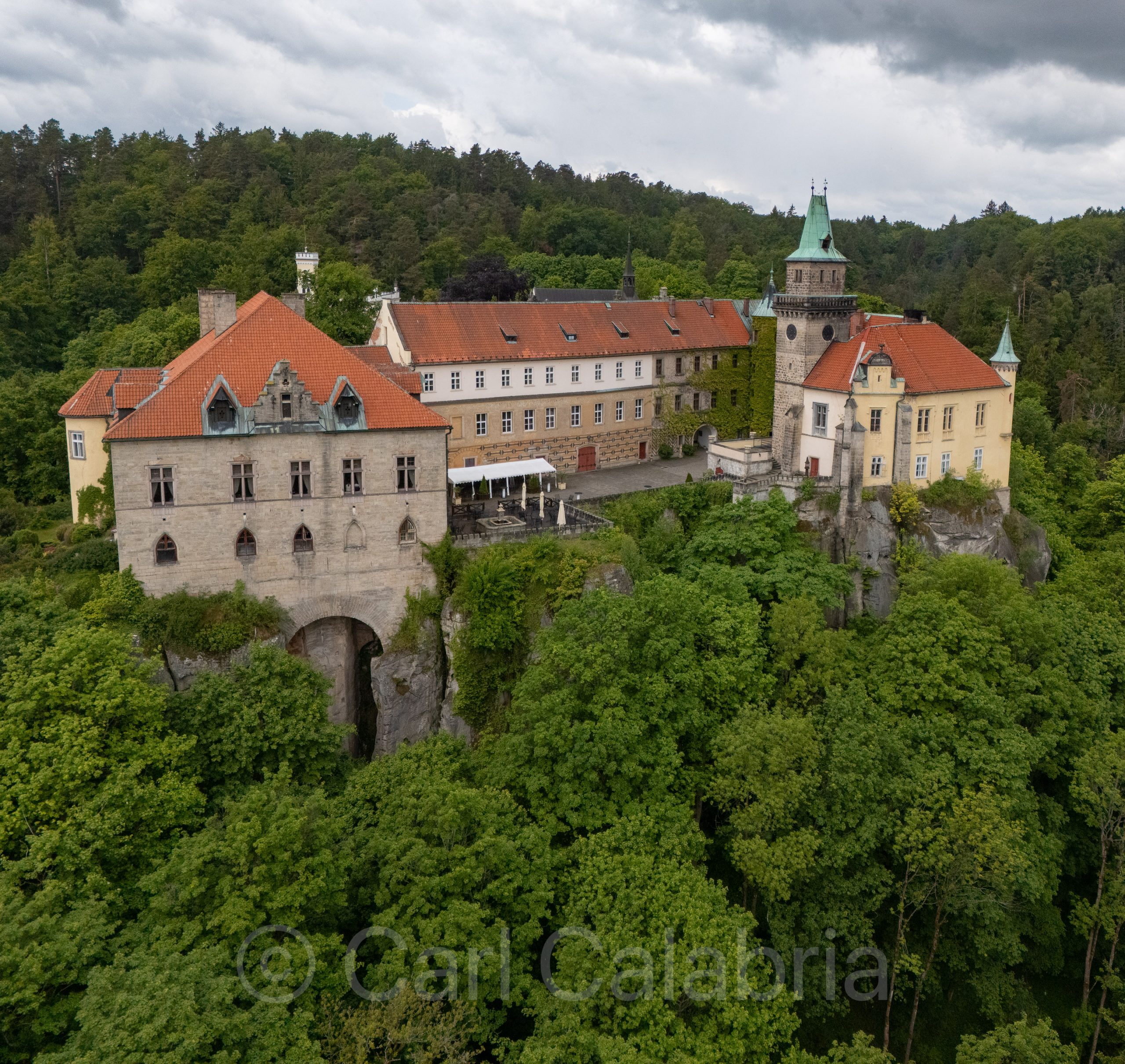
Zámek Hrubá Skála is a historic château located in the Bohemian Paradise region, dramatically perched on sandstone cliffs above the village of Hrubá Skála. Founded in the mid-14th century by Hynek of Valdštejn (Wallenstein), originally as a Gothic castle. Over centuries, it changed hands among notable Czech noble families, including the Smiřickýs, who transformed it into a Renaissance château in the late 16th century. The château underwent several reconstructions-Baroque after a fire in 1710, and finally Neo-Gothic in the mid-19th century under the Aehrenthal family, giving it the romantic appearance seen today. After nationalization in 1945, the château was repurposed for recreational use, causing some damage to its interiors. Today, it operates as a hotel and event venue, with public access to its courtyard, lookout tower, and scenic views.

Rural Czechia

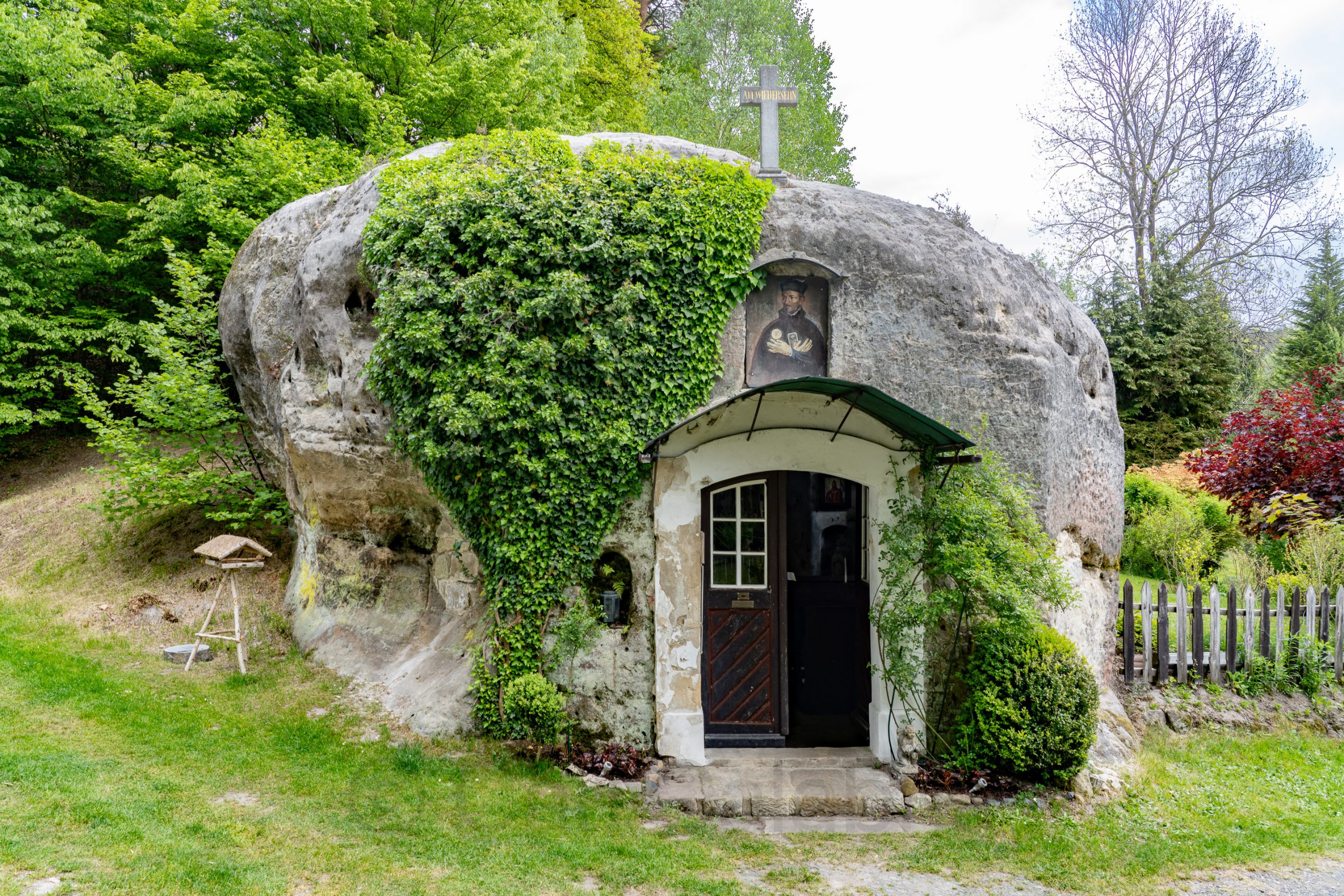
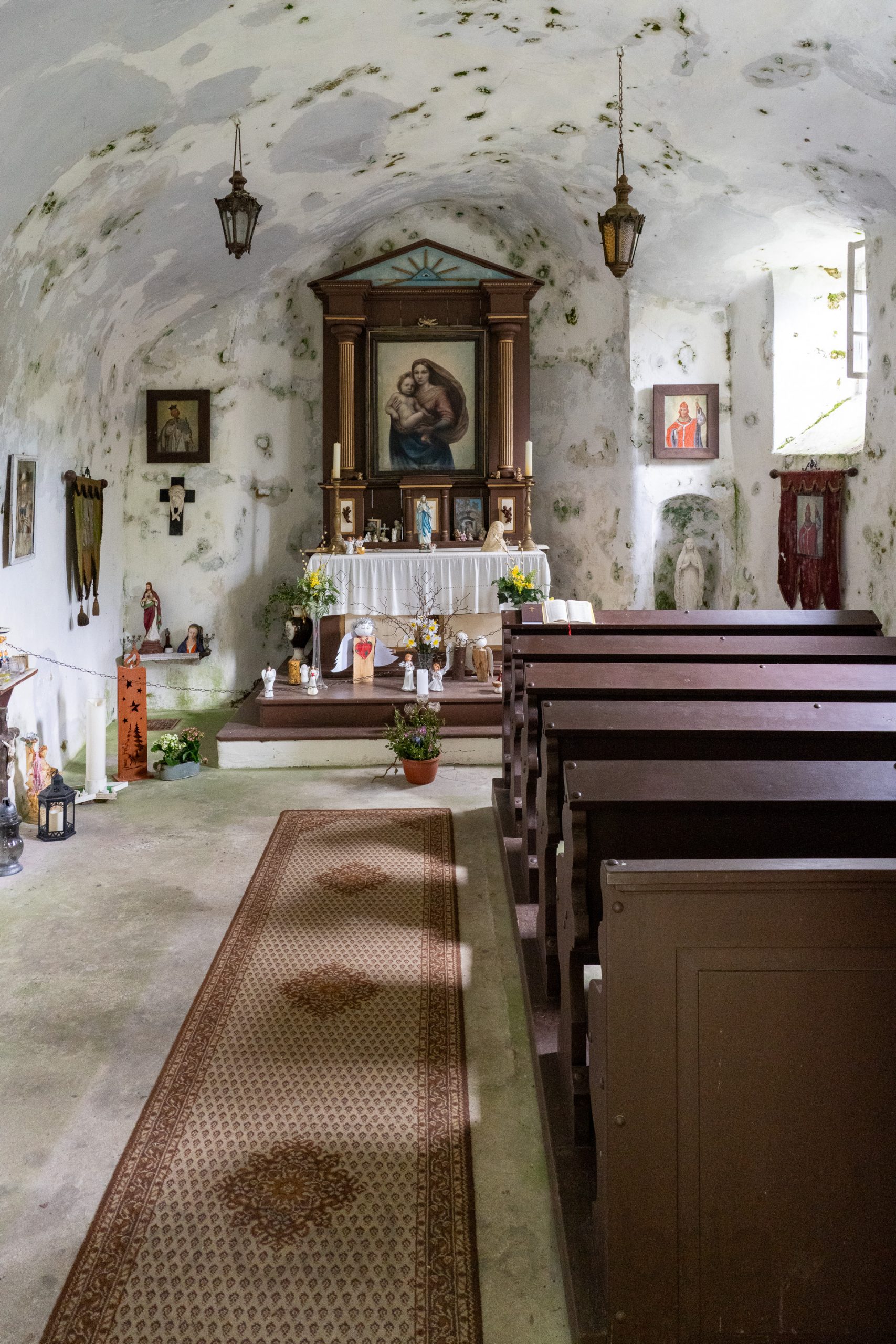
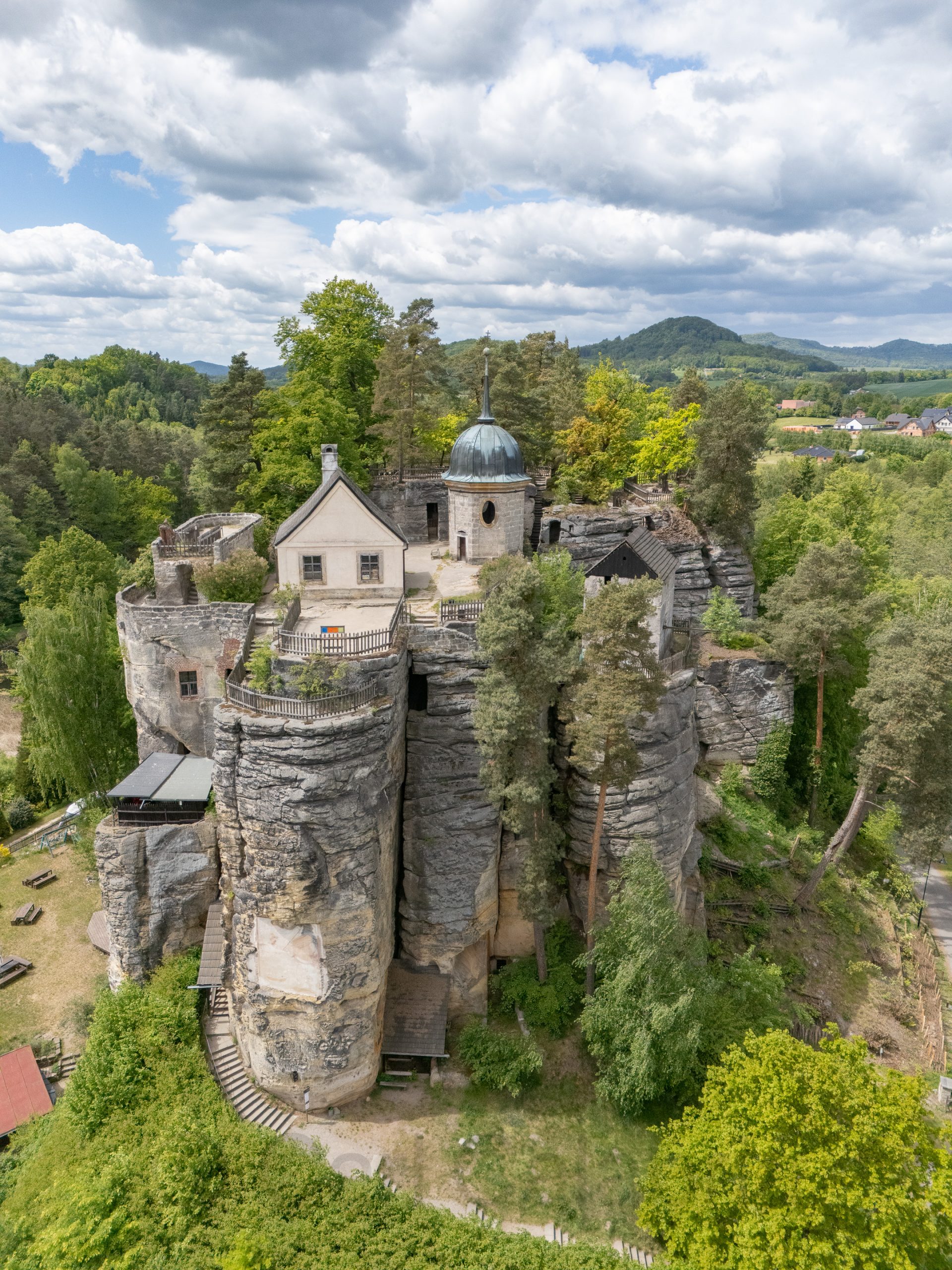
As much as I have enjoyed Prague, I was happy to hit the road this morning, headed north. The city congestion soon gave way to wide open spaces as I pursued my theme for the day: things made of rocks. We start with a small church (St Ignatius Rock Chapel) carved into a massive boulder, complete with seating for a dozen parishioners.

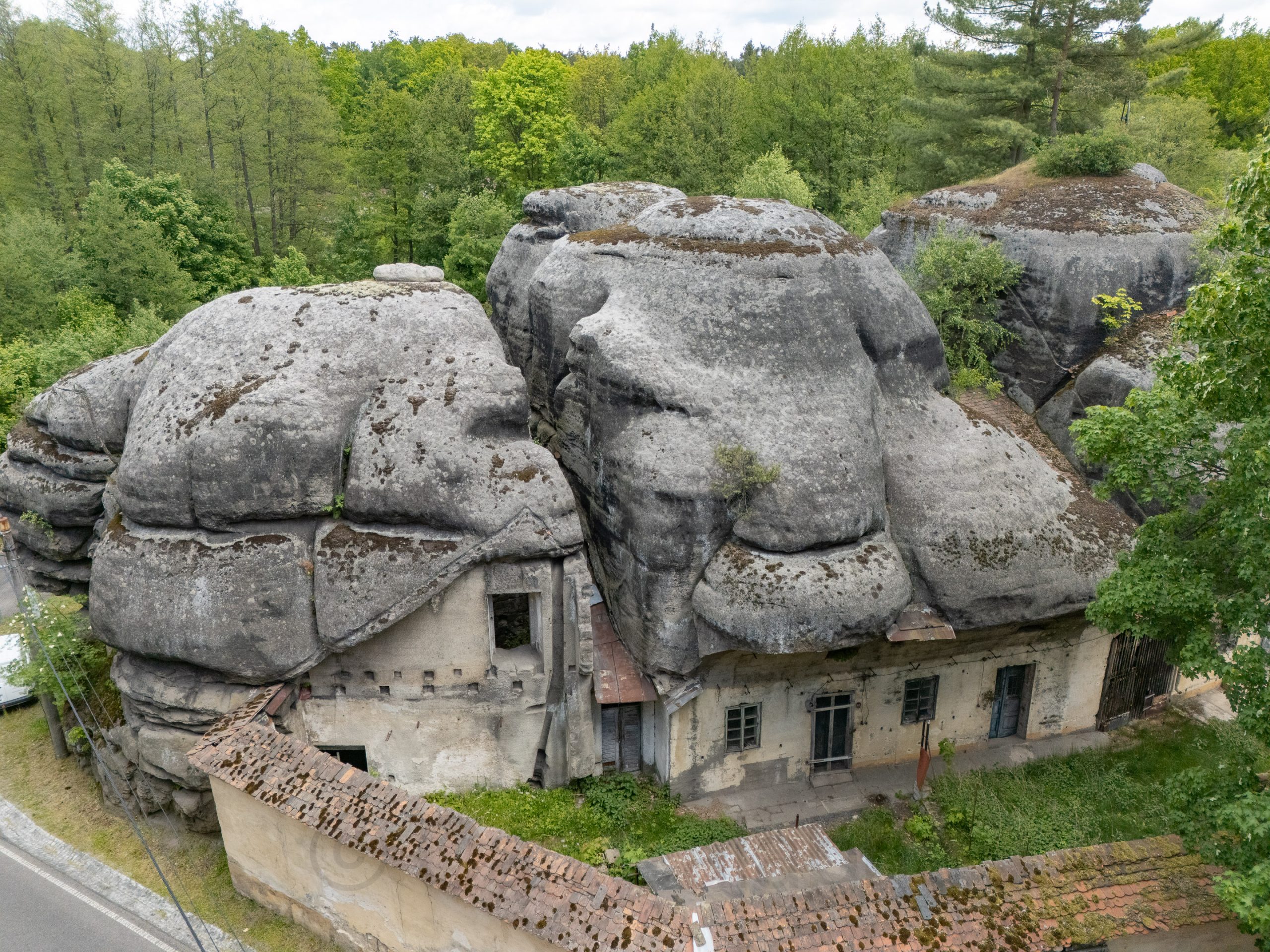
Next, we have a two-story house built into a naturally split mountain of rock.

How about a private event space built atop several rock columns, previously the site of an unassailable medieval castle.

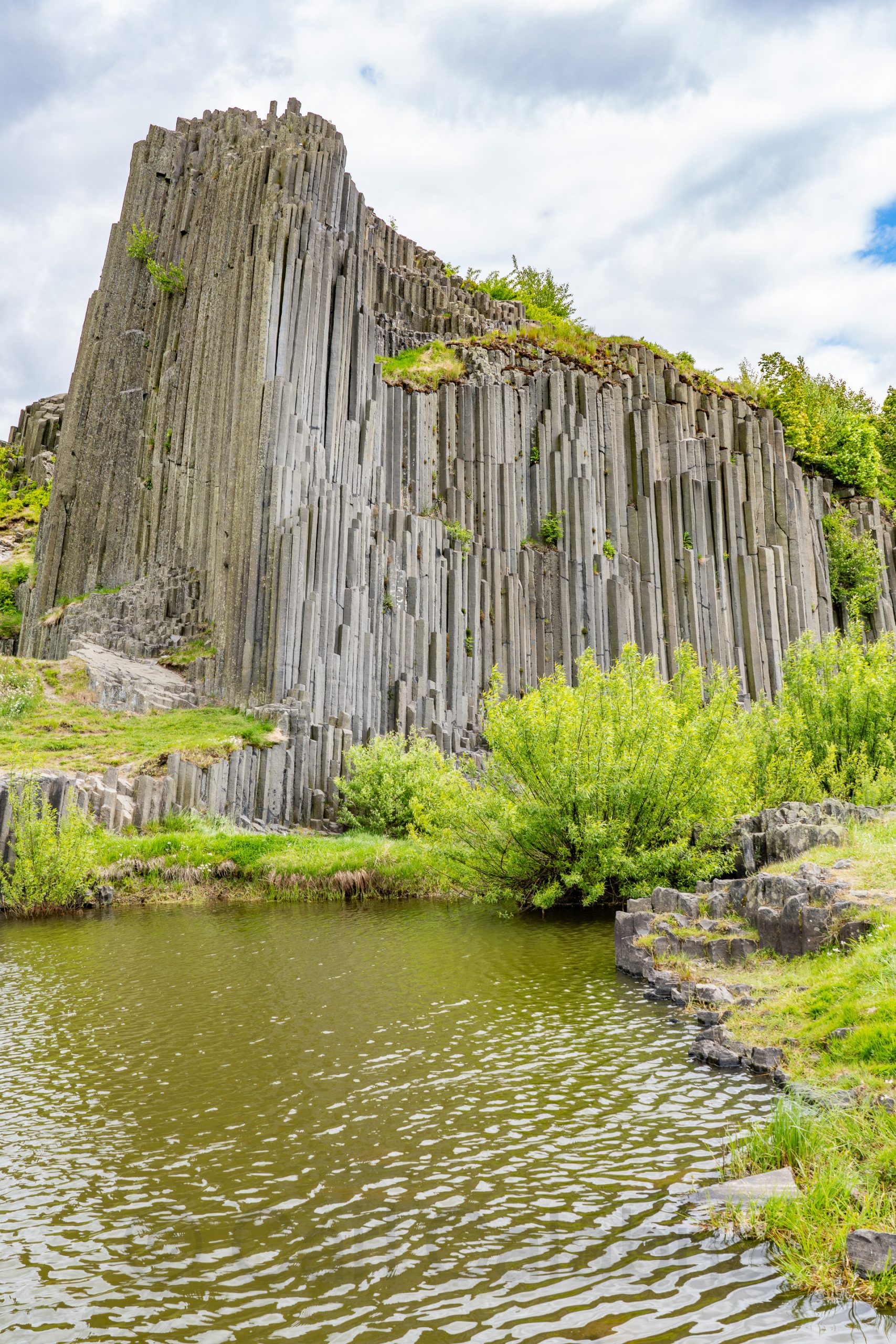
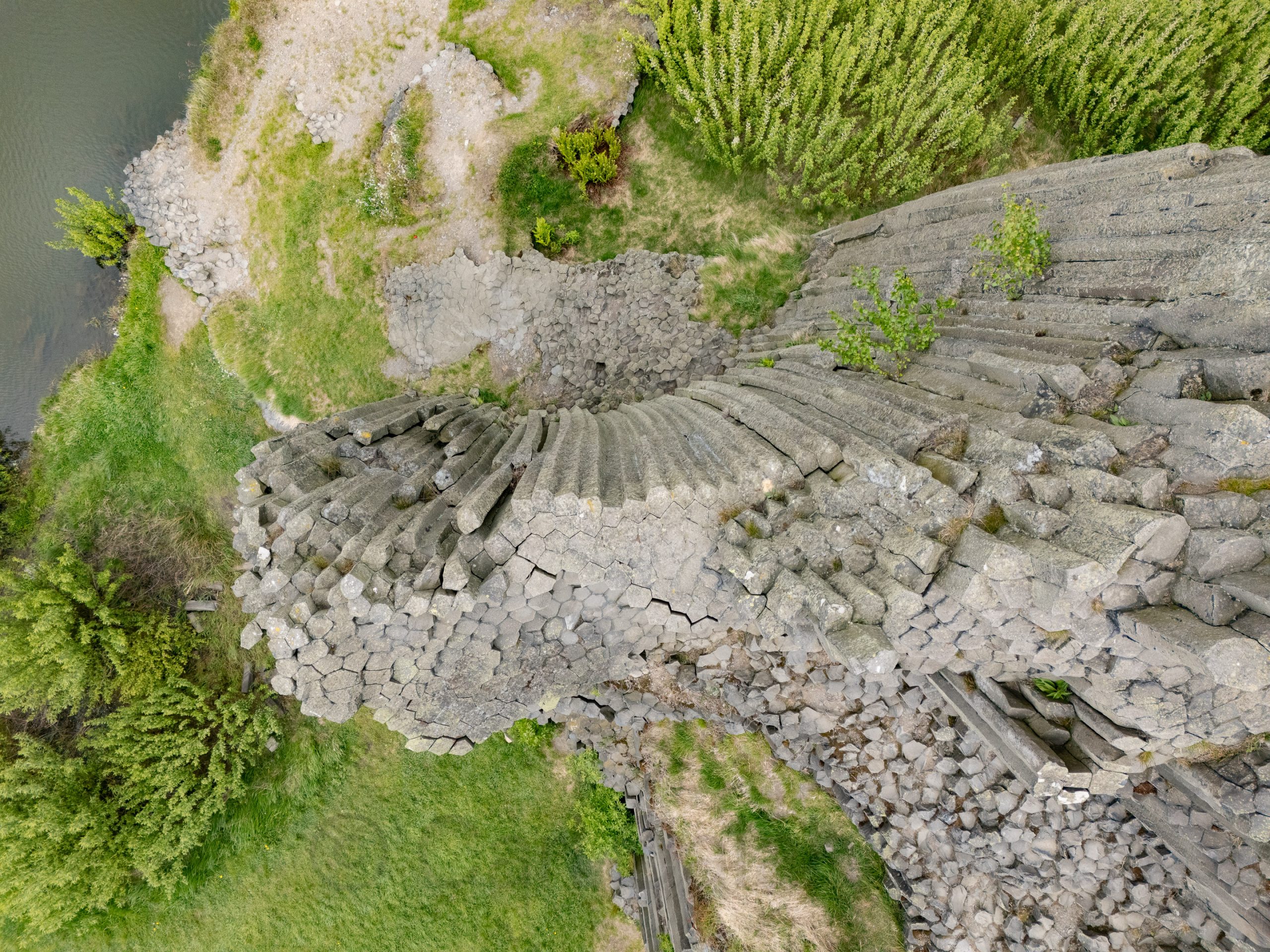
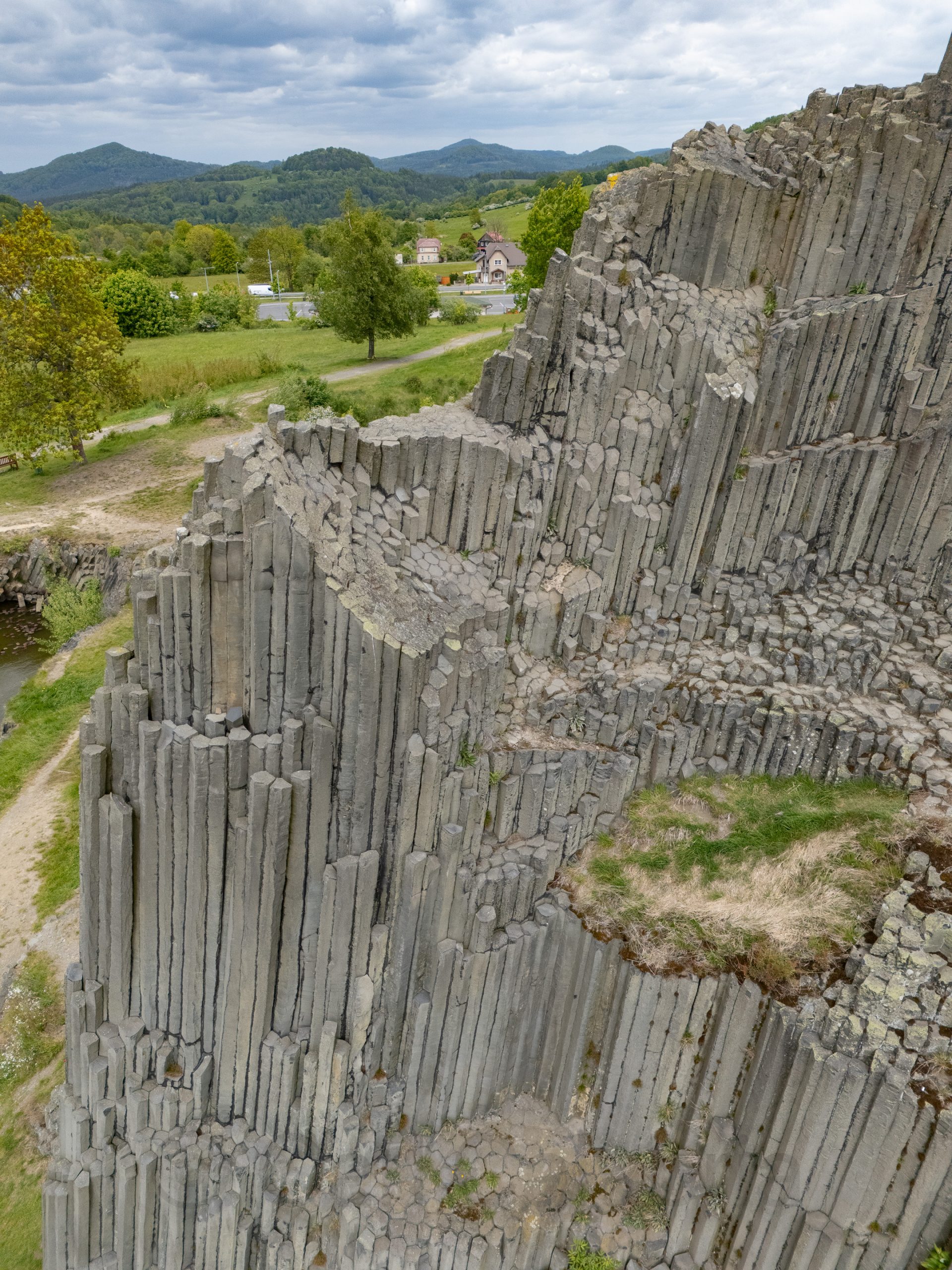
Speaking of columns, here we have Mansion Rocks, a magnificent example of basalt columns.

My ultimate destination for the day was the Pravčická Archway, the largest sandstone arch in Europe. Reaching it requires a strenuous 4.4-mile hike from the hostel I am staying in this evening. It is nestled somewhere atop the cliffs shown below. Rain in the afternoon kept me from starting the climb until 5pm. I determined that I had sufficient time to reach the arch just in time for golden light. The plan would have been perfect if not for the fact that I climbed the wrong trail (I am not so good at reading Czech). When the relentless uphill trek turned into an equally arduous decent, I realized this could not be the trail to the arch and then it started to rain again. It was a 5-mile mistake that I will not soon forget. It remains to be seen whether my legs are up for another dose of abuse tomorrow, especially in light of the fact that the morning sun will be on the wrong face of the arch for a good photo.
While on the subject of rocks, I passed two kidney stones this evening, a common occurrence for me after flying.

Tourist Jungle

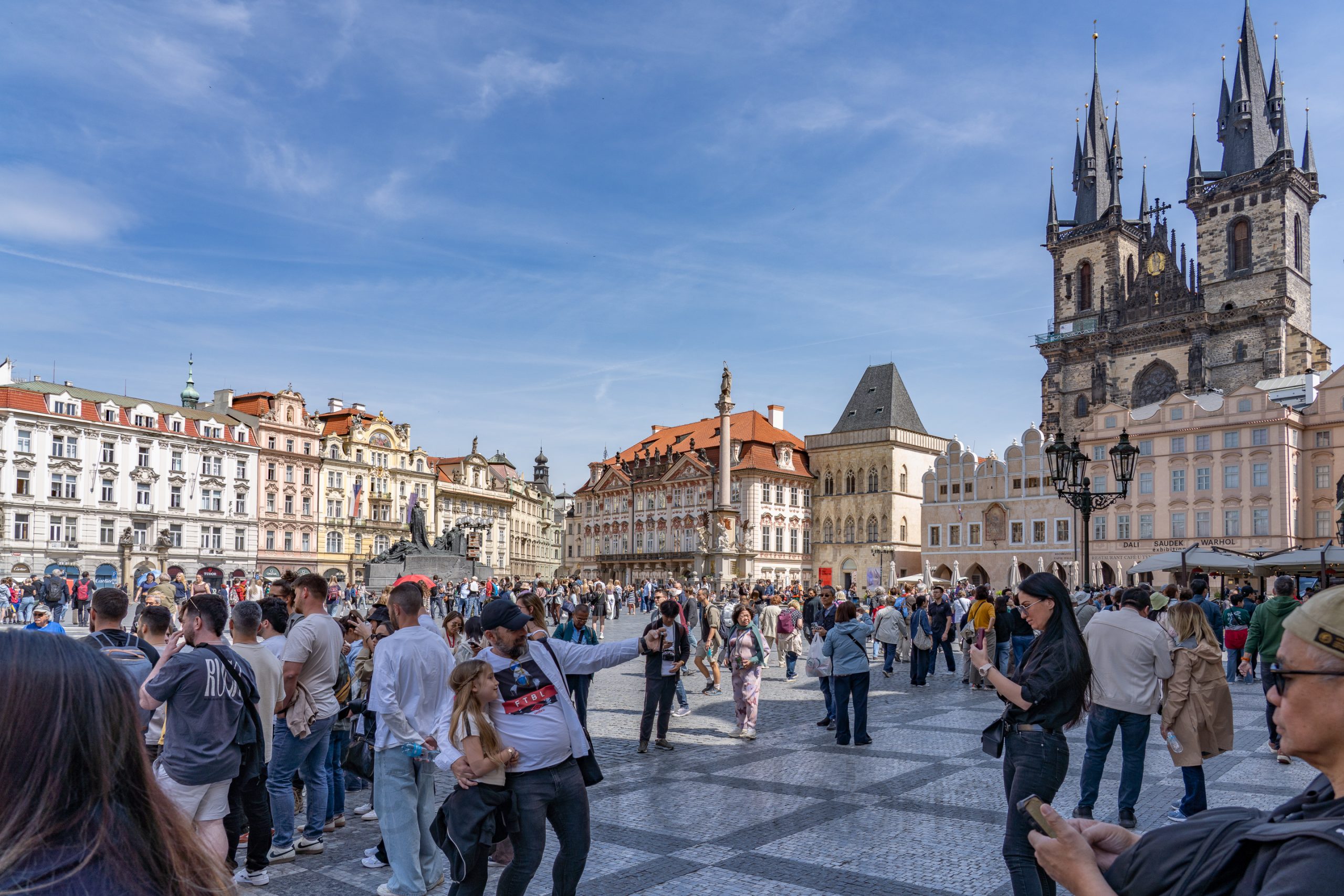
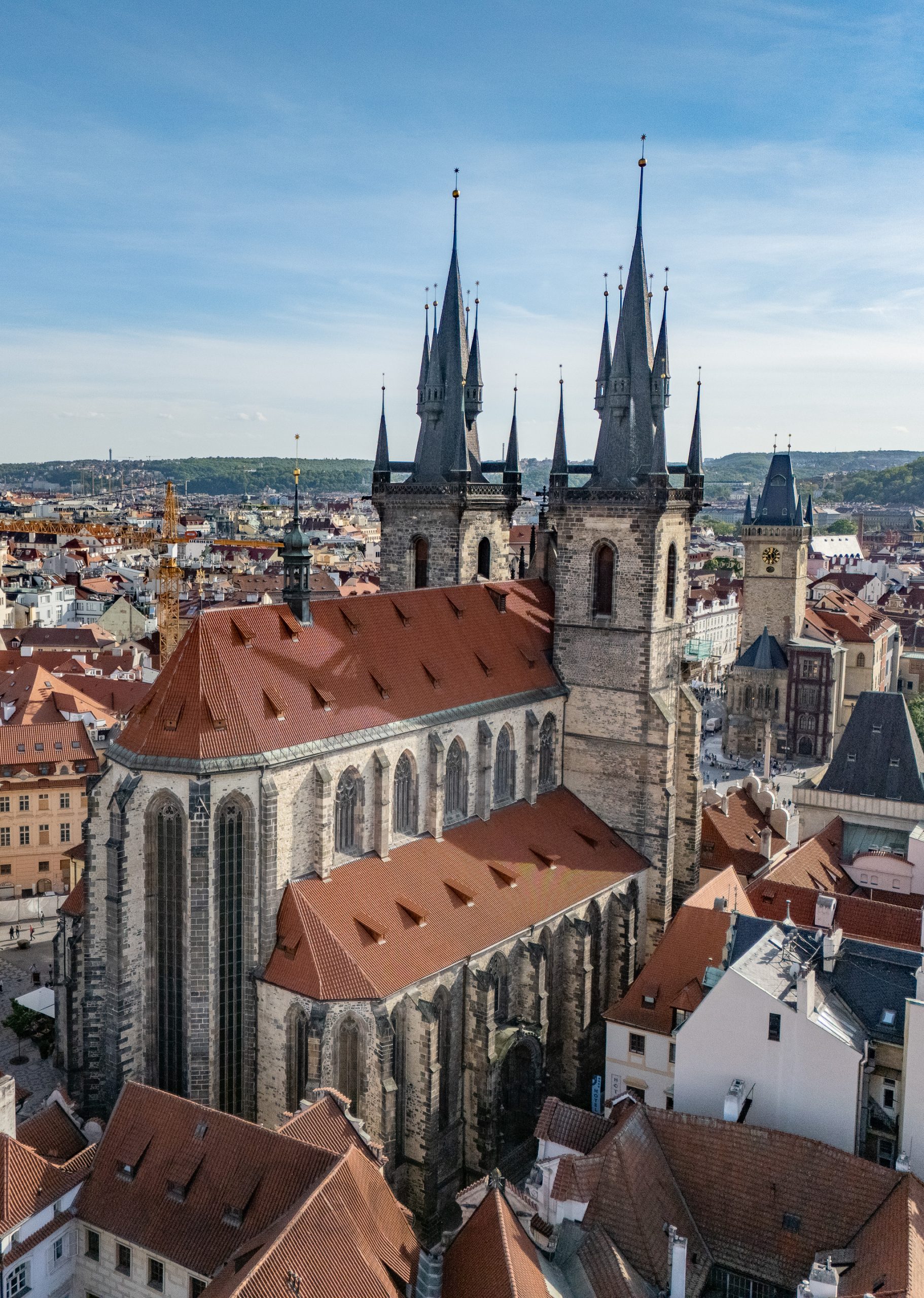
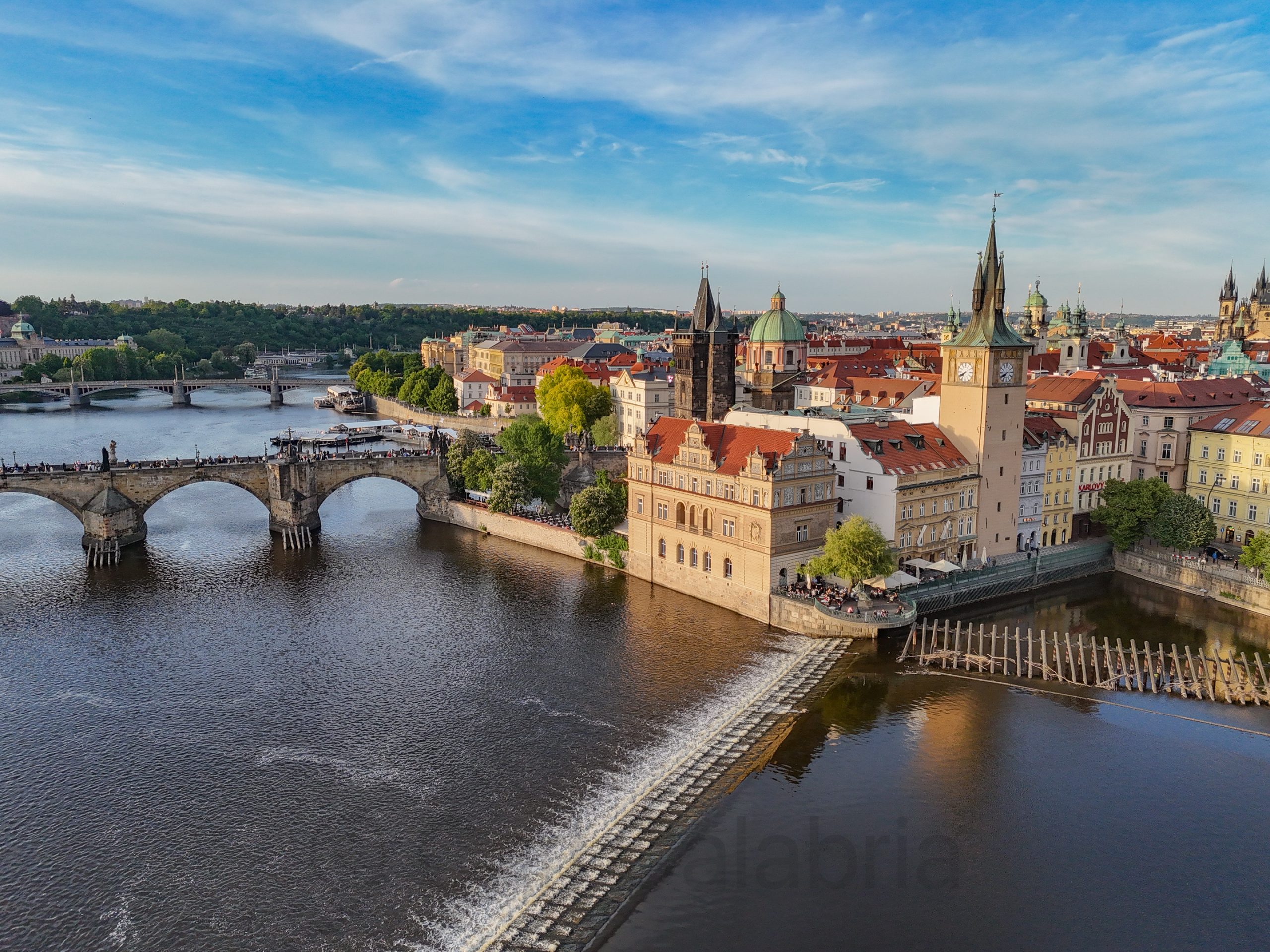
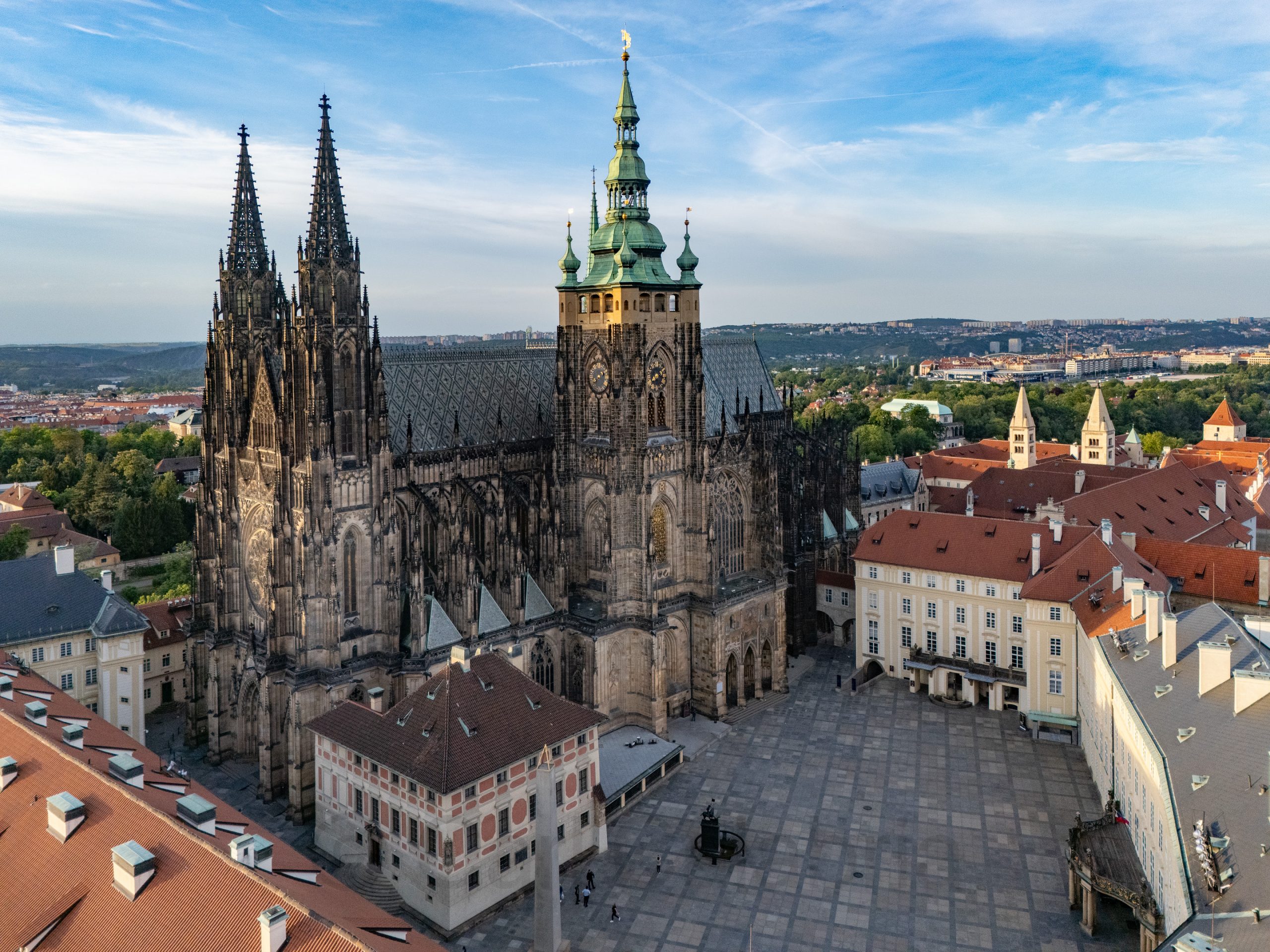
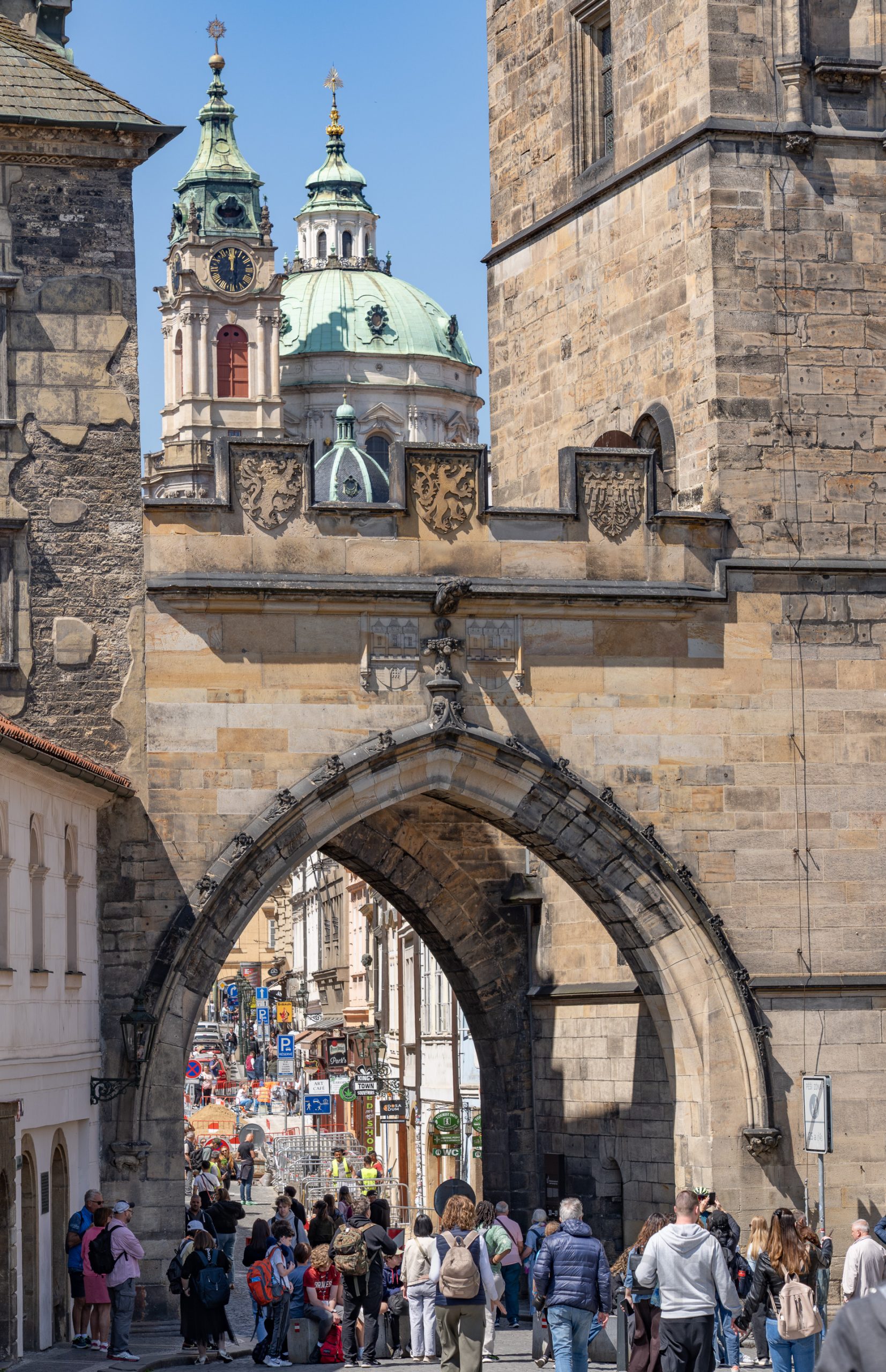
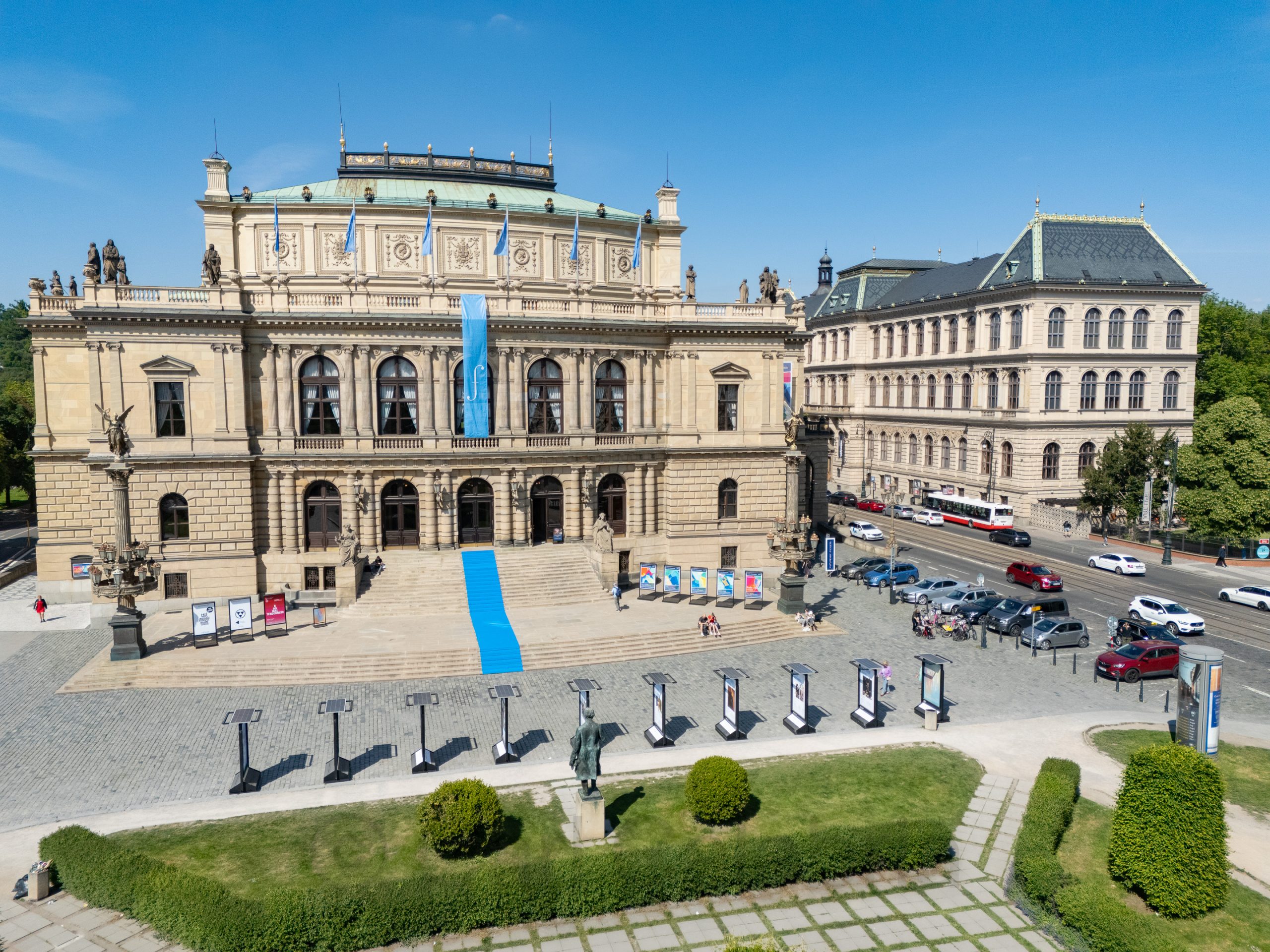
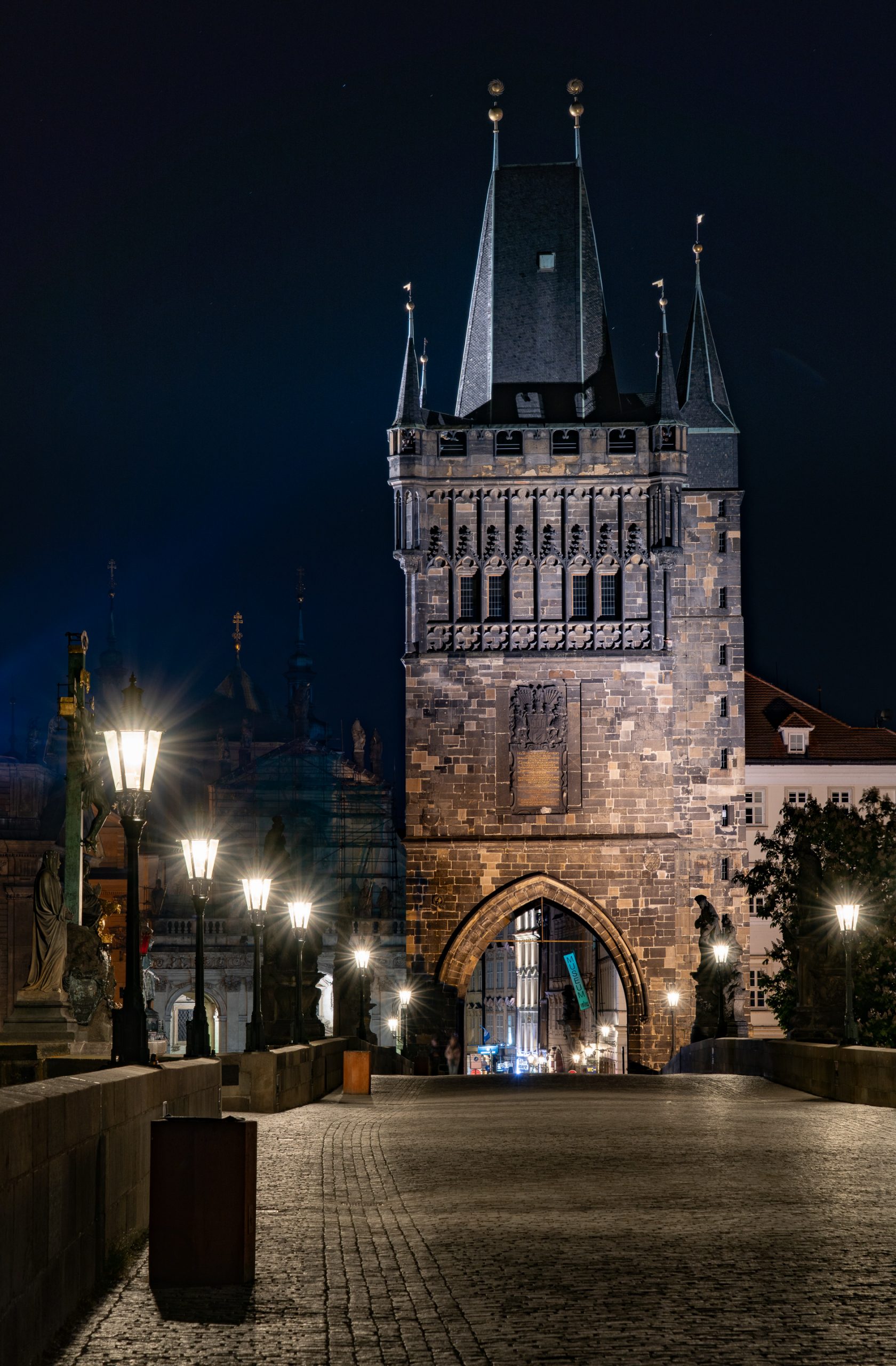
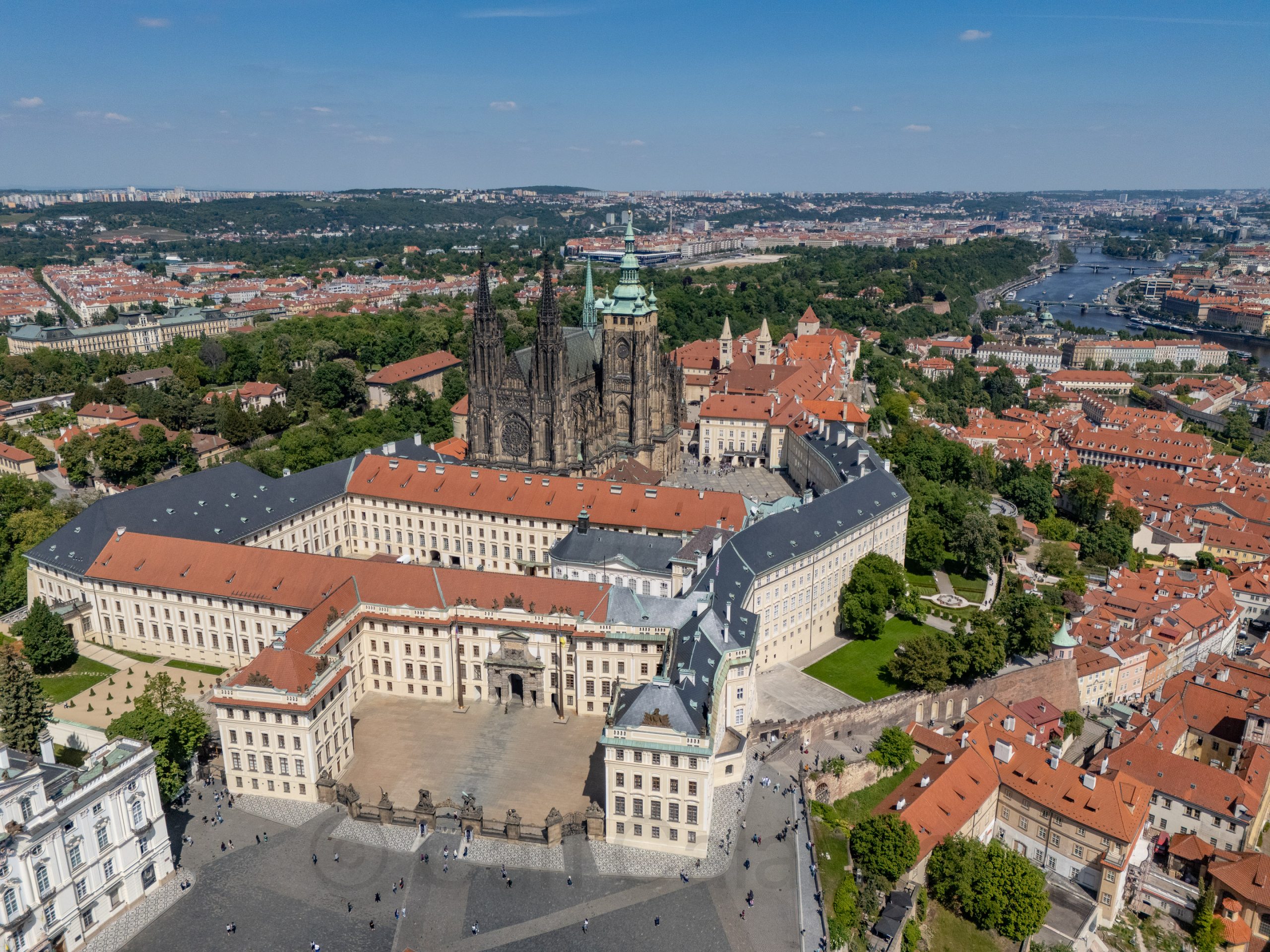
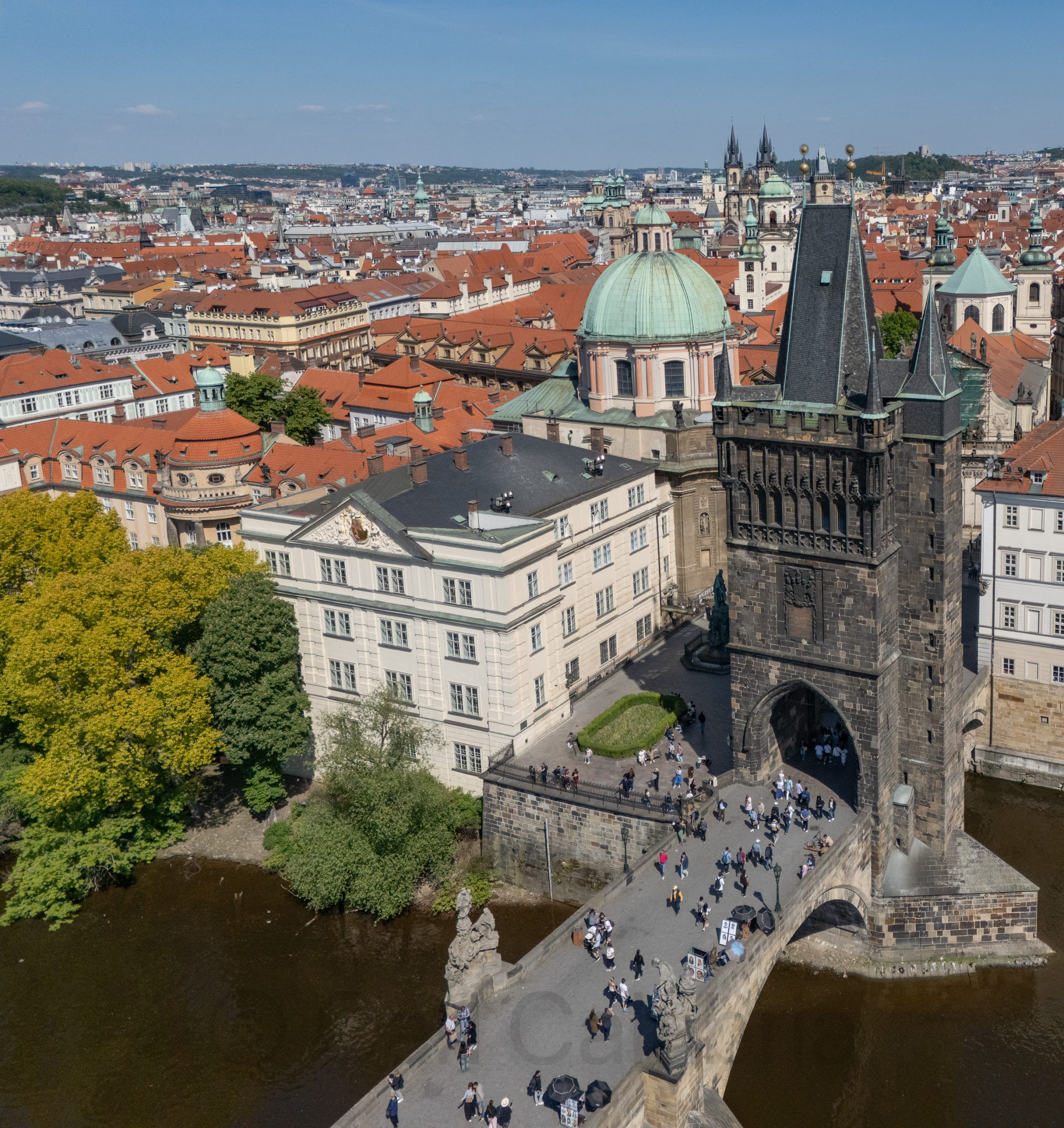
Given that I am a tourist, I have no standing to complain about the throngs that are drawn to Prague. I will say that it makes it nearly impossible to create images that are not populated by strangers all trying to take the same selfie in front of the same attraction. That said, I have found two ways to avoid the masses. First, by using the drone. Even though the people are still everywhere, they are very tiny.

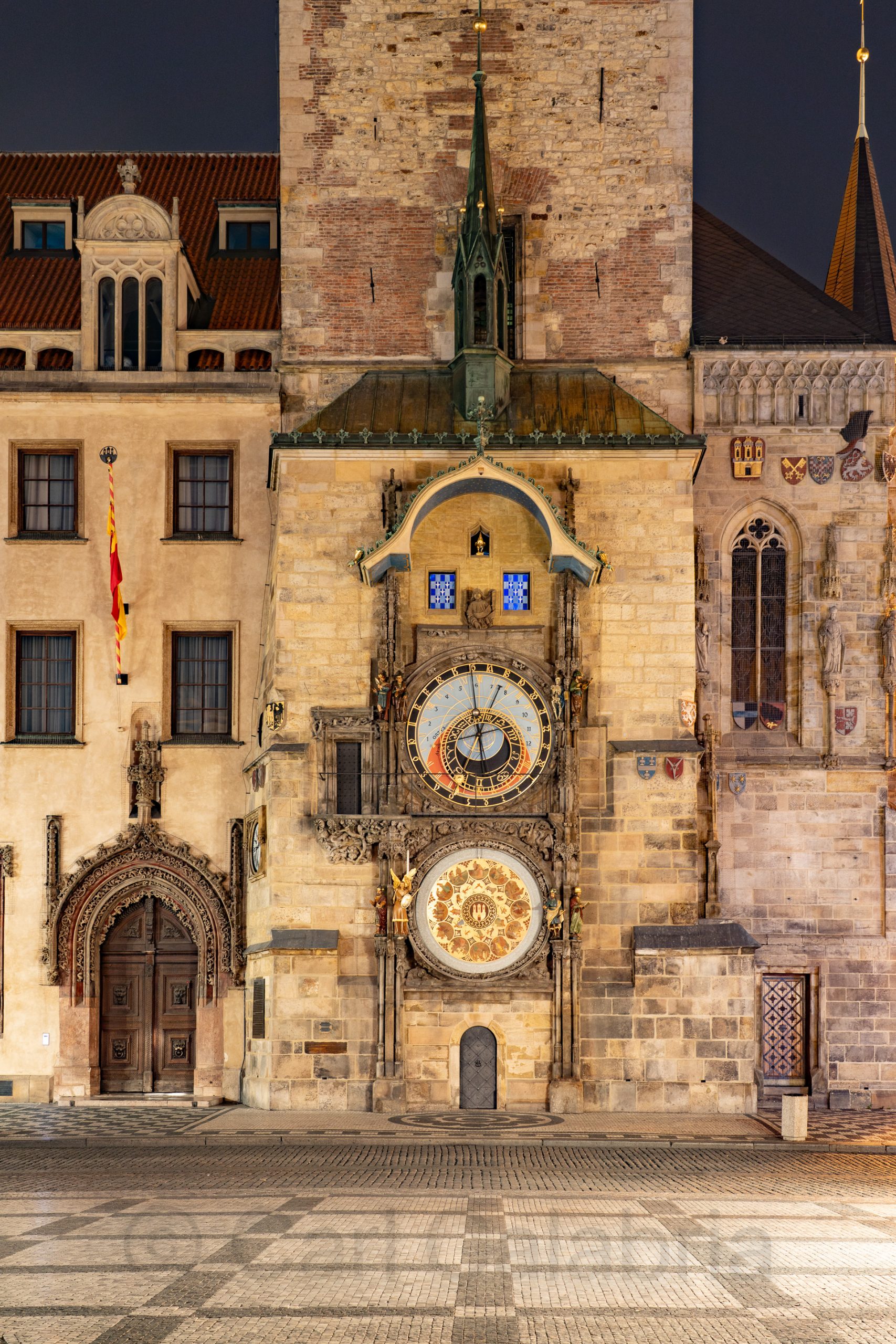
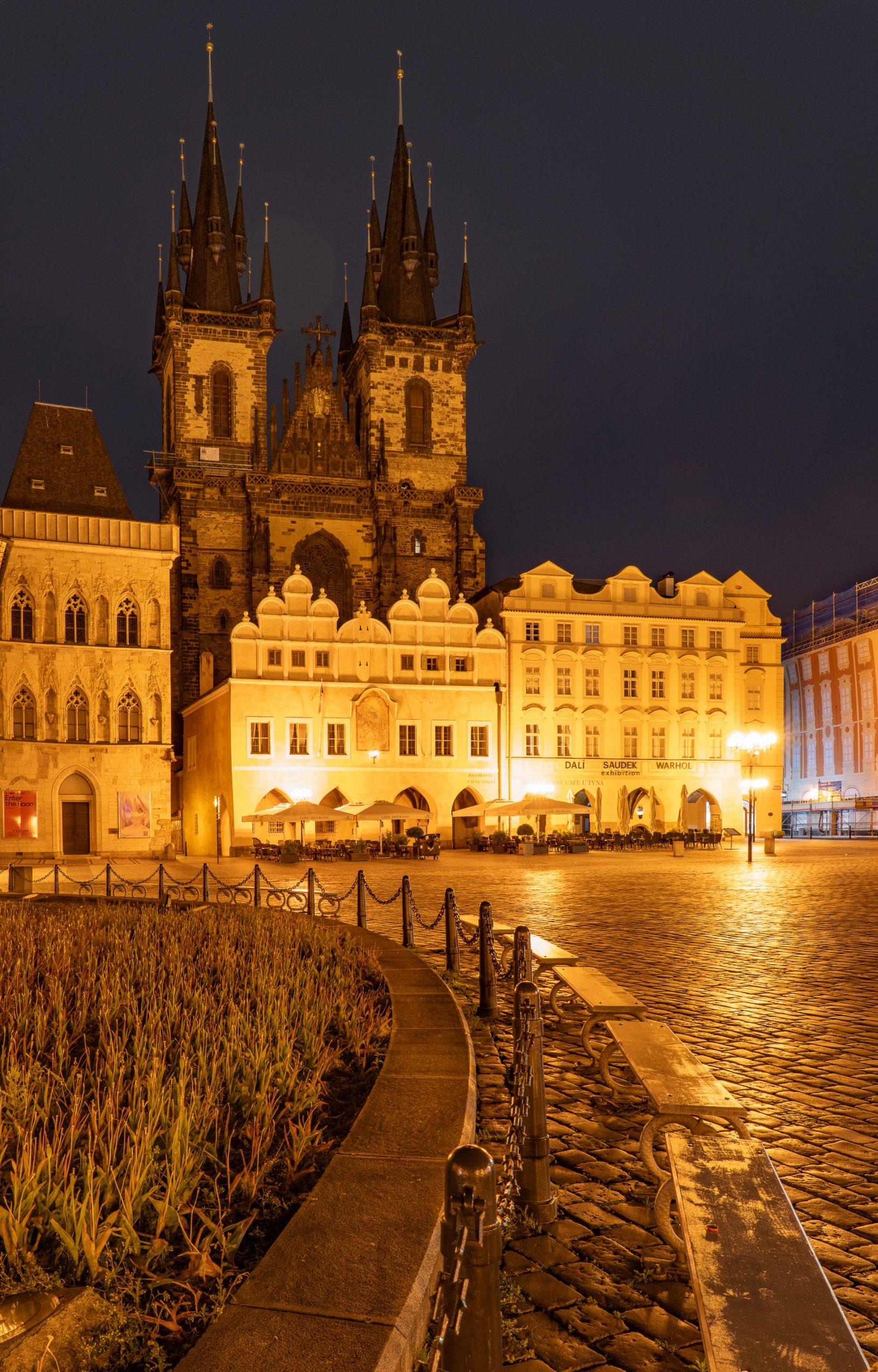
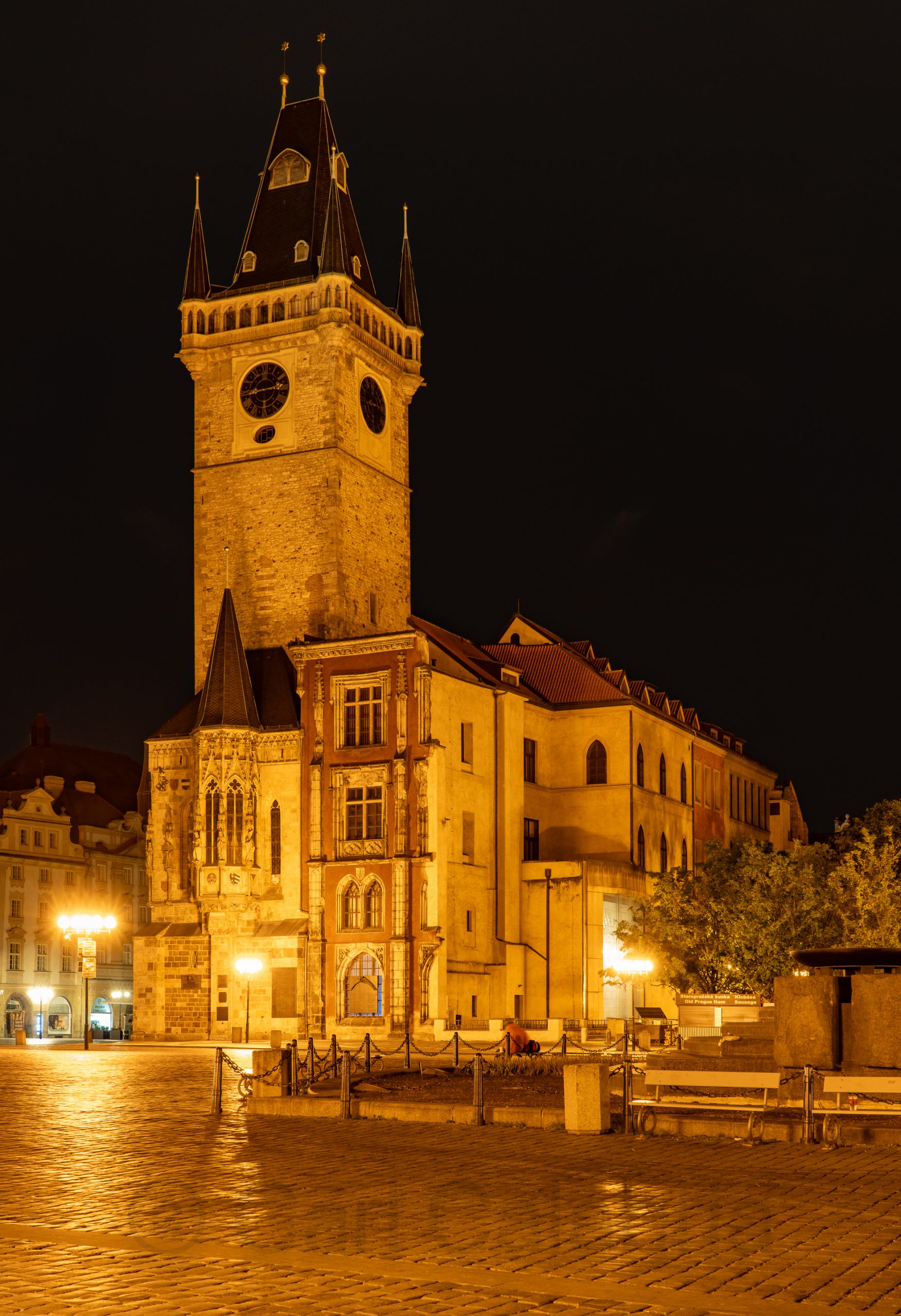
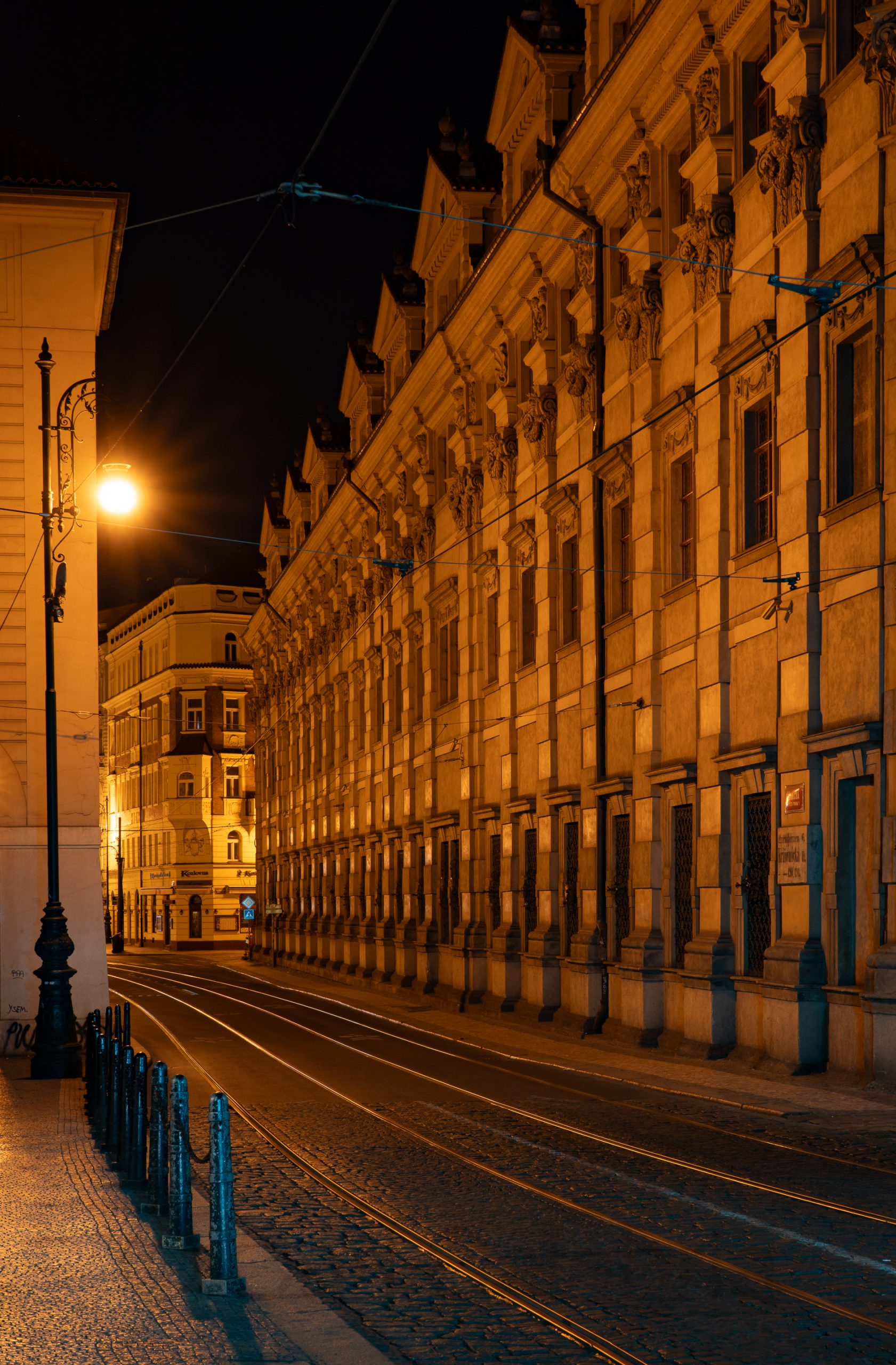
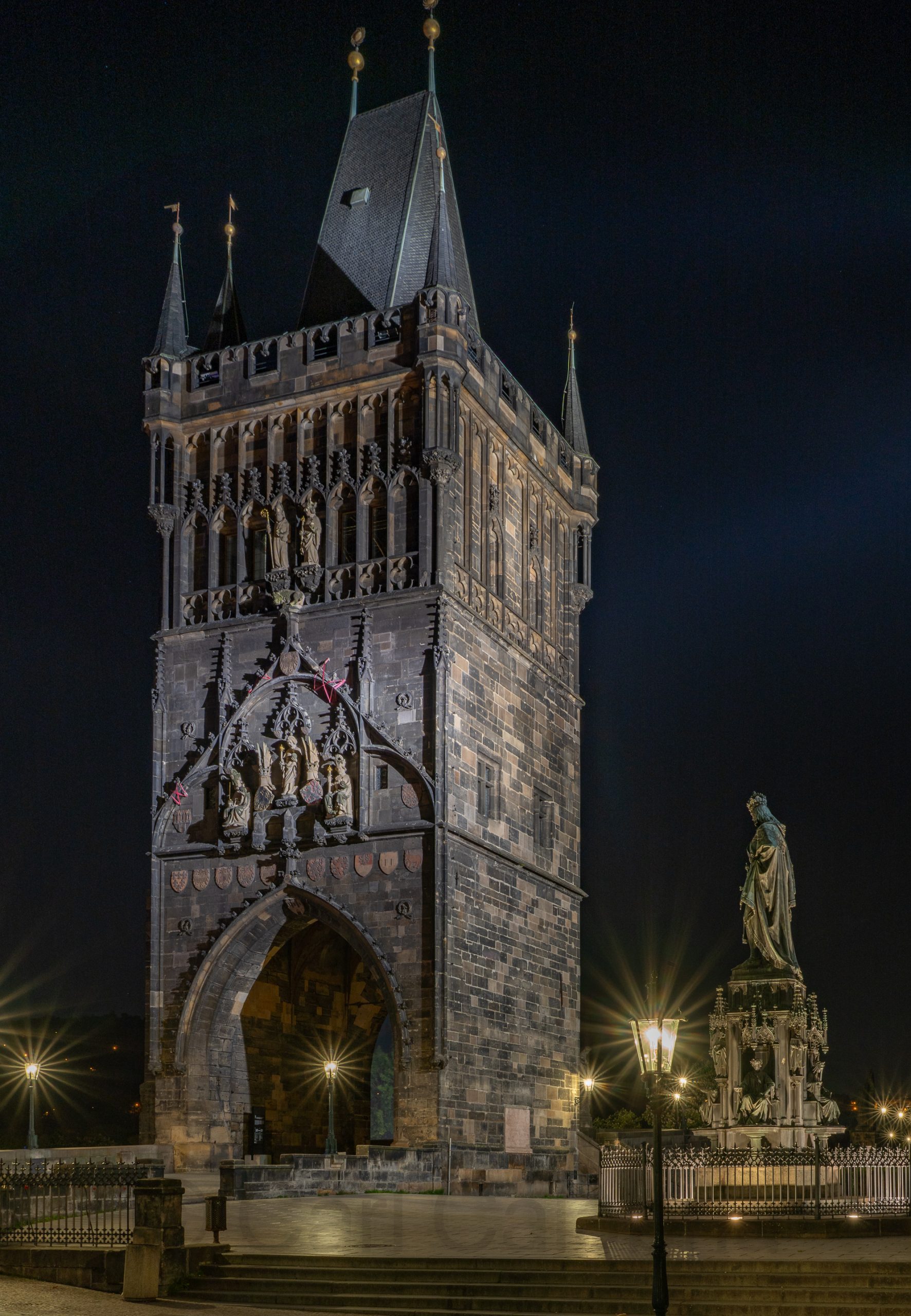
The second is to photograph at night using long exposures. I particularly like the photo below of the Prague Astronomical Clock. Installed in 1410, it is the world’s oldest astronomical clock still in operation today. It is a medieval marvel showcasing advanced horological and astronomical knowledge of its time, created by the clockmaker Mikuláš of Kadaň and Jan Šindel, a professor of mathematics and astronomy at Charles University. There was not a moment of daylight when this clock was not surrounded by hundreds of people. Even at 3am, I had to time my exposures to avoid people milling past on the way home from the many pubs in the area.

Prague

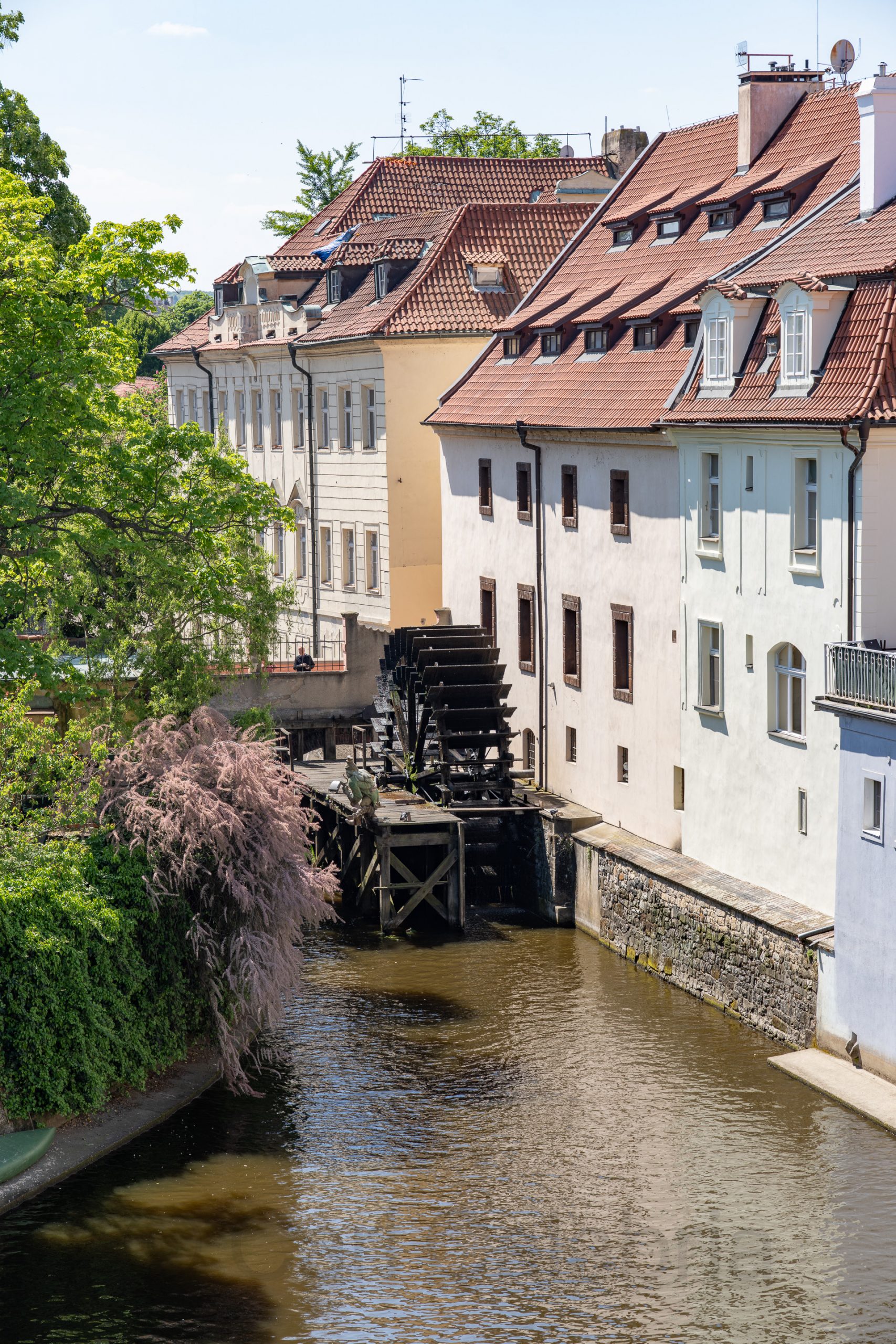
Uneventful travel concluded with my arrival in Prague this morning. I wisely parked my rental car outside the city center and walked to the apartment I have rented. Prague is an overwhelmingly beautiful city. There is something magnificent to enjoy around almost every corner. That said, the number of tourists here is staggering. They are of every age from seniors to elementary school kids on class outings and of every nationality you can imagine. The energy here is vibrant and there were people still out at 3am when I did a bit of night photography.

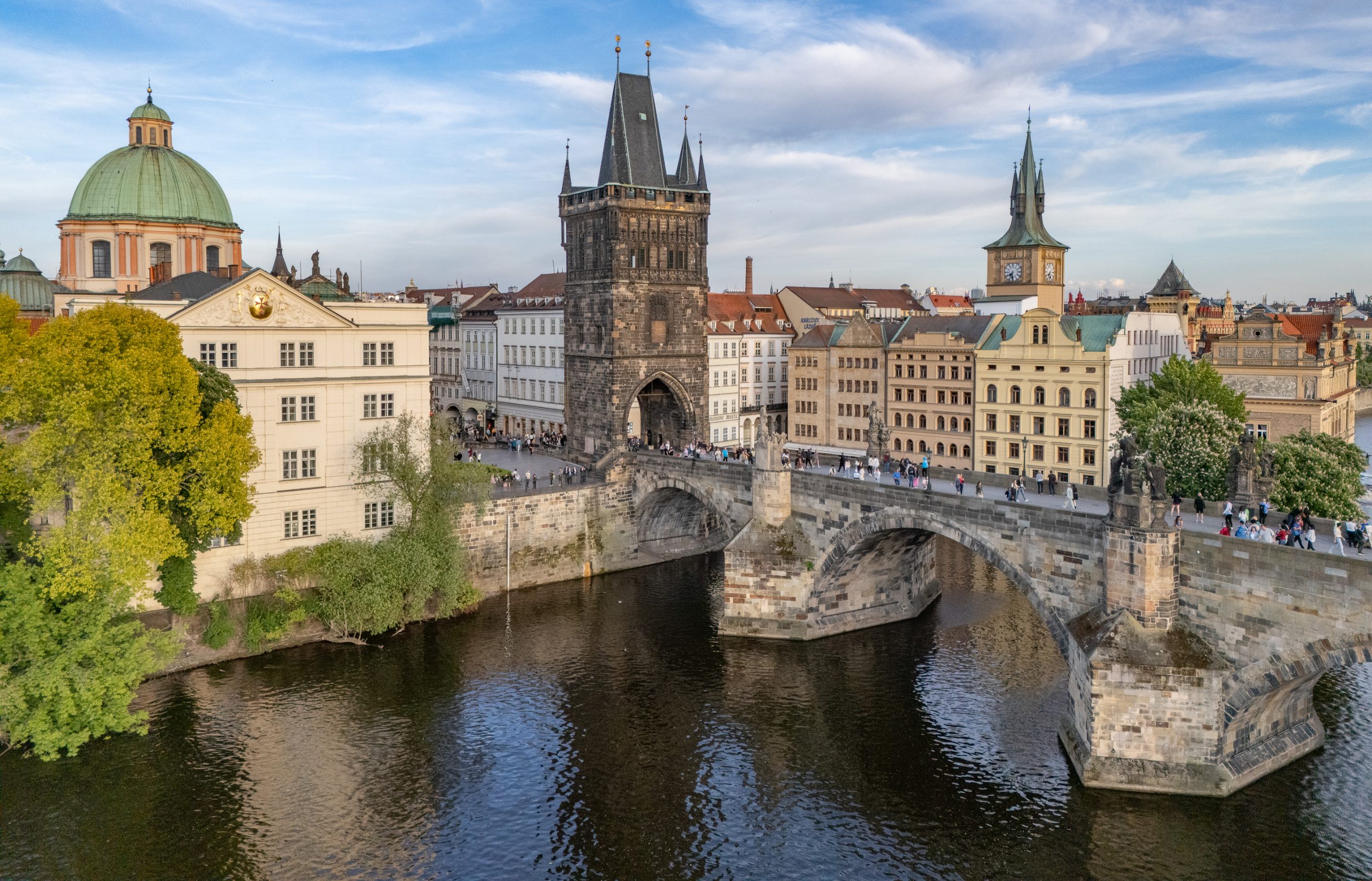
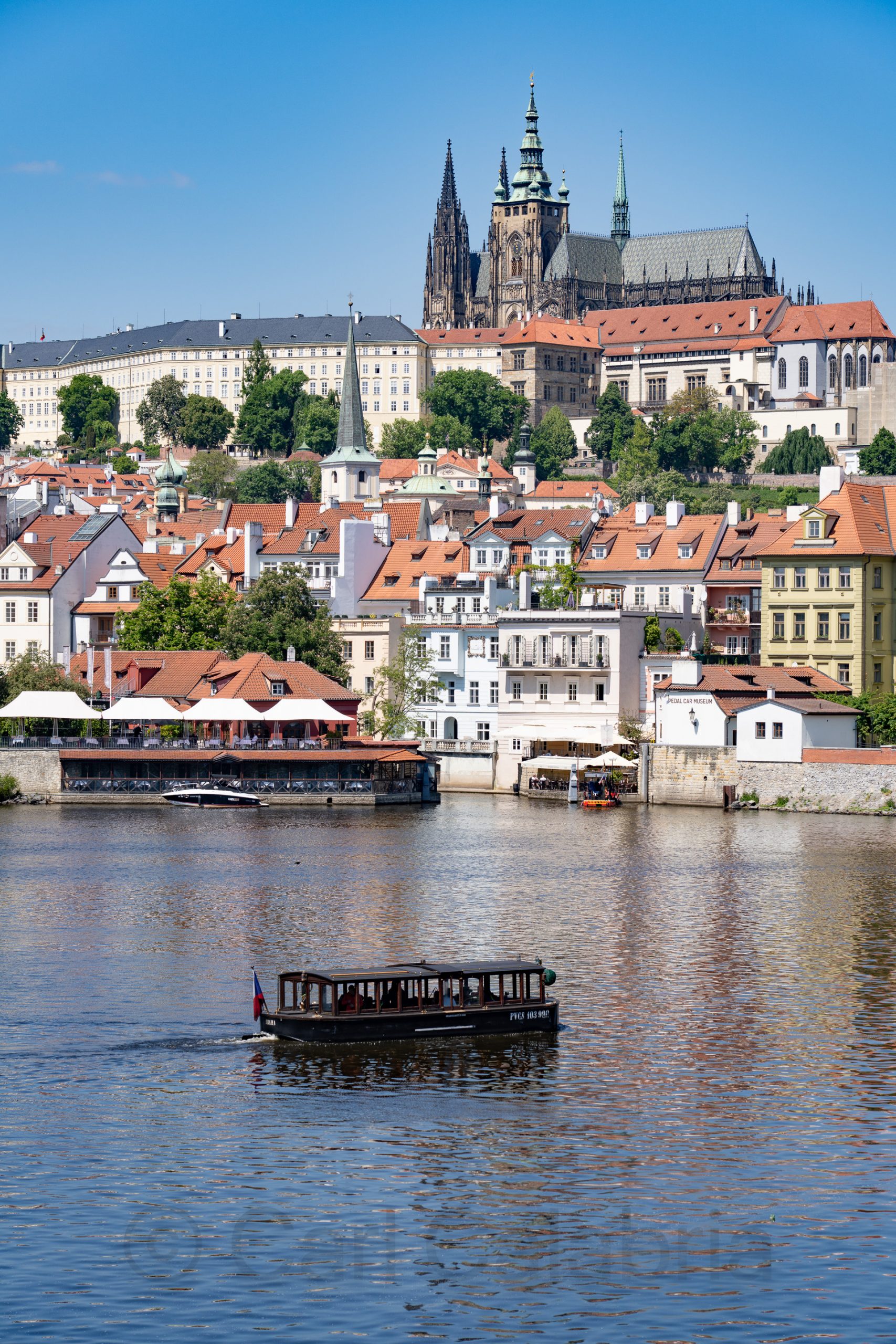
Drone use is permitted here, but it presents a significant challenge. Finding good launch sites amid the narrow streets lined by tall buildings was difficult. Instead, I opted to launch from the bridges and fly to my subjects, often far away.

In total, I walked over ten miles, and that’s before my night walk, which will be factored into tomorrow’s numbers. At the end of the day, I was utterly exhausted and have decided I will take a more leisurely approach to my explorations tomorrow.
Hitting The Road

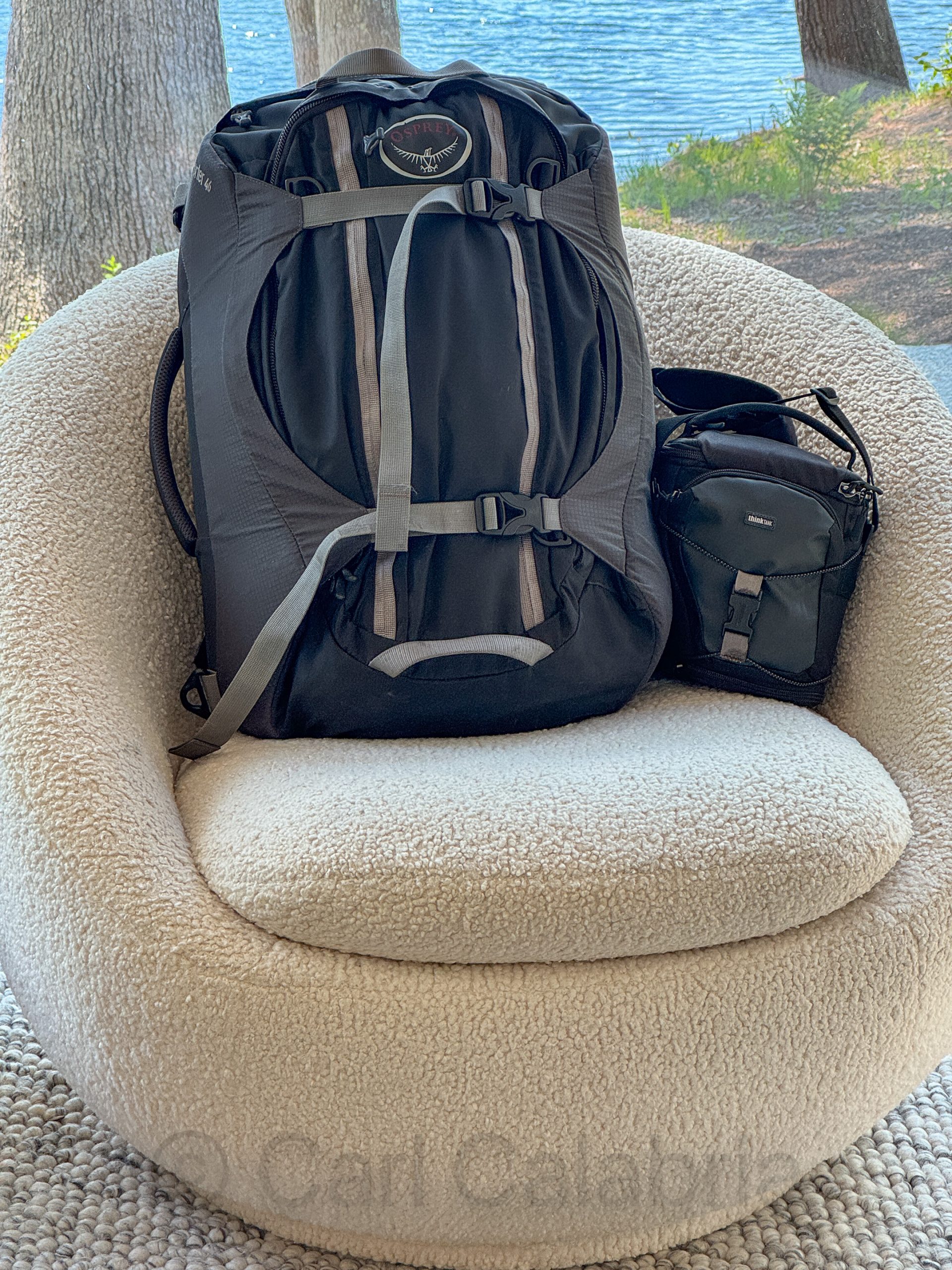
I am headed to Europe for the next two weeks. I will spend one-third of my time in the Czech Republic, Slovakia, and Italy. My soccer team is playing in an over-60s tournament organized by the Italian police on the final weekend. I predict that our team will either place first or last, depending on the consumption habits of our opponents regarding the bomboloni (Italian donuts; my attempt at police stereotype humor). I will travel by foot, train, and bus while in Italy and by rental car elsewhere. For this reason, I am packing very light. My camera, drone, telephoto lens, tripod, laptop, and full soccer kit take up 80% of my baggage volume. The rest is for a minimal set of travel clothing and weather protection. Wi-Fi connectivity permitting, I will try and post from the road.
Mamma Jeanine

I have spent much of my life making things. I have never, however, made a human. That is a miracle that only women can perform. Jeanine has delivered three such miracles and nurtured them through adulthood. I could not have been luckier than to have shared my life with her.

Happy Mother’s Day, Mamma.

New Concord Middle School

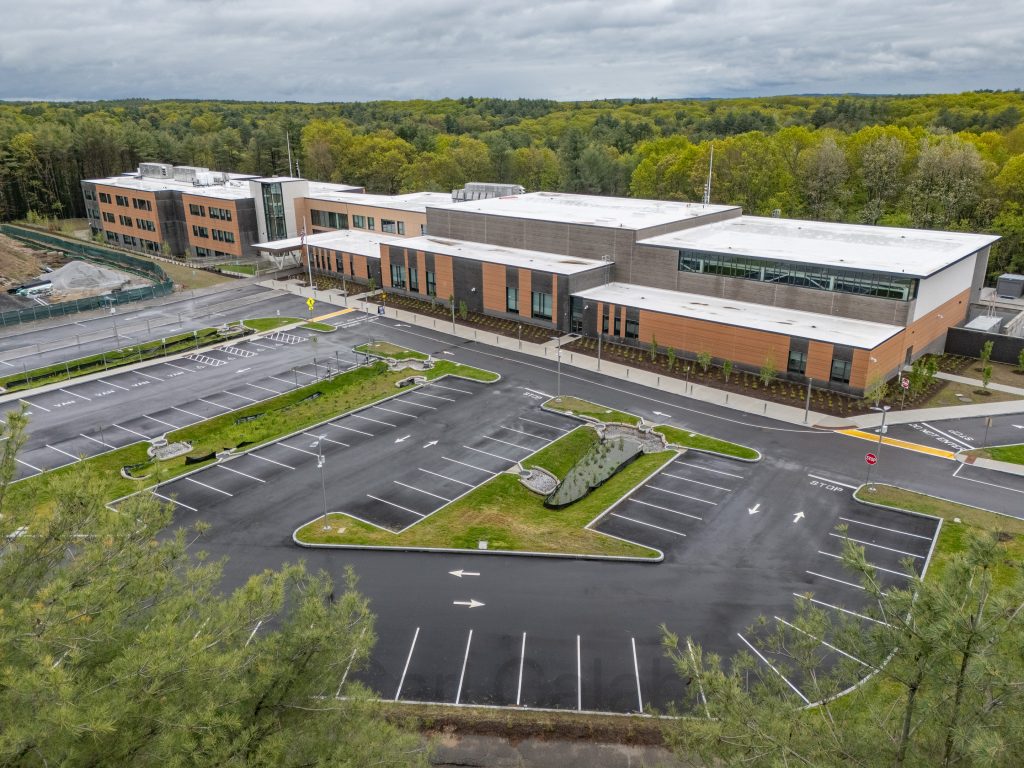
After three days, the rain finally let up this afternoon, allowing me to photograph the new Concord Middle School at the request of our local newspaper. Ribbon cutting for the $100,000,000 project is scheduled for June 11th , and once fitted with solar cells is expected to be a net-zero building and among the most energy efficient in the world.

Busted

Thus far, the primary use of the surveillance cameras on our house has been to apprehend culprits in the act of eating our plantings. This groundhog made short work of two Cone Bushes (upper right corner in the photo below).

An ideal solution to this problem would be to introduce the fox who routinely patrols our yard to the woodchuck.

Two Decade Milestone

This month, my blog will celebrate its twentieth anniversary. If you told me I would still be making daily posts two decades into this project, I would have thought you were crazy.

To date, I have made 9,293 posts containing 12,989 images. What started as an experiment with something new called a “blog” and an expectation that it would help improve my photography turned into something entirely different. It became a personal/family/travel journal that helped me find the discipline to write every day.

As I look back, most of the photos are OK, some are pretty good, and a few are great. Occasionally, I manage to write something funny, clever, or insightful; more often than not, I settle for not overly boring. Although I genuinely enjoy hearing from followers, I have never attempted to seek a broader audience than the one intrinsically drawn to these pages, whatever their reasons might be. At times, it has been a nightmare to keep this site up and running. You have no idea how hard it is to keep 20-year-old posts compatible with the latest software, or how long it took to detoxify the posts that were corrupted in a ransom attack. To say that maintaining this blog has been a labor of love would be an understatement.

I often think that it would be nice to take a break from the blog. Perhaps, going forward, I will extend myself the latitude to post less frequently. Perhaps not. When all is said, done, and posted, this blog has helped me to live the lesson I learned from the “Dead Poets Society”: Carpe Diem.

New Neighbors

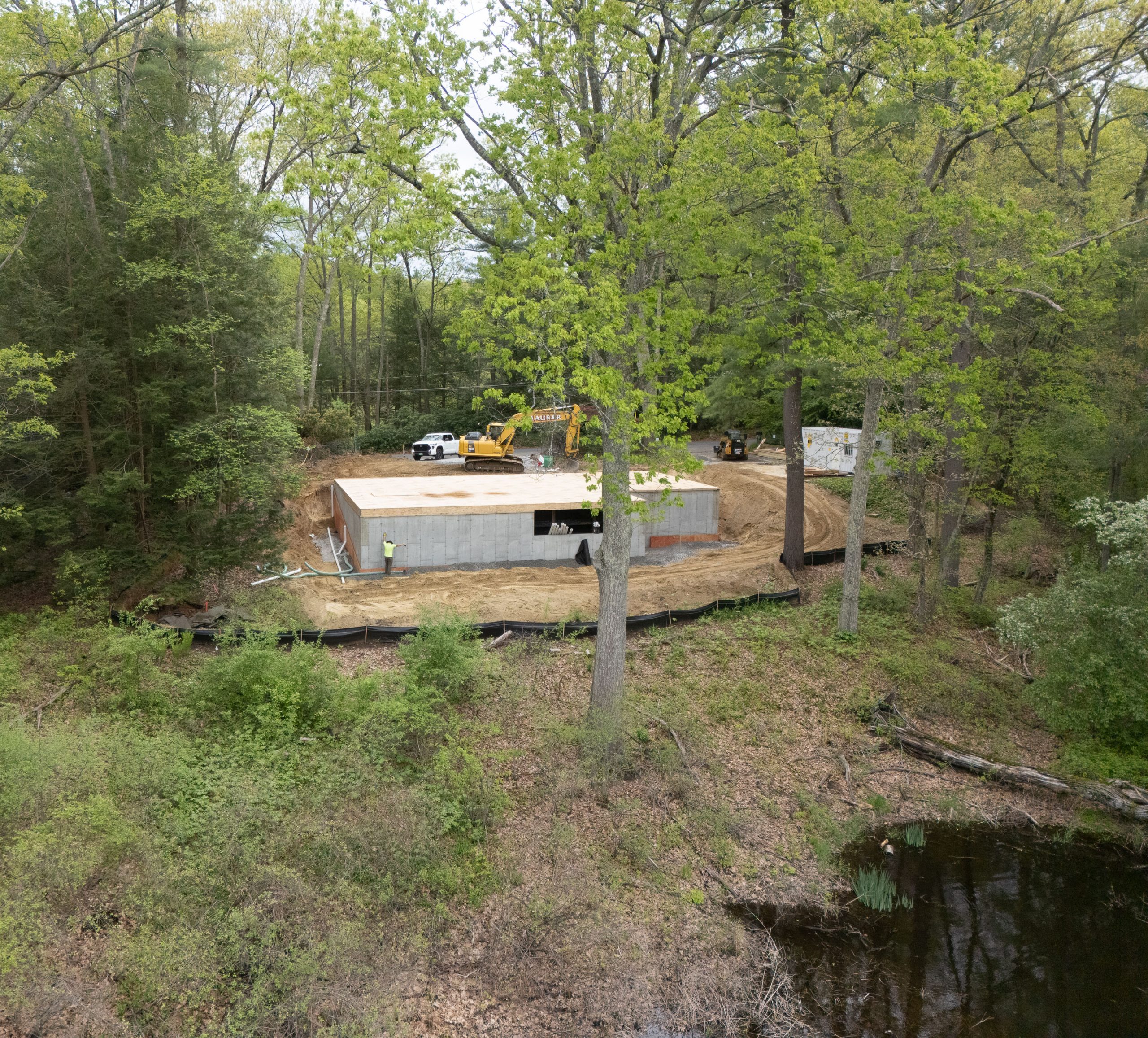
Construction is well underway for a house just down the road from us. Our new neighbors reached the same conclusion we did and opted to tear down the original house to build a new one. It is fun to drive by the site each day and watch the construction progress, especially when I do not have to concern myself with the work.

Heart For Jimmy, Maisey & Hannah

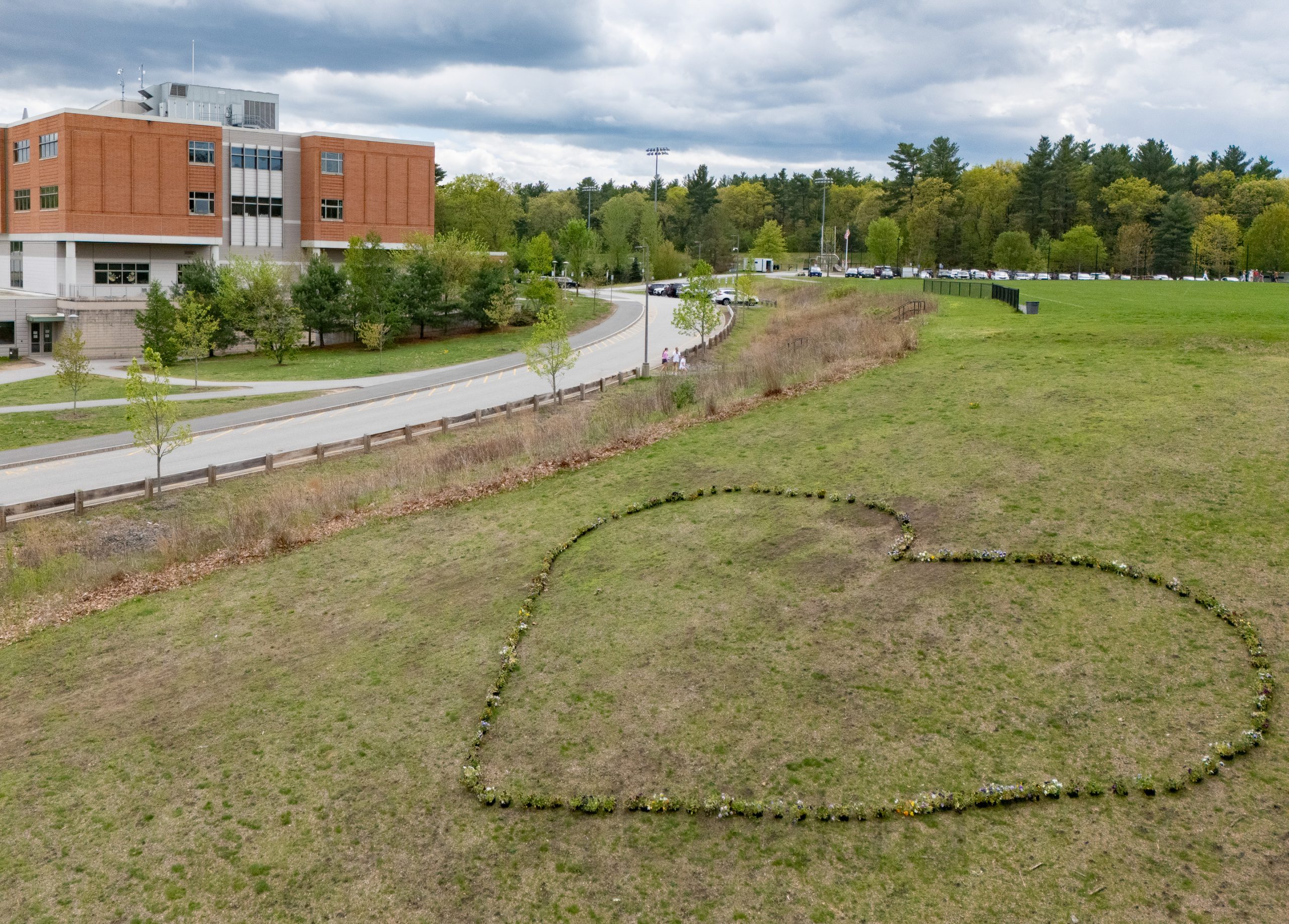
Memorial services for two of the three CCHS seniors who died 2 weeks ago in a car accident on a Florida highway were held this weekend. The third will be private. Students, family, and staff placed flowers in the shape of a heart on the school grounds as the community continues to mourn. Our town newspaper, The Concord Bridge, carries obituaries of town residents, which I routinely scan, comparing my age to those who have passed. I cannot express my sadness as I turned to the last page of this week’s issue and found the obituaries for two 18-year-olds and one 17-year-old. It is strange that I feel such profound grief for the loss of young adults that I did not know. Perhaps it is because, I share the fear every parent has that they will lose a child. I hope Jimmy, Maisey, and Hannah’s family, and friends can feel the love and well wishes I am sending into the universe for them.

TREE Reunion

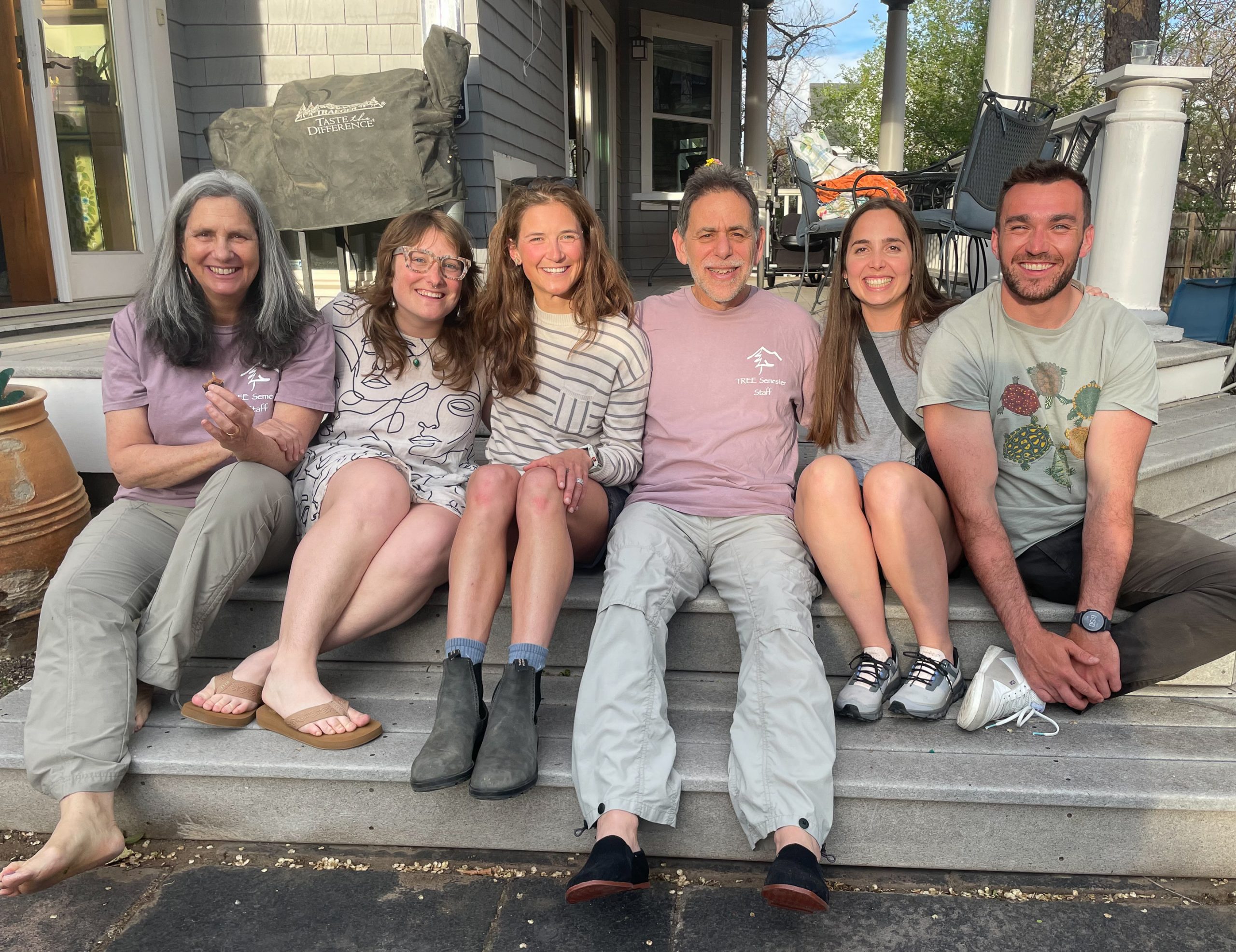
Nico shared this reunion photo of his 2016 TREE (Teaching & Research in Environmental Education) cohort taken in Colorado this week.

Meanwhile, in a break with tradition, Maya is serving cat soup for Cinco de Mayo.

Rachel In The House

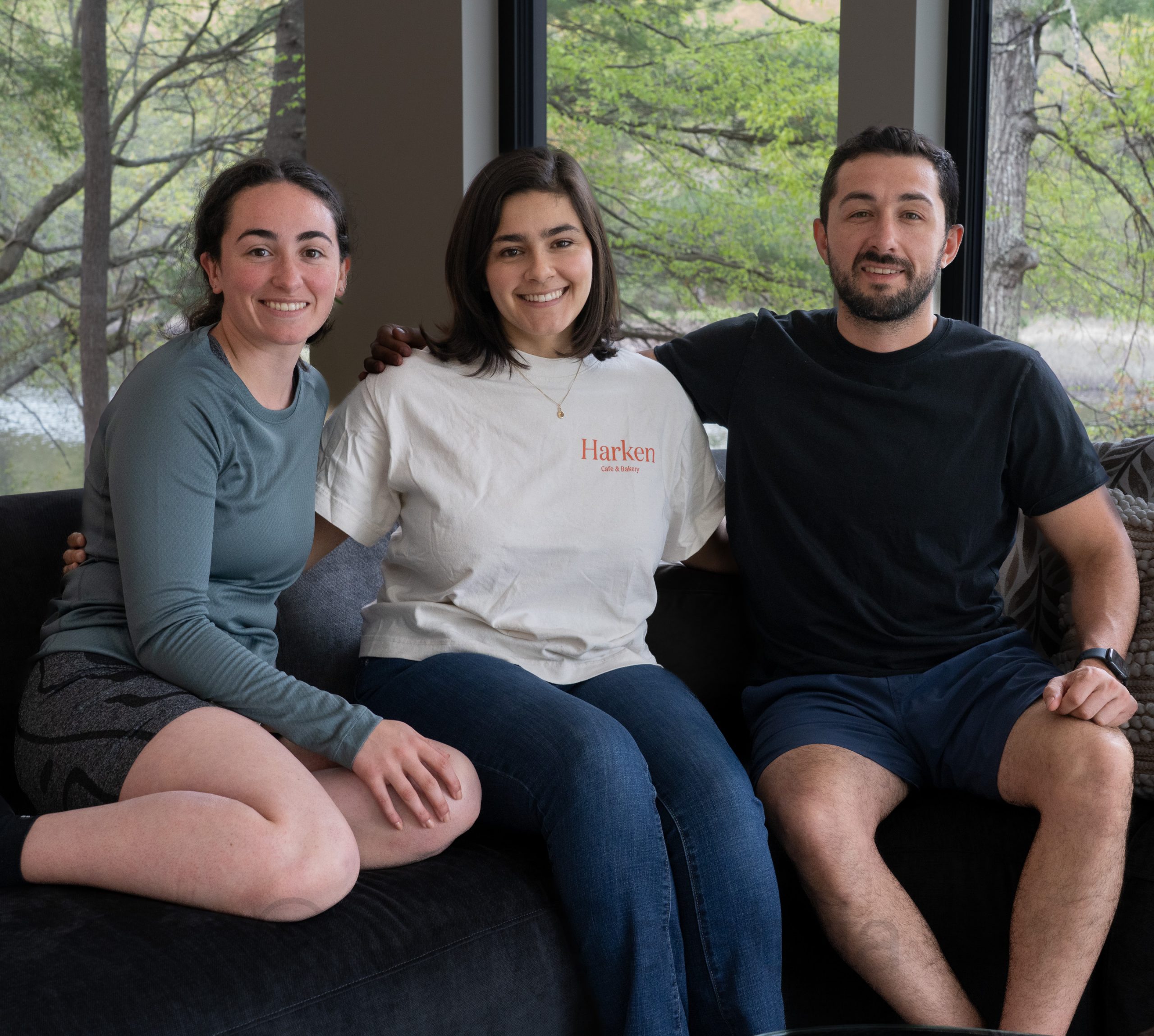
For the first time since we completed the house, my niece Rachel and her boyfriend Rob visited this afternoon. Maya and Kyle joined us for the mini-reunion with their cousin, Uncle Mark, and Aunt Marie. Nico was in Denver for work.

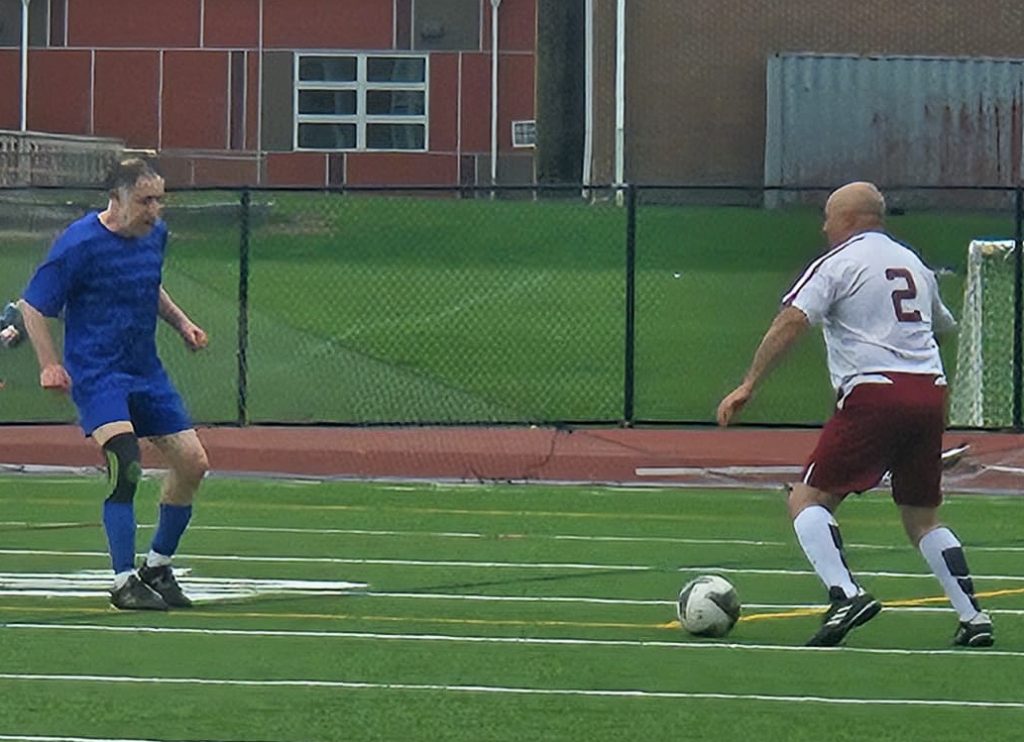
Mark came to my soccer game this morning and watched us systematically take apart our Russian opponents. The score at halftime was 1-0, a fair reflection of the match play to that point. In the second half, however, we ground them down and scored an additional 5 unanswered goals. It was a particularly satisfying win because our opponents played a very “dirty” brand of soccer and tried to physically intimidate us.