Kanab to Page

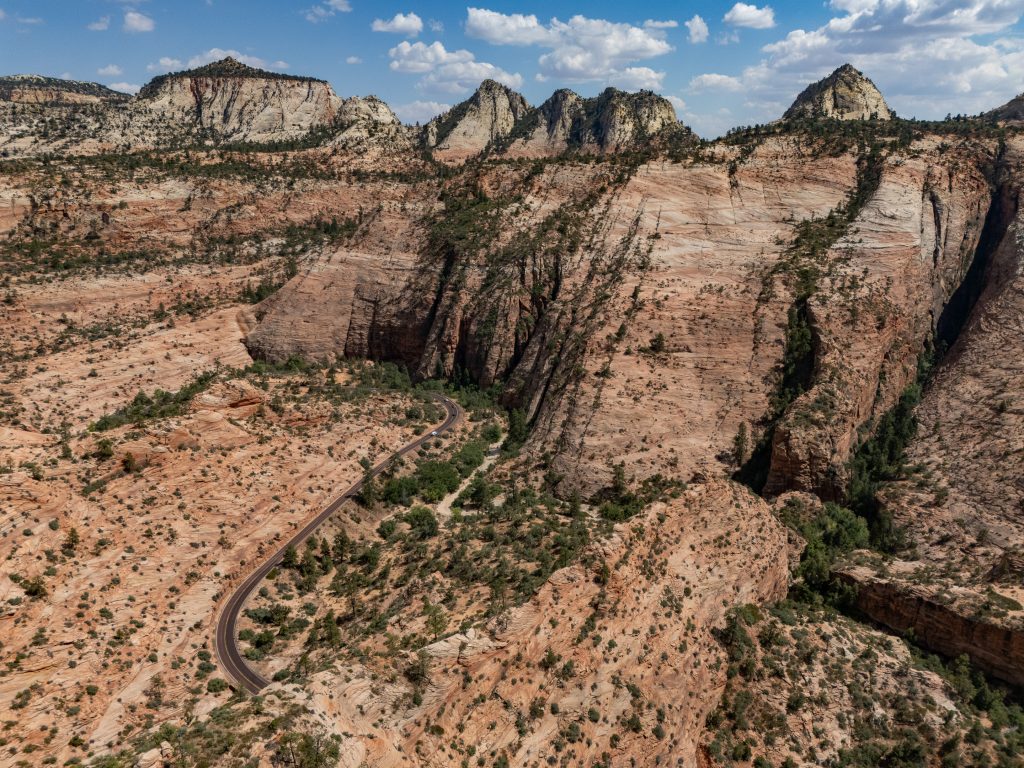
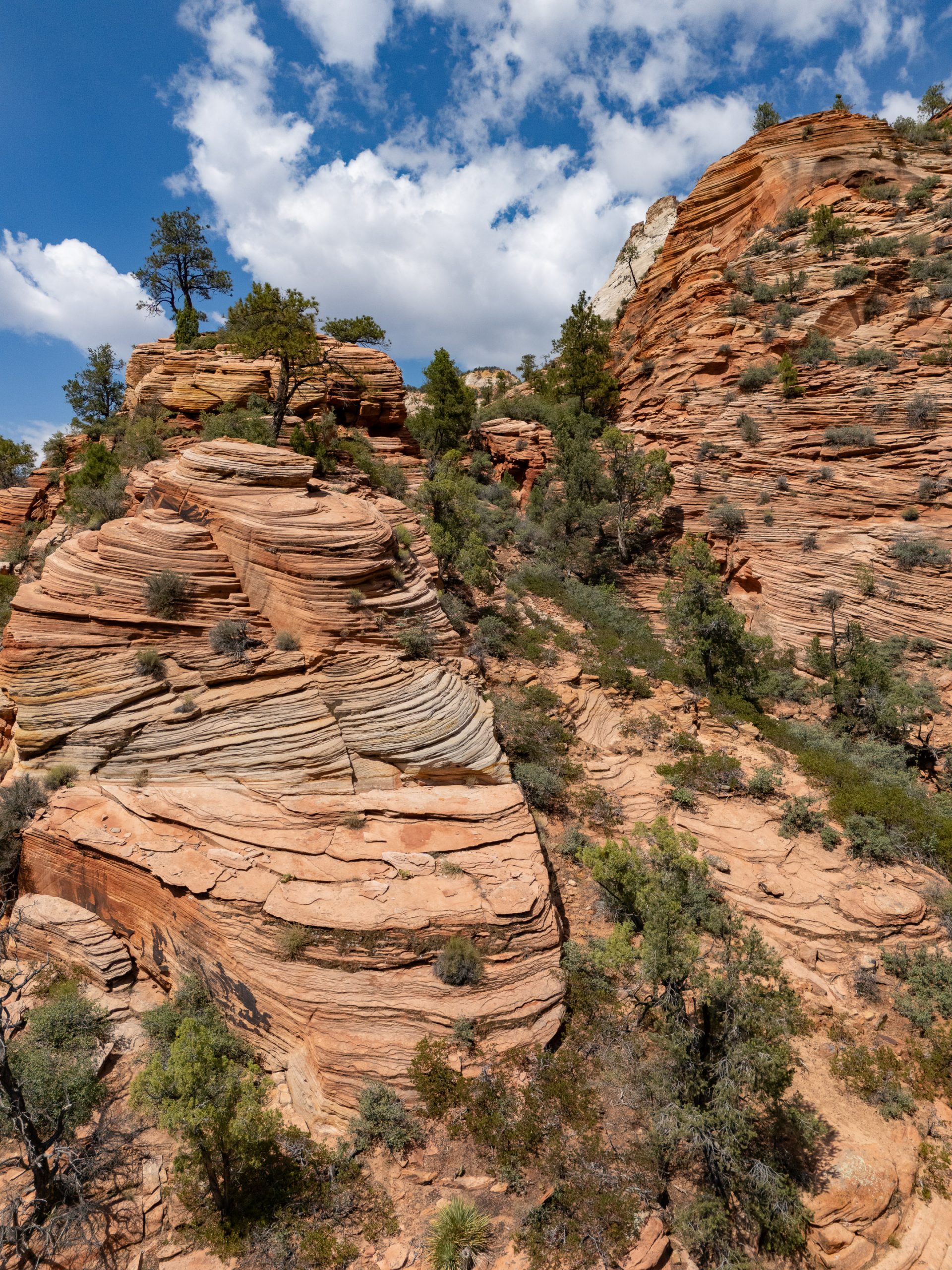
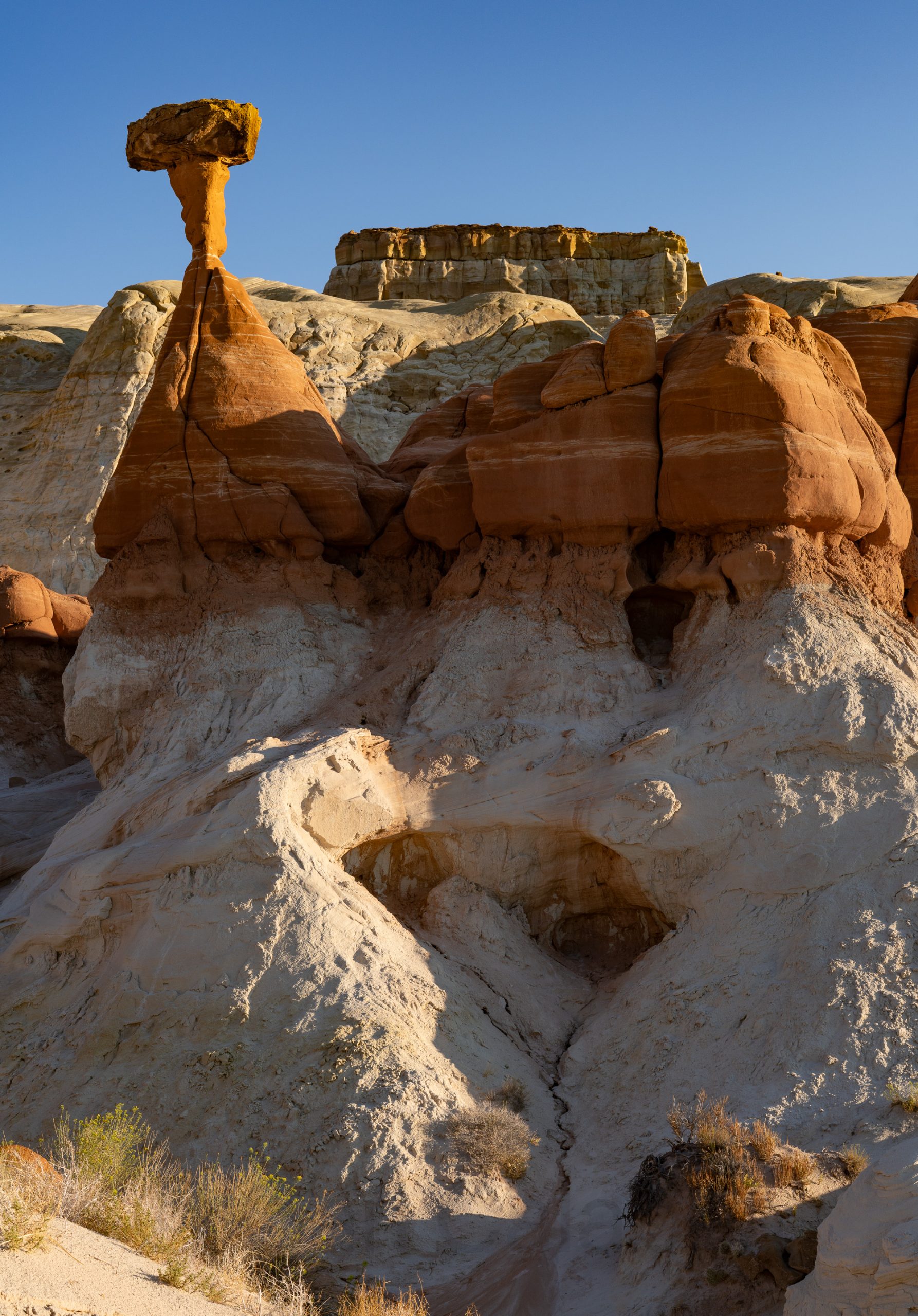
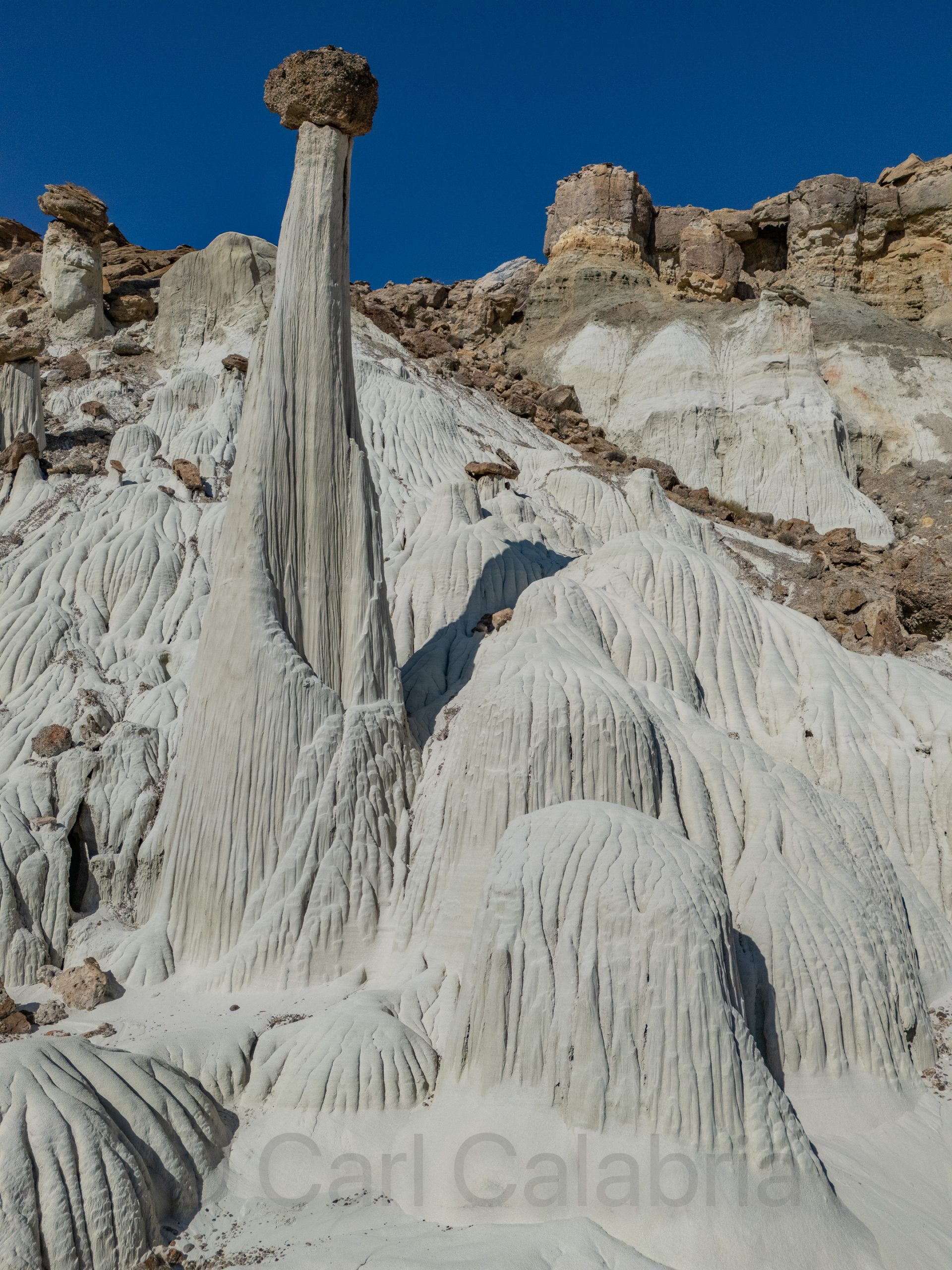
Millions of years in the making, hoodoos never fail to capture my fascination and photographic interest. Their formation process begins with flat-lying sedimentary rocks deposited in ancient lakes or floodplains, later elevated by tectonic forces, and finally sculpted by frost wedging and acidic rain that erodes softer layers beneath harder caprock. The caprock protects the weaker underlying rock, creating the hoodoo’s columnar shape, which persists until erosion eventually topples the cap and destroys the spire. Today, I revisited several of my favorites, the Toadstools and the White Ghost. The former are easily accessible from the highway and can be reached via a relatively short hike. The latter, not so much. On my first visit to the White Ghost, I opted for the southern approach, which requires an 8-mile hike. This time, I opted for the northern approach, which only requires a 2-mile hike. What is the “catch,” you might wonder?  The shorter hike requires a 20-mile round trip on “unimproved roads.” For the most part, these are just very bumpy dirt roads. The problem is with the other parts. There are about a dozen places where the road crosses a river wash. Each one offers a unique way to strand your vehicle in a place where a new vehicle would cost less than the tow truck fee. Let’s just say that I will opt for the longer hike on any future visits. On a positive note, I did encounter some very beautiful landscapes along the way.
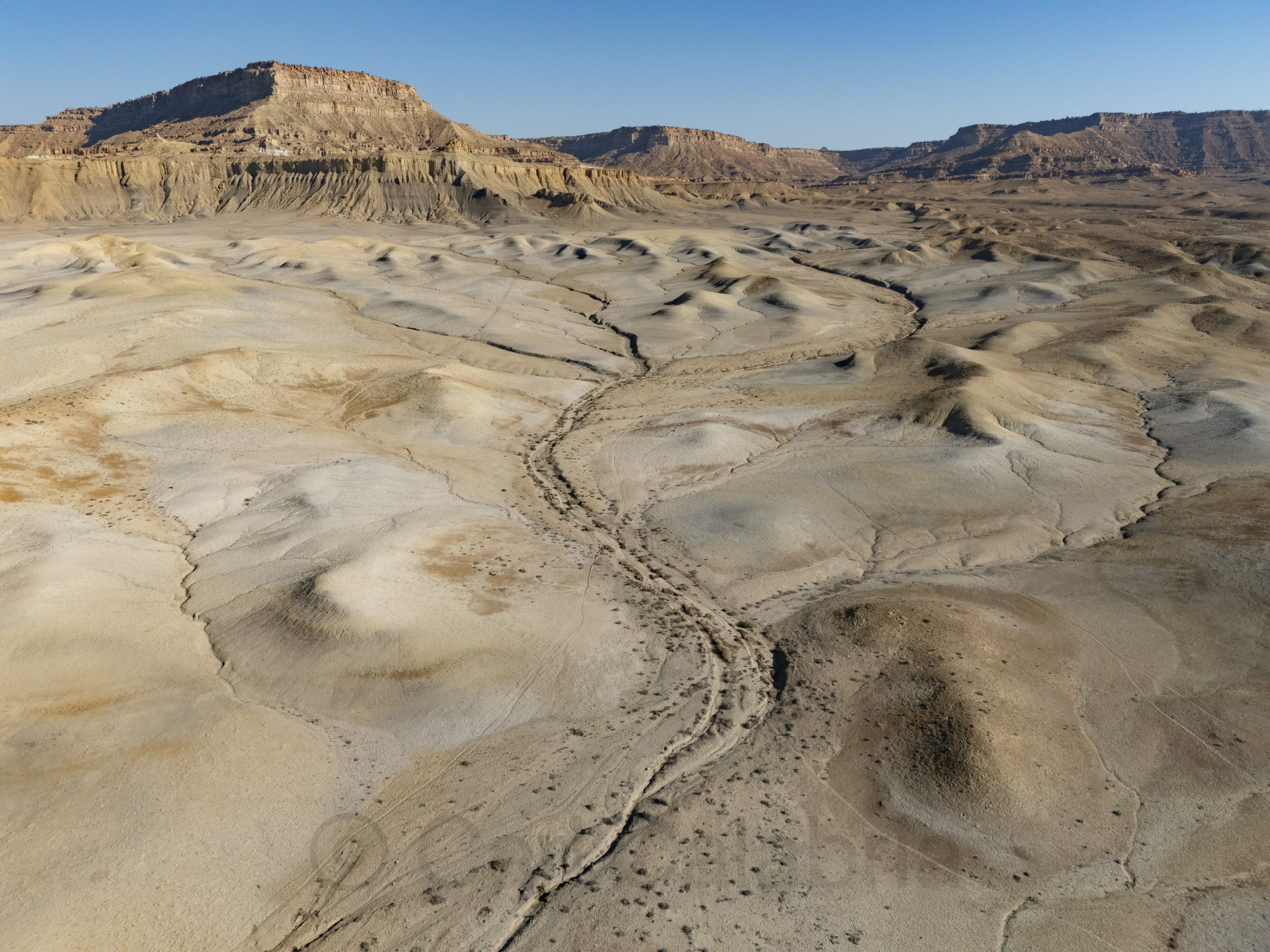
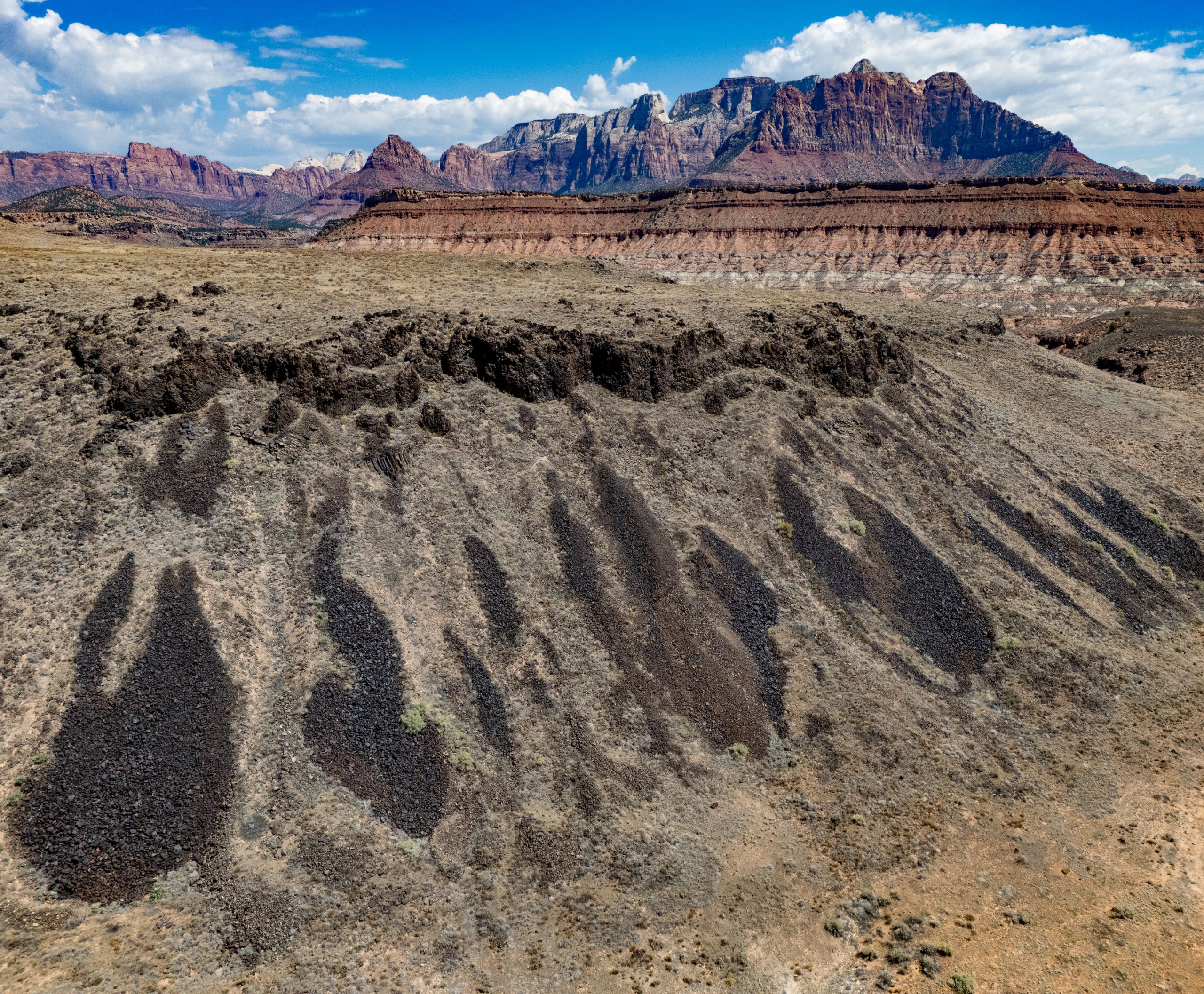
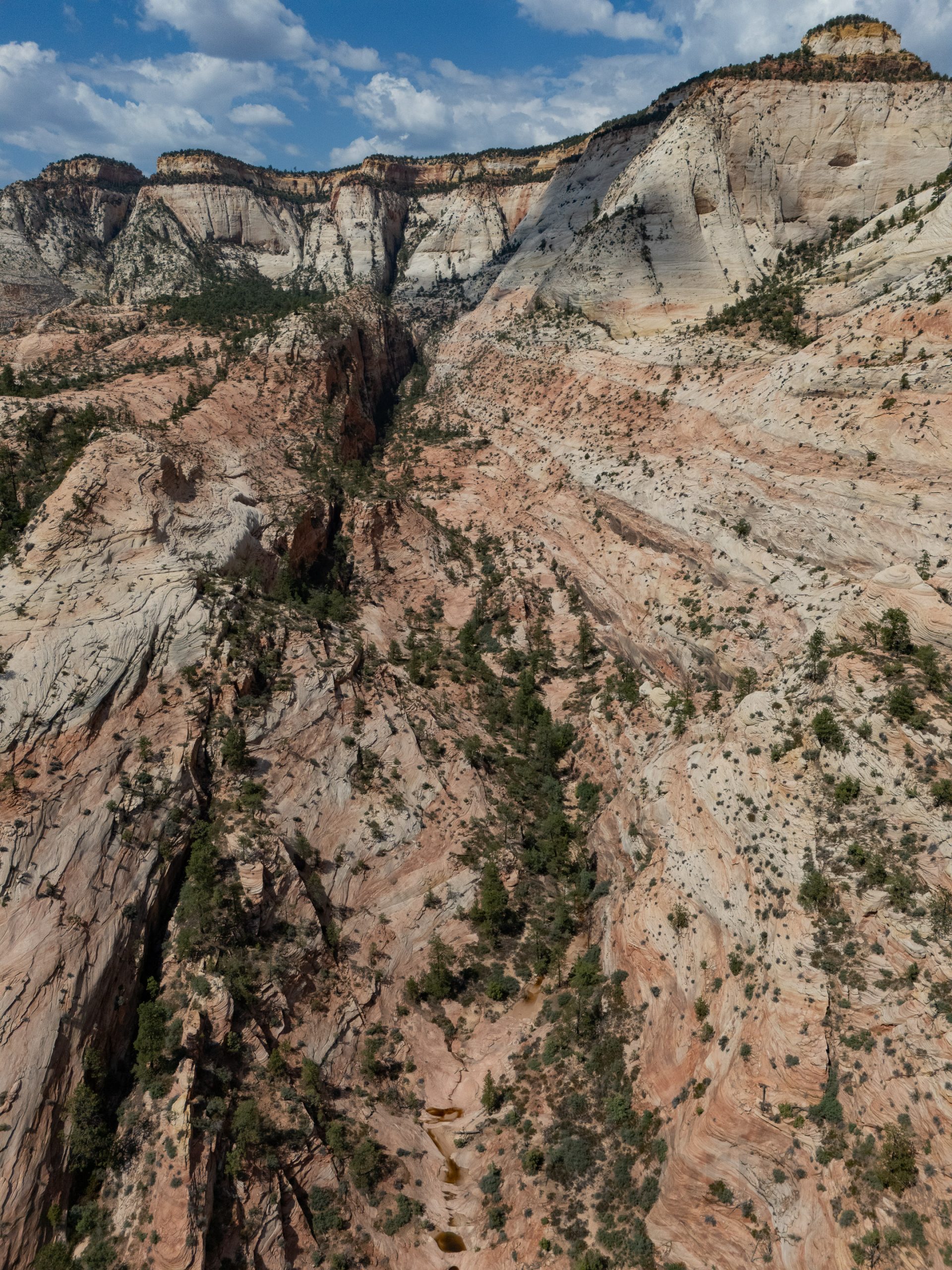
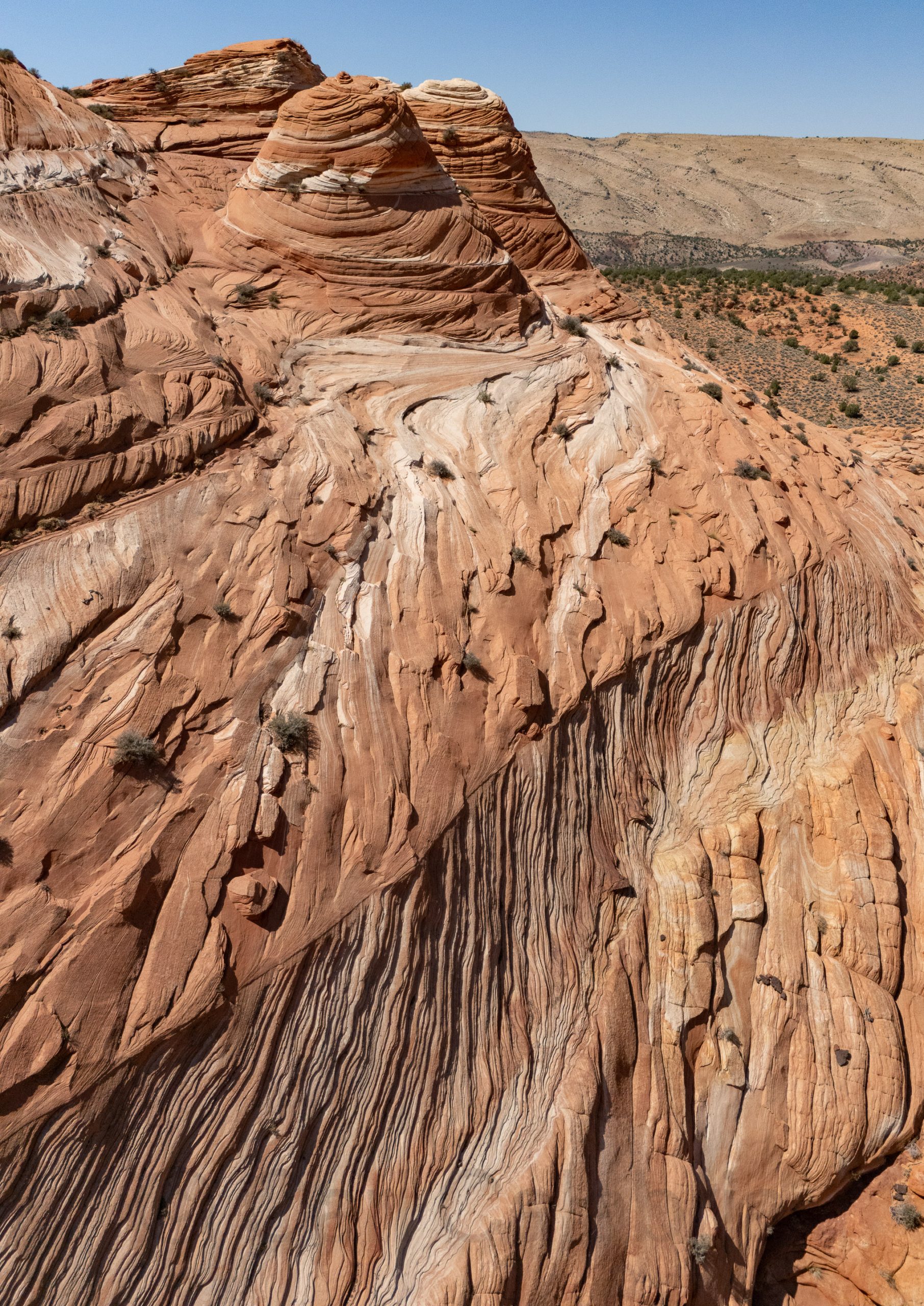
Unsuccessful at winning the 1000:1 daily lottery for a pass to The Wave, I opted to use my drone to look for equally impressive rock formations. I found several, my favorite being the one below, which I call “Melting Ice Cream.”
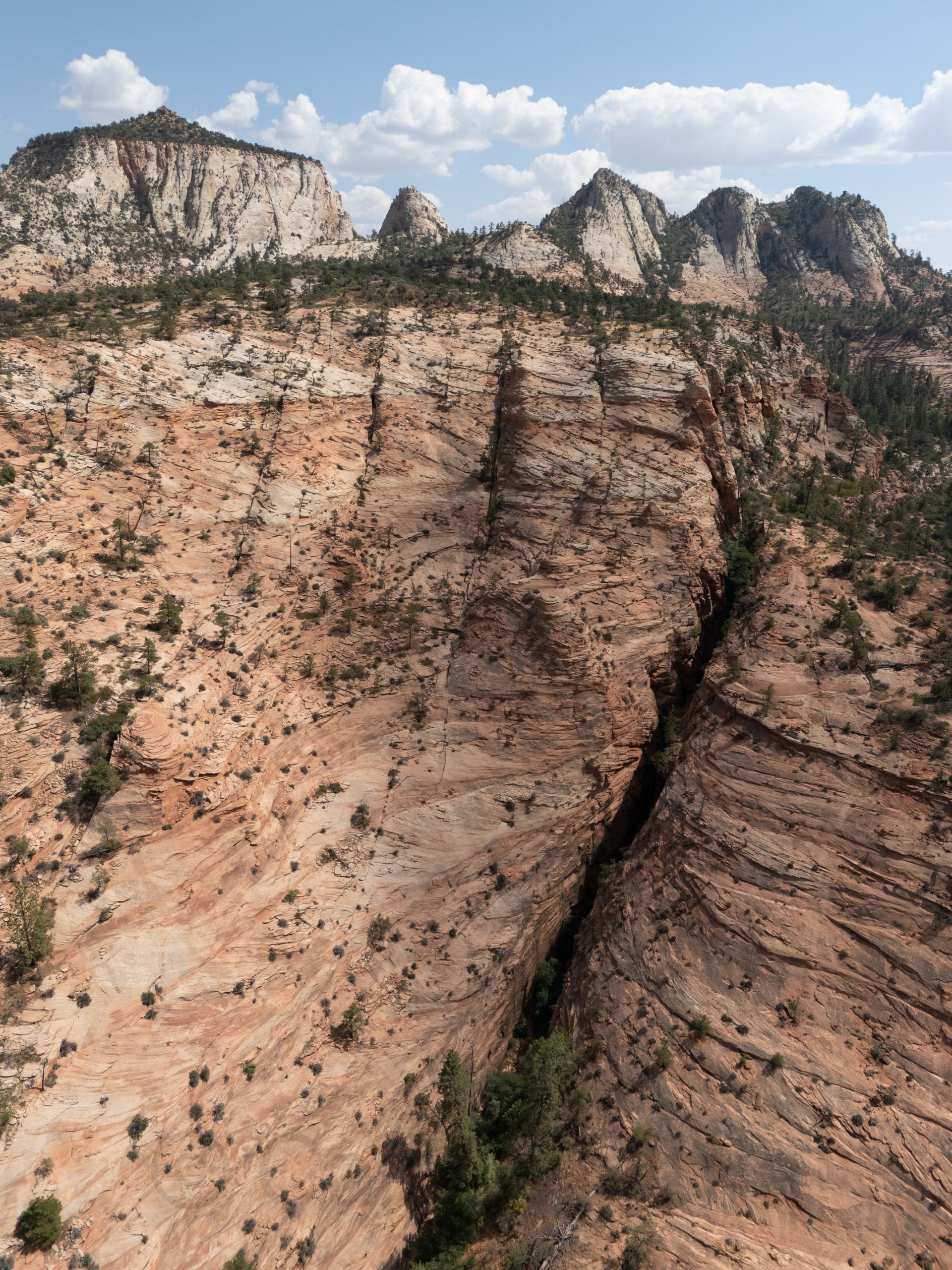
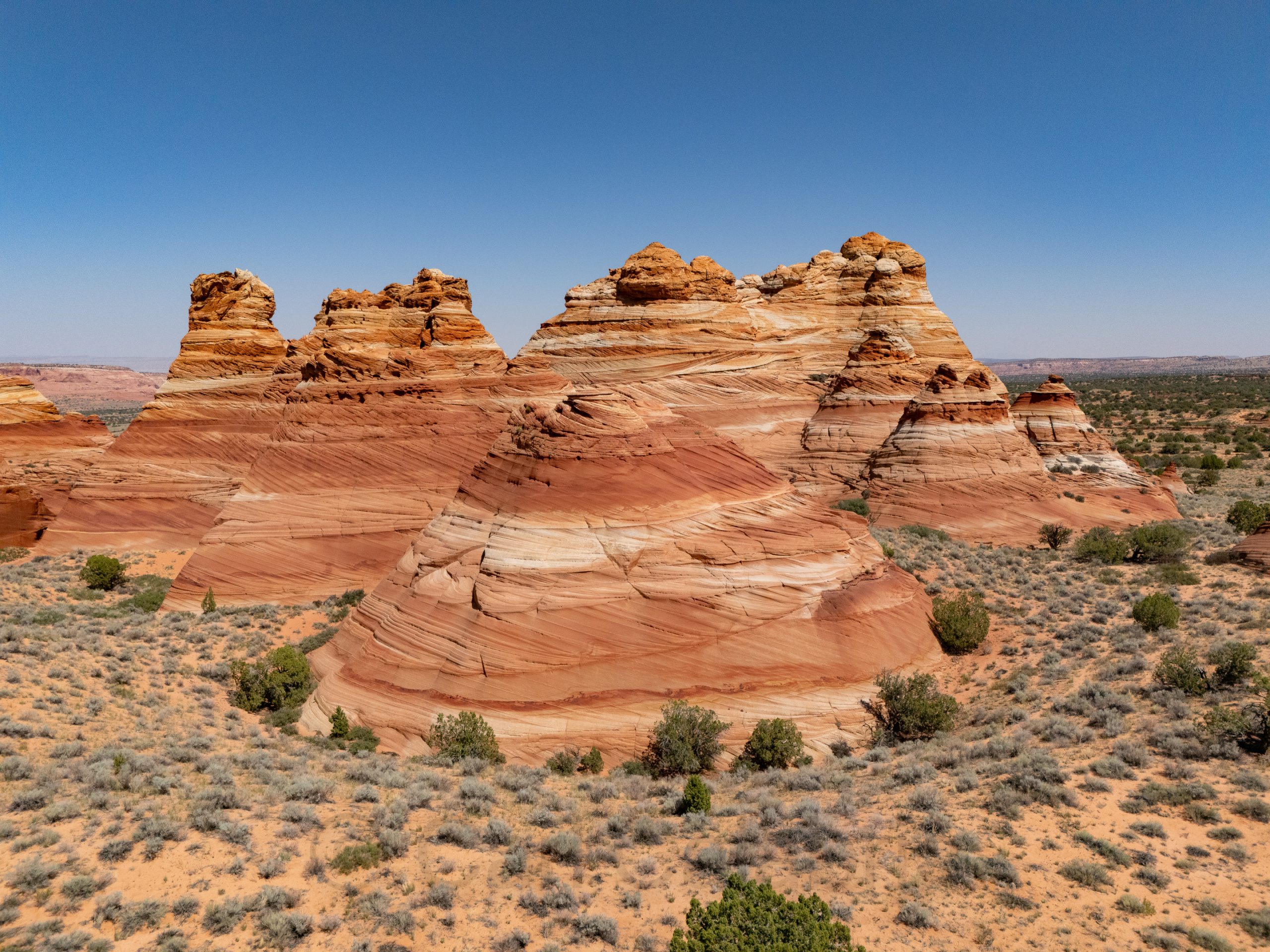
I also made a long flight to capture the aptly named North Teepees.
Lone Rock is a prominent and solitary rock formation located in Wahweap Bay within Lake Powell.
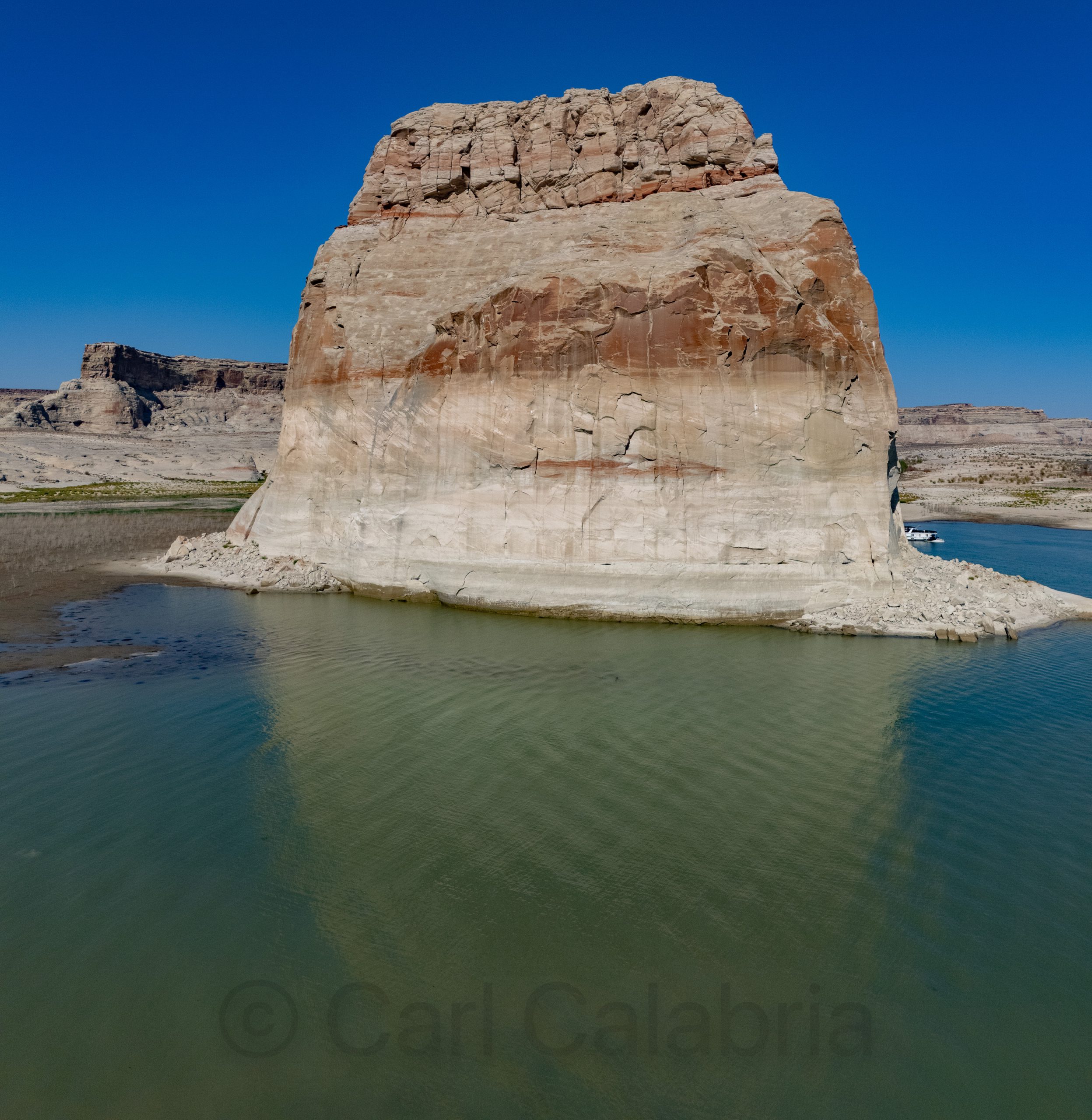
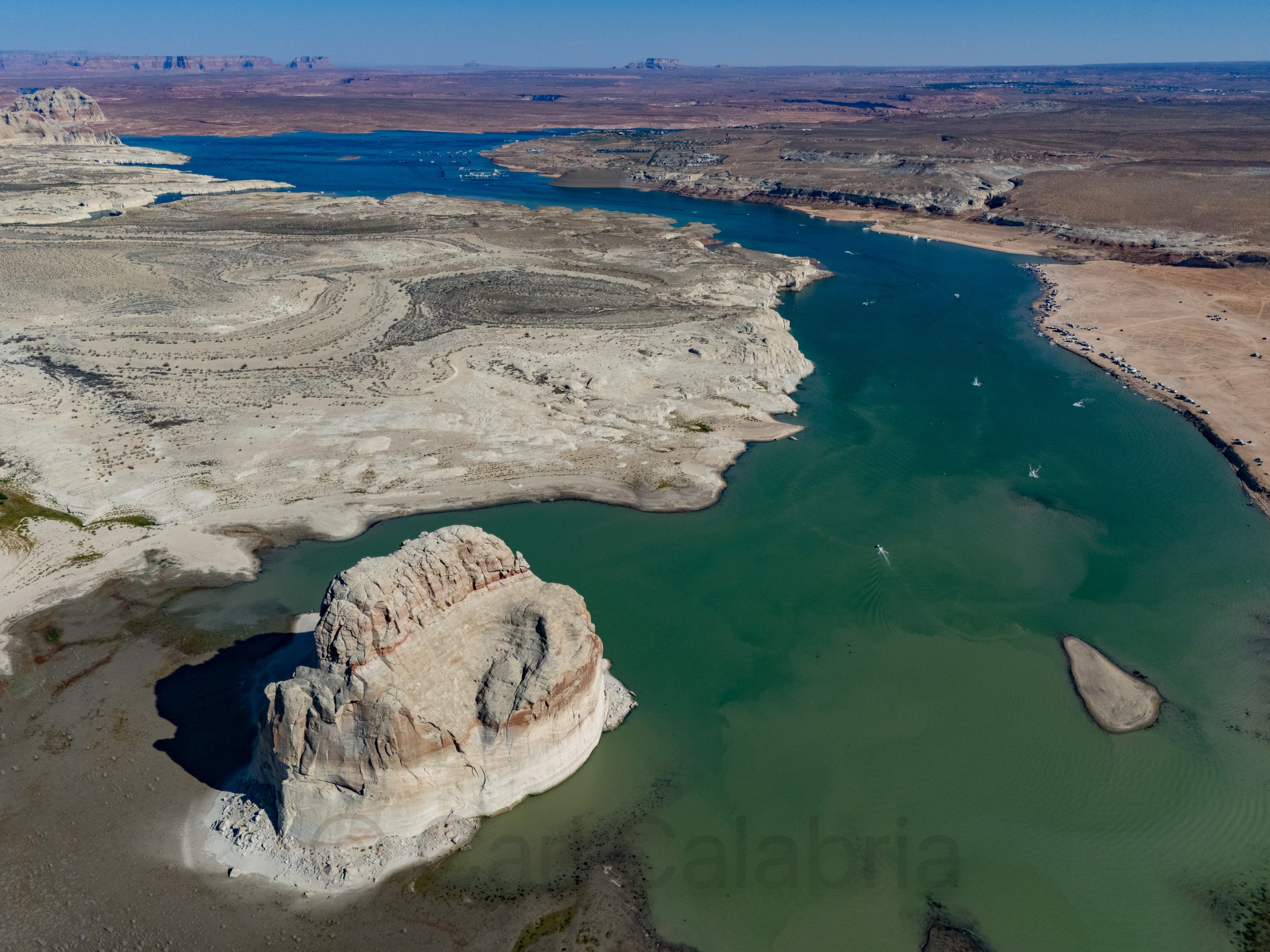
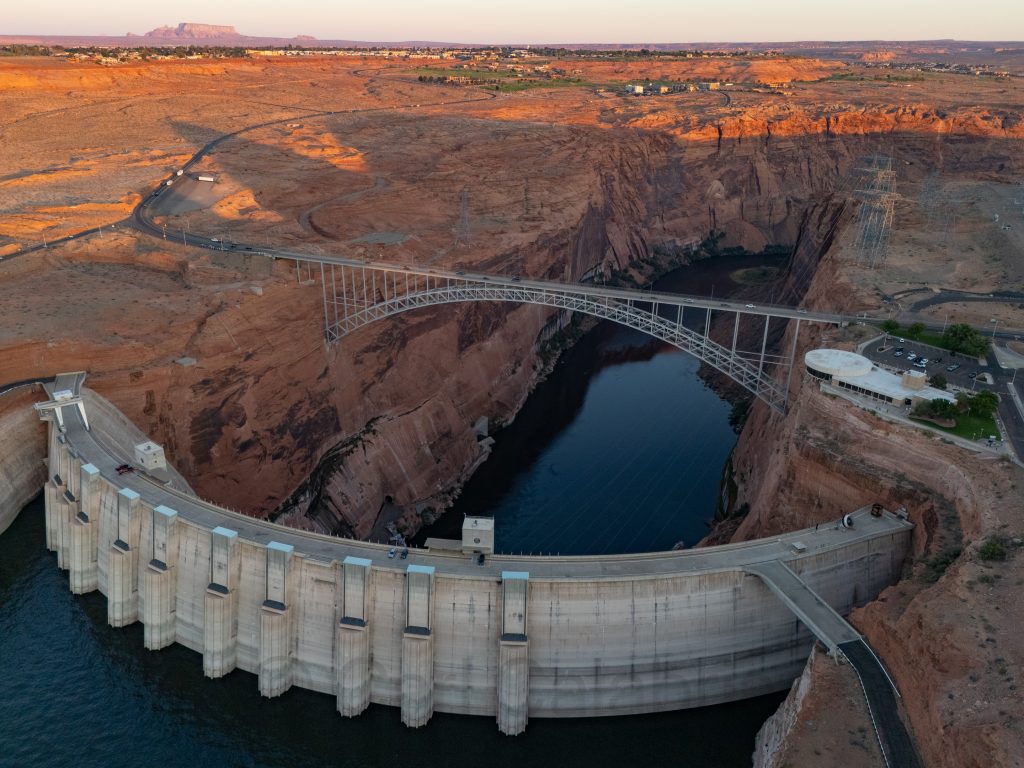
I caught the last light of the day at the Glen Canyon Dam before heading into Page, AZ for the night.
St. George to Kanab

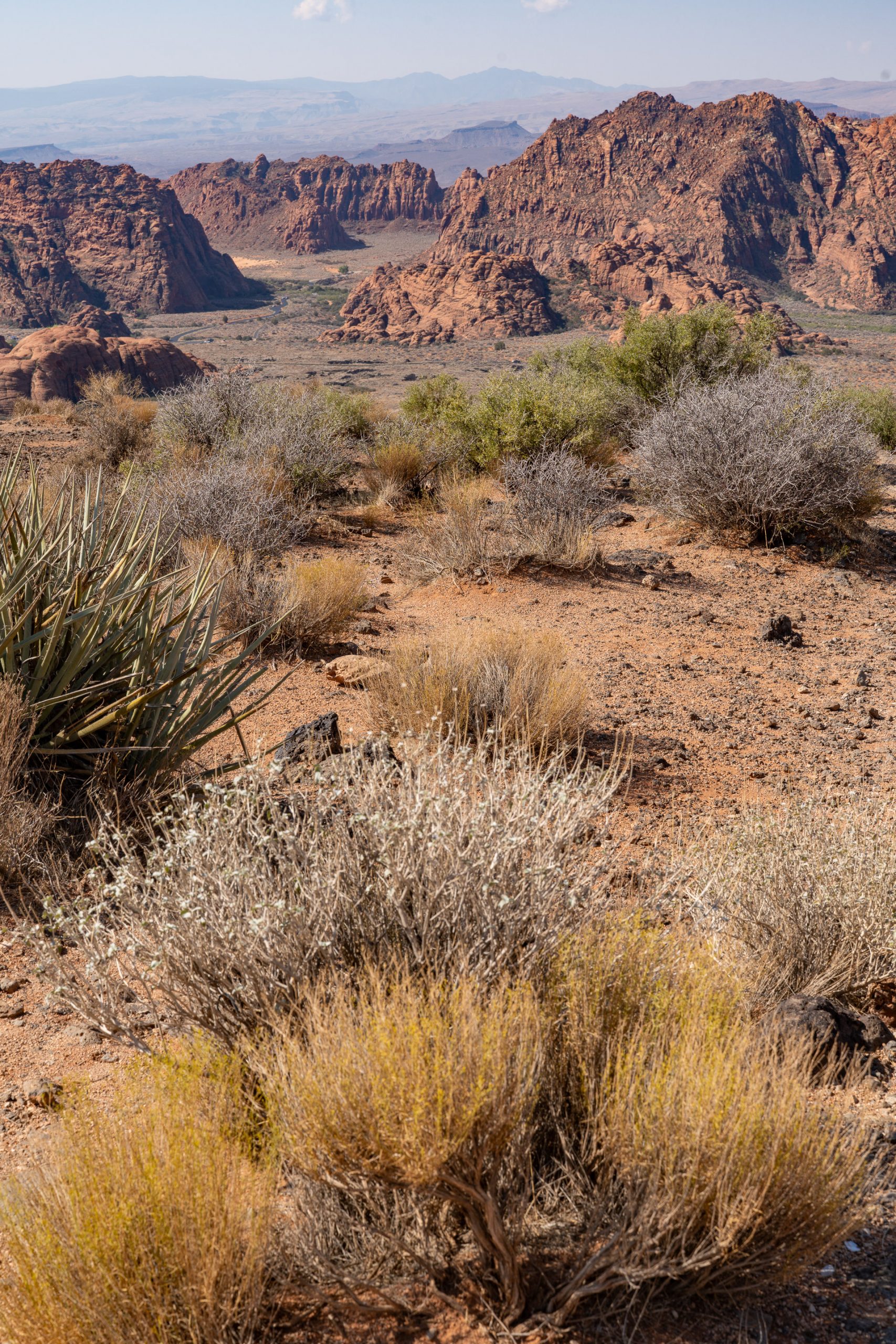
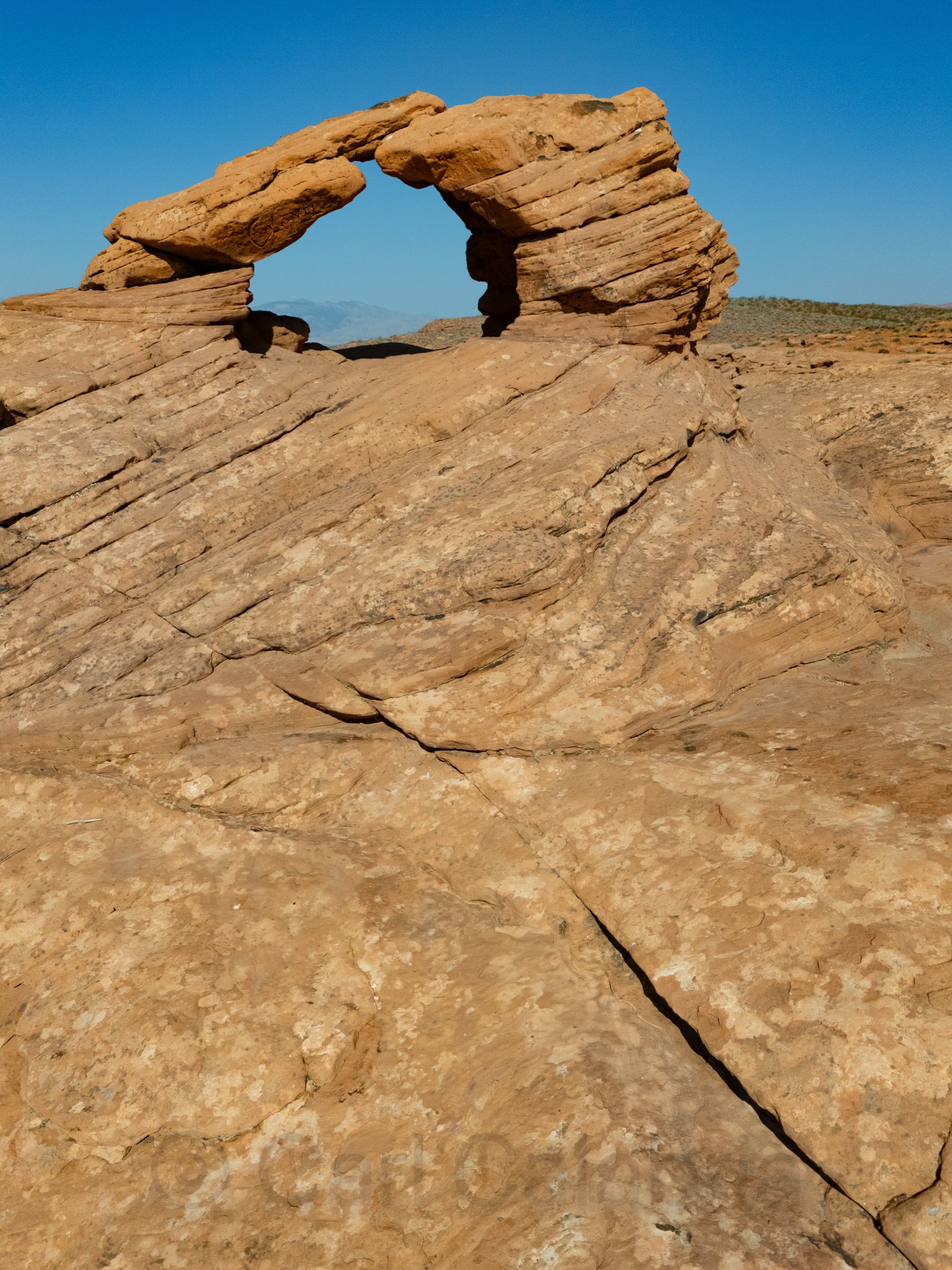
As soon as the sun was up, I made a beeline for St. George, UT where my first stop was Pioneer Park. I had hoped to photograph the St. George Narrows located there, but a group of teenagers was climbing on belay, and it did not look like they would be finishing anytime soon. Instead, I found a beautiful little arch to start the day off on a good note. I made my way north to the Snow Canyon State Park, which had a lovely valley view overlook.

Next, I had planned to photograph the Toquerville Falls, hoping that the all-wheel-drive, high-ground-clearance SUV that I rented would be up to the challenge. One mile into the five-mile final ascent, I had to abandon the effort, because I was not up to the challenge. Jeanine will attest to the fact that I have tackled some very insane roads. This one was just too treacherous and I could just imagine stranding my rental on the side of a mountain and ruining the rest of my trip.

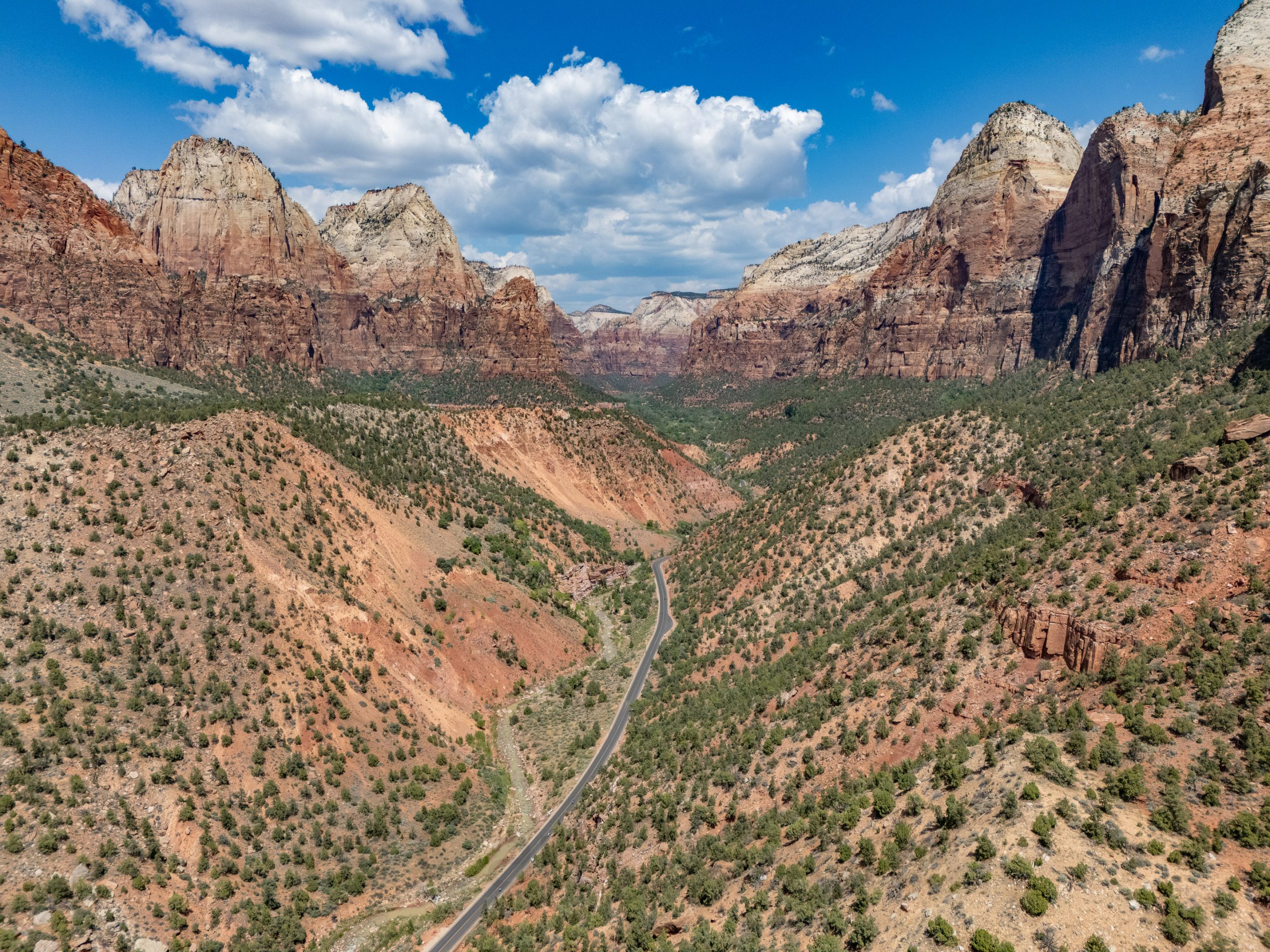
Instead, I decided to drive through Zion National Park on my way to Kanab. Fortunately, traffic was light and I could stop often to soak in the magnificence.

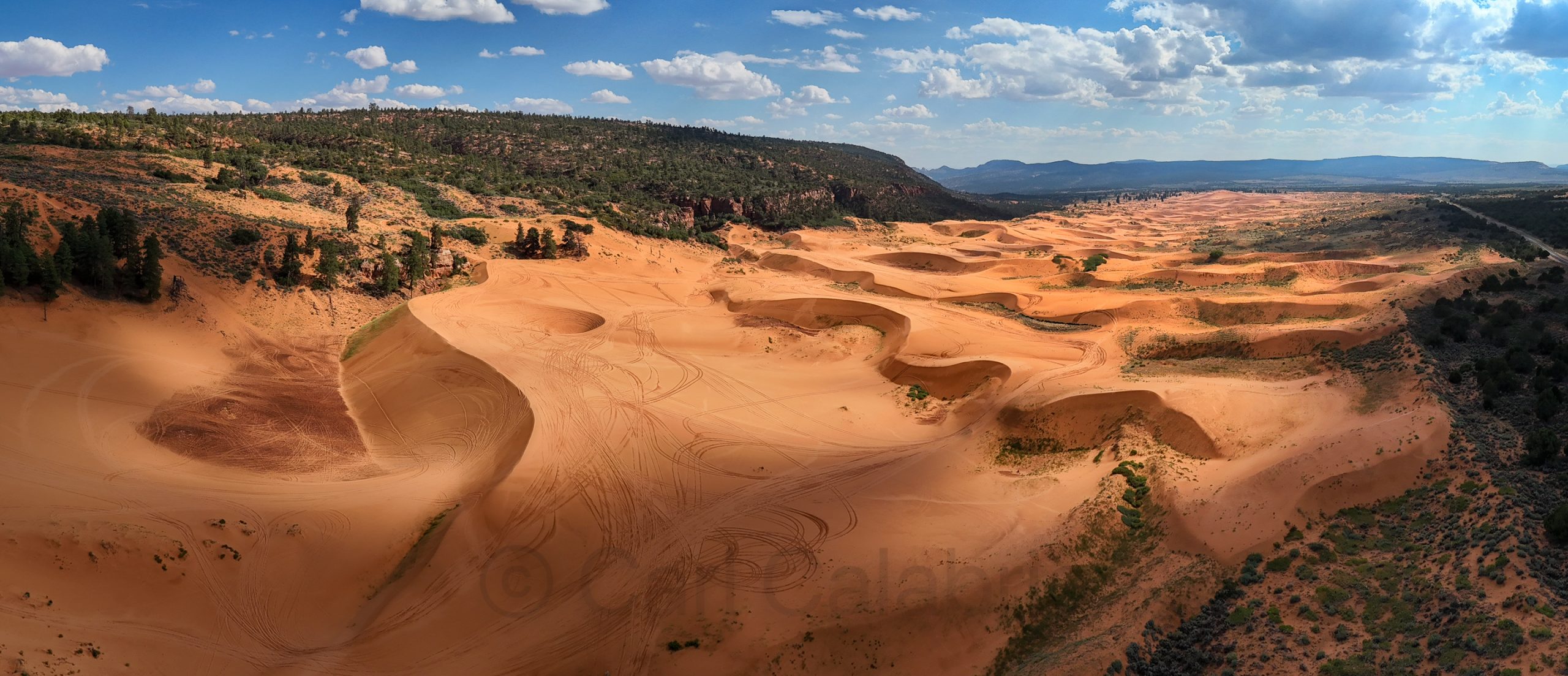
As the sun was setting, I made a final stop at the Coral Pink Sand Dunes State Park. The light was exceptional, and the dunes looked like waves of water. A perfect way to finish day one of my road trip.

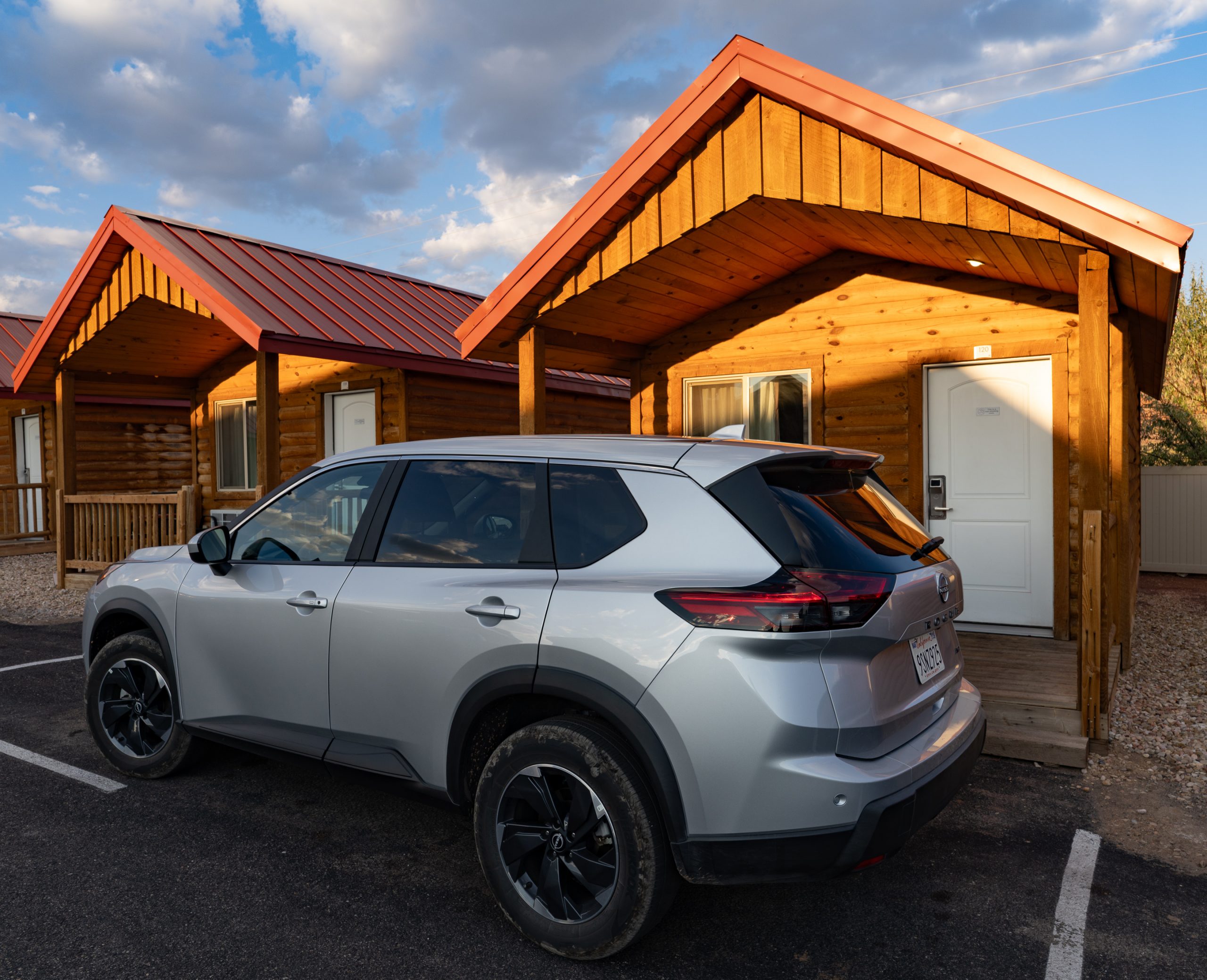
I found a very cute cabin in Kanab and hitched my trusty steed to the post.

Friend or Foe

Despite what you might imagine is happening in this photo, these squirrels were neither fighting nor engaged in foreplay. They were, in fact, grooming each other. I never realized squirrels did this, but if you think about it, it makes perfect sense. They run up and down sap-covered trees all day when they are not digging in the dirt.

This morning, I decided I would take a week-long trip to canyon country (Utah, Arizona, Nevada) while Jeanine is in Greece. I booked a flight, car, and first night’s stay in the morning, completed a rough itinerary and packed by early afternoon, and was on a plane headed west before dinner. I made a similar weekend-long trip in May, 2019 when Jeanine was bicycling in France with my cousins. On that adventure, I lost my drone on the second morning and missed out on all the aerial photos I had hoped to take. Hopefully, I will not repeat that debacle.

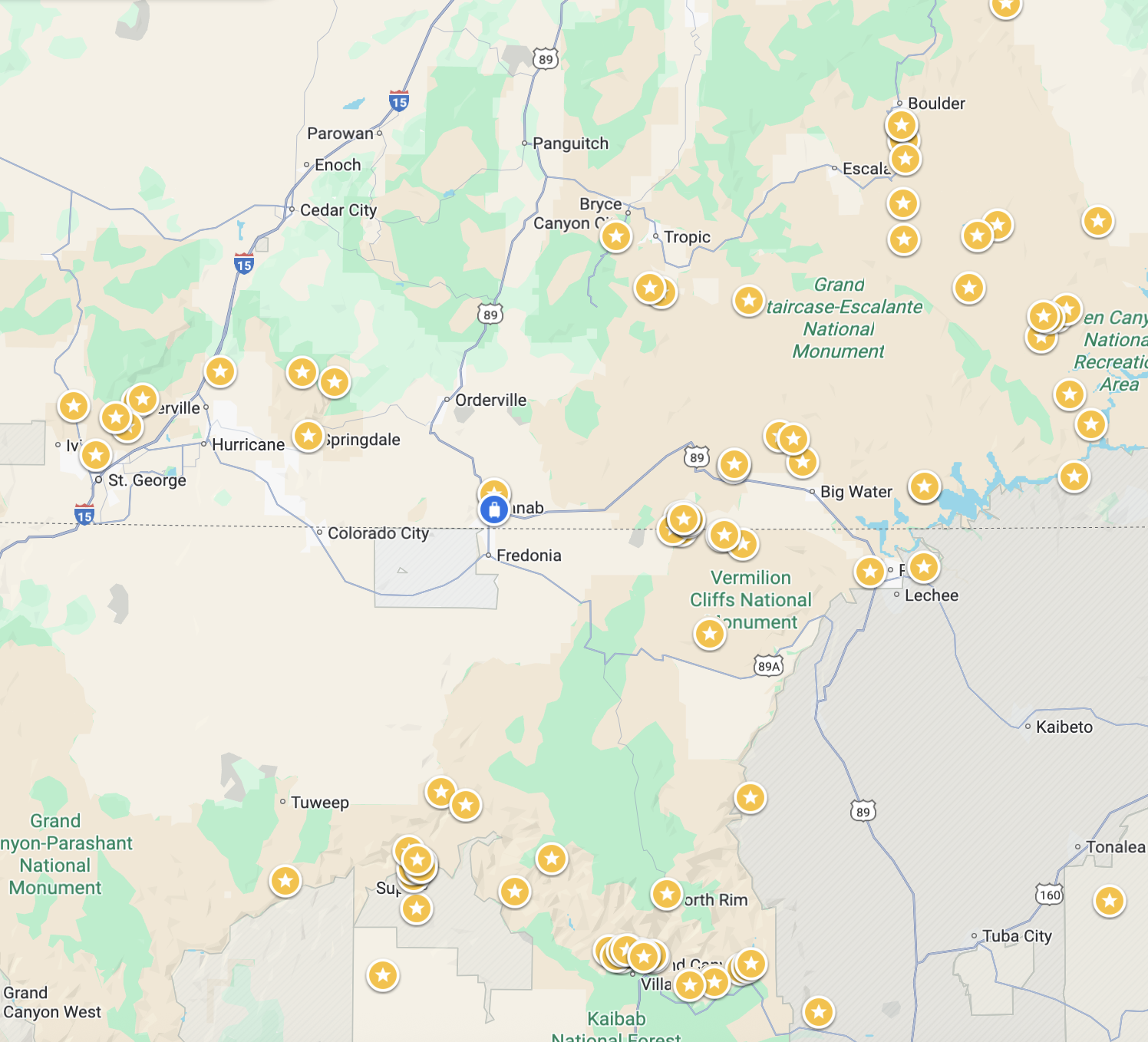
Anytime I discover a photographically interesting destination, I save it in Google Maps. I have been doing this for years. Pictured below is the rough area I will be visiting. As you can see, it is a target-rich environment. I will only have time to see a fraction of these locations and will choose based on how much ground (in the car and on foot) that I can cover, as well as weather conditions.

Friendly Hymenoptera

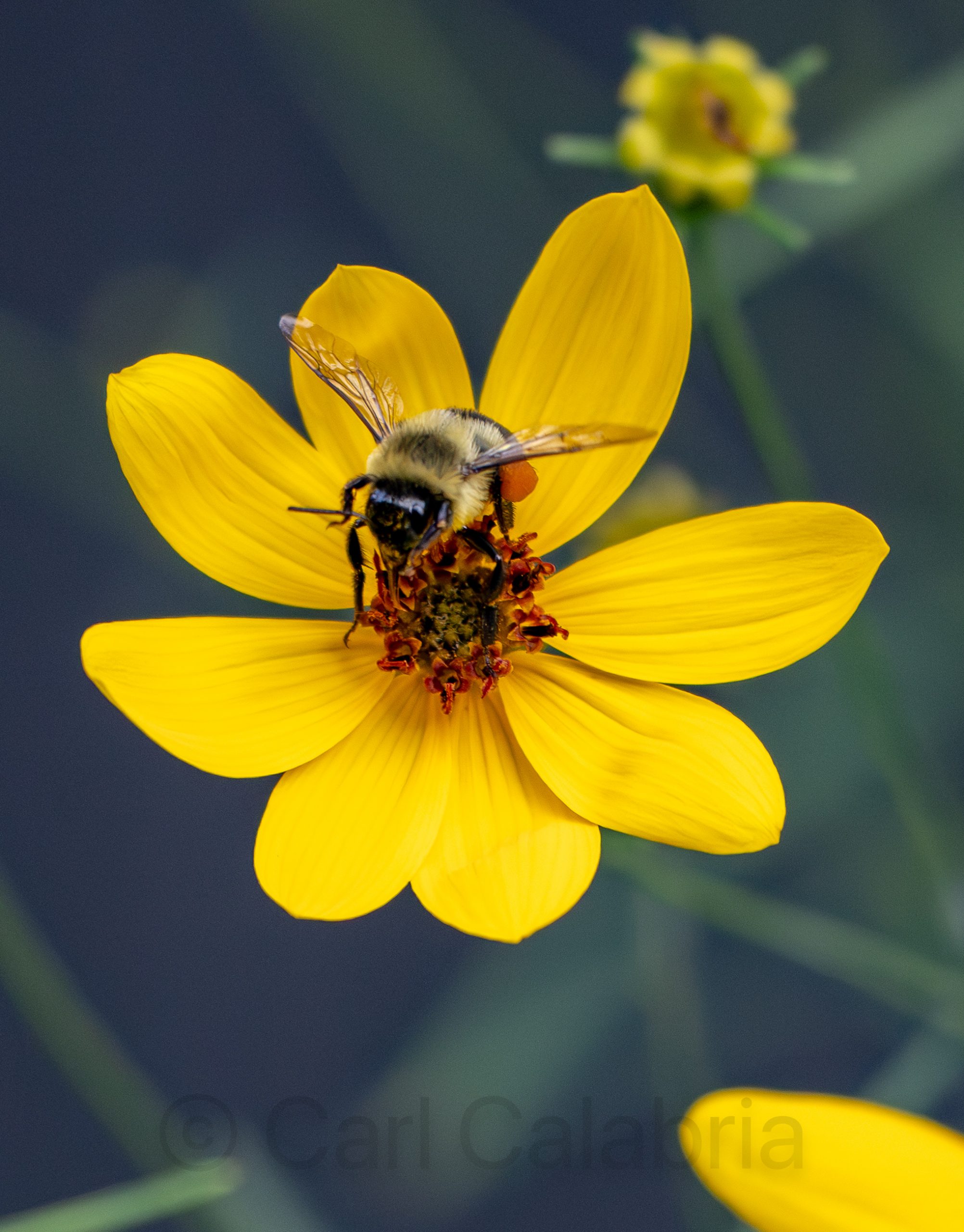
Concerned after yesterday’s post, that some might consider me hostile to all Hymenoptera, I decided to create a loving portrait of this member of the Apidae family. When I approached very closely to take the photo, it did not summon a swarm of its buddies to mount an attack, it did not chase me for hundreds of feet, and it did not bite and sting me repeatedly, as did the members of the Vespidae family I encountered yesterday. In short, this bee was very friendly, and I was pleased that we could peacefully coexist in the same space.

The moral of the story: Live and Let Live. An alternative interpretation: Don’t attack me for walking too close to your nest, and I won’t fill it with a flammable accelerant.

Athens Bound

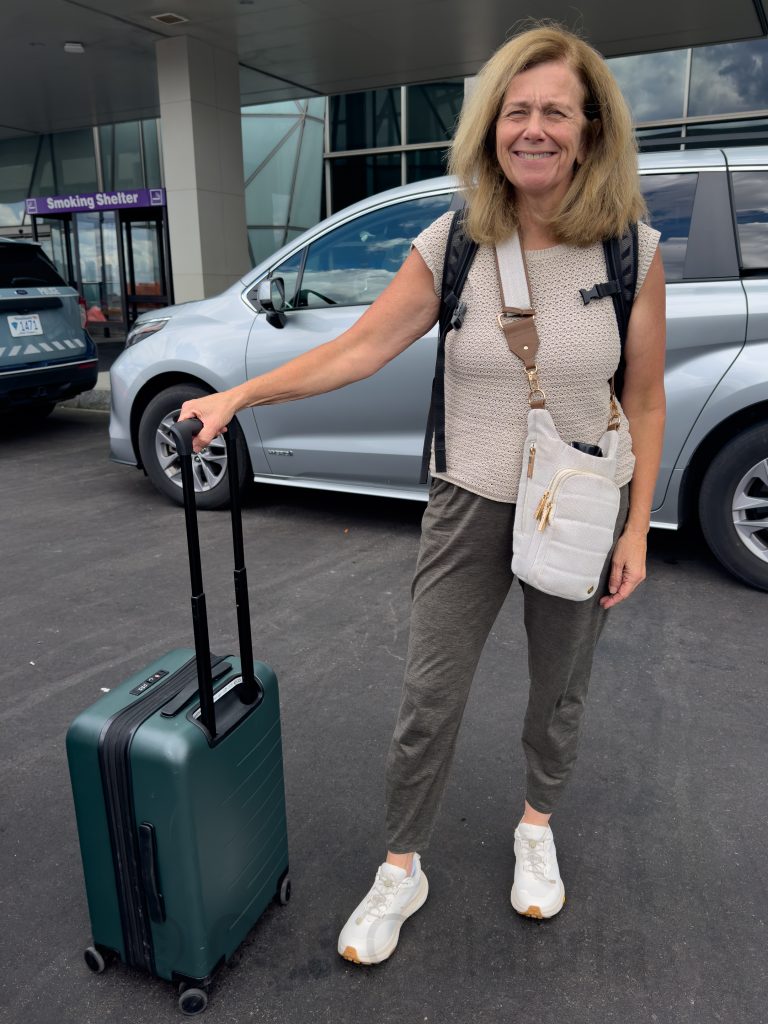
I dropped Jeanine off at the airport this afternoon. She is headed to Greece, where she will spend 4 days in Athens before taking the ferry to Aegina. There she will be staying with her friend Maile at a vacation home in Perdika through the first week of September.

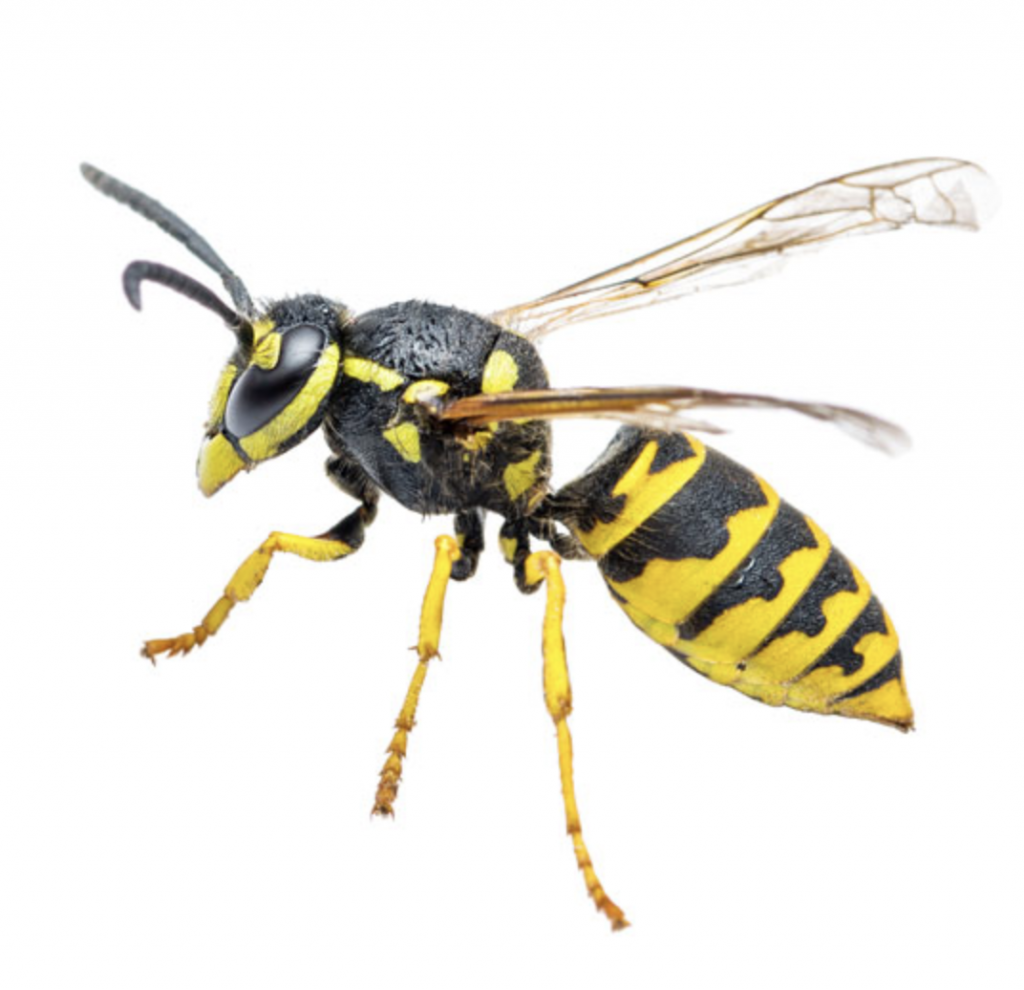
The southern yellowjacket (Vespula squamosa) is known for its notably aggressive behavior, especially when its nest is disturbed or threatened, and it can coordinate group attacks using alarm pheromones released by individuals in the colony. This species is recognized as having a “shorter fuse” than other yellowjacket types, often attacking more quickly and aggressively, particularly in late summer and fall when food scarcity and high colony populations amplify their defensiveness. Even a minor disturbance near their underground nest can provoke a swarm response, with multiple individuals joining in defense and stinging repeatedly without losing their stingers.

While spreading the last of the wood chips, I managed to disturb such a population of yellowjackets and suddenly found myself under attack. I set a new personal best speed record while retreating and simultaneously swatting at the marauders that were already on me. Fortunately, I only sustained four stings, but they are quite painful. After licking my wounds, I returned to the nest with a pint of gasoline, which I poured into their underground burrow. Admittedly, it was more an act of retribution than remediation, but I felt quite pleased with my counter offensive and justified it as necessary to protect neighbors who might be attacked while walking a dog who stumbled upon the nest.

I have decided not to risk further confrontation with the yellowjackets, and I am done spreading wood chips for the season. The remaining 1/2 ton will be left in a small pile for future use.

Gifted Tomato

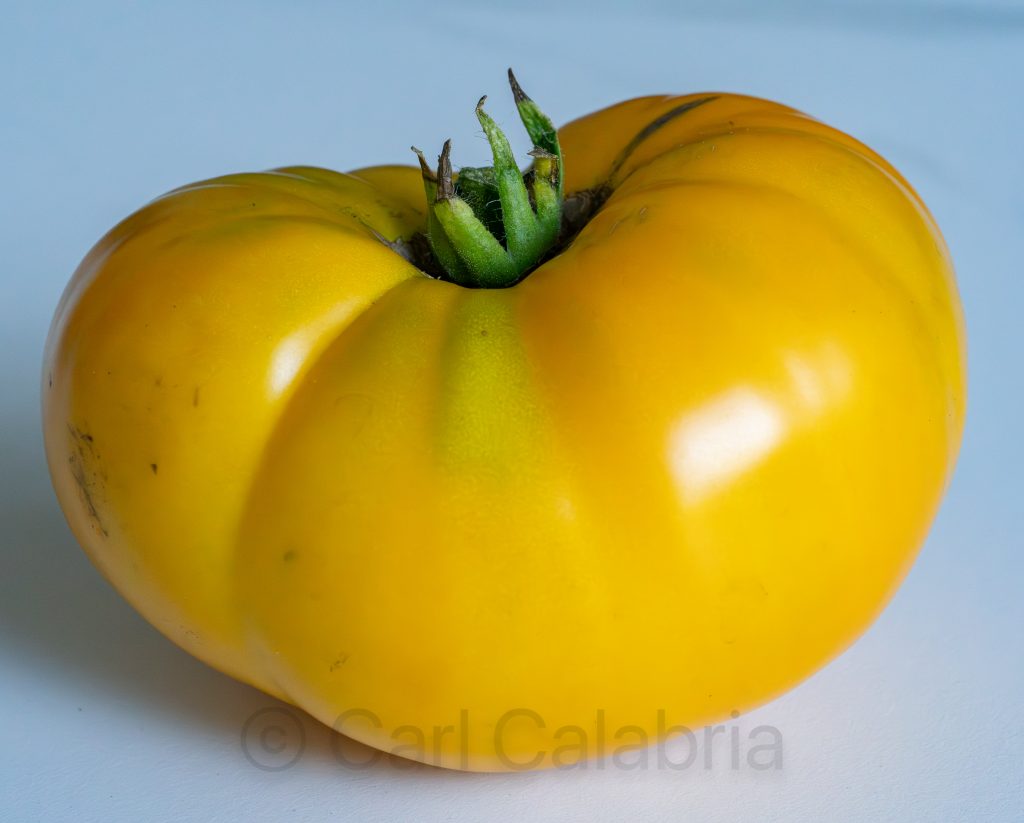
While on an evening walk with Jeanine, we encountered a neighbor coming from the community garden. She was thrilled to show us the basket of tomatoes she had just picked from her plot. About the size of a softball, the tomato pictured above was her gift to us and will be in my belly as soon as I complete typing this post.

I made another big dent in the last remaining wood chip pile and estimate that 1 ton of the original 21 remains to be spread. I am very much looking forward to a change of pace to my landscaping workout.

Skewered

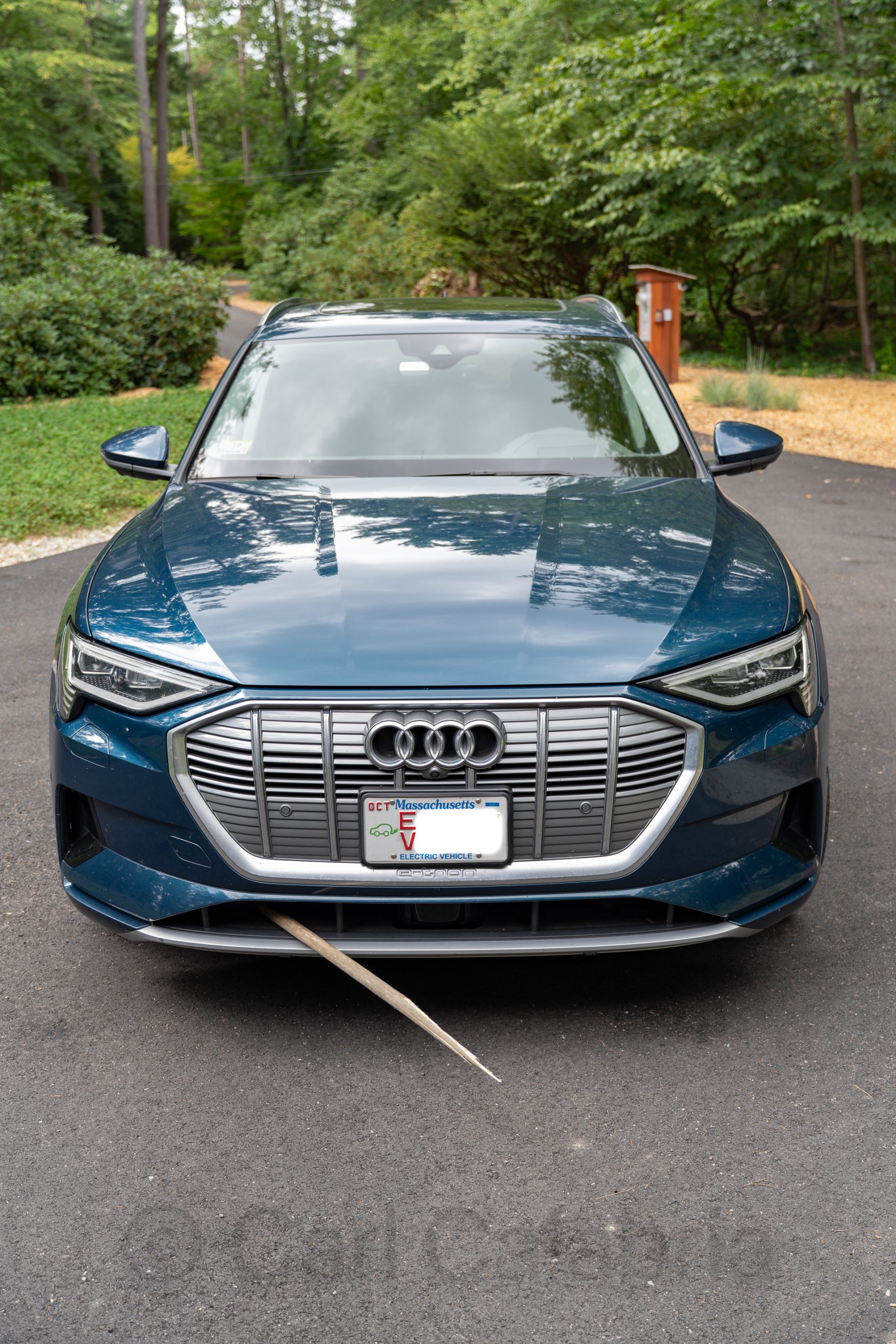
While driving down the highway this afternoon, a large push broom came flying off a truck traveling well ahead of me. It hit a car in front of me and broke in half. The severed handle flew into my lane and skewered the front of my car. Picture above is what I discovered when I reached home. I still need to do further investigation but my initial assessment is that no major damage was sustained. A few inches in any direction could have led to a completely different story. For the record, all parties were traveling at an approriate speed with reasonable following distance. Even so, there was ZERO time to react and the only thing to be done was to brace for impact.

Preseason Tune Up

My soccer team played a preseason match this morning against a team from the age division below us. We traditionally begin our season with such a competition to help us prepare for the challenges ahead. Despite having a limited number of substitutes, we managed a 0-0 tie, which felt like a win against our younger opponents. I played a total of 60 minutes and needed a nap three times as long to recover. Even so, I felt like I was in reasonably good shape, which I attribute to my daily wood chip workouts (see prior posts on the topic).

Later in the day, I completed the wireless switching upgrade to my window washing deionizer and finished cleaning the windows on the front side of the house. I am delighted with the performance and ease of use, and will look forward to this bi-annual task in the years to come.

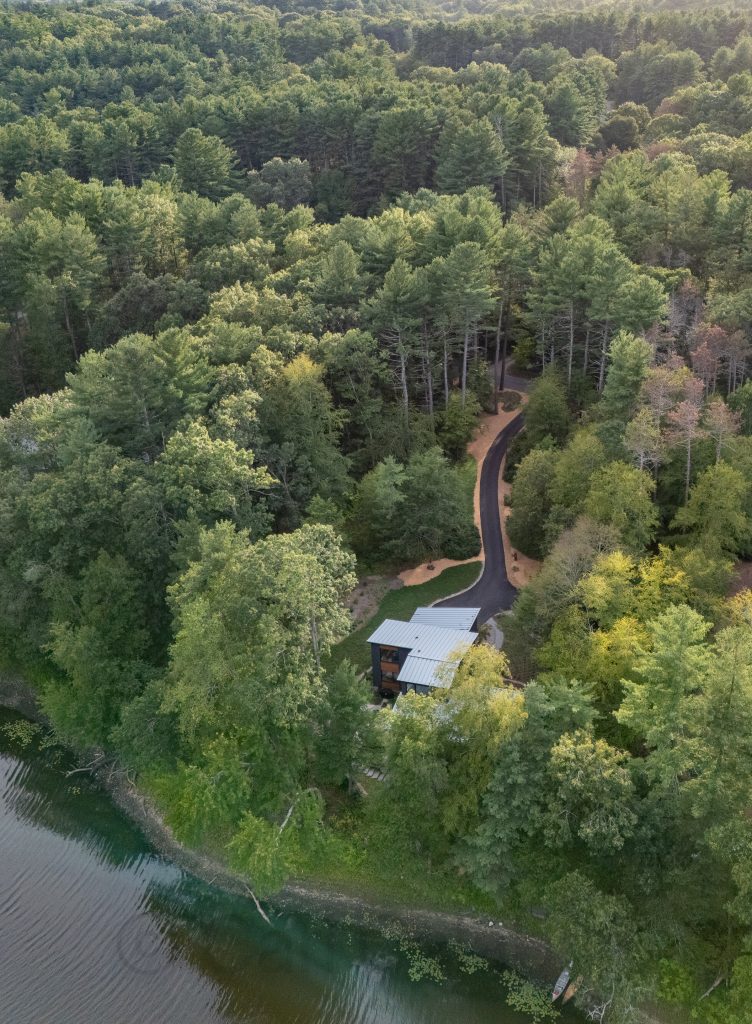
As the sun was setting, I decided to get a drone shot of the property showing the exposed shoreline, the result of the lower river level we are now experiencing. Jeanine has encouraged me to find a way to carry our kayaks down our steep embankment so that we can access the river directly from our property rather than relying on the use of our gracious neighbors’ launching area. I have an idea in mind. Stay tuned for updates.

The Boston Common

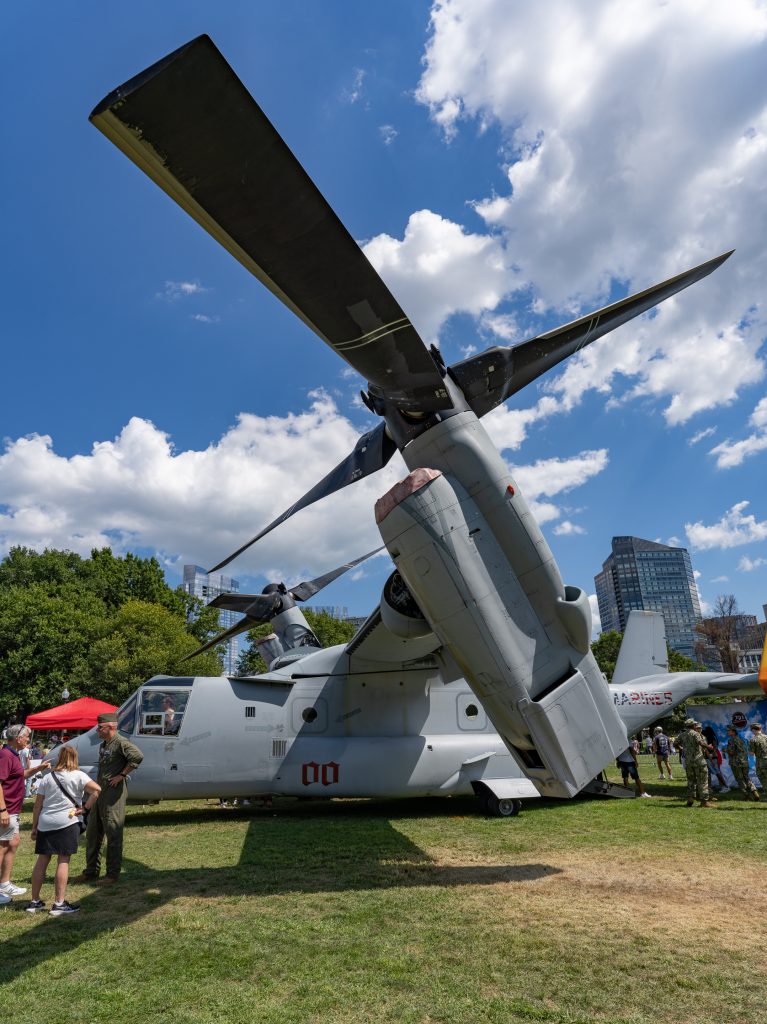
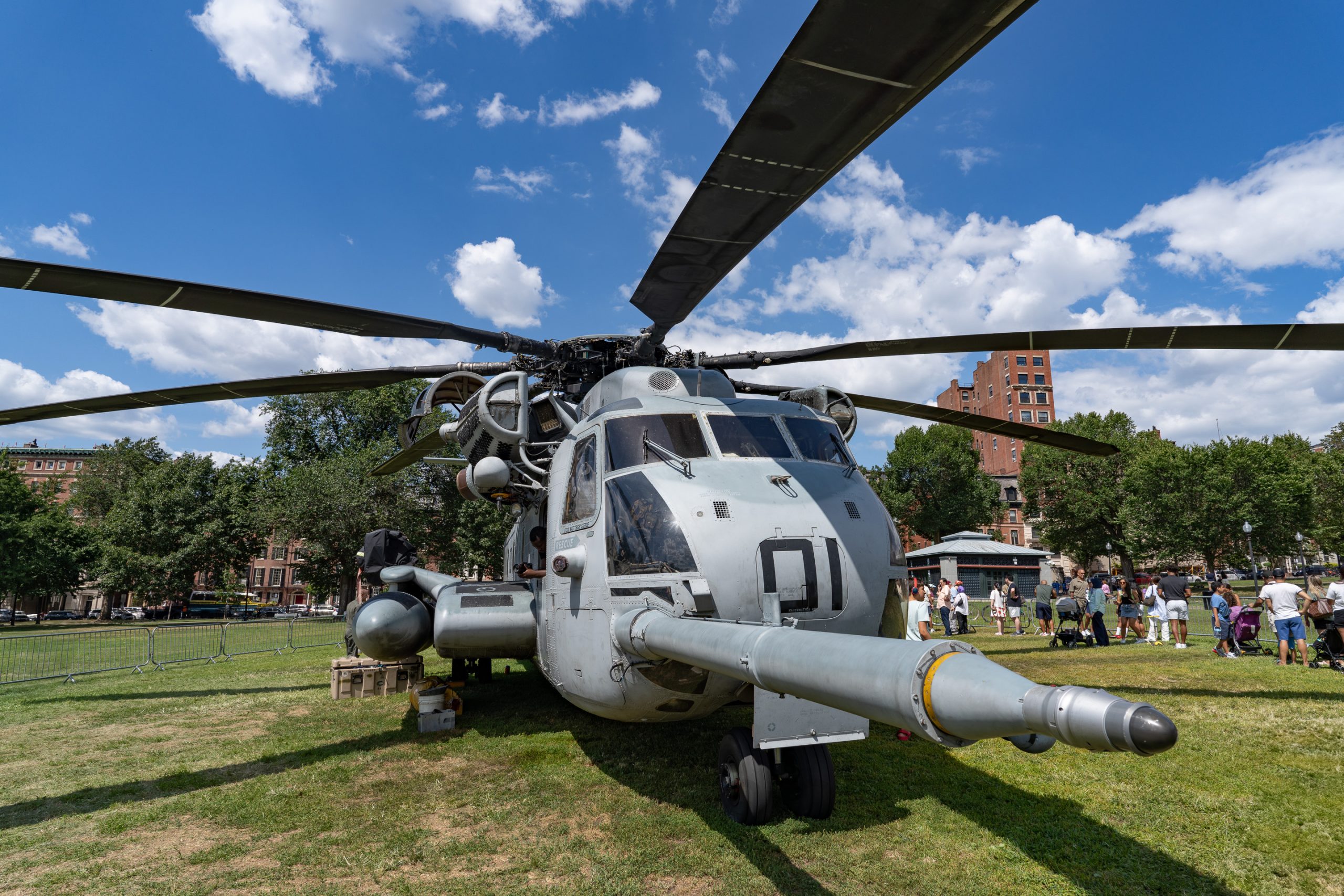
With this being the last weekend before Jeanine heads off to vacation in Greece, we drove into Boston to spend the afternoon on the Common and at the Downtown Crossing. At the former, the Marine Corps had several aircraft on display as part of their 250th anniversary celebration. Photos do not convey the scale of these machines. They are enormous and insanely impressive, especially the tilt-rotor vertical take-off Osprey.

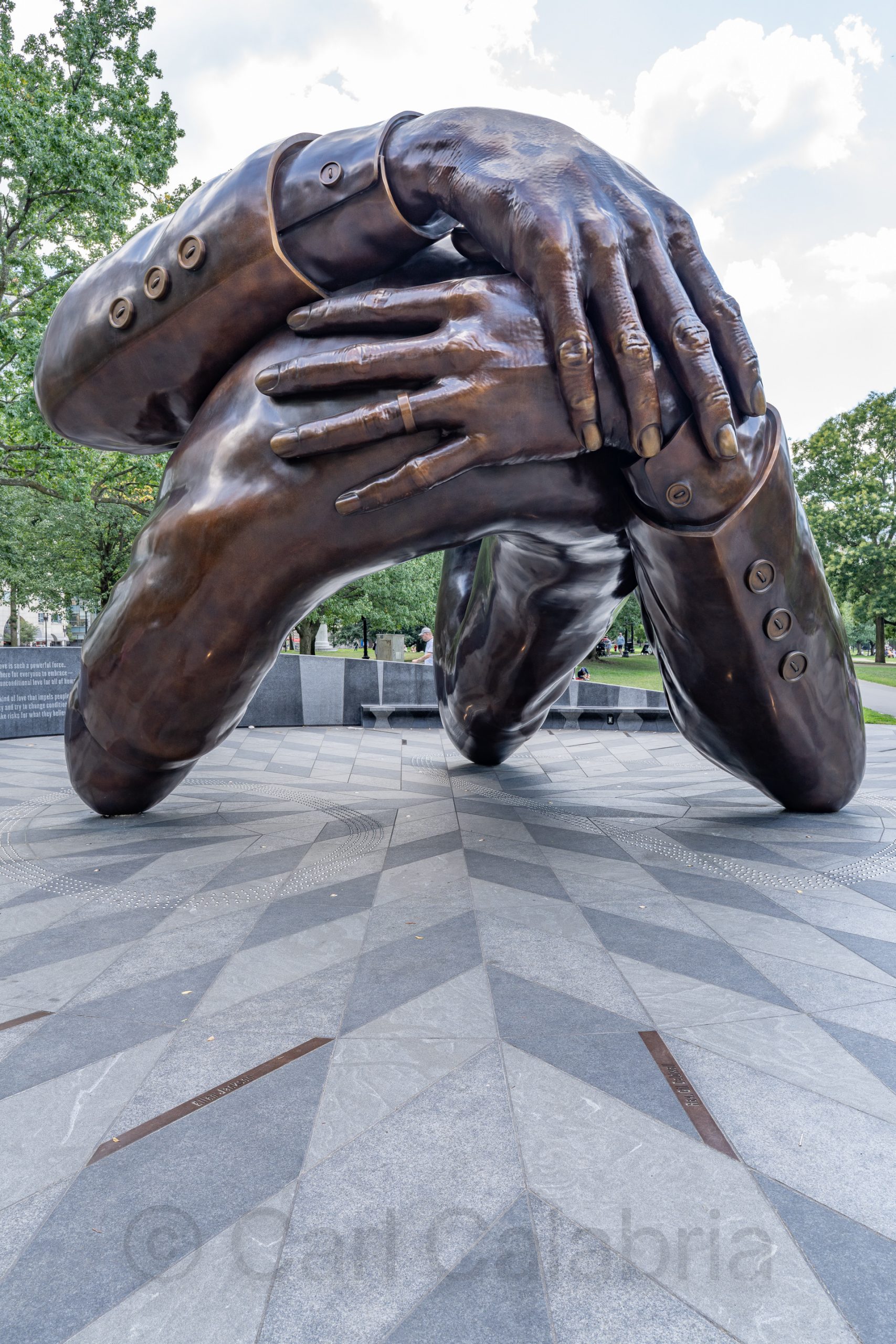
Although it was installed almost three years ago, this was my first opportunity to see The Embrace, a bronze sculpture by Hank Willis Thomas, commemorating Martin Luther King Jr. and Coretta Scott King. It depicts four intertwined arms, representing the hug they shared after he was awarded the Nobel Peace Prize in 1964. The work was created by welding together about 609 smaller pieces.

Later, we walked over to Downtown Crossing, where we attended two musical performances as part of the We Make Noise Festival, which showcases women and gender-expansive artists.

We enjoyed more music when we returned to Concord and a truly unique outdoor venue called the Back Forty. All in all, a very fun day.

The Holy Trinity

Among photography professionals and enthusiasts, the “Holy Trinity” refers to a set of three professional zoom lenses designed to cover a vast range of focal lengths with constant wide apertures. These are:

  • 16-35 mm f/2.8
  • 24-70 mm f/2.8
  • 70-200 mm f/2.8

For the last 8 years, my lens kit has included the following zooms:

  • 16-35 mm f/4
  • 24-105 mm f/4
  • 100-400 mm f/4.5-5.6

I chose f/4 lenses because they are lighter than their equivalent f/2.8 counterparts, and I already have a set of primes for low-light situations. Even though it is quite heavy, I chose the 100-400 mm for shooting birds and soccer.

Today, I began the transition to what I am calling the “Dynamic Duo,” a pair of zoom lenses to replace the trinity.

  • 20-70 mm f/4
  • 70-200 mm f/4 + 1.4x teleconverter

I started with the purchase of a new 20-70 mm f/4 lens (pictured above) to replace my 16-35 mm and 24-105 mm lenses (pictured below), which are now up for sale on Craigslist and Facebook Marketplace. My new kit will weigh 3.2 pounds, down from 5.7 pounds. I will lose 4 mm on the wide end and 120 mm on the long end. It remains to be seen if the reduced range will be worth the lighter load. I would not have gone down this path if I were not already fairly certain about the answer. I used Lightroom to create a histogram for the 115,000 photos I have taken to determine my most frequently used focal lengths. The answer: roughly 6,000 taken at each of 24 mm, 50 mm, 70 mm, 85 mm, 100 mm, and 135 mm.

Favorite Aerial Photo

Every so often, my preferred online photo printer runs a 50% off sale. I take advantage of these occasions to print photos that I would like to display or share. Most recently, I had them print my all-time favorite aerial photo, which I hung in my office today. The photograph is a wide-angle panorama composed of 21 images and stitched together with software. The 3-foot-wide by 1-foot-tall picture is of Mount Fitz Roy, located in Patagonia straddling the border between Argentina and Chile. I took this photograph with my drone during my trip there with Nico in 2019. Rising to 11,170 feet, Fitz Roy dominates this section of the Andes located within Los Glaciares National Park near the village of El Chaltén. On this early morning, Nico hiked to Laguna de Los Tres (pictured below, a small slice of the larger panorama), a climb I had done 7 years earlier with Kyle. I opted instead to hike to a different area where I could launch my drone safely and away from other climbers. The further I flew away from the mountain the more spectacular the panorama became. I was positioned perfectly when the sun lit up the peaks and against all odds, there was not a cloud in the sky.

Wireless Upgrade

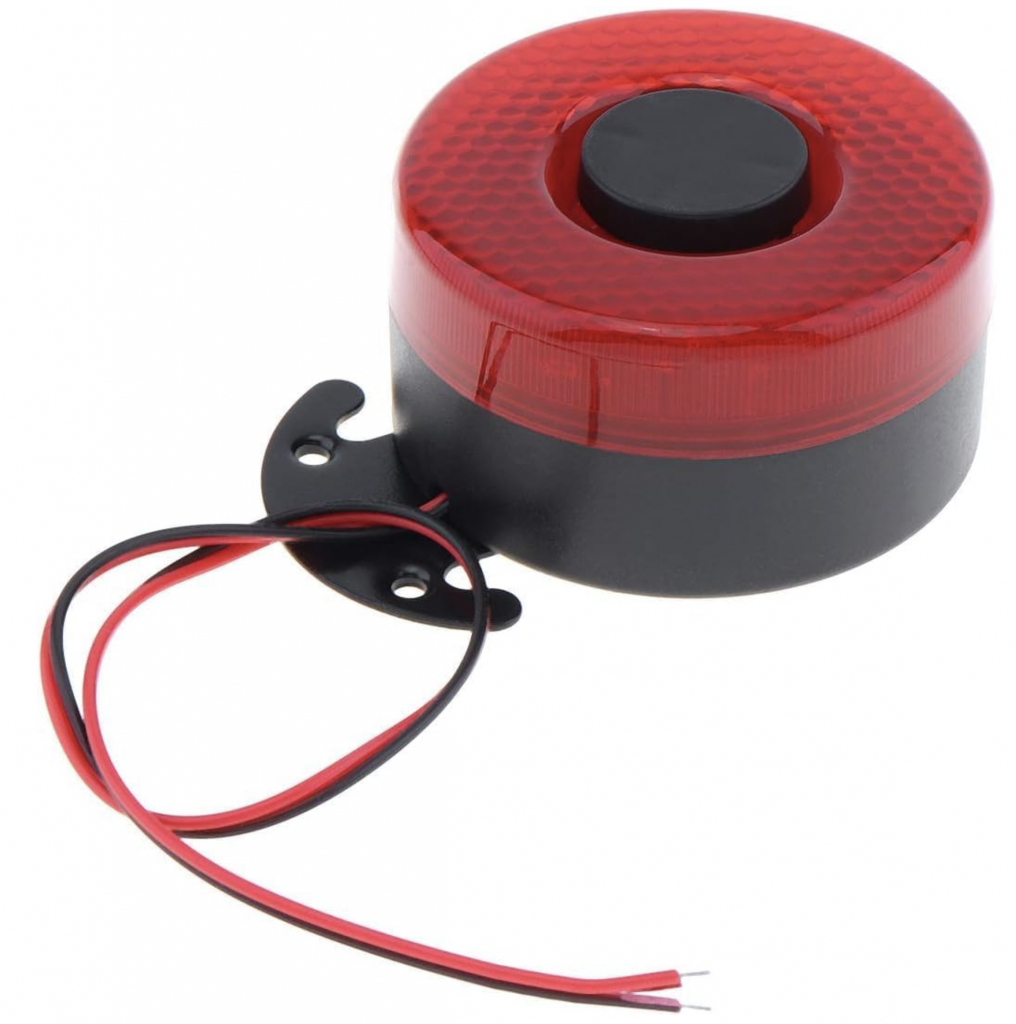
Yesterday, I started testing my newly constructed deionized water window washing system. A feature that distinguishes it from every other system I have seen on the market is the ability to switch between regular water for washing and (expensive) pure water for rinsing using electric solenoid valves rather than a mechanical bypass valve. This allows me to switch from the window washing pole location rather than having to go back to the deionizer tanks. What I realized after washing a few windows is that a wireless remote control switch would be a far superior alternative to the wired version I initially built. Managing an electrical cable in addition to the water feed tube proved to be something of a hassle. For the whopping sum of $12, I purchased a wireless transmitter, receiver, and case to upgrade my system. I initially considered this approach but was concerned that a transmission might get dropped and leave the system in the deionized delivery mode wasting the expensive pure water. For an additional $6, I will be adding the beeper/flasher pictured below which will provide a visual and audible alert anytime deionized water is being used.

New Arrivals

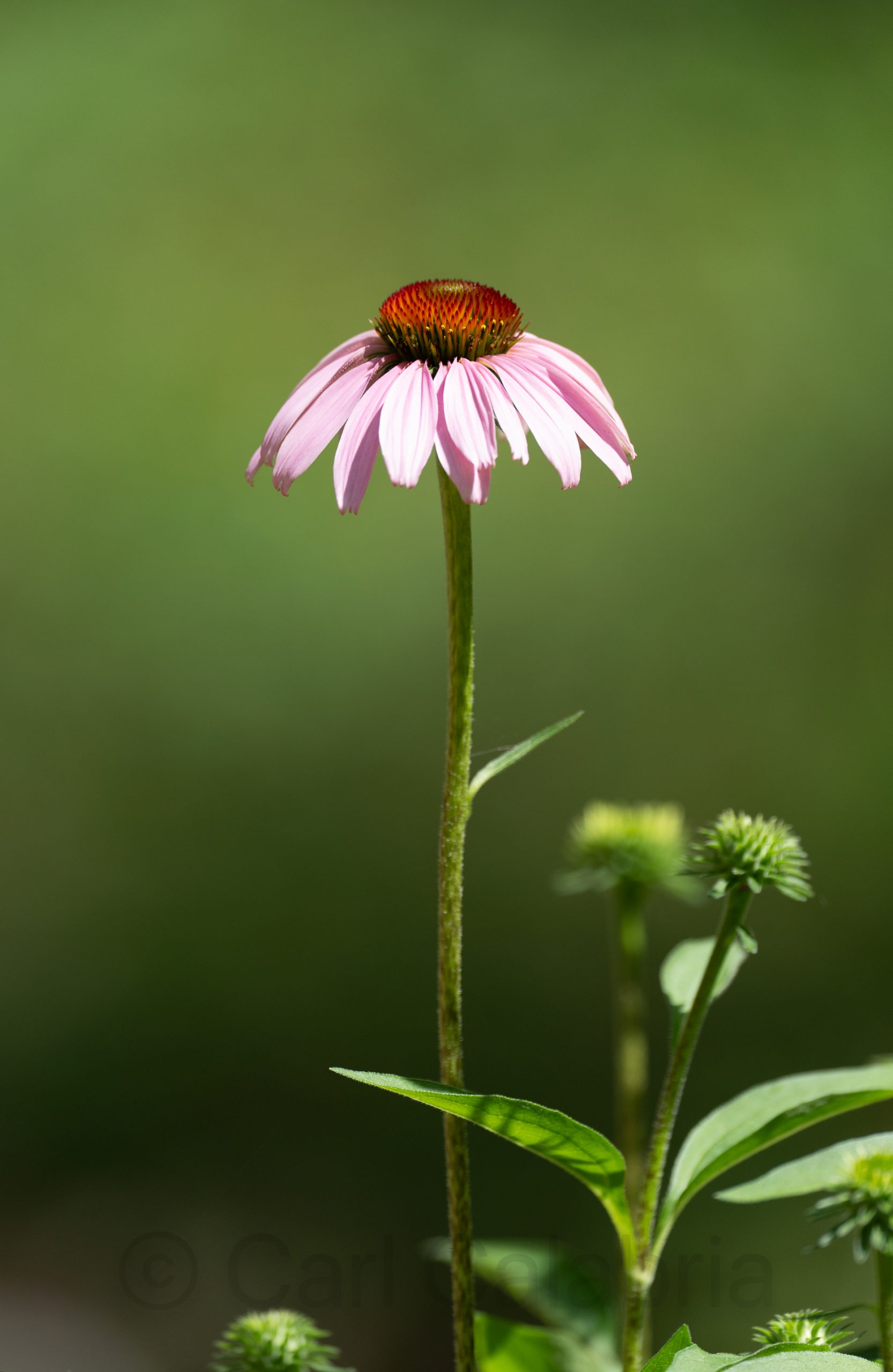
Against all odds, several of the coneflowers that Jeanine planted last year are blooming. Most succumbed to the voracious appetite of our resident groundhogs, who have a particular fancy for the young sprouts.

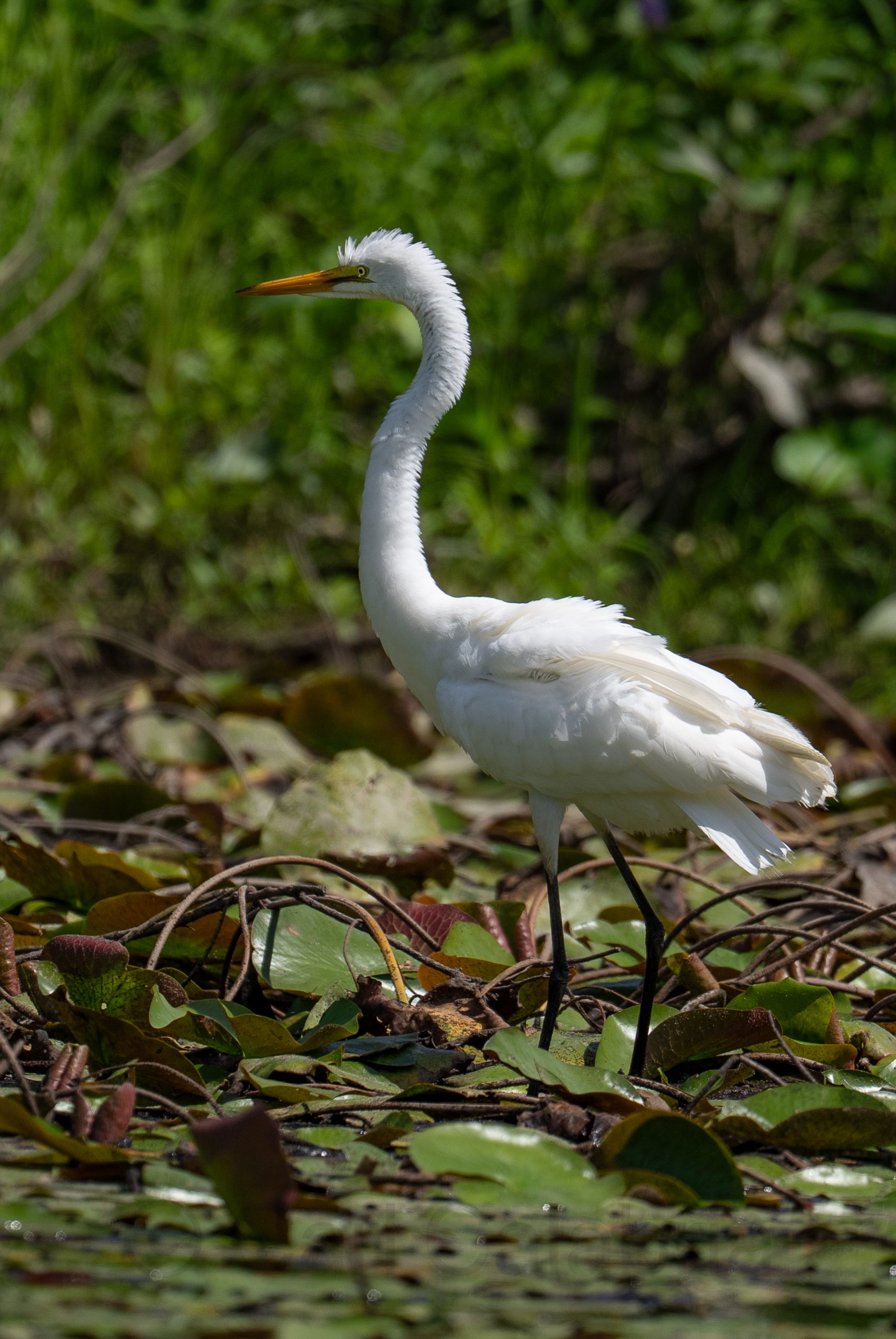
Recently, the water level in the Sudbury River has dropped significantly, exposing wide enough banks to create a nice area for walking along the river edge. I took advantage of this to explore and was rewarded with sightings of a Great Egret and what I believe is a juvenile Sharp-Shinned Hawk.

Baby Snapping Turtles

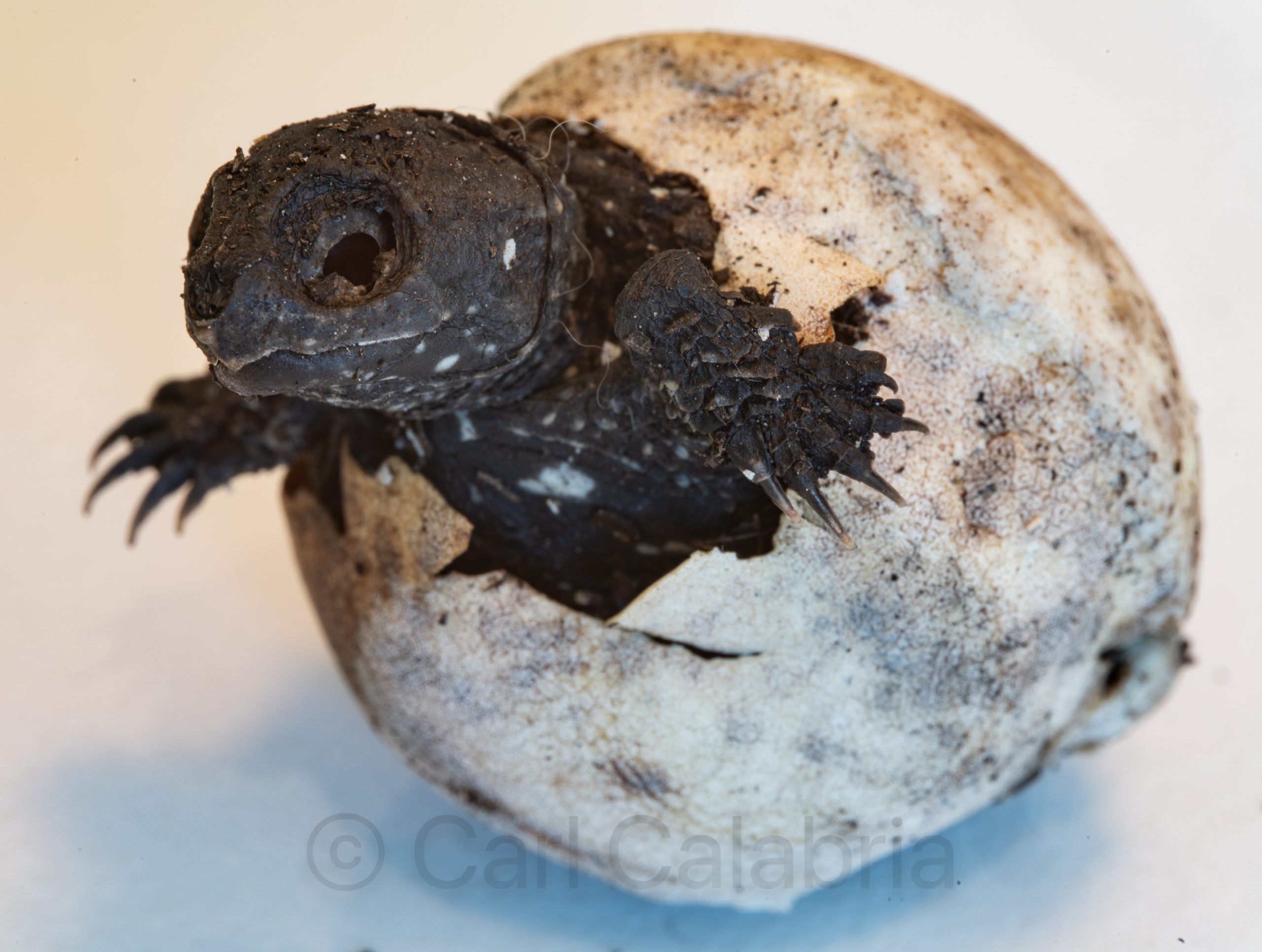
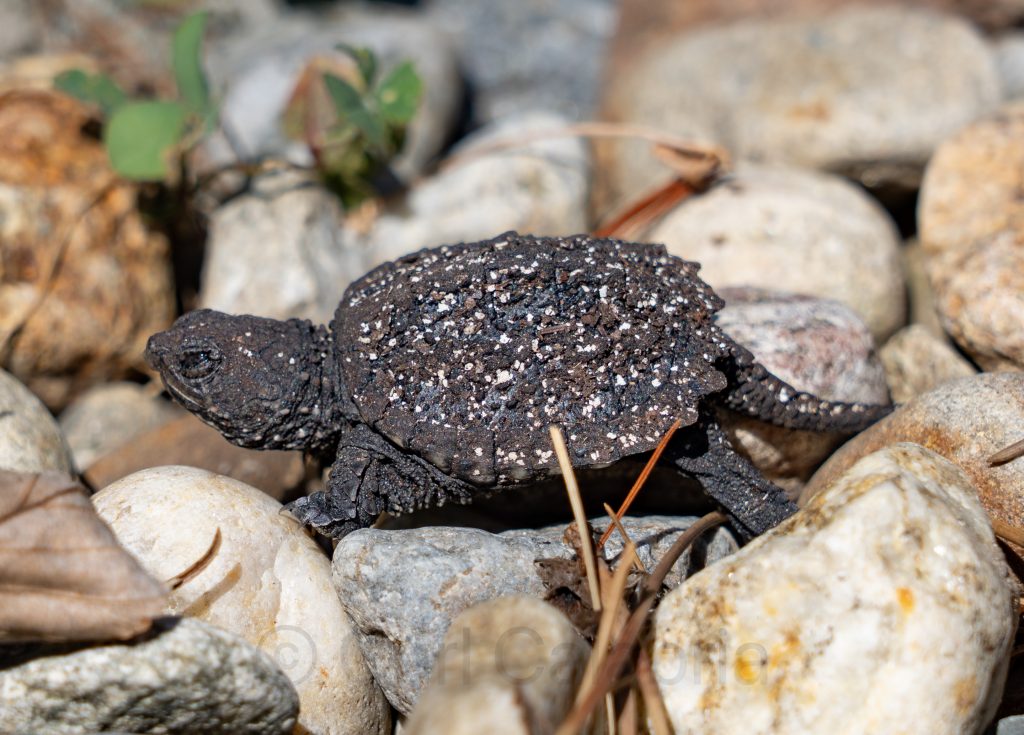
Back in early June, we were visited by a large snapping turtle, which deposited a clutch of eggs in the compost pile at the end of our driveway turnaround. We left the pile undisturbed in the hope that those eggs would hatch. Today, while working in the yard, I spotted a baby turtle making its way across our driveway and into the river rocks that line it. When I investigated the compost pile for signs of further hatchlings, I discovered the poor little fellow pictured above, who was not strong enough to break free from his shell.

Chipping Away

I spent a couple of hours today “chipping away” at our wood chip piles. Of the 21 tons we started with, I estimate that only 9 remain, all to be spread adjacent to the street. Pictured above are some of the areas that have already been filled in. Given the August heat, I am only able to work for one or two hours a day. It provides a surprisingly effective workout for both strength and cardiovascular training. I keep telling myself that it is a good way to prepare for the fall soccer season, but that remains to be verified. The trick has been to do a little bit every day. Kyle has helped me on two occasions, which made the work go three times faster.

I also completed the design of a switch enclosure for my new deionized window washing system. It will get strapped to the carbon fiber extension pole, allowing me to select between regular water for washing and pure deionized water for the final rinse. The switch will be press fit into the enclosure.

Dual Deionizer

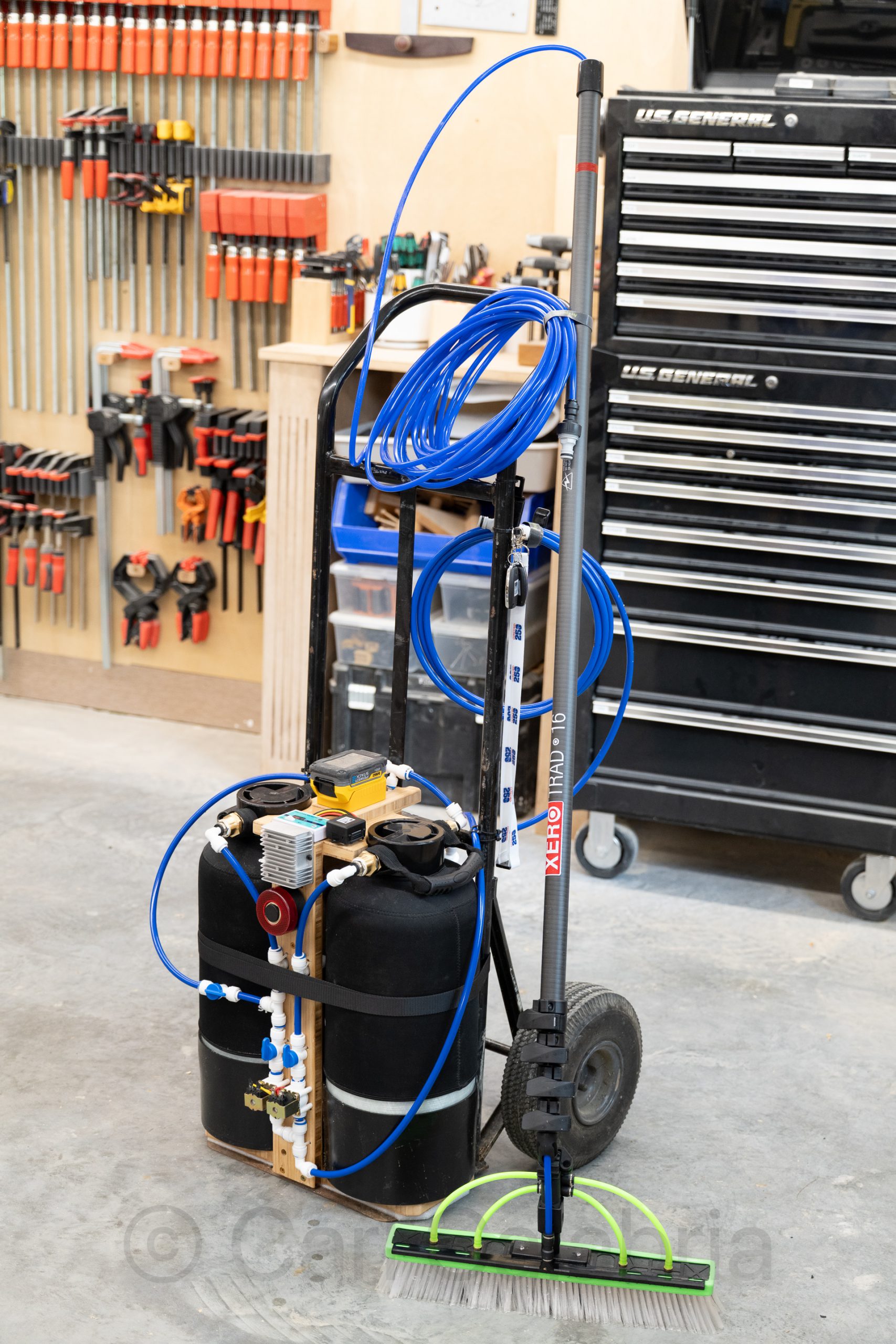
In response to a recent post about window washing, a former colleague reached out and shared his approach, which utilizes deionized water for a spot-free final rinse, replacing a squeegee with a pole mounted water fed brush. After a brief amount of research, it proved to be a superior method requiring less effort and producing better results. I identified commercially available systems using this approach, but these generally cost several thousand dollars, so I set out to build my own. The expensive bit is creating pure deionizer water. One method uses a reverse osmosis filter to do the heavy demineralization and a resin-based deionization filter to do the finishing. I opted for what is called a dual deionizer approach which uses two resin filters in series. When the first filter has reached its service capacity (400 gallons in my case, a function of the total dissolved solids in Concord water) you replace the resin inside and reverse the order of the tanks in the system. This allows you to squeeze every bit of useable filtration out of each filter while insuring an uninterrupted supply of pure water.

Pictured above is the system I built. It incorporates two 10-liter resin tanks, a three-channel TDS (total dissolved solids) meter, three flow control valves, two solenoid water valves powered by a DeWalt battery-driven 20V to 12V converter, a three-way switch at the end of a long cord, and quick-connect fittings for the water supply and output. The switch and solenoid valves allow me to use unfiltered water for extended washing and initial rinsing. When it is time for the final deionized water rinse, I throw the switch, wait 5 seconds for the water line to the pole-mounted brush to clear. Using this method of deionized water conservation, I estimate that I will use only 1/2 gallon per window. This translates to roughly 20 gallons per whole house window cleaning which I plan to do twice a year. Thus it will be 10 years before I have to do my first resin replacement at a cost of $80.

I constructed the whole unit on a wood frame that can be lashed to a hand truck for easy transportation when in use. The last thing I need to do is 3D print an enclosure for the three-way switch so that it can be mounted to the extension pole for easy actuation. The total cost for the deionizer was about $400. The carbon fiber extension pole was $250, and the water-fed brush and tubing were $250. All in, my DIY window washing system costs less than a single professional cleaning and should be a lot easier to use than my current squeegee setup.

Motion Study

Our hummingbird feeder has been quite a hit with our local population. There was enough light today that I could crank my shutter speed way up to freeze motion on a sequence of shots illustrating one full wing flap cycle.

After the Storm

Maya is set to move to a new apartment at the end of the month and asked if we had any moving boxes left over. Although the answer was no, Jeanine contacted a neighbor who moved in across the street yesterday, who was happy to unload hers. We delivered them to Maya late this afternoon, and she thanked us with a homemade Korean beef rice bowl dinner. On the way into Somerville, we drove into a massive thunderstorm, which ended as quickly as it started as we pulled up to Maya’s apartment. On the way home, the massive clouds still in the area were lit up by the setting sun. I wish I had pulled over for a better picture of the dramatic lighting.

Hummers

At Jeanine’s behest, I installed a pole near the patio on which to hang a pair of hummingbird feeders last weekend. Since then, we have had several guests. They prefer to dine in the morning and from late afternoon until dusk. I can recognize at least three different birds so far. Surprisingly, hummingbirds are not good at sharing. Even though we have two feeders, they will “fight” for minutes on end to determine who will get to feast on Jeanine’s special nectar recipe. “Fighting” involves dive bombing each other until someone relents. It is highly entertaining, and the position of the feeders allows us to watch from the living room, main bedroom, and my office.

Equally cute is the baby turkey that has been finding lots to eat in our clover patch.

Ego No Go

My Ego battery-powered snowblower is one of my favorite tools. It works better than the exceptionally good Honda snowblowers I have owned in the past. I cannot say the same for Ego’s pressure washer. In many ways, it is a very well-designed machine, but it has a few shortcomings that led me to return it less than an hour after purchasing it. The wand handle has a clever display and a pressure control switch that is coupled to the main unit by Bluetooth. It works fine when you are standing close by, but loses connection when you are working at the limit of the hose length or when your body shields the wand from the base unit. In my book an intermittent control function is worse than nothing at all. Next, the indicators for low, high and turbo pressure on both the base unit and wand are completely unreadable in bright sunlight. Regardless of the machines other strengths, I cannot tolerate a poor user interface.
Katahdin

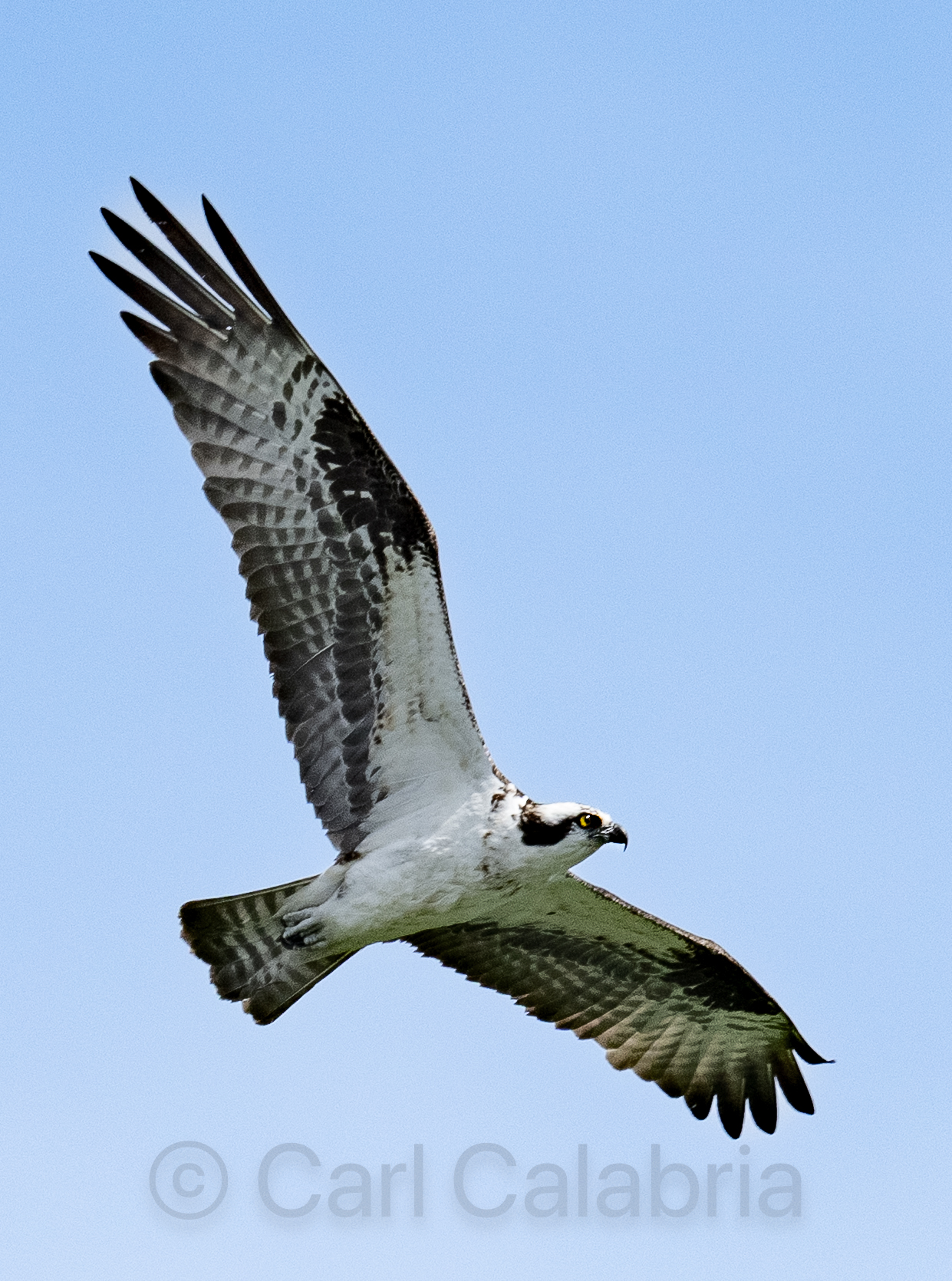
Mount Katahdin is the highest mountain in Maine, standing at 5,269 feet, and is the centerpiece of Baxter State Park. It is named “Katahdin,” meaning “Great Mountain” by the Penobscot Native Americans, and serves as the northern terminus of the Appalachian Trail. The mountain is known for its rugged terrain, unique alpine environment, cultural significance to indigenous peoples, and is a popular but strenuous hiking destination. Nico shared this image from his weekend in Maine, where he combined work with hiking and time spent with friends.

Jamestown & Newport

The day started with Jeanine picking basil from our herb garden for a tomato and mozzarella salad. This would be one of the dishes shared over lunch with our good friends, Louanne and Alex Mackenzie. We were invited to join them for a driving/ferry tour of Jamestown and Newport, Rhode Island. They live in Providence and offered to give us a grand tour of their neck of the woods. Their daughter, Fiona, is one of Maya’s closest friends from high school and a current flatmate. Alex and I play for the same Concord football club, although he usually plays one age division down from me.

On the way to Jamestown, we stopped at the birthplace of Gilbert Stuart, one of America’s foremost portrait artists, best known for his iconic unfinished portrait of George Washington, which became the image on the U.S. one-dollar bill. He painted over one thousand portraits, including six presidents and numerous prominent figures of the early United States, helping shape how generations visualize America’s founders. Despite his artistic achievements, Stuart struggled financially throughout his life and died in 1828, buried in an unmarked grave in Boston.

The Jamestown Windmill, a three-story, octagonal windmill built in 1787, still stands today and operated until 1896. The hill on which it is built includes farmsteads, the Quaker Meetinghouse, and has archaeological significance due to evidence of prehistoric Native American occupation. The windmill, an important part of the local agricultural community, was built after the original 1730 mill and is maintained as a working historic site by the Jamestown Historical Society.

The Beavertail Lighthouse, located on the southern tip of Conanicut Island, was originally established in 1749 and is the third-oldest lighthouse in the United States. The current granite tower was built in 1856 and marks the entrance to Narragansett Bay, serving as an important navigation aid for vessels. The lighthouse—and an associated museum—has a rich history, including damage during the Revolutionary War and the 1938 hurricane. It is so named for the shape of the tip of the island on which it was built.

We paused for a brief hike and lunch in Fort Wetherill State Park. From the marina there, we got to watch a sailing regatta in progress. Its start was signaled by a thunderous blast from a cannon located at nearby Fort Adams.

A short ferry ride took us to 18.5 acre Rose Island, known for its historic lighthouse and military significance. The Rose Island Lighthouse was built in 1870 on the site of Fort Hamilton’s southwest bastion and served as an important navigation aid for a century until it was decommissioned in 1970 due to the construction of the Newport Pell Bridge. After a period of abandonment and vandalism, local efforts in the 1980s led to its restoration, and since 1993, the lighthouse functions as a private aid to navigation and a museum open to the public. Rose Island played a significant role as part of the Naval Torpedo Station at Newport starting in 1883, when it was designated as a U.S. Naval Magazine and used primarily for storing explosives and torpedoes. The island’s facilities included storage for gun-cotton and other munitions, as well as serving as a torpedo warhead arming facility during World Wars I and II.

After returning from Rose Island, our next stop was the Sachuest Point National Wildlife Refuge, where we worked off our lunch with a traverse of the Ocean View Loop Trail.

We ended the day with dinner at Flo’s Clam Shack, which features a distinctive shark sculpture in their outdoor dining area. All-in-all, a thoroughly delightful day.

Rhythms

I recently purchased a device that monitors and records carbon dioxide, temperature, and humidity levels. I am using it to improve air quality and comfort in our home. The top chart shows CO2 levels measured hourly over five days in our bedroom, while the bottom chart displays temperature. The CO2 pattern peaks every morning at 7 AM, driven by our respiration in the closed room. Optimal levels of CO2 are in the range of 400-800 ppm. Based on this information, I have programmed our ventilation system to increase fresh air from 5 AM to 7 AM. The reason for not leaving the system turned up all day is that it wastes energy. I will remeasure CO2 levels over the next week and refine the ventilation schedule as needed.

The temperature chart reflects the summertime programming of our HVAC system during a week with outdoor temps in the 90s. The AC starts running at 8 PM and cools the house to 66°F by bedtime (our optimal sleeping temperature). At 4 AM, it turns off, and the temperature ramps up to 71°F over the next 12 hours or so.

NERD ALERT: When I get some time, I will use this data to see how accurate my HVAC design calculations were.

One Ton / Day

Armed with a new 10 cubic foot yard cart that I picked up this morning, I set out to attack the first of four wood chip piles that now grace our property. It took twelve 5-gallon buckets to fill the cart, which equals 8 cubic feet. So much for the Gorilla brand marketing claim of ten. The density of Red Pine wood chips is ~33 pounds per cubic foot, making the cart total ~264 pounds. After an hour of work, I managed to install 8 carts’ worth of wood chips and was ready to call it a day. This puts my installation rate at one ton per hour. At this pace, it will take me 20 more days to conquer all four piles. When temperatures begin to drop a bit, I suspect I will be able to work for more than an hour a day. If nothing else, I should be in pretty good shape by the time my fall soccer season starts.

21 Tons

Our neighbors across the street were having twenty dead or nearly dead Red pines removed from their property today. I asked the tree company if we could have the wood chips. They were more than happy to dump them across the street rather than haul them across the county to their approved site. The darker batch of chips in the photo above came from a different neighbor who was also having tree work done today. In total, we received 15 tons of chips, now located in two massive piles on either side of the top of our driveway. Over the coming weeks and months, I will be getting a good workout as I spread these piles to where they are needed.

UPDATE: Since posting, the tree company asked if we could take another 6 tons, which are now distributed at the edges of our property near the street.

Kidney Stone Geode

My blog serves many purposes. It is a family journal and archive. It is a creative outlet for my photography and writing. It is a vehicle for sharing ideas and documenting projects. And sometimes, it serves as a medical record. For this, I apologize to visitors who were hoping to find something else today. Recently, I documented Maya’s broken fifth metatarsal x-rays, and today, I am memorializing my passing of yet another kidney stone. This stone measured 1.5 x 1.0 mm and caused minimal pain. I added it to my collection of passed stones, numbering in the hundreds, but not before breaking it in half to examine the structure inside. What I discovered reminded me a little of a geode, the most common type of mineral formations with hollow insides. They are typically hollow, globular rock structures lined with crystals.

33 Years of Pride

33 years ago today, I experienced more joy and happiness than I imagined possible. I had become a father. Having found the woman I wanted to spend the rest of my life with, my greatest desire was to have a child with her. I was secretly hoping for a girl, but the instant the doctor announced Kyle’s gender, I could imagine nothing more perfect. I envisioned the future we would have together. I would teach him to build things, wrestle, play soccer, and share my love of camping and hiking. Looking back, we have done all those things and more.

An excellent student, athlete, and an entrepreneur at heart, he started his own company while still in high school and reinvented himself as a data engineer when the field of finance proved unsatisfying. Now he is beginning to generate passive income from a home rental business while dipping a toe in the sphere of AI engineering. All this, while traveling the world as a digital nomad working remotely from all over the globe. I could not be more proud of him for all he has achieved.

For two years, Kyle was the center of our world. Normally, a second child receives less attention because they have to share their parents with a sibling. In our case, Nico received a disproportionate amount of our focus as we attended to his special circumstance. Even at his very young age, Kyle seemed to understand this, and what’s more, he was a fierce advocate for and defender of his baby brother and remains his biggest supporter. When Maya arrived, Jeanine and I had had more than our fill of “boy energy” and were so ready to welcome a little girl to the family. To be honest, she became the focal point for everyone. Once again, Kyle was a doting big brother which is not to say that he did not occasionally torment his siblings as is the prerogative of all first born.

Although Kyle grew up during the most demanding period of my professional career, I always found time to attend his soccer matches and enjoyed the flair with which he played the game. Even more memorable were the three father-son adventures we embarked on together. The first, to Belize when he was 13. There we went spelunking, snorkeling, underground river rafting, and kite surfing in a tropical paradise. The second time, when he was 20, we trekked through Chile’s Torres Del Paine National Park, and then hiked Argentina’s Mount Fitz Roy and visited the Perito Moreno glacier, ending our trip in Buenos Aires. Finally, the year we spent working together on weekends to renovate the basement of the home he purchased in Medford. These “journeys,” afforded me a front row seat to Kyle’s evolution from boyhood to manhood and I will forever cherish that time spent together.

Happy Birthday, Kyle.

Window Washing

This afternoon, it was not too hot, not too sunny, and not too windy. Perfect conditions for a chore that I have been putting off for one of the above reasons for some time now. Window washing was never a priority in any of the other homes we have owned. Here, however, we are constantly looking out the windows, and the experience is made all the better when they are squeaky clean. The tool I use for this has a sponge on one side and a squeegee on the other. I mount it on a short pole for the first-floor windows and a long pole for the second-floor windows. These photos, courtesy of our security camera show the basic operation on our smallest windows. I completed 25 of 37 windows and will have to tackle the remaining dozen another time. It may not look like it, but this task is quite the upper body work out and I was happy to burn off some of the calories I ingested last night during the birthday feast for the boys.

Birthday Boys

This evening, we did a joint birthday celebration for Kyle (33) and Nico (31). Maya is just back from Norway, and Nico from Binghamton, NY. I cooked some steaks on the grill, and they were mighty fine if I don’t say so myself. Jeanine prepared fresh corn from Verrill Farm, some of the best we have ever had, as well as a tomato salad and chocolate peanut butter mousse for dessert. I am so grateful we can still hang out like this.

Jeanine just shared this photo from last Friday. Lucia is a neighbor who was visiting with her mother, brother, and dog. She took an interest in my shop, and I wound up coaching her in the construction of a swing seat that she hopes to hang in her backyard. I might have used a straight edge to draw the cut line, but I had to admire her method, which was much faster. I taught her how to safely use the miter saw and drill press, the latter required ensuring that her long hair never came close to the spinning chuck. She was quite pleased with her completed project.

Author, Author

My sister’s new book, “The Power of Impact Circles,” is now available. I ordered my copy on Amazon this morning, and it is expected to arrive next week. Our father, himself the author of two books, would be delighted to see that his eldest daughter and daughter-in-law have both joined him as published authors. I am also thinking of writing a book. I will call it “The Stupidity of Blogging for 20 Years – An Exercise in Daily Suffering.” In all seriousness, I have the utmost respect for all the authors in this family and encourage our next generation to carry on the tradition.

A link to Alissa’s website is here. She will be having a book signing at The Book House of Stuyvesant Plaza on September 20 from 3-5 PM.

Canoe Convoy

Now and again, we see something new on the Sudbury River. Today, a single boat towing 7 canoes passed by the house heading downstream. My guess is that is has something to do with the water chestnut eradication project that has been underway for several weeks. Our neighbor and friend, Dave Witherbee, was skippering the tow boat, and I will ask him about this the next time I see him. I am curious to know how one stops such a flotilla without creating a pileup. I suspect you have to do so very slowly.