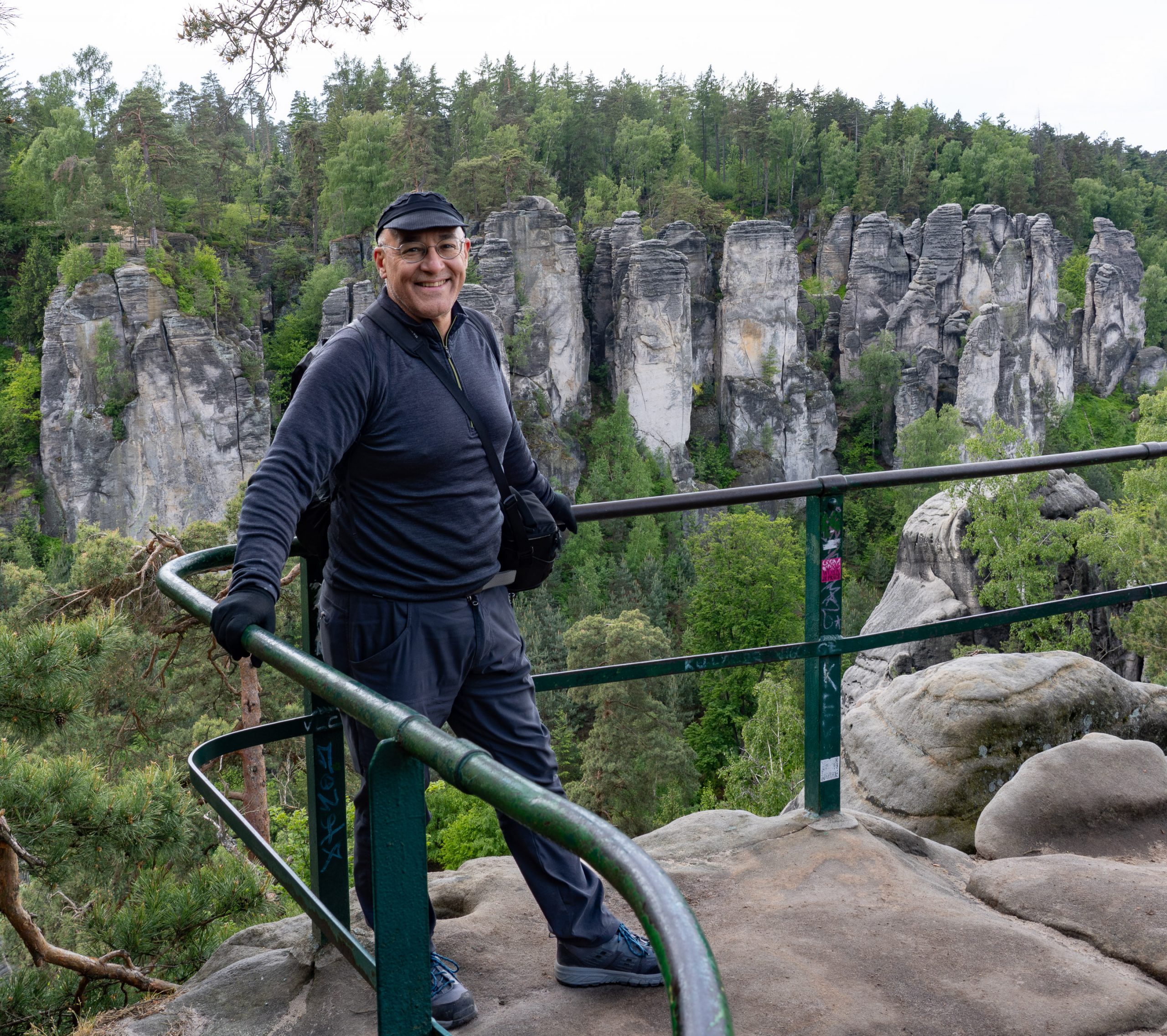
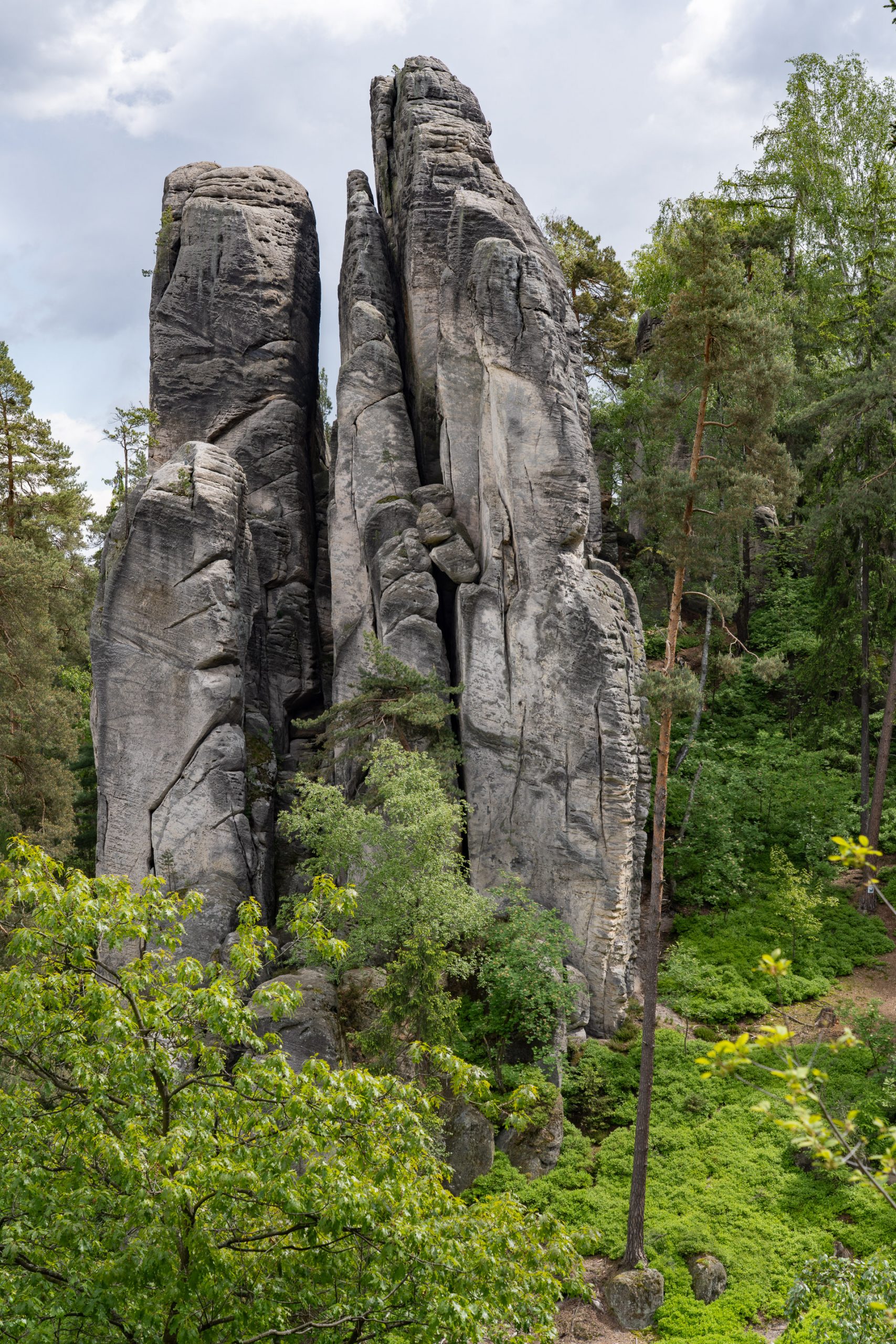
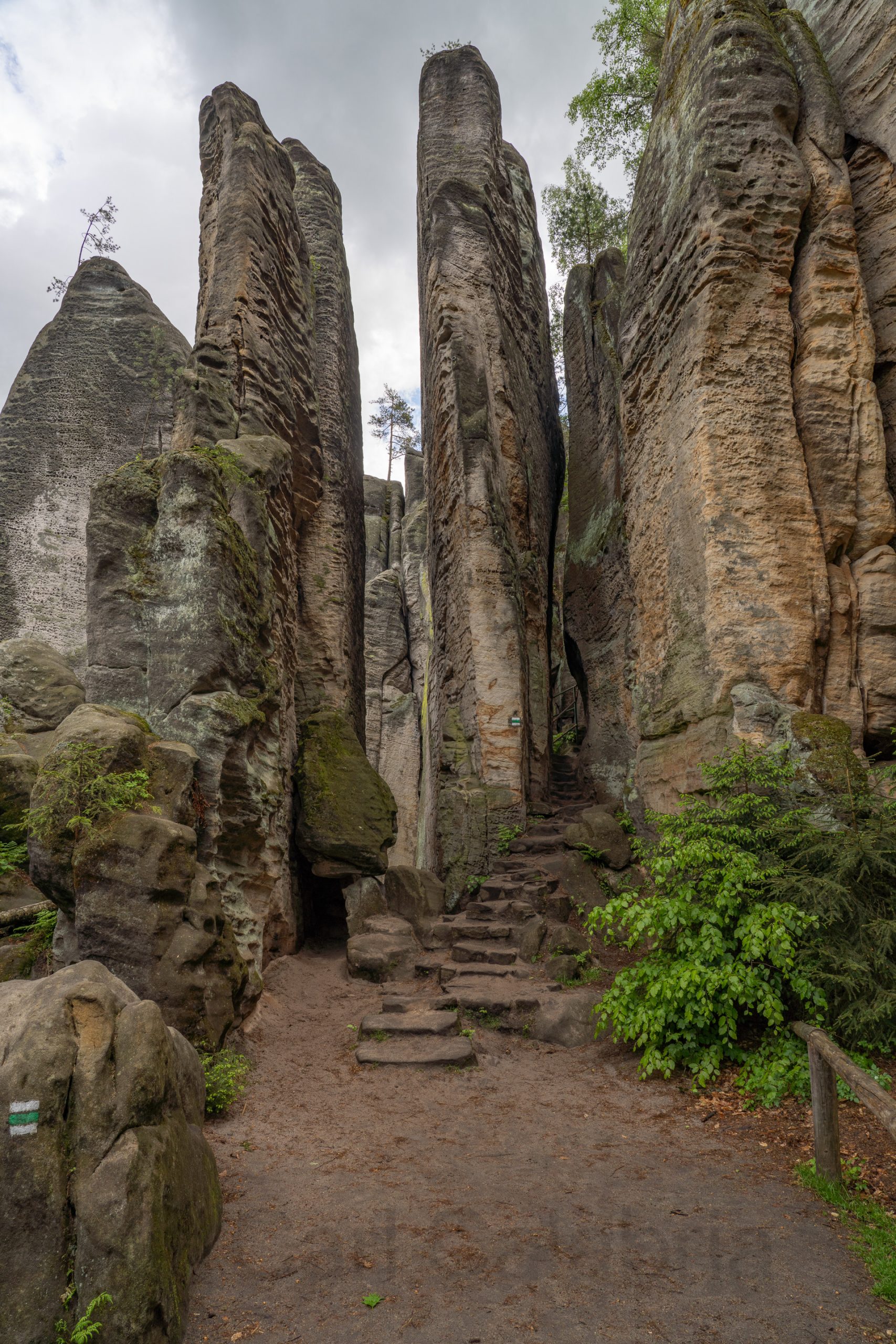
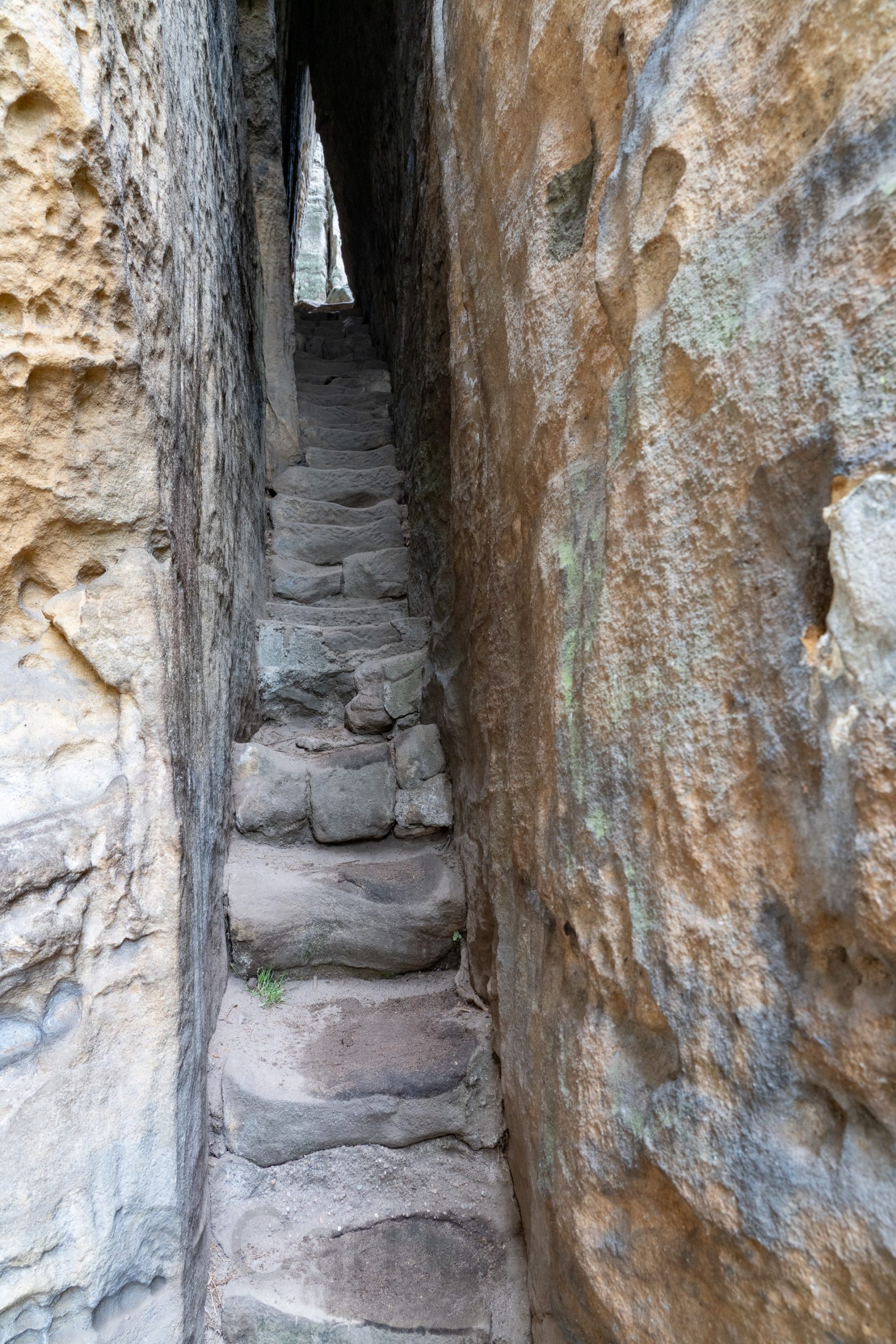
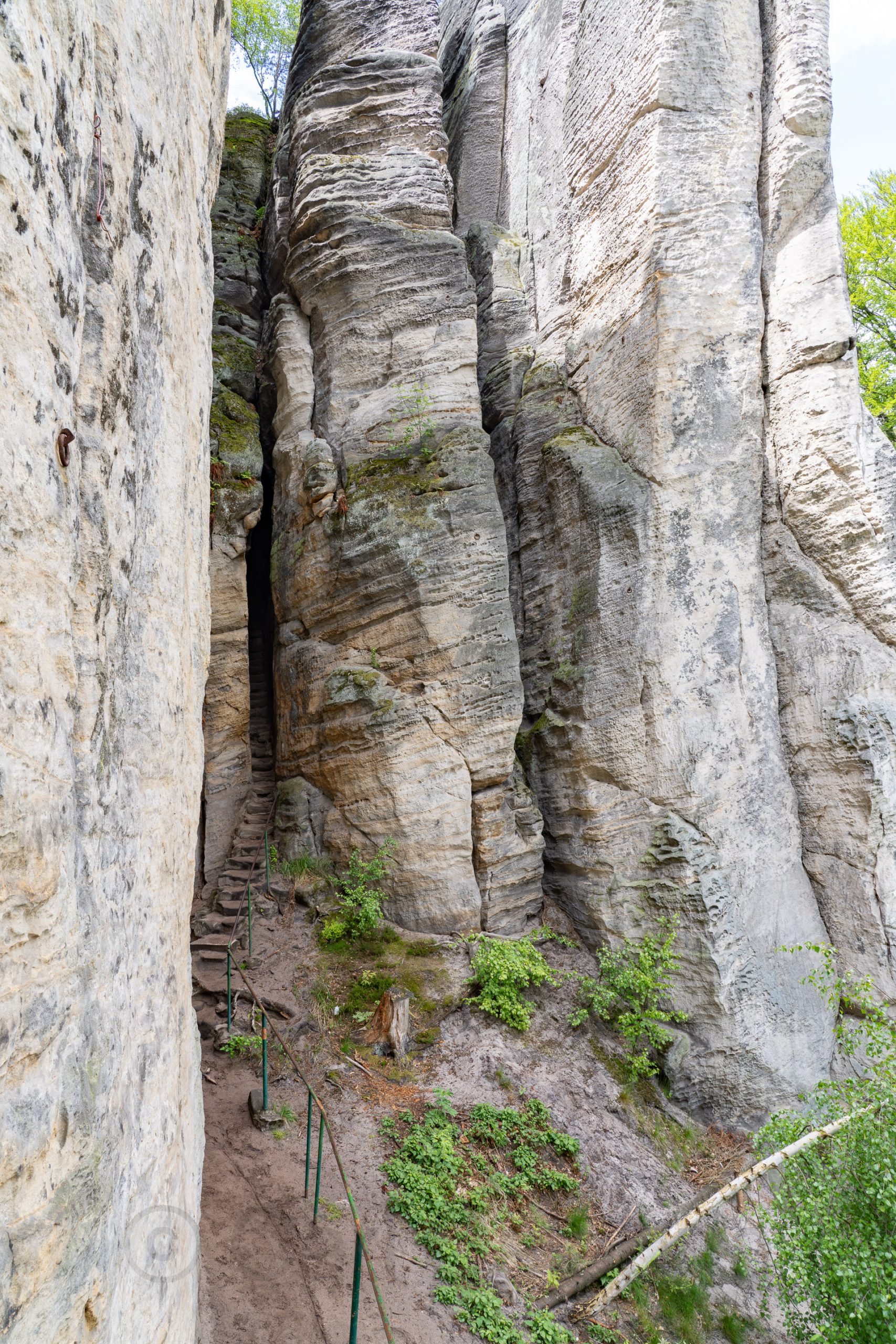
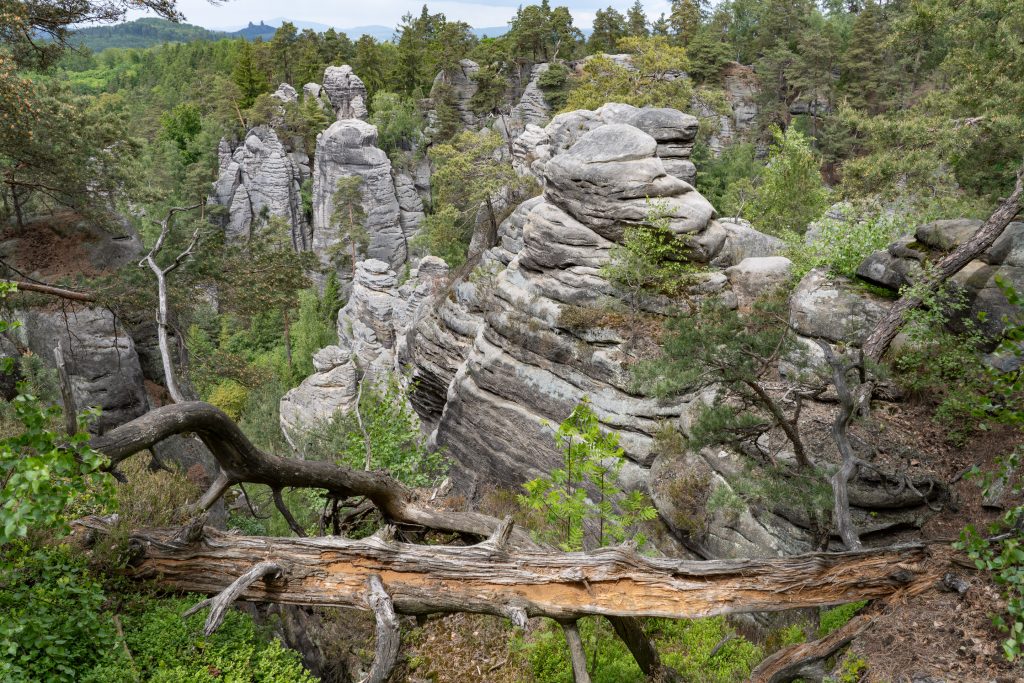
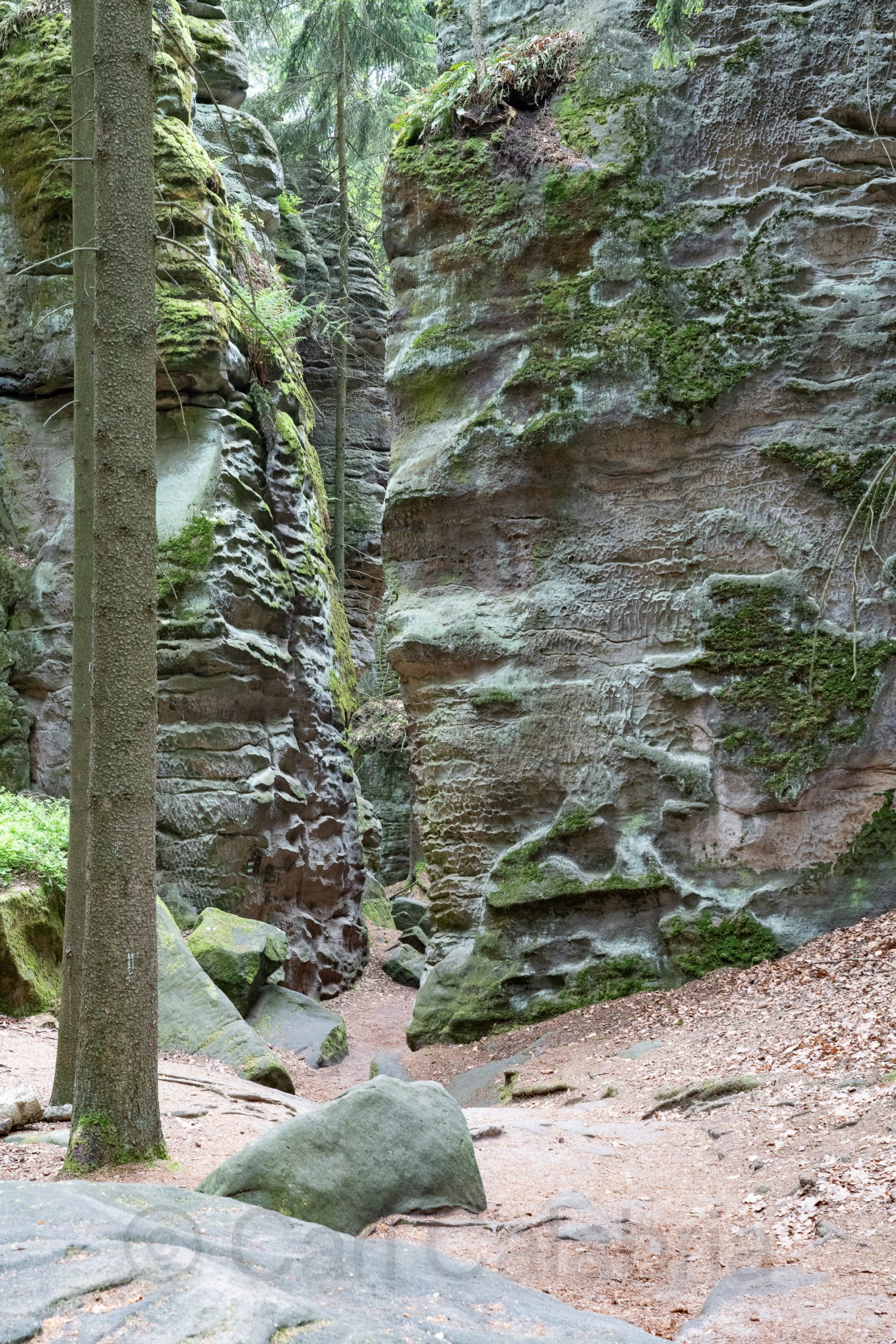
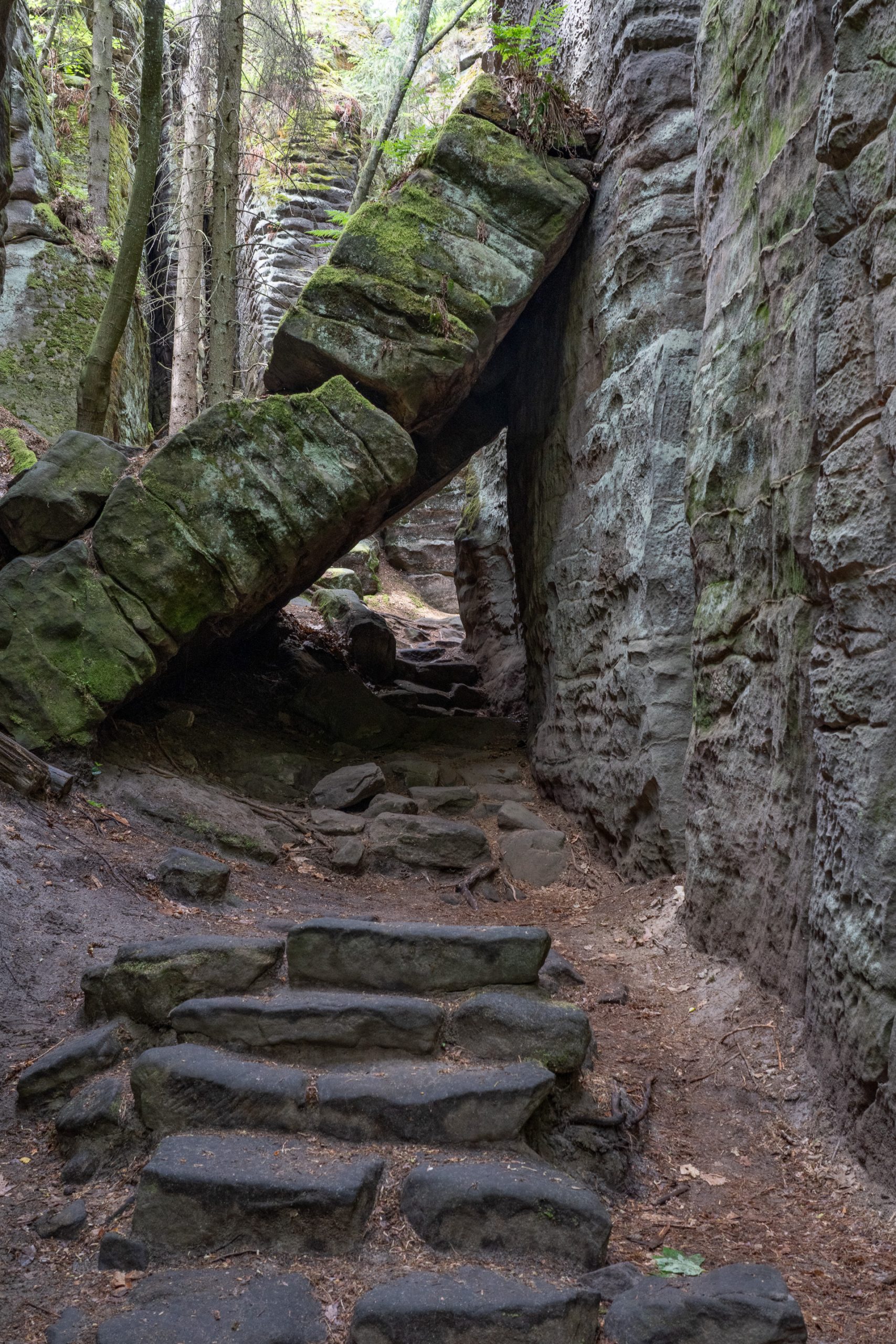
The Prachov Cliffs are a famous sandstone rock formation located about 5 km northwest of Jičín in the Bohemian Paradise (Český ráj) region of the Czech Republic. They have been a protected natural reserve since 1933 and are one of the most iconic natural landmarks of the area. The formations originated from a sandstone plateau formed over 60 million years ago and have been sculpted by wind and rain into unique shapes. The area offers numerous hiking trails with varying lengths and difficulties, featuring steep stone steps, narrow rock passages, and multiple viewpoints providing stunning panoramas of the rock town and surrounding landscape.
Fortunately, I decided to skip the hike to the Pravčická Archway after yesterday’s navigational debacle because I would have never survived the rest of the day had I made that climb as well. When I researched the Prachov Cliffs, I grossly underestimated the difficulty of the 3.5km green blaze trail I elected to take. The short linear hiking distance does not reflect the amount of continuous elevation change up and down, mostly on poorly carved stairs which were hell on my knees. Essentially you climb to the top of one formation and then back down to the ground and over to the next formation, repeat. According to my health app, I climbed the equivalent of 89 floors. That is like climbing up and down the Empire State Building. Making matters worse, I got “lost” and nearly doubled the length of my hike. The reason that “lost” is in quotes is because I diligently followed the green blaze trail which apparently has an optional detour (labeled in Czech only) to a mountainside restaurant way off the path back to my car. When I asked a waiter WTF was going on and pointed to the green blaze painted on the side of the restaurant he laughed and said this happens all the time. If my legs were not so tired from two days of abuse I would have kicked some ass.
Summing up: Czechs suck at trail marking. Despite the arduous climbing, I loved my visit to this place of natural wonder.
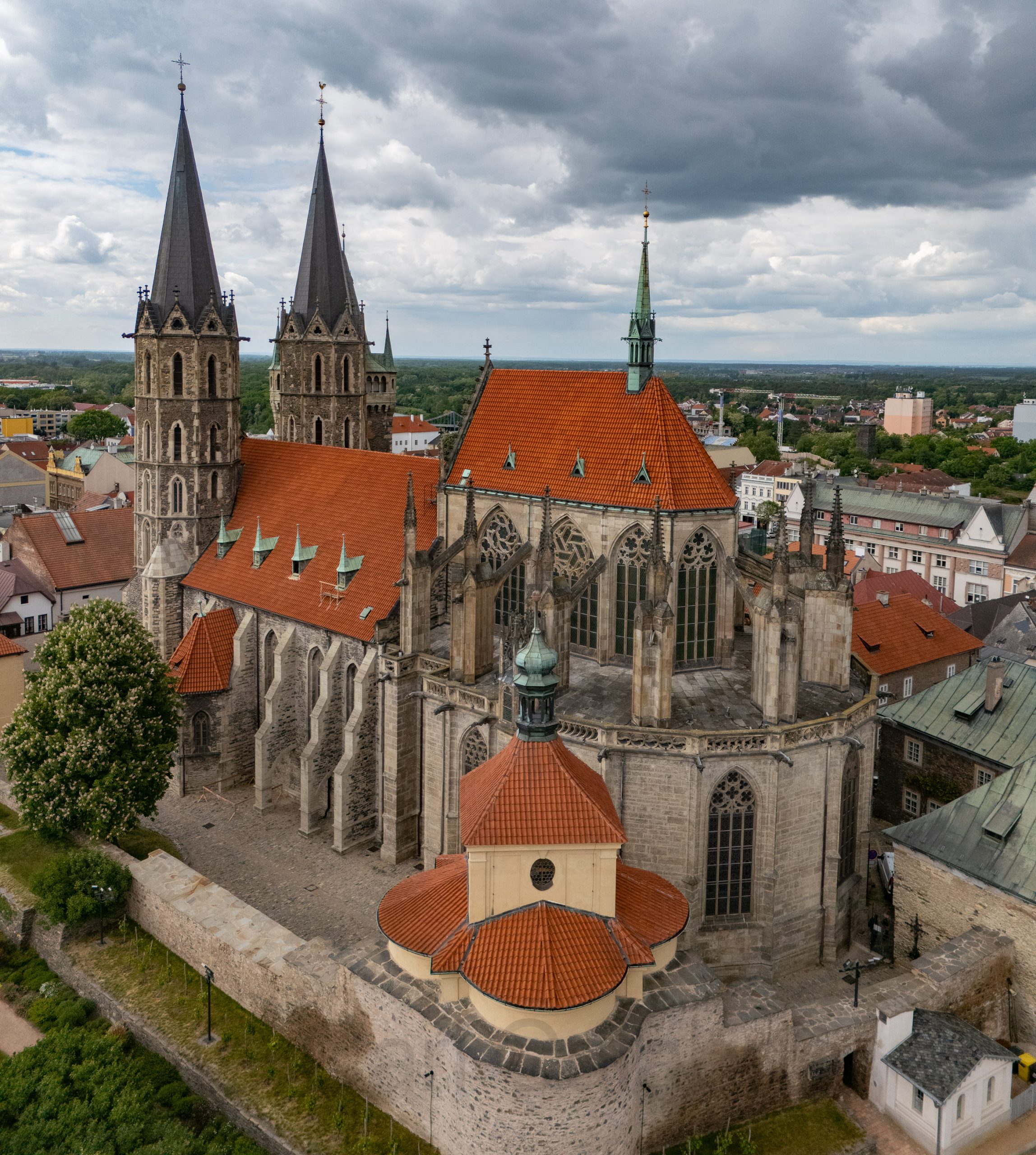
The Cathedral of St. Bartholomew is the dominant landmark of Kolín and was hard not to notice as I drove through the town. It was not on my plan to visit but I just had to stop for a drone photo. Founded in the mid-13th century under King Přemysl Otakar II, the cathedral was constructed in several stages, with significant contributions from the renowned architect Peter Parler, who also worked on St. Vitus Cathedral in Prague. Its three-nave design, original Gothic choir, and twin octagonal towers are notable features. The cathedral has survived fires, wars, and multiple reconstructions, most notably in the 19th century under Josef Mocker, who restored its Gothic character.
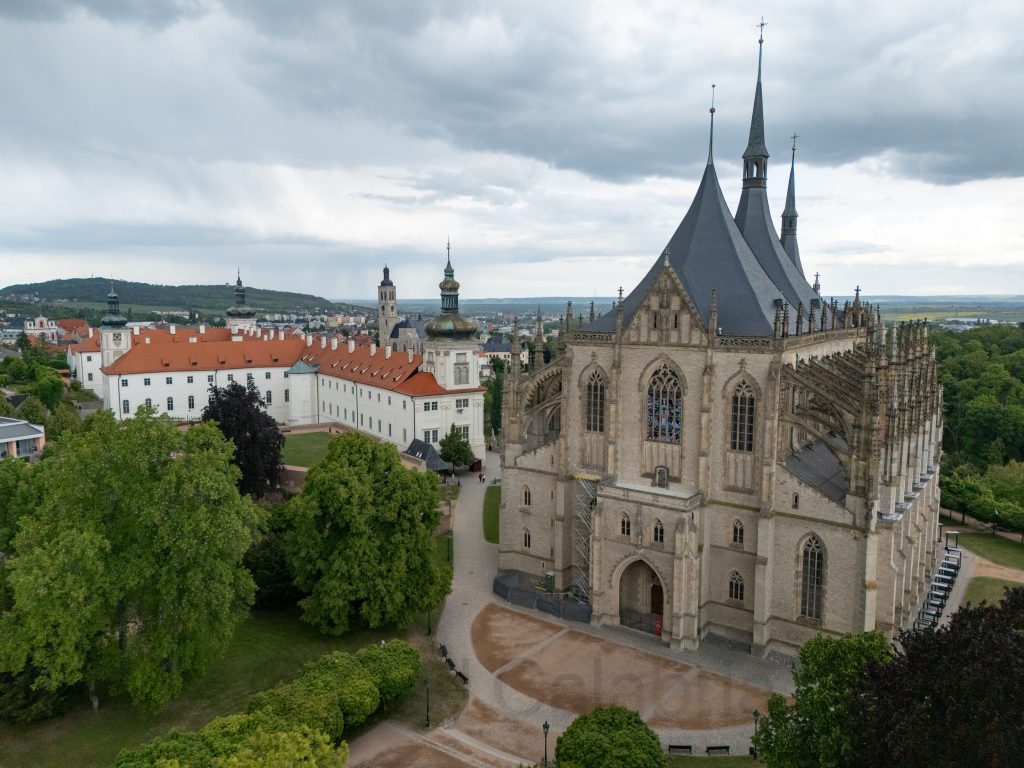
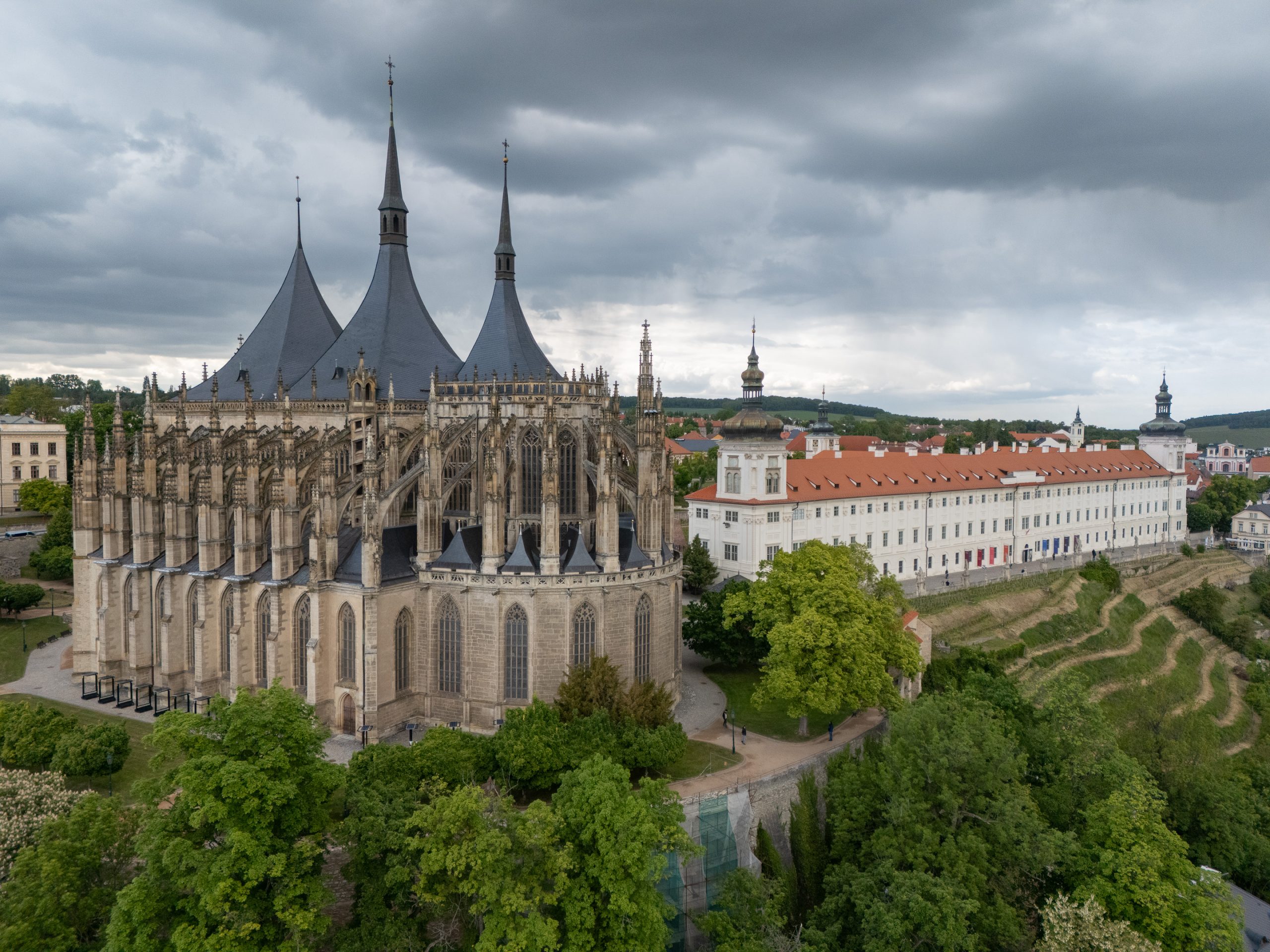
St. Barbara’s Cathedral in Kutná Hora, is a stunning Gothic masterpiece and a UNESCO World Heritage Site, renowned for its architectural beauty and historical significance. Construction began in 1388, inspired by the wealth from the town’s silver mines, with miners as its primary patrons. The cathedral is dedicated to Saint Barbara, the patron saint of miners and those with dangerous occupations. Architecturally, it is a five-aisled Gothic cathedral featuring rare Gothic frescoes, intricate stone craft, and a late Gothic ribbed vault designed by Benedikt Rejt. The cathedral underwent various phases of construction and restoration, with significant neo-Gothic revitalization completed in the early 20th century, including the addition of stained glass windows depicting Christian motifs and historical scenes.
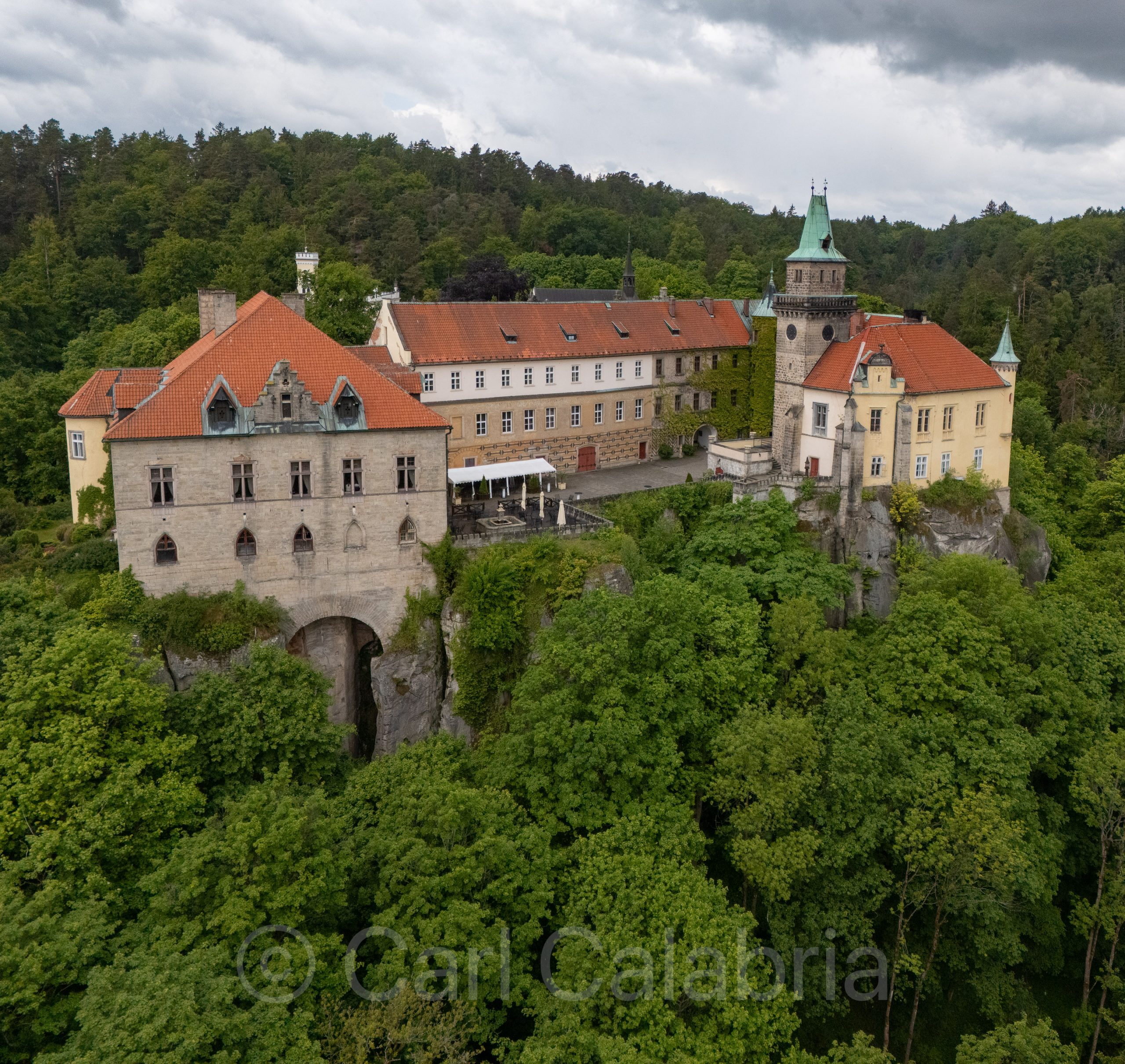
Zámek Hrubá Skála is a historic château located in the Bohemian Paradise region, dramatically perched on sandstone cliffs above the village of Hrubá Skála. Founded in the mid-14th century by Hynek of Valdštejn (Wallenstein), originally as a Gothic castle. Over centuries, it changed hands among notable Czech noble families, including the Smiřickýs, who transformed it into a Renaissance château in the late 16th century. The château underwent several reconstructions-Baroque after a fire in 1710, and finally Neo-Gothic in the mid-19th century under the Aehrenthal family, giving it the romantic appearance seen today. After nationalization in 1945, the château was repurposed for recreational use, causing some damage to its interiors. Today, it operates as a hotel and event venue, with public access to its courtyard, lookout tower, and scenic views.