
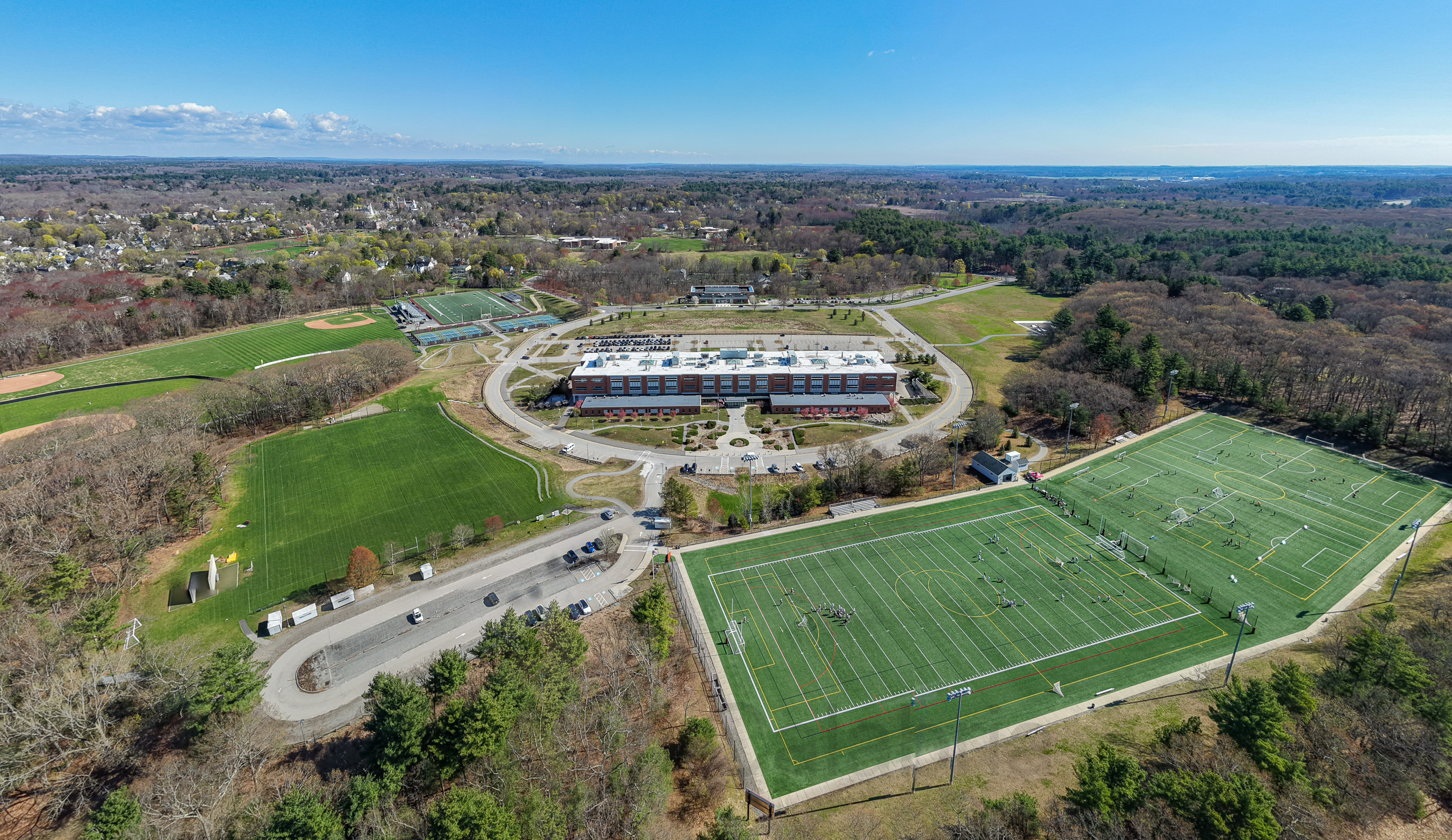
Today I was out shooting a photo assignment for the Concord Bridge at three different locations in town. It was such a nice day that I decided to take some additional photos just for my benefit. Pictured above is a panoramic shot of the Concord Carlisle High School. The soccer field in the foreground is my team’s home turf. Below is the Wright Tavern with the First Parish of Concord in the background; the last photo shows the Holy Family Parish and the Old Burying Ground.
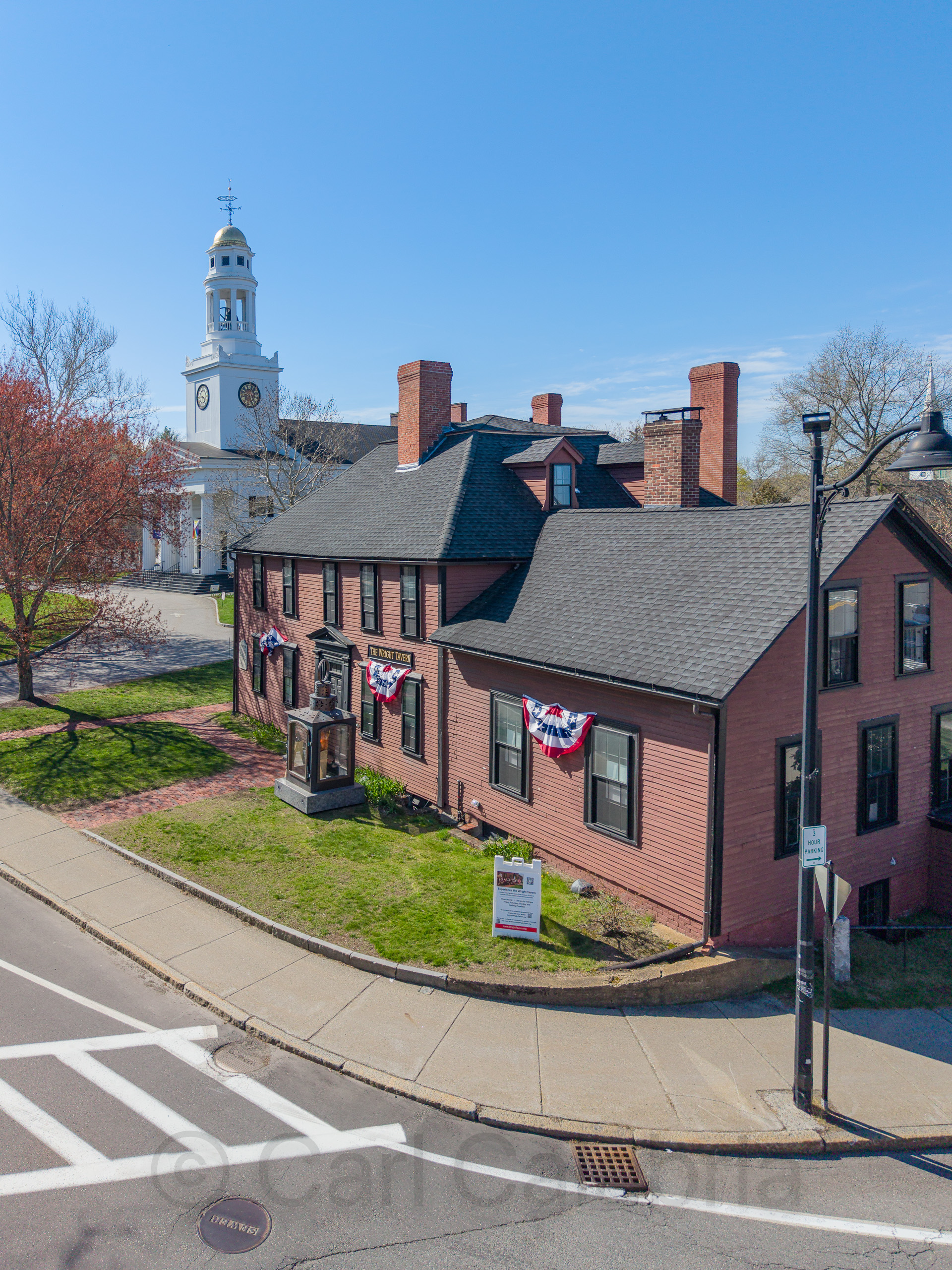
The Wright Tavern, a distinctive red Georgian-style building in the center of town, is a National Historic Landmark best known for its pivotal role at the start of the American Revolution. Built in 1747 by Ephraim Jones, it earned its lasting name from Amos Wright, the innkeeper during the events of 1775. The tavern served as a critical hub for both Patriot and British forces during the outbreak of the war. In October 1774, committees of the Massachusetts Provincial Congress met here to plan the rebellion against the British Crown. During the early morning of April 19, 1775, approximately 150 local Minutemen assembled at the tavern to prepare for the approaching British troops. Later that same morning, the tavern was seized by British regular forces and used as a temporary headquarters for Colonel Smith and Major Pitcairn during their search for colonial munitions.
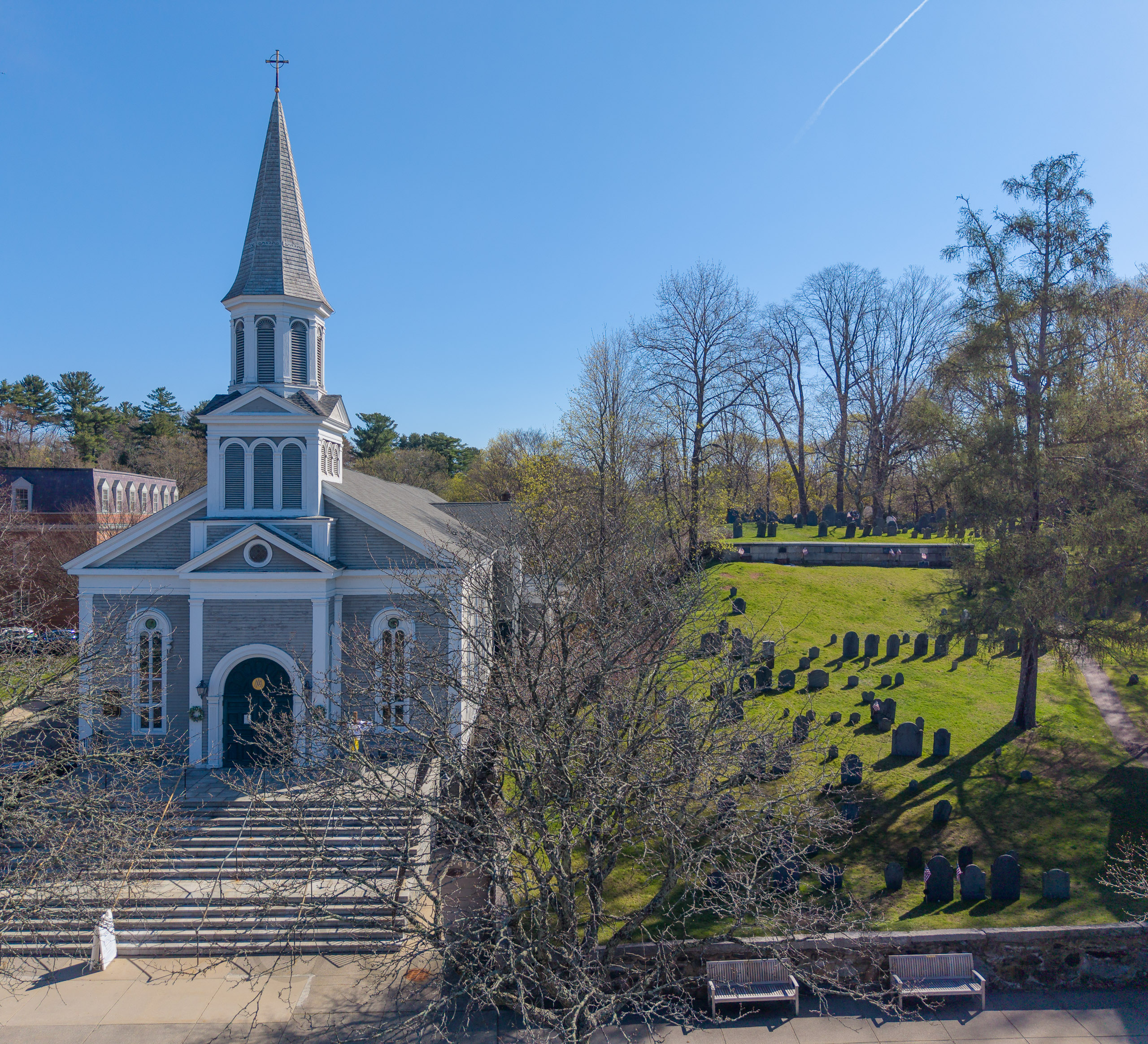
The
Old Hill Burying Ground (also known as the North Burying Ground) is Concord’s oldest cemetery, established shortly after the town’s incorporation in 1635. Located on a glacial ridge overlooking Monument Square, it served as the center of Concord’s early religious and civic life. The site was chosen partly for its southern exposure; the hillside was often the first area to thaw in the spring, allowing for the burial of those who died during the harsh New England winters.