
After lunch we visit the Mayan runis of Xunantunich and climb the Castillo which remains one of the tallest man made structures in the country today.


After lunch we visit the Mayan runis of Xunantunich and climb the Castillo which remains one of the tallest man made structures in the country today.

By noon we reach Clarissa Falls and put out for an exquisite lunch. Pictured here is a traditional dug out canoe that is still used for river crossings.

Before entering the river, we receive safety training. It becomes clear that my camera will not be making the journey with us and as a result I have no photos of the white water journey.

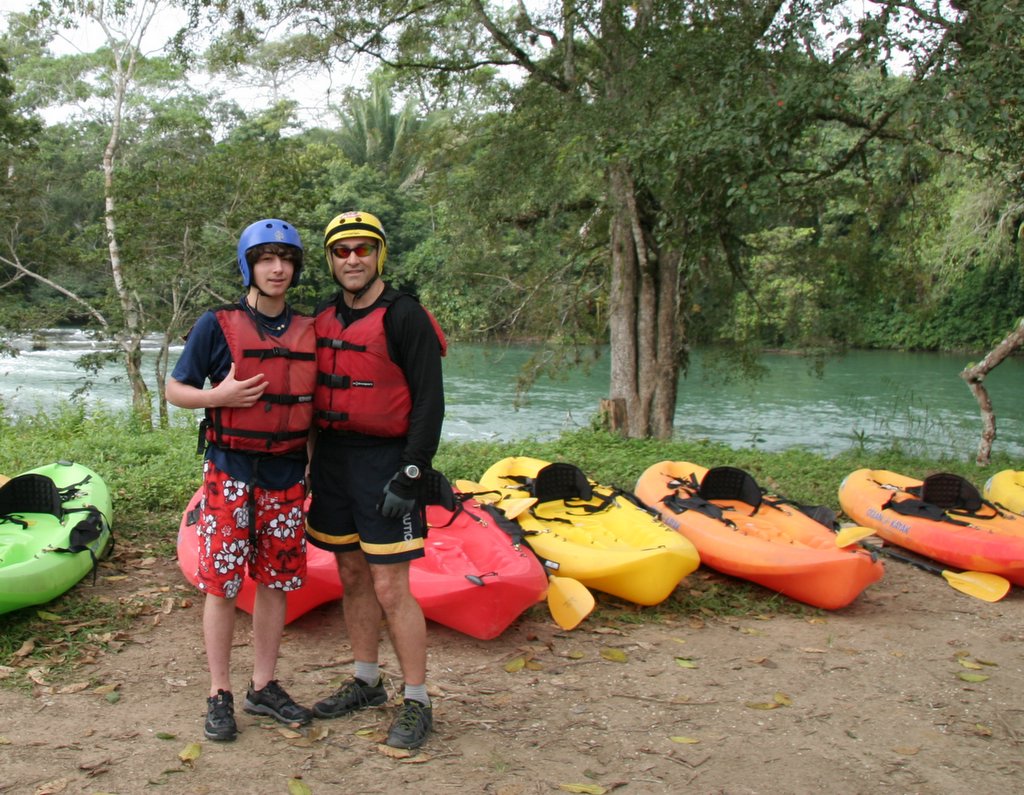
Why do you need helmets for kayaking? Answer: When you fall out in the middle of rapids and discover through touch and feel what creates white water. After negotiating a rapid, we would turn around, paddle upstream and river surf. This involves paddling like crazy to get into the eddy created by the whitewater in front of you. When you “climb the wave”, you can stop paddling and you will remain stationary surfing the river. Getting in and out of this position is rather tricky, however, and gave me a dozen opportunities to practice water rentry into my capsized kayak.

Today we head out for Class 2+ white water kayaking on the Mopan River in the morning followed by exploration of the Xunantunich Mayan ruins in the afternoon. Rather than the soft bottom kayaks used yesterday, today we switch to hard shell sit-on-top kayaks. They are much less stable but stand up much better to the encounters with big rocks which will be the order of the day.

During the final leg of our voyage, we stopped in an underground cavern to investigate a number of incredible mineral formations.


Kyle poses in his kayak at the exit of the final cave.

One last pose before we head back underground.

Lunch is prepared and served on top of an inverted kayak. Small fish, close relatives to the pirhana, are everywhere and swarm at our legs. Apparently they only nibble at dead skin which does not hurt. After lunch, we throw some meat into the water and they devour it. I decide to spend the rest of the time on shore or in the kayak.

At lunchtime we stop at a very interesting sink hole and Kyle does some exploration.


I stop often to swing my kayak around for a shot of Kyle’s raft. Several water fights errupt on this journey and it is always advisable to know if any vessel is sneaking up on you.

Occassional sink hole openings allow us to rest for a few minutes and soak up some sunshine.

Minding your head is essential if you wish to remain conscious to enjoy the bats swooping through the caves.

One last safety review before we enter the cave.

The next several miles of paddling will be underground with the exception of a 0.3 mile portage which will be one of the most strenuous challenges of the entire week.

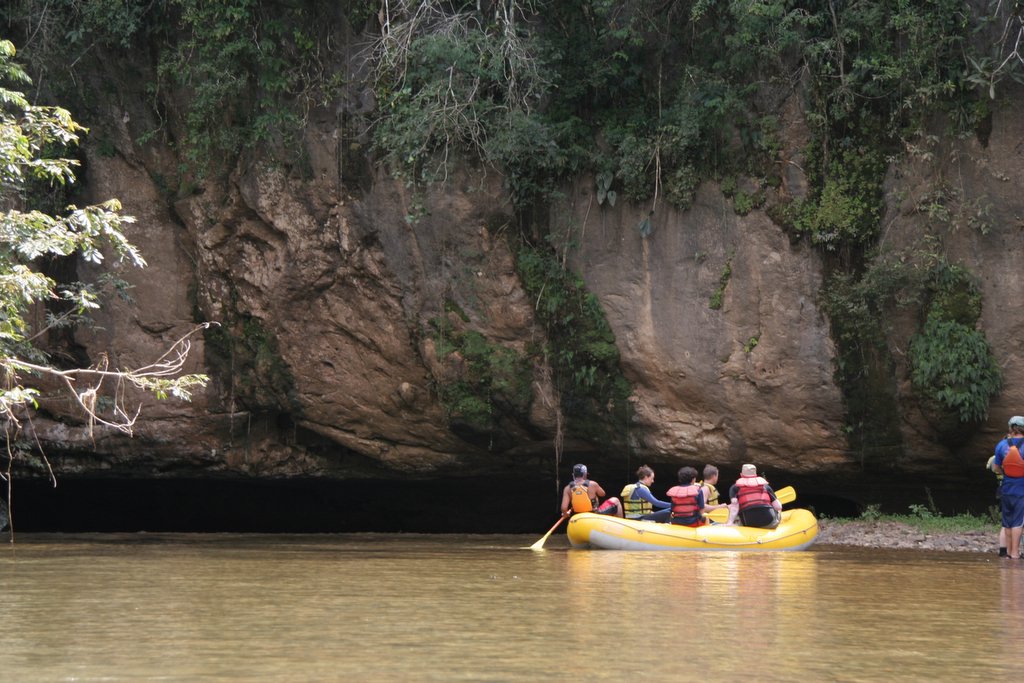
Kyle looks a little nervous as we put ashore to to don headlamps and inspect the very low entrance to the first cave.

As we approach the first cave, Kyle switches into one of the rafts and I switch into the kayak.

Winding through the jungle on the Caves Branch River.

Kyle opts for one of the kayaks.

The group prepares to set out with two 5-person rafts and 3 one-man kayaks. We have about one hour of paddling before we reach the cave entrance.

Day two and we gear up for underground rafting and kayaking.

Relaxing on the porch after an exhausting day of spelunking. Our guide Jes was an excellent musician and kind enough to entertain us.

After several hours underground, our group is ready to make the journey back to sunlight. Note that we are all wearing socks. In sections of the cave which contain artifacts, shoes are not permitted which forces you to be pretty damn careful where you put your feet.

This skeleton is of the only female and is located at the deepest part of the cave.

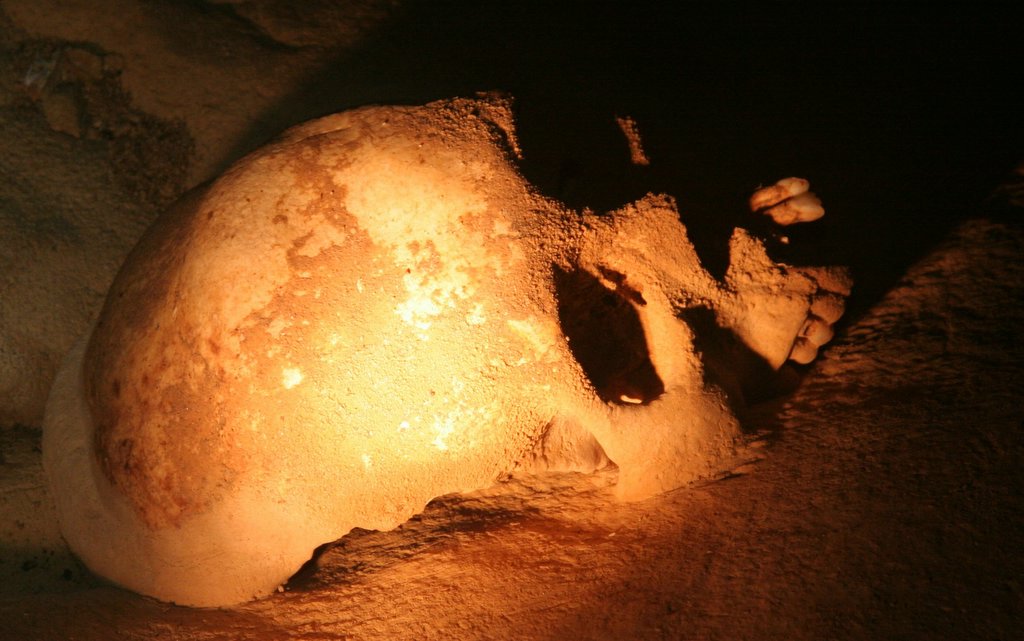
The Mayans made human offerings to the underworld Gods and the cave contains the remains of 6 infants under the age of 3, one 7 year old and seven adults.

At one point the cave opens up into a huge chamber and you can envision how the Mayan must have gathered here for their ceremonies as did we for a group portrait.

The cave itself was unbelievably beautiful. According to our guide, effective one week from today, photography will no longer be permitted in the cave. I felt exceptionally fortunate to be among the last visitors to have an opportunity to capture these scenes.

Artifacts took the form of ceramic pots of various shapes and sizes and obsidian blades used for blood letting rituals.

Helmets and headlamps are considered essential. Kyle, pictured here with our cave guide.

The cave reaches 5 kilometers into the mountain side and requires a combination of swimming, walking through water from ankle depth to neck deep, climbing through openings and over rocks. Discovered in 1989, the cave was used by the Mayans for ceremonies and rituals between 300 and 900 AD. Artifacts and the sacrificial remains of 14 people remain exactly as they were left by the last Mayans who used the cave.

… and hike through the jungle.

Our first destination was the Actun Tunichil Muknal cave. To reach the cave entrance we had to traverse the same river three different times …