What happened in the days, even hours, after an asteroid set off the extinction of the dinosaurs? I learned the answer to this question while listening to a TED Talk by renowned paleontologist Dr. Ken Lacovara, the founding executive director of the Edelman Fossil Park & Museum, which opened just over 2 months ago in southern New Jersey. Built on the site of a marl quarry, it contains the most complete fossil record of the event that ended the age of the dinosaurs. Over 100,000 specimens representing more than 100 species were excavated from an area the size of a tennis court over a period of 14 years.
When I learned that Jeanine and I would be traveling to Ocean City to visit with the Earles, I knew we would have to add this museum to our itinerary. This morning we made the one-hour drive to visit the park and museum, and it more than lived up to my expectations. Afterwards, Jeanine and I made the drive back to Concord, during which I listened to another TED Talk and learned the answer to why small mammals who survived the impact managed to thrive when, by all accounts, the surviving reptiles should have annihilated them. The answer, BTW: fungi.
Although all of the land-based dinosaurs were wiped out, many reptiles and aquatic dinosaurs survived the initial asteroid impact. The nuclear winter that followed (dust blocking the sun for years) took care of almost all the survivors.
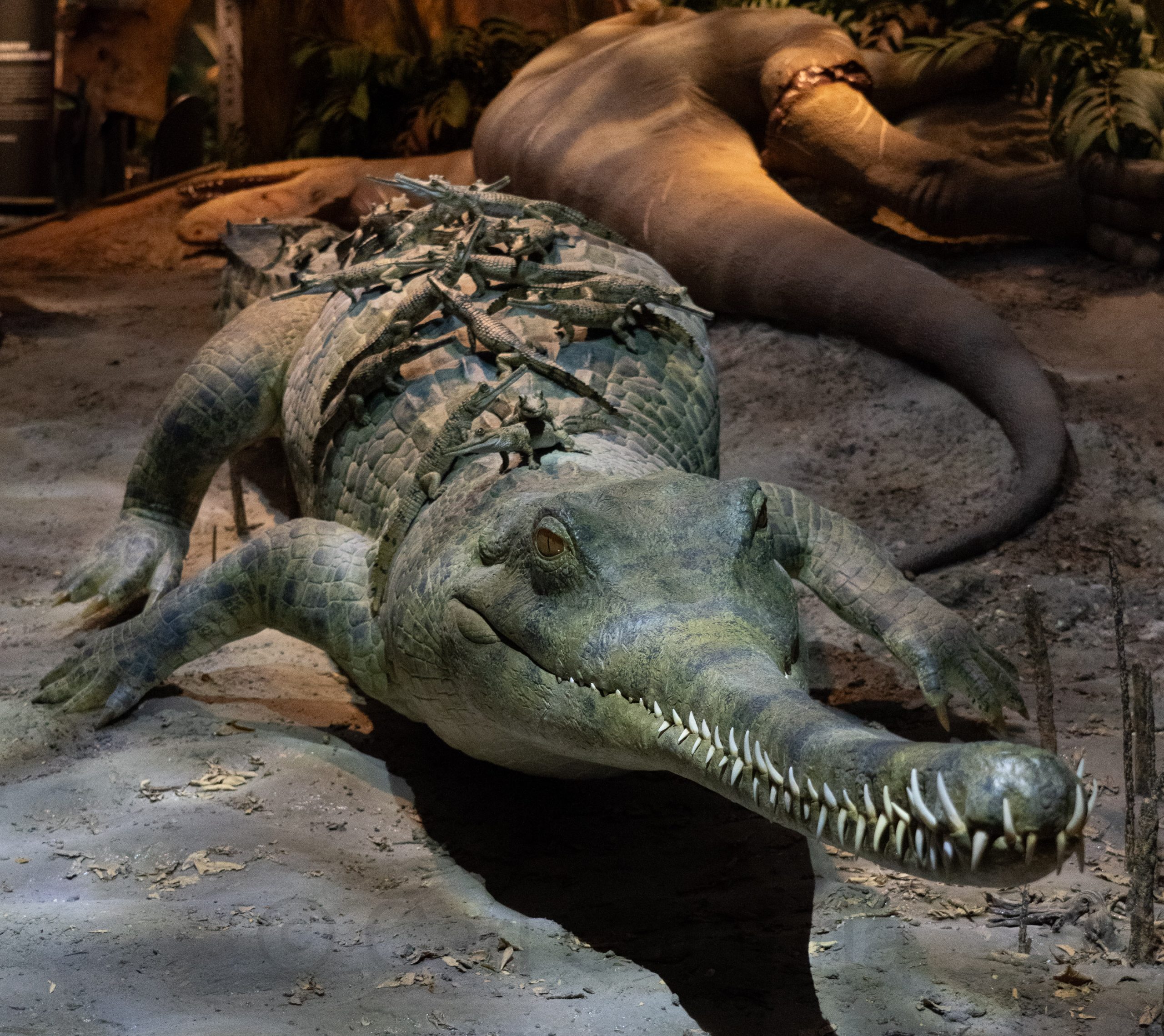
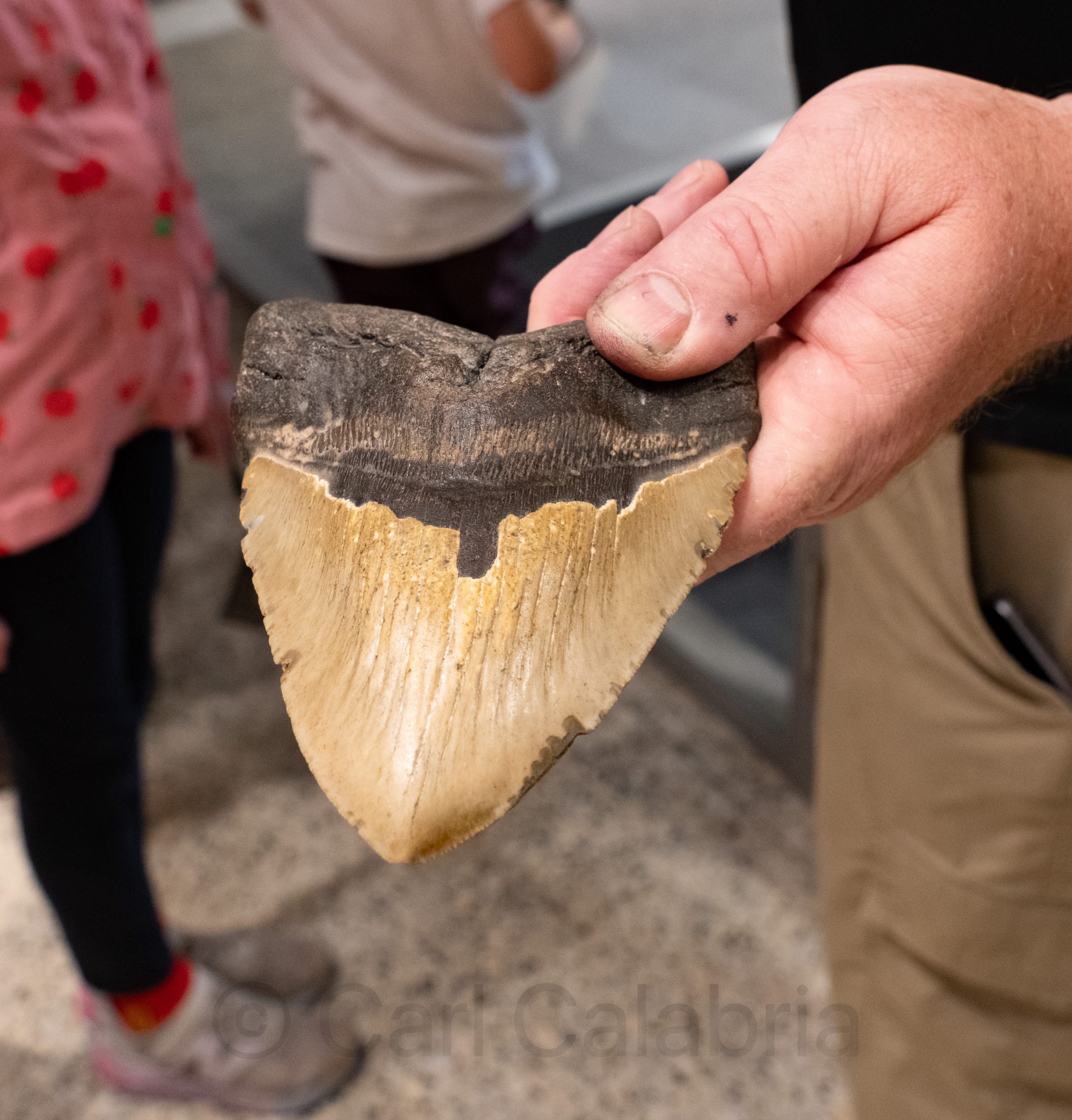
Pictured below is a shark tooth. Striations found in the femur of a large dinosaur made by sharks support the theory that animals killed moments after the impact were taken to sea by the ensuing tsunami, where they would have been floating buffets.
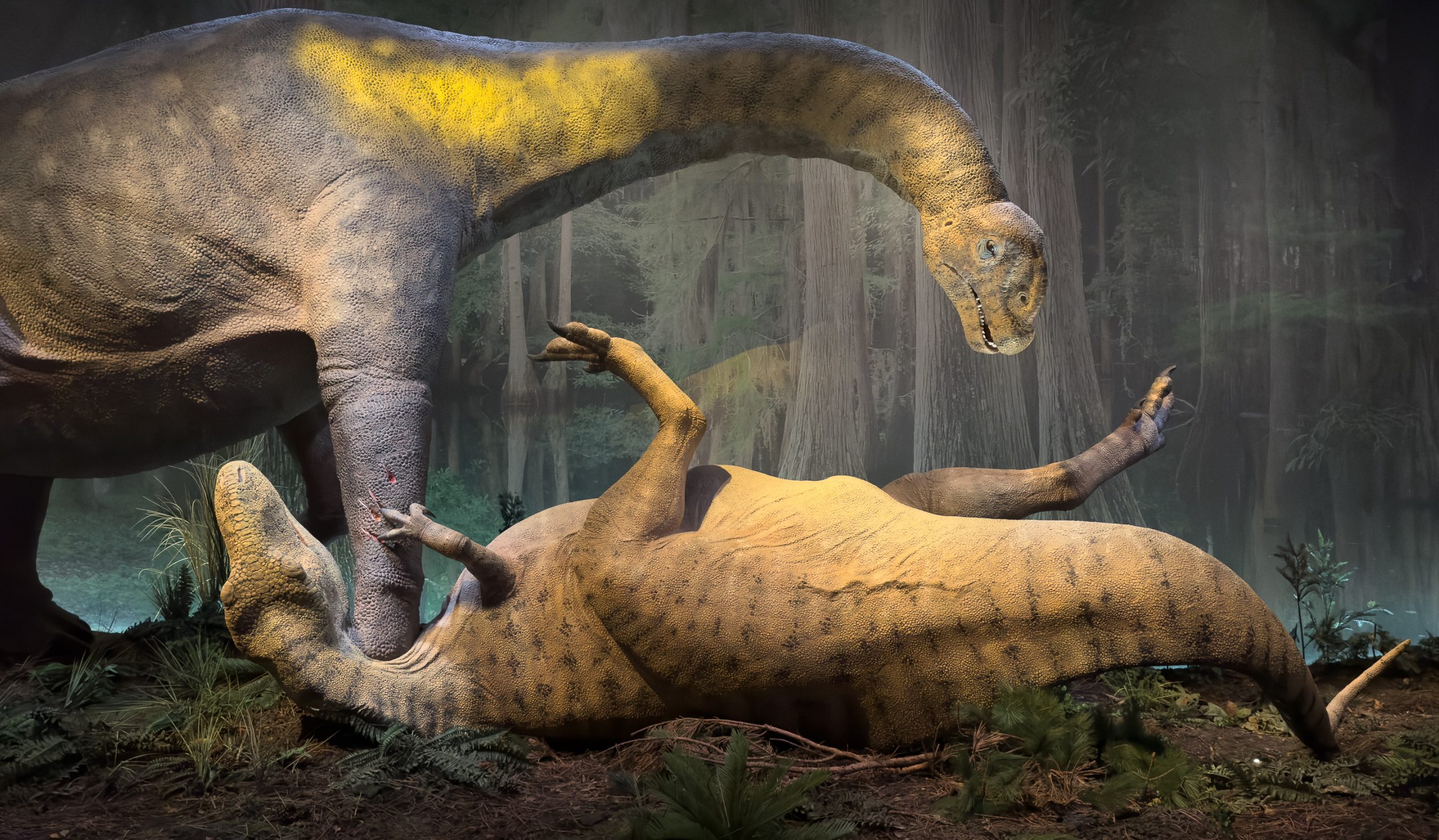
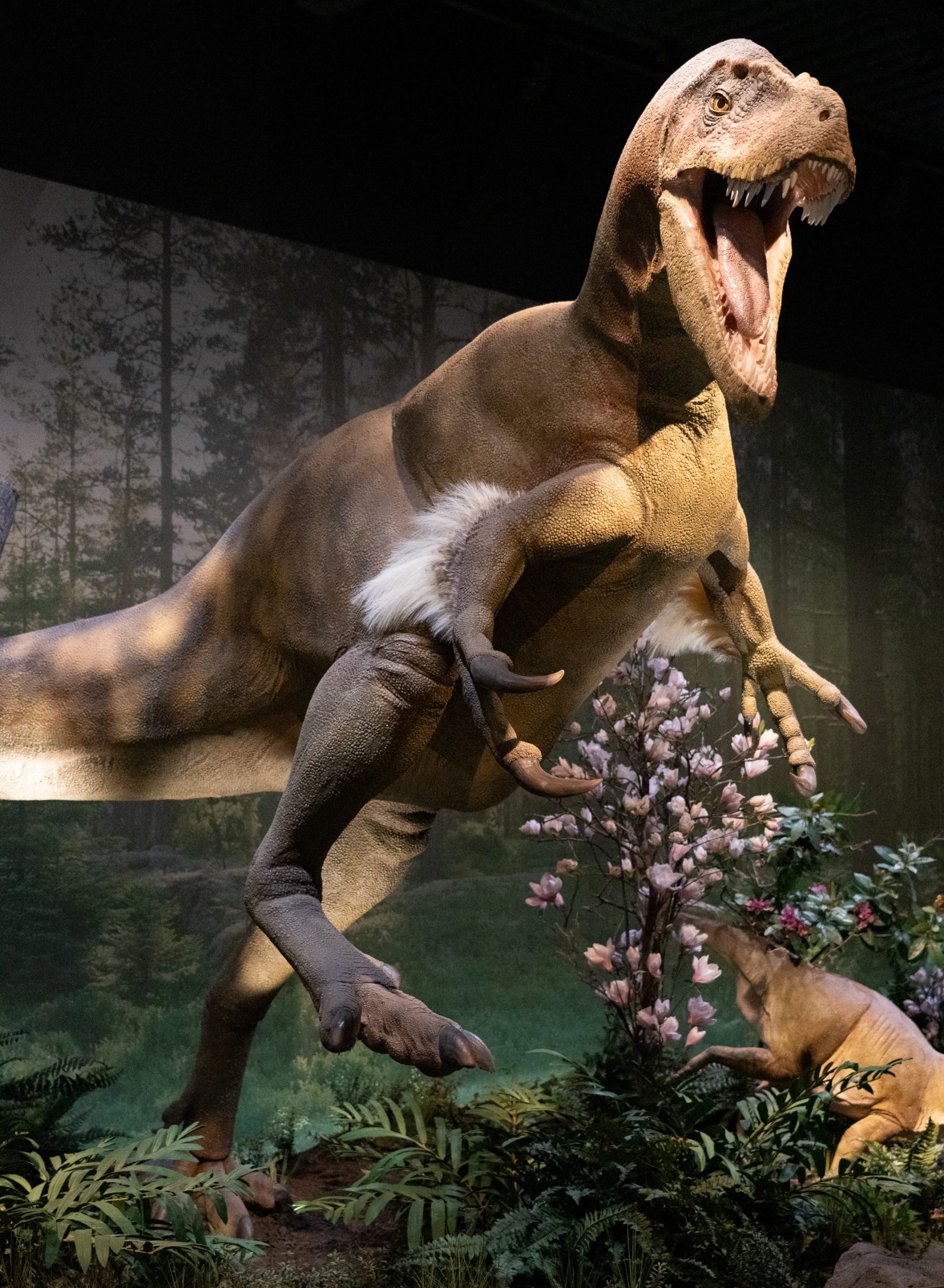
The fossil record also shows that many carnivorous dinosaurs were no match for the much larger plant-eaters, which could use their weight to crush them. Think lion versus bull elephant.