
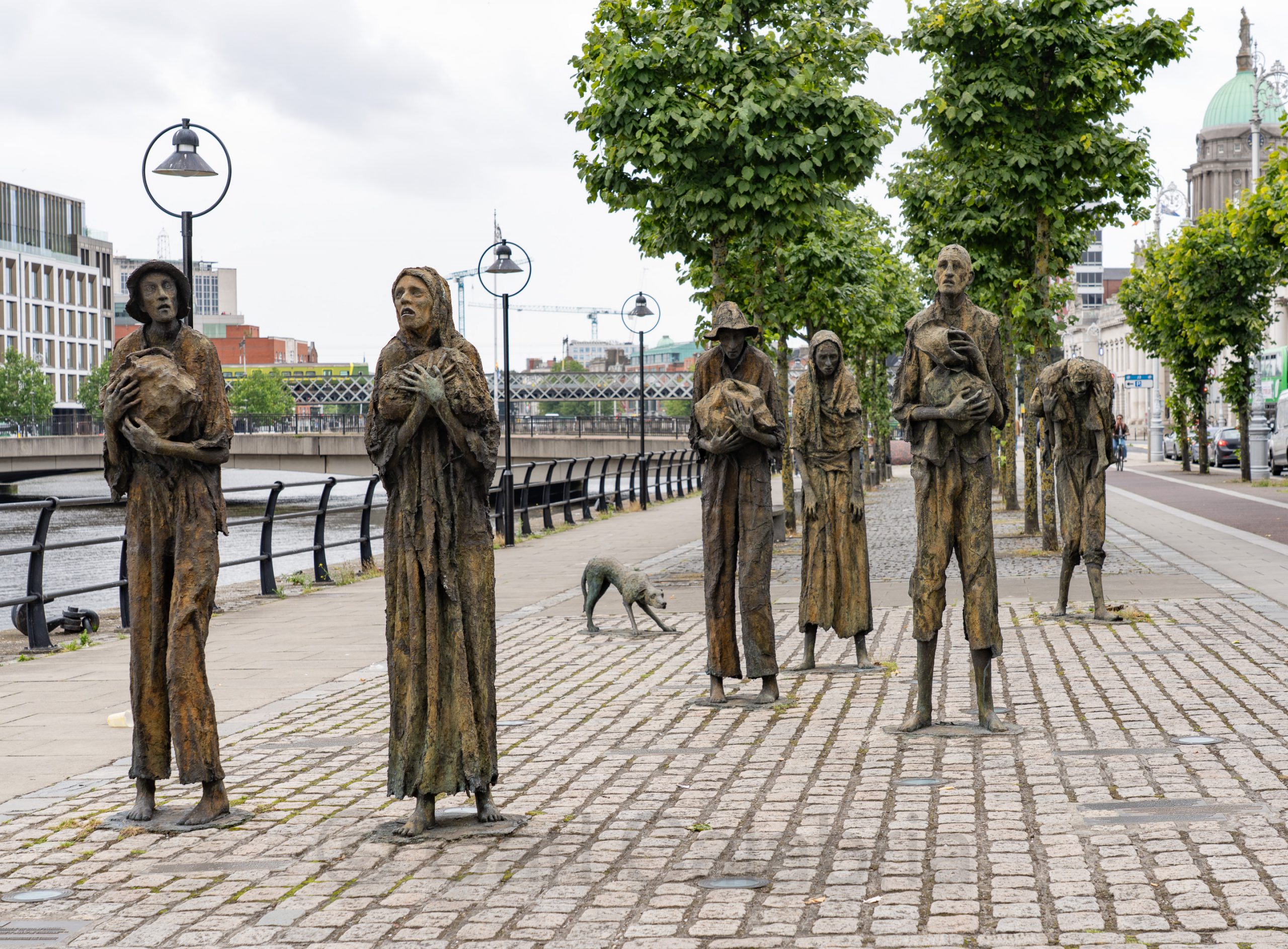
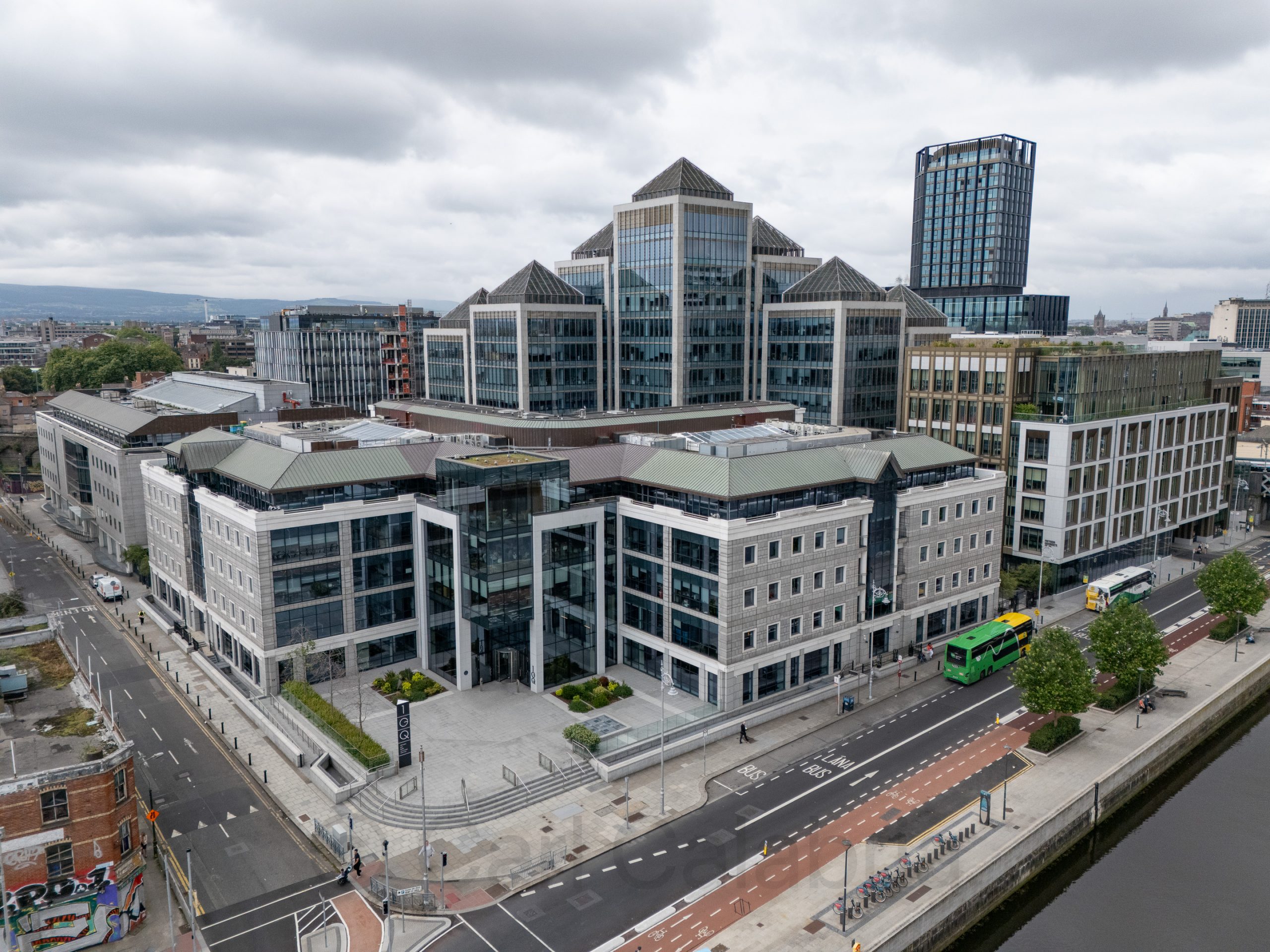
Our return flight to the US was not until late afternoon, allowing Jeanine and me another half day to explore Dublin. She opted to visit the Irish Emigration Museum, while I chose to wander around outside. Pictured above is the Famine Memorial, which vividly portrays starving people in rags, some carrying children and meager belongings, symbolizing the suffering faced by the Irish population during the famine when about one million people died and another million emigrated from Ireland. Below, a part of Dublin’s modern skyline is George Quay Plaza.
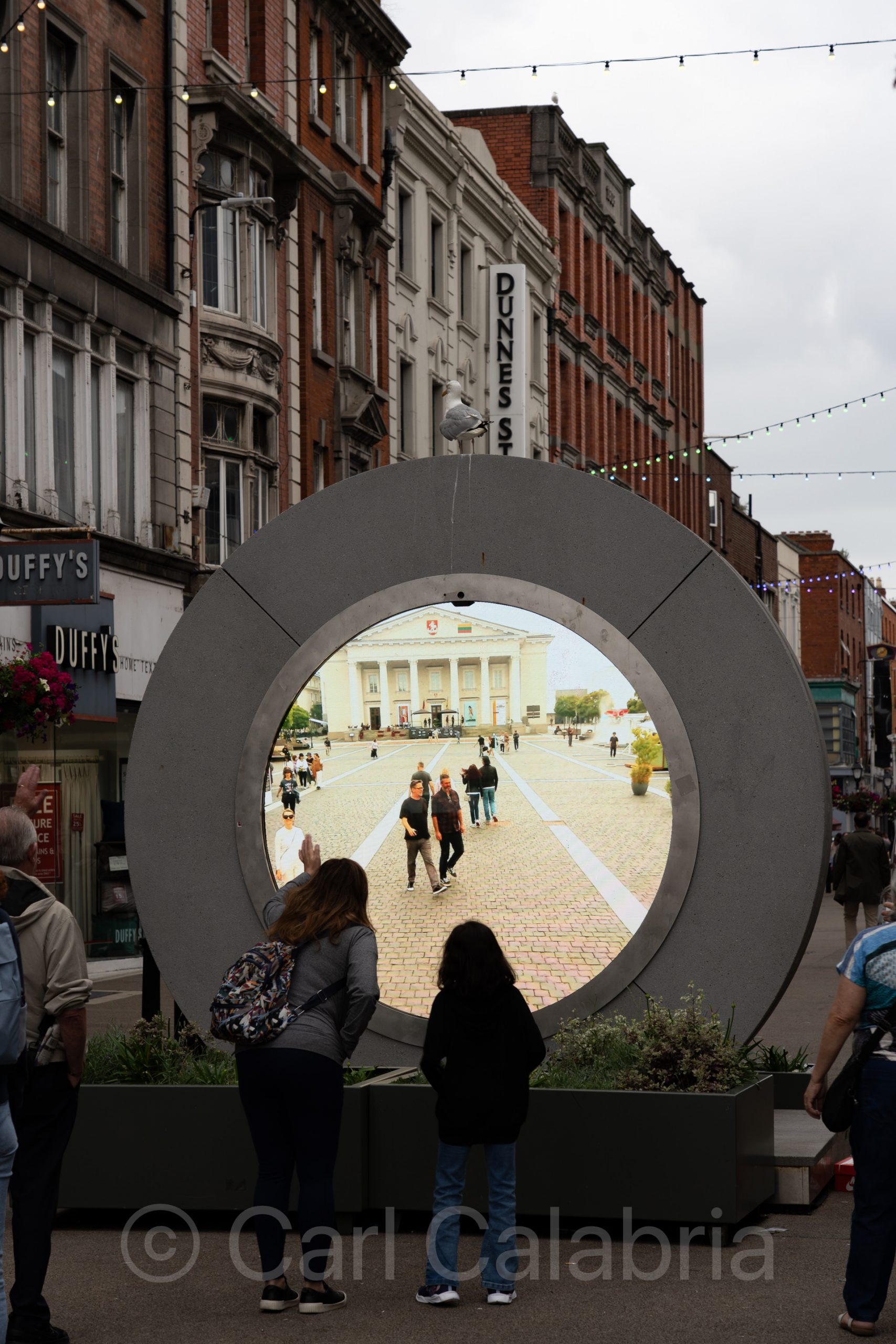
“The Portal” is an innovative public art installation that creates a real-time visual connection between Dublin and other cities worldwide. Initially, the portal was coupled to another portal in New York City and has since expanded to include Vilnius (Lithuania), Poland, and Brazil. It consists of a large circular sculpture with a rounded screen in the middle that streams a continuous, unfiltered live video feed of the other city. This allows people in Dublin to see and interact visually with those in the different cities as if they were sharing the same space.
It is without a doubt the most engaging piece of urban art I have ever encountered.
The Samuel Beckett Bridge is a cable-stayed swing bridge that spans the River Liffey. Designed by renowned Spanish architect Santiago Calatrava, the bridge is noted for its elegant shape that evokes an Irish harp lying on its edge, symbolizing Irish culture. The bridge is 120 meters long and 48 meters high, featuring a single curved pylon that rises 46 meters above sea level.
