Dual Deionizer

In response to a recent post about window washing, a former colleague reached out and shared his approach, which utilizes deionized water for a spot-free final rinse, replacing a squeegee with a pole mounted water fed brush. After a brief amount of research, it proved to be a superior method requiring less effort and producing better results. I identified commercially available systems using this approach, but these generally cost several thousand dollars, so I set out to build my own. The expensive bit is creating pure deionizer water. One method uses a reverse osmosis filter to do the heavy demineralization and a resin-based deionization filter to do the finishing. I opted for what is called a dual deionizer approach which uses two resin filters in series. When the first filter has reached its service capacity (400 gallons in my case, a function of the total dissolved solids in Concord water) you replace the resin inside and reverse the order of the tanks in the system. This allows you to squeeze every bit of useable filtration out of each filter while insuring an uninterrupted supply of pure water.

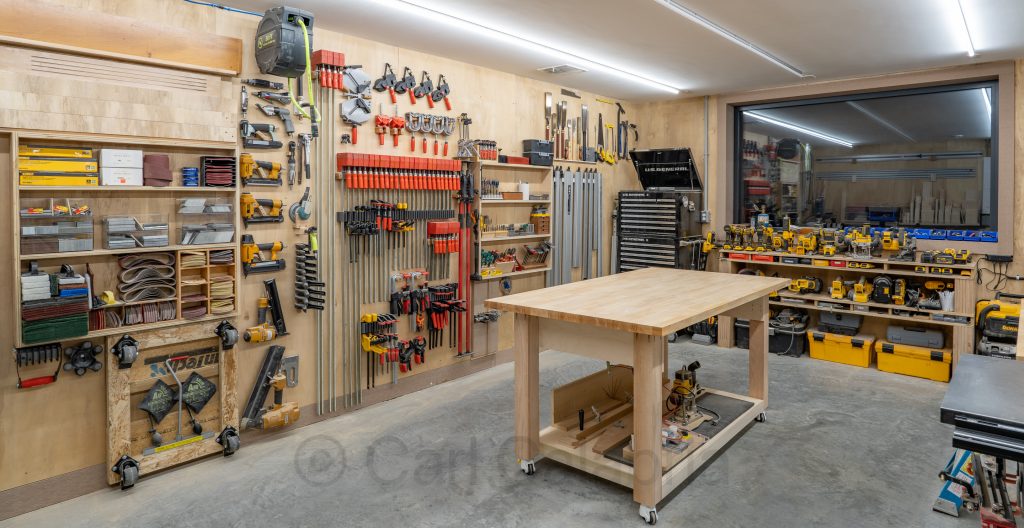
Pictured above is the system I built. It incorporates two 10-liter resin tanks, a three-channel TDS (total dissolved solids) meter, three flow control valves, two solenoid water valves powered by a DeWalt battery-driven 20V to 12V converter, a three-way switch at the end of a long cord, and quick-connect fittings for the water supply and output. The switch and solenoid valves allow me to use unfiltered water for extended washing and initial rinsing. When it is time for the final deionized water rinse, I throw the switch, wait 5 seconds for the water line to the pole-mounted brush to clear. Using this method of deionized water conservation, I estimate that I will use only 1/2 gallon per window. This translates to roughly 20 gallons per whole house window cleaning which I plan to do twice a year. Thus it will be 10 years before I have to do my first resin replacement at a cost of $80.

I constructed the whole unit on a wood frame that can be lashed to a hand truck for easy transportation when in use. The last thing I need to do is 3D print an enclosure for the three-way switch so that it can be mounted to the extension pole for easy actuation. The total cost for the deionizer was about $400. The carbon fiber extension pole was $250, and the water-fed brush and tubing were $250. All in, my DIY window washing system costs less than a single professional cleaning and should be a lot easier to use than my current squeegee setup.

Motion Study

Our hummingbird feeder has been quite a hit with our local population. There was enough light today that I could crank my shutter speed way up to freeze motion on a sequence of shots illustrating one full wing flap cycle.

After the Storm

Maya is set to move to a new apartment at the end of the month and asked if we had any moving boxes left over. Although the answer was no, Jeanine contacted a neighbor who moved in across the street yesterday, who was happy to unload hers. We delivered them to Maya late this afternoon, and she thanked us with a homemade Korean beef rice bowl dinner. On the way into Somerville, we drove into a massive thunderstorm, which ended as quickly as it started as we pulled up to Maya’s apartment. On the way home, the massive clouds still in the area were lit up by the setting sun. I wish I had pulled over for a better picture of the dramatic lighting.

Hummers

At Jeanine’s behest, I installed a pole near the patio on which to hang a pair of hummingbird feeders last weekend. Since then, we have had several guests. They prefer to dine in the morning and from late afternoon until dusk. I can recognize at least three different birds so far. Surprisingly, hummingbirds are not good at sharing. Even though we have two feeders, they will “fight” for minutes on end to determine who will get to feast on Jeanine’s special nectar recipe. “Fighting” involves dive bombing each other until someone relents. It is highly entertaining, and the position of the feeders allows us to watch from the living room, main bedroom, and my office.

Equally cute is the baby turkey that has been finding lots to eat in our clover patch.

Ego No Go

My Ego battery-powered snowblower is one of my favorite tools. It works better than the exceptionally good Honda snowblowers I have owned in the past. I cannot say the same for Ego’s pressure washer. In many ways, it is a very well-designed machine, but it has a few shortcomings that led me to return it less than an hour after purchasing it. The wand handle has a clever display and a pressure control switch that is coupled to the main unit by Bluetooth. It works fine when you are standing close by, but loses connection when you are working at the limit of the hose length or when your body shields the wand from the base unit. In my book an intermittent control function is worse than nothing at all. Next, the indicators for low, high and turbo pressure on both the base unit and wand are completely unreadable in bright sunlight. Regardless of the machines other strengths, I cannot tolerate a poor user interface.

Katahdin

Mount Katahdin is the highest mountain in Maine, standing at 5,269 feet, and is the centerpiece of Baxter State Park. It is named “Katahdin,” meaning “Great Mountain” by the Penobscot Native Americans, and serves as the northern terminus of the Appalachian Trail. The mountain is known for its rugged terrain, unique alpine environment, cultural significance to indigenous peoples, and is a popular but strenuous hiking destination. Nico shared this image from his weekend in Maine, where he combined work with hiking and time spent with friends.

Jamestown & Newport

The day started with Jeanine picking basil from our herb garden for a tomato and mozzarella salad. This would be one of the dishes shared over lunch with our good friends, Louanne and Alex Mackenzie. We were invited to join them for a driving/ferry tour of Jamestown and Newport, Rhode Island. They live in Providence and offered to give us a grand tour of their neck of the woods. Their daughter, Fiona, is one of Maya’s closest friends from high school and a current flatmate. Alex and I play for the same Concord football club, although he usually plays one age division down from me.

On the way to Jamestown, we stopped at the birthplace of Gilbert Stuart, one of America’s foremost portrait artists, best known for his iconic unfinished portrait of George Washington, which became the image on the U.S. one-dollar bill. He painted over one thousand portraits, including six presidents and numerous prominent figures of the early United States, helping shape how generations visualize America’s founders. Despite his artistic achievements, Stuart struggled financially throughout his life and died in 1828, buried in an unmarked grave in Boston.

The Jamestown Windmill, a three-story, octagonal windmill built in 1787, still stands today and operated until 1896. The hill on which it is built includes farmsteads, the Quaker Meetinghouse, and has archaeological significance due to evidence of prehistoric Native American occupation. The windmill, an important part of the local agricultural community, was built after the original 1730 mill and is maintained as a working historic site by the Jamestown Historical Society.

The Beavertail Lighthouse, located on the southern tip of Conanicut Island, was originally established in 1749 and is the third-oldest lighthouse in the United States. The current granite tower was built in 1856 and marks the entrance to Narragansett Bay, serving as an important navigation aid for vessels. The lighthouse—and an associated museum—has a rich history, including damage during the Revolutionary War and the 1938 hurricane. It is so named for the shape of the tip of the island on which it was built.

We paused for a brief hike and lunch in Fort Wetherill State Park. From the marina there, we got to watch a sailing regatta in progress. Its start was signaled by a thunderous blast from a cannon located at nearby Fort Adams.

A short ferry ride took us to 18.5 acre Rose Island, known for its historic lighthouse and military significance. The Rose Island Lighthouse was built in 1870 on the site of Fort Hamilton’s southwest bastion and served as an important navigation aid for a century until it was decommissioned in 1970 due to the construction of the Newport Pell Bridge. After a period of abandonment and vandalism, local efforts in the 1980s led to its restoration, and since 1993, the lighthouse functions as a private aid to navigation and a museum open to the public. Rose Island played a significant role as part of the Naval Torpedo Station at Newport starting in 1883, when it was designated as a U.S. Naval Magazine and used primarily for storing explosives and torpedoes. The island’s facilities included storage for gun-cotton and other munitions, as well as serving as a torpedo warhead arming facility during World Wars I and II.

After returning from Rose Island, our next stop was the Sachuest Point National Wildlife Refuge, where we worked off our lunch with a traverse of the Ocean View Loop Trail.

We ended the day with dinner at Flo’s Clam Shack, which features a distinctive shark sculpture in their outdoor dining area. All-in-all, a thoroughly delightful day.

Rhythms

I recently purchased a device that monitors and records carbon dioxide, temperature, and humidity levels. I am using it to improve air quality and comfort in our home. The top chart shows CO2 levels measured hourly over five days in our bedroom, while the bottom chart displays temperature. The CO2 pattern peaks every morning at 7 AM, driven by our respiration in the closed room. Optimal levels of CO2 are in the range of 400-800 ppm. Based on this information, I have programmed our ventilation system to increase fresh air from 5 AM to 7 AM. The reason for not leaving the system turned up all day is that it wastes energy. I will remeasure CO2 levels over the next week and refine the ventilation schedule as needed.

The temperature chart reflects the summertime programming of our HVAC system during a week with outdoor temps in the 90s. The AC starts running at 8 PM and cools the house to 66°F by bedtime (our optimal sleeping temperature). At 4 AM, it turns off, and the temperature ramps up to 71°F over the next 12 hours or so.

NERD ALERT: When I get some time, I will use this data to see how accurate my HVAC design calculations were.

One Ton / Day

Armed with a new 10 cubic foot yard cart that I picked up this morning, I set out to attack the first of four wood chip piles that now grace our property. It took twelve 5-gallon buckets to fill the cart, which equals 8 cubic feet. So much for the Gorilla brand marketing claim of ten. The density of Red Pine wood chips is ~33 pounds per cubic foot, making the cart total ~264 pounds. After an hour of work, I managed to install 8 carts’ worth of wood chips and was ready to call it a day. This puts my installation rate at one ton per hour. At this pace, it will take me 20 more days to conquer all four piles. When temperatures begin to drop a bit, I suspect I will be able to work for more than an hour a day. If nothing else, I should be in pretty good shape by the time my fall soccer season starts.

21 Tons

Our neighbors across the street were having twenty dead or nearly dead Red pines removed from their property today. I asked the tree company if we could have the wood chips. They were more than happy to dump them across the street rather than haul them across the county to their approved site. The darker batch of chips in the photo above came from a different neighbor who was also having tree work done today. In total, we received 15 tons of chips, now located in two massive piles on either side of the top of our driveway. Over the coming weeks and months, I will be getting a good workout as I spread these piles to where they are needed.

UPDATE: Since posting, the tree company asked if we could take another 6 tons, which are now distributed at the edges of our property near the street.

Kidney Stone Geode

My blog serves many purposes. It is a family journal and archive. It is a creative outlet for my photography and writing. It is a vehicle for sharing ideas and documenting projects. And sometimes, it serves as a medical record. For this, I apologize to visitors who were hoping to find something else today. Recently, I documented Maya’s broken fifth metatarsal x-rays, and today, I am memorializing my passing of yet another kidney stone. This stone measured 1.5 x 1.0 mm and caused minimal pain. I added it to my collection of passed stones, numbering in the hundreds, but not before breaking it in half to examine the structure inside. What I discovered reminded me a little of a geode, the most common type of mineral formations with hollow insides. They are typically hollow, globular rock structures lined with crystals.

33 Years of Pride

33 years ago today, I experienced more joy and happiness than I imagined possible. I had become a father. Having found the woman I wanted to spend the rest of my life with, my greatest desire was to have a child with her. I was secretly hoping for a girl, but the instant the doctor announced Kyle’s gender, I could imagine nothing more perfect. I envisioned the future we would have together. I would teach him to build things, wrestle, play soccer, and share my love of camping and hiking. Looking back, we have done all those things and more.

An excellent student, athlete, and an entrepreneur at heart, he started his own company while still in high school and reinvented himself as a data engineer when the field of finance proved unsatisfying. Now he is beginning to generate passive income from a home rental business while dipping a toe in the sphere of AI engineering. All this, while traveling the world as a digital nomad working remotely from all over the globe. I could not be more proud of him for all he has achieved.

For two years, Kyle was the center of our world. Normally, a second child receives less attention because they have to share their parents with a sibling. In our case, Nico received a disproportionate amount of our focus as we attended to his special circumstance. Even at his very young age, Kyle seemed to understand this, and what’s more, he was a fierce advocate for and defender of his baby brother and remains his biggest supporter. When Maya arrived, Jeanine and I had had more than our fill of “boy energy” and were so ready to welcome a little girl to the family. To be honest, she became the focal point for everyone. Once again, Kyle was a doting big brother which is not to say that he did not occasionally torment his siblings as is the prerogative of all first born.

Although Kyle grew up during the most demanding period of my professional career, I always found time to attend his soccer matches and enjoyed the flair with which he played the game. Even more memorable were the three father-son adventures we embarked on together. The first, to Belize when he was 13. There we went spelunking, snorkeling, underground river rafting, and kite surfing in a tropical paradise. The second time, when he was 20, we trekked through Chile’s Torres Del Paine National Park, and then hiked Argentina’s Mount Fitz Roy and visited the Perito Moreno glacier, ending our trip in Buenos Aires. Finally, the year we spent working together on weekends to renovate the basement of the home he purchased in Medford. These “journeys,” afforded me a front row seat to Kyle’s evolution from boyhood to manhood and I will forever cherish that time spent together.

Happy Birthday, Kyle.

Window Washing

This afternoon, it was not too hot, not too sunny, and not too windy. Perfect conditions for a chore that I have been putting off for one of the above reasons for some time now. Window washing was never a priority in any of the other homes we have owned. Here, however, we are constantly looking out the windows, and the experience is made all the better when they are squeaky clean. The tool I use for this has a sponge on one side and a squeegee on the other. I mount it on a short pole for the first-floor windows and a long pole for the second-floor windows. These photos, courtesy of our security camera show the basic operation on our smallest windows. I completed 25 of 37 windows and will have to tackle the remaining dozen another time. It may not look like it, but this task is quite the upper body work out and I was happy to burn off some of the calories I ingested last night during the birthday feast for the boys.

Birthday Boys

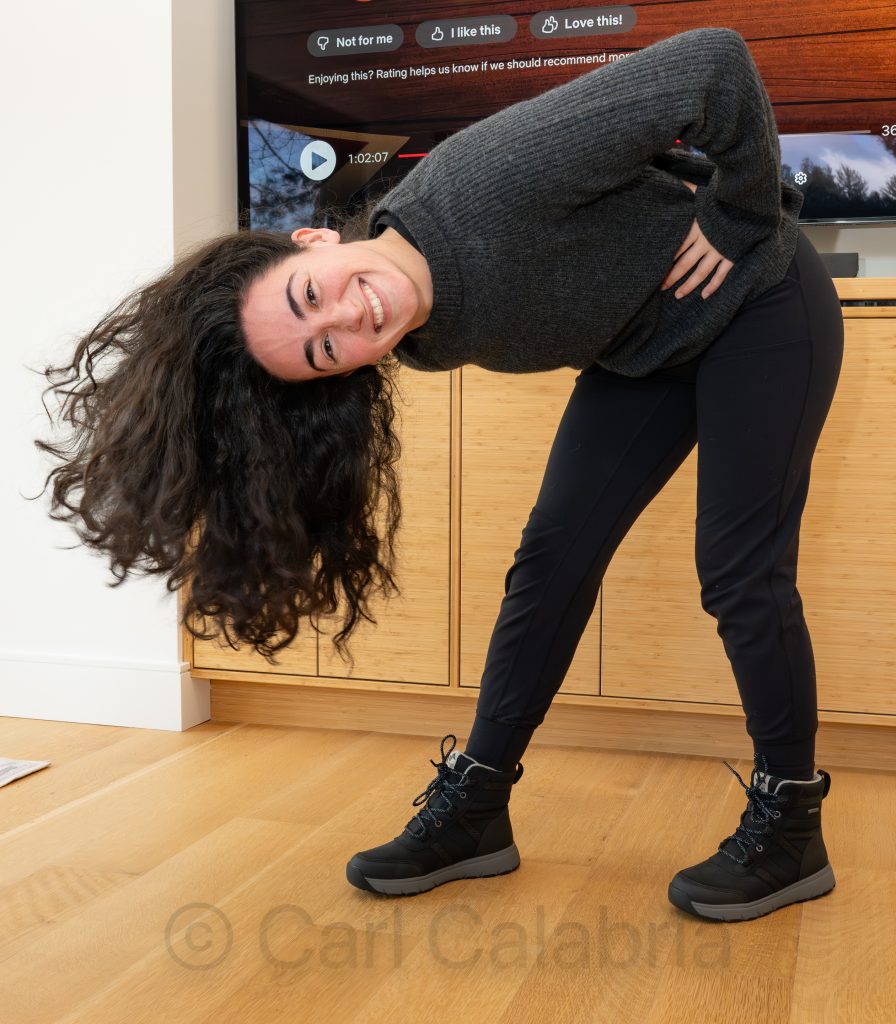
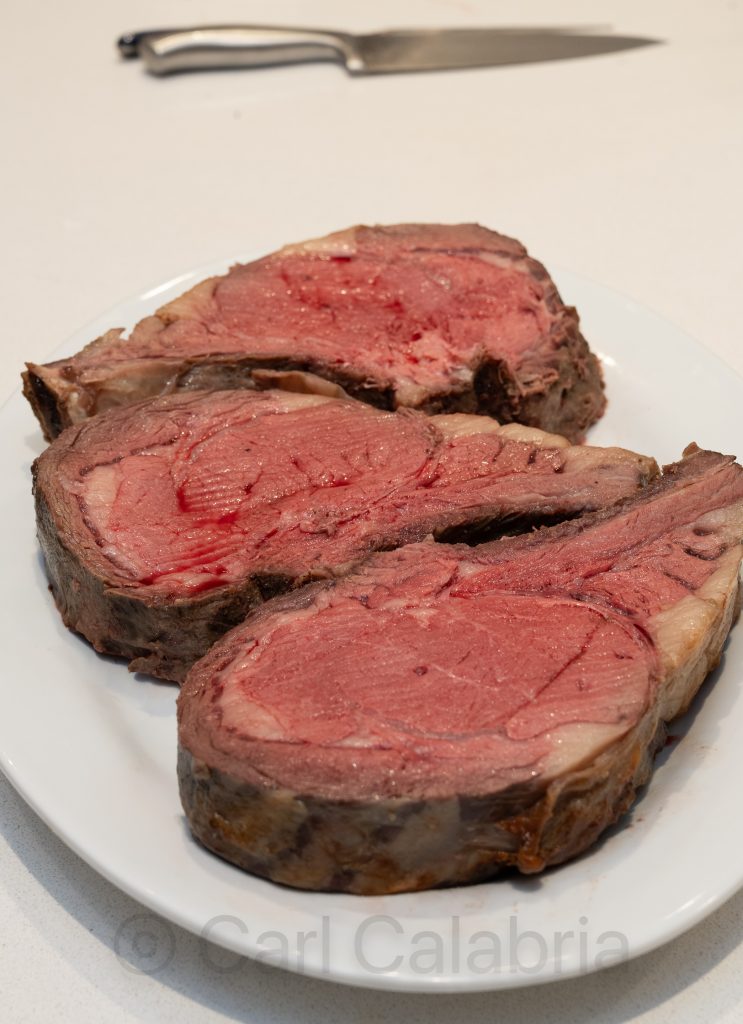
This evening, we did a joint birthday celebration for Kyle (33) and Nico (31). Maya is just back from Norway, and Nico from Binghamton, NY. I cooked some steaks on the grill, and they were mighty fine if I don’t say so myself. Jeanine prepared fresh corn from Verrill Farm, some of the best we have ever had, as well as a tomato salad and chocolate peanut butter mousse for dessert. I am so grateful we can still hang out like this.

Jeanine just shared this photo from last Friday. Lucia is a neighbor who was visiting with her mother, brother, and dog. She took an interest in my shop, and I wound up coaching her in the construction of a swing seat that she hopes to hang in her backyard. I might have used a straight edge to draw the cut line, but I had to admire her method, which was much faster. I taught her how to safely use the miter saw and drill press, the latter required ensuring that her long hair never came close to the spinning chuck. She was quite pleased with her completed project.

Author, Author

My sister’s new book, “The Power of Impact Circles,” is now available. I ordered my copy on Amazon this morning, and it is expected to arrive next week. Our father, himself the author of two books, would be delighted to see that his eldest daughter and daughter-in-law have both joined him as published authors. I am also thinking of writing a book. I will call it “The Stupidity of Blogging for 20 Years – An Exercise in Daily Suffering.” In all seriousness, I have the utmost respect for all the authors in this family and encourage our next generation to carry on the tradition.

A link to Alissa’s website is here. She will be having a book signing at The Book House of Stuyvesant Plaza on September 20 from 3-5 PM.

Canoe Convoy

Now and again, we see something new on the Sudbury River. Today, a single boat towing 7 canoes passed by the house heading downstream. My guess is that is has something to do with the water chestnut eradication project that has been underway for several weeks. Our neighbor and friend, Dave Witherbee, was skippering the tow boat, and I will ask him about this the next time I see him. I am curious to know how one stops such a flotilla without creating a pileup. I suspect you have to do so very slowly.

Back In The Shop

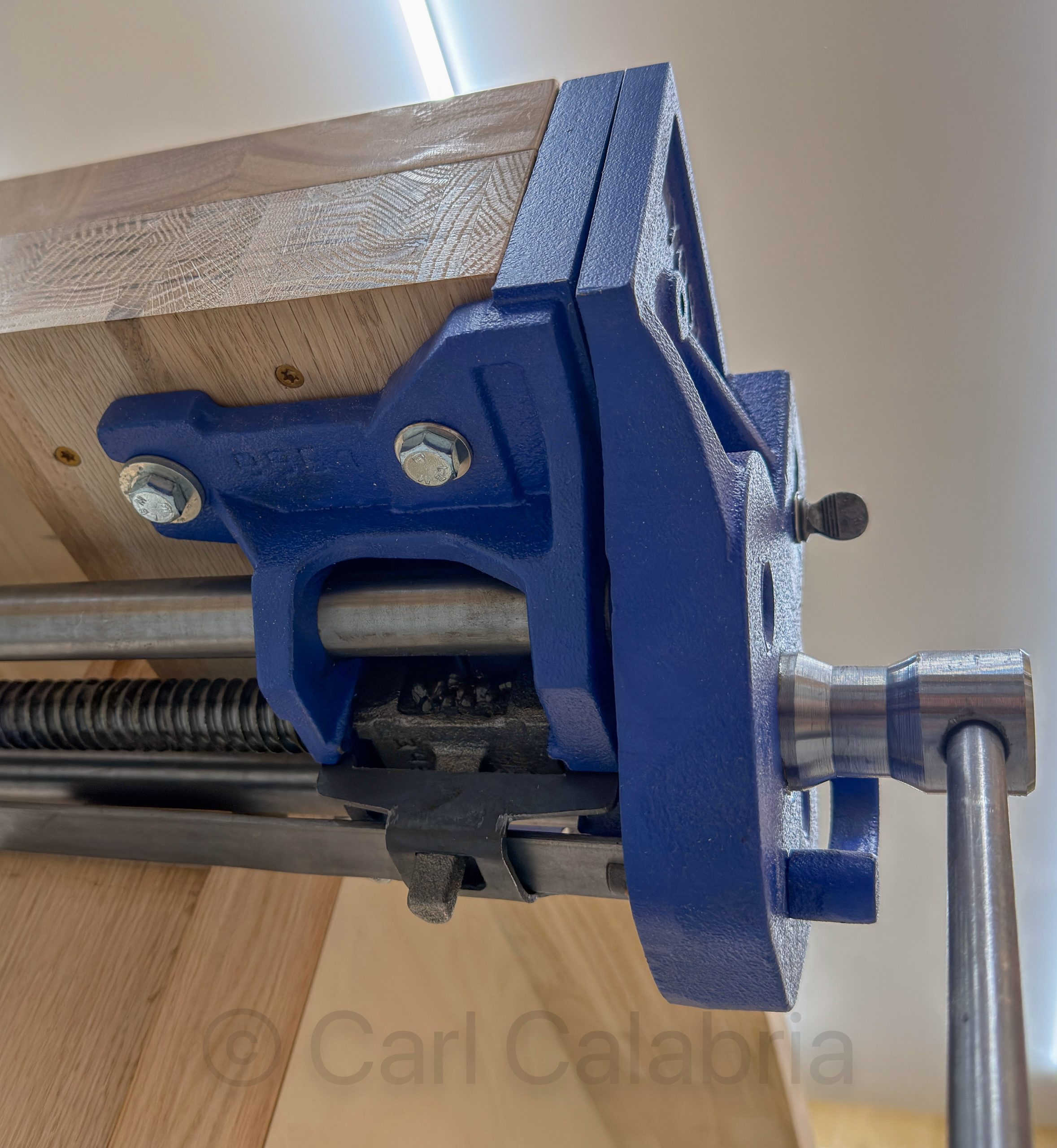
Andy is both a teammate and a friend. He makes, repairs, and sells violins and violas professionally. This morning, he came over to use my bandsaw to cut through several $300 slabs of figured maple and a couple of spruce. Much of the work he does involves hand tools, and although he has a bandsaw, it was not large enough for this particular job. It was fun being in the shop again and working with him. I have taken a fairly long break after spending every day for nine months building the cabinetry for the house.

Silhouettes

There are a pair of branches that overhang the river just outside our living room window. It is quite common to see all manner of birds perched there throughout the day. Never before, however, have I seen two herons share this prime hunting perch.

I spent nearly the whole day working on my website. I hired a Ukraine-based developer to perform a site-wide software upgrade and theme migration. He completed the work in short order, and I felt good about directing my business to their war-torn economy. He helped me figure out why a 14-month period of my blog is missing all the images (at that time, almost 15 years ago, I was hosting my images on a platform that has since gone belly up). I spent the balance of the day, recovering each of those images and reinserting them into the blog, a very time consuming and tedious job. I repaired 6 months worth in as many hours and hope to complete the job over the next few days.

What’s Different

I challenge observant viewers to identify the main difference between these two scenes. The novice will identify differences in pillow placement and chair orientation. Middle-of-the-road detectives might observe the addition of a wooden box on top of the coffee table. Only a true Sherlock-class sleuth will notice that the couches are different, and only by close examination of the seams.

When this custom-ordered piece was initially delivered back in April, we noticed that one of the three sections was not quite like the others. The color of the thread and orientation of the seam folds were different. It is the kind of thing that you do not notice at first, but once you’ve seen it, you can’t help but see it every time you look at the couch. To their credit, West Elm, the store where we placed the order, offered to give us a BIG refund or replace the set. We opted for the latter, and the replacement couch finally arrived today. This is likely the last couch we will ever own, and I am glad we opted to wait for a properly upholstered one rather that take the refund.

Purple Invader

The “butterfly garden” that exists on the common land of our neighborhood has been overtaken by Purple Loosestrife, an invasive plant. While it may not be welcomed, it is certainly delightful to look at.

This evening, just before dusk, Jeanine and I went outside to watch the bats. It is mesmerizing to watch them fly to and fro, guided by their echolocation, darting here and there to capture mosquitoes and other flying insects. At some point, I would like to try photographing one in flight, a goal that will be next to impossible to achieve given their speed and the low light conditions.

Rose Bush

For some time now, Jeanine has been wanting to plant a rose bush beneath our bedroom window. Today, after a trip to a local nursery, we satisfied that dream. Digging a suitable-sized hole (16″W x 16″D) in the highly compacted, rock-strewn soil on which our house was built took the better part of half an hour with the aid of a pickaxe. Jeanine is pictured above scooping out the last bits of clay by hand before adding compost and fertilizer. It remains to be seen how the new rose bush will fare in this setting, and all we can do at this point is continue to water and hope for the best.

Cambridge Jazz Festival

Jeanine and I spent a good portion of the afternoon at the Cambridge Jazz Festival, where we did a little Salsa and Merengue dancing and enjoyed the Caribbean jazz sounds of Ron Reid’s Special Metal Project. There is a good chance, weather permitting, we will attend for a second day tomorrow.

Frank Löffel (196x-2025)

In the early days of Truevision, the company I co-founded in my twenties, I hired an engineer from Switzerland named Frank Löffel for the role of an ASIC (chip) Designer. He wrote a well-researched letter describing his skills and capabilities, as well as how they would benefit the company. We granted him an interview, were impressed, and proceeded to offer him the job. He later told me we were the only company to respond to 30 similar letters he had sent out to other potential employers. When he moved to the US to start work, he had no place to live, so I invited him to stay in my spare bedroom. Eventually, he got his own place and went on to work for the company for several years. Frank and I both shared an interest in landscape photography. He was most drawn to deserts and his work was at a level I can only aspire to reach. We reconnected after ~20 years while we were both attending the National Association of Broadcasters (NAB) trade show in Las Vegas. After the show ended we spent a day together shooting photography in Death Valley. I have wonderful memories of that day but damn few photos of Frank to share beyond the one above. Frank was a loner and would work intermittently to fund his passion for desert photography. He had a Toyota Land Cruiser fitted with huge tires and a pop-top camper. It had several spares on the roof along with extra gas cans, car jacks, and traction ramps. It was fitted with solar panels and storage areas for all his photo gear. He had recently spent several months in the Bolivian high dessert and had driven up from South America.

I recently learned that Frank died 6 months ago. At the time, he was being held in an Iranian prison where he reportedly committed suicide. The Iranian’s claimed he was a spy taking photos of a military base near where he was arrested, and it is suspected that he was tortured. My guess is he was there shooting landscape photography of the deserts he loved so much, finding himself in the wrong place, at the wrong time, with a truck full of high-end photography gear and drones.

This was unbelievably sad news to receive, but even worse is that I can find no record of his online photography portfolio. He devoted much of his life to making beautiful images of some of the most remote and desolate places on Earth, and now it appears his photographic legacy may be lost forever as well.

Frank is pictured below in an early Truevision company picnic photo with his girlfriend. He is directly below the Frisbee.

I offer my condolences to his sister, wife, and son, and pledge I will do all in my power to recover his photographs.

Linden Tree Bowl

When my brother last visited us in Concord, he left with a small section of a Linden Tree trunk from our yard. While in Ireland, he returned it in a slightly different form. Mark has become a skilled woodturner, and we have been the beneficiaries of several of his creations.

Last Day In Ireland

Our return flight to the US was not until late afternoon, allowing Jeanine and me another half day to explore Dublin. She opted to visit the Irish Emigration Museum, while I chose to wander around outside. Pictured above is the Famine Memorial, which vividly portrays starving people in rags, some carrying children and meager belongings, symbolizing the suffering faced by the Irish population during the famine when about one million people died and another million emigrated from Ireland. Below, a part of Dublin’s modern skyline is George Quay Plaza.

“The Portal” is an innovative public art installation that creates a real-time visual connection between Dublin and other cities worldwide. Initially, the portal was coupled to another portal in New York City and has since expanded to include Vilnius (Lithuania), Poland, and Brazil. It consists of a large circular sculpture with a rounded screen in the middle that streams a continuous, unfiltered live video feed of the other city. This allows people in Dublin to see and interact visually with those in the different cities as if they were sharing the same space.

It is without a doubt the most engaging piece of urban art I have ever encountered.

The Samuel Beckett Bridge is a cable-stayed swing bridge that spans the River Liffey. Designed by renowned Spanish architect Santiago Calatrava, the bridge is noted for its elegant shape that evokes an Irish harp lying on its edge, symbolizing Irish culture. The bridge is 120 meters long and 48 meters high, featuring a single curved pylon that rises 46 meters above sea level.

The Chester Beatty

The Chester Beatty, also known as the Chester Beatty Library, is Ireland’s leading museum of world cultures located within the grounds of Dublin Castle. It was established in 1953 to house the collections of Sir Alfred Chester Beatty, an American mining magnate and collector. The museum holds an extraordinary collection of approximately 25,000 manuscripts, rare books, miniature paintings, and decorative objects from Europe, the Middle East, Asia, and North Africa, covering a range of world cultures and religions. The Chester Beatty is acclaimed for its diverse exhibitions, including significant religious manuscripts such as early Bible copies, Qur’an, Buddhist scriptures, and the Gospel of Mani.

It was our primary destination today and lived up to its reputation as one of Europe’s best museums. I learned more about the religions of the world in one day than I have during my lifetime.

Afterwards, and in between ice cream breaks, we visited the nearby St. Patrick’s Cathedral, the largest church in Ireland and a prime example of Gothic architecture. Its history stretches back over 800 years, built primarily between 1220 and 1260 under Archbishop John Comyn, on a site believed to be where St. Patrick himself baptized converts in the 5th century. The cathedral was constructed in a cruciform (cross-shaped) layout typical of Gothic design, featuring pointed arches, ribbed vaults, flying buttresses, and an elaborate 140-foot tall bell tower.

Pictured below is a random self-portrait I made. Jeanine studied this photo for several minutes and could not figure out what exactly she was looking at. See if you can figure it out.

UPDATE: In response to many inquiries about this photo, I am adding the explanation. I was seated on some stone steps in front of a boarded-up entry to an old stone-faced building. I photographed my reflection in a mirror being transported on a panel truck. The graffiti is on the plywood I am leaning against. The rectangular sticker below the graffiti is on the mirror. I am holding the camera above my head to get an angle that makes it look like I am sitting at the bottom of the mirror.

Broken Metatarsal

Shortly after we left the wedding reception last night, Maya broke the fifth metatarsal in her left foot while dancing. She was attempting a split leap when one of her feet got caught on her dress, causing her to land on the side of her foot with all her weight. She contacted us this morning to say that she was in a lot of pain and that she thought she might have broken a bone. Her siblings were quick to her aid while Jeanine and I drove over to their apartment from our hotel. Kyle scheduled an appointment at a local outpatient clinic to get her a referral for an x-ray. Nico found a medical supply house where we obtained a pair of forearm crutches. An x-ray at the hospital confirmed that she had a full fracture of her fifth metatarsal. The doctor said the bone will fully heal in 18 months. For now she will have to wear a boot for several months and avoid bearing her full weight on the foot. Regrettably, Maya was planning to spend the remainder of her vacation hiking in Norway with friends.

Brooke & Mario

My nephew Mario and Brooke celebrated their marriage with family and friends this afternoon. Brooke’s father officiated the ceremony, and Mario’s brother, Rory, served as the Master of Ceremonies. The event was as playful as it was poignant, a perfect reflection of the couple. Our family was honored to share in the celebration. I took many photos but made sure not to interfere with the professional hired for the occasion. Knowing she would cover all the “standard” shots, I focused on the guests, especially the smaller ones, and some unique takes on the couple.

The full set of photos I have taken during the wedding weekend can be found here.

Galway

Galway is a vibrant, bohemian city on Ireland’s west coast, known for its lively arts scene, traditional music, and colorful, cobblestone streets along Galway Bay. The wedding was timed to coincide with the Galway Arts Festival which only served to amplify the cities bustling café and pub culture

Jeanine enjoys catching up with Mario while Brooke greets her nieces.

Mario’s brother, Rory, is seen behind bars with one of his friends. Some might argue that this is a good way to protect Rory from the throngs of women who tend to follow him around.

Meanwhile, the kids have coerced me into the ridiculous pose below, designed to make fun of my sun hat; brim tipped up, ears tucked in.

I have started a wedding album for Mario and Brooke. It can be found here.

Connemara & Inishbofin

The reason for our visit to Ireland is to attend the wedding celebration of my nephew, Mario, to Brooke. Most of the guests have now arrived in Galway and will be touring the Aran Island of Inishmore today. Having previously visited there and also in need of some me time, I opted to drive up the Connemara coastline and take the ferry to Inishbofin, an even more remote island off the western coast.

If not for my 11:30 ferry time, I would have spent the entire day in Connemara where there seemed to be something worth photographing at every turn, and there were a lot of turns.

My first real stop was at the Coral Strand, known for its crystal-clear waters and unique sand composed of crushed coraline algae, giving it a distinctive coral-like appearance despite not being true coral. Click on the second photo below for a close-up of the “sand.”

After pausing for breakfast in Roundstone, it was on to Dog’s Bay, a beautiful horseshoe-shaped beach. I had hoped to get an aerial photo similar to the one below (not taken by me), but had to settle for a quick shot from the ground as I was running seriously behind schedule.

I will spare the details of my harrowing drive to catch the ferry to Inishbofin. Suffice it to say that I was the last passenger to board, and the gangway was stowed 30 seconds after I crossed it. For my own future benefit, the Cleggan Ferry does not depart from the Cleggan Cliffs, and it is best not to leave your phone in the car when your ferry tickets are stored on it.

During the Cromwellian conquest of Ireland in the mid-17th century, Inishbofin was the last stronghold of Irish royalist forces. In 1652, it was captured by Cromwell’s troops, who decided to build a new, more formidable fortification to control the harbour and suppress opposition. The result was the star-shaped stone fort—now locally called Cromwell’s Barracks—which still dominates the tidal island today.

Once on the island, I decided to hike the 5-mile West Quarter Loop. Determined not to miss the last ferry back to the mainland, I set off during torrential rain, hoping it would abate as is often the case in Ireland. Mercifully, the rain stopped an hour into my hike just as the most interesting views appeared. Click on the aerial photo below and see if you can find Waldo. I saw more people in the bathroom at the Cliffs of Moher visitor center than I did on my entire hike on Inishbofin.

The blow hole on Inishbofin was formed when sea caves eroded landwards and upwards into vertical shafts that opened at the surface, allowing seawater to shoot dramatically into the air during certain tidal conditions. I knew the chances of catching the blow hole in action were minimal and was happy to capture the unique geological formation in a progressive series of drone photos, the last of which is a reverse angle.

The Burren

Situated on the high Burren limestone plateau, Poulnabrone Dolmen is one of the country’s most iconic archaeological monuments and the oldest dated megalithic monument in Ireland. It is classified as a portal tomb, featuring two large portal stones standing on either side of an entrance, capped with a massive sloping capstone. Excavations by archaeologists revealed the remains of 33 people at the site and radiocarbon dating of their bones indicates that the tomb was in continual use for a period of 600 years between 5,200 and 5,800 years ago.

Glacio-karst landscape features, which are the combined result of glacial activity and rainwater dissolution features, are abundant around Poulnabrone Dolmen. The limestone pavement has been scraped clean by moving ice sheets and the blocks of limestone known as clints are separated by fissures known as grikes. The grikes are formed by rainwater dissolving thin calcite veins that permeate the limestone. While the last ice sheets melted here almost 16,000 years ago and the karst process has been active since then, there is evidence that karst processes were operating in warmer interglacial periods before the last ice age.

After visiting the Burren National Park Visitors Center, we drove to the seldom-visited Cahercommaun situated on the edge of a valley. Cathair is the Irish for ‘stone fort’, and this fort contains 3 walls ranging in height from approximately 5-1/2 to 13 feet. It is not certain when Cahercommaun was built, but an excavation in 1934 suggests that it dates back to the early 9th century. However, this date is highly contested, as a number of artifacts that were found within the site pre-date this.

Earlier in the day, we visited the Cahermore ringfort, featuring massive drystone walls up to 9 feet high and thick, with well-fitted limestone blocks and an impressive entrance featuring a complex gateway that could be used to trap would-be invaders.

Our final destination for the day were the Cliffs of Moher, which proved to be somewhat of a disappointment for me. Since our last visit, 34 years ago, the site has been dramatically developed to include a $32M visitor center and flagstone barriers installed to physically discourage and prevent visitors from getting closer to the edge. It felt like the difference between seeing a declawed tiger in a zoo compared to one roaming in the wild. The sun angle did not favor the traditional view of the cliffs so I focused my photographic attention on a less dramatic but better illuminated section of the coastline.

This website is dedicated to sharing, with family and friends, the day-to-day adventures of the Calabria family.