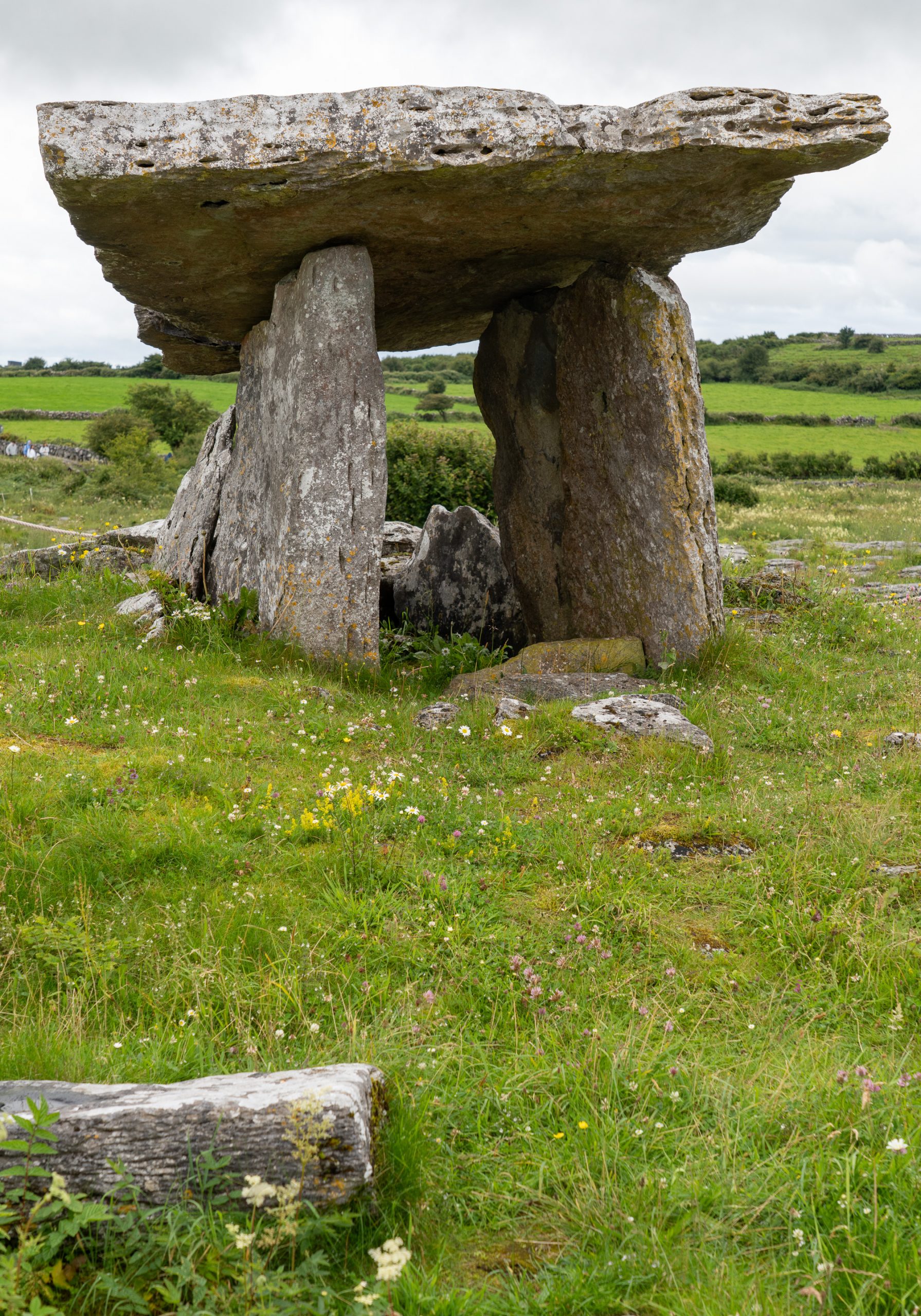
Situated on the high Burren limestone plateau, Poulnabrone Dolmen is one of the country’s most iconic archaeological monuments and the oldest dated megalithic monument in Ireland. It is classified as a portal tomb, featuring two large portal stones standing on either side of an entrance, capped with a massive sloping capstone. Excavations by archaeologists revealed the remains of 33 people at the site and radiocarbon dating of their bones indicates that the tomb was in continual use for a period of 600 years between 5,200 and 5,800 years ago.
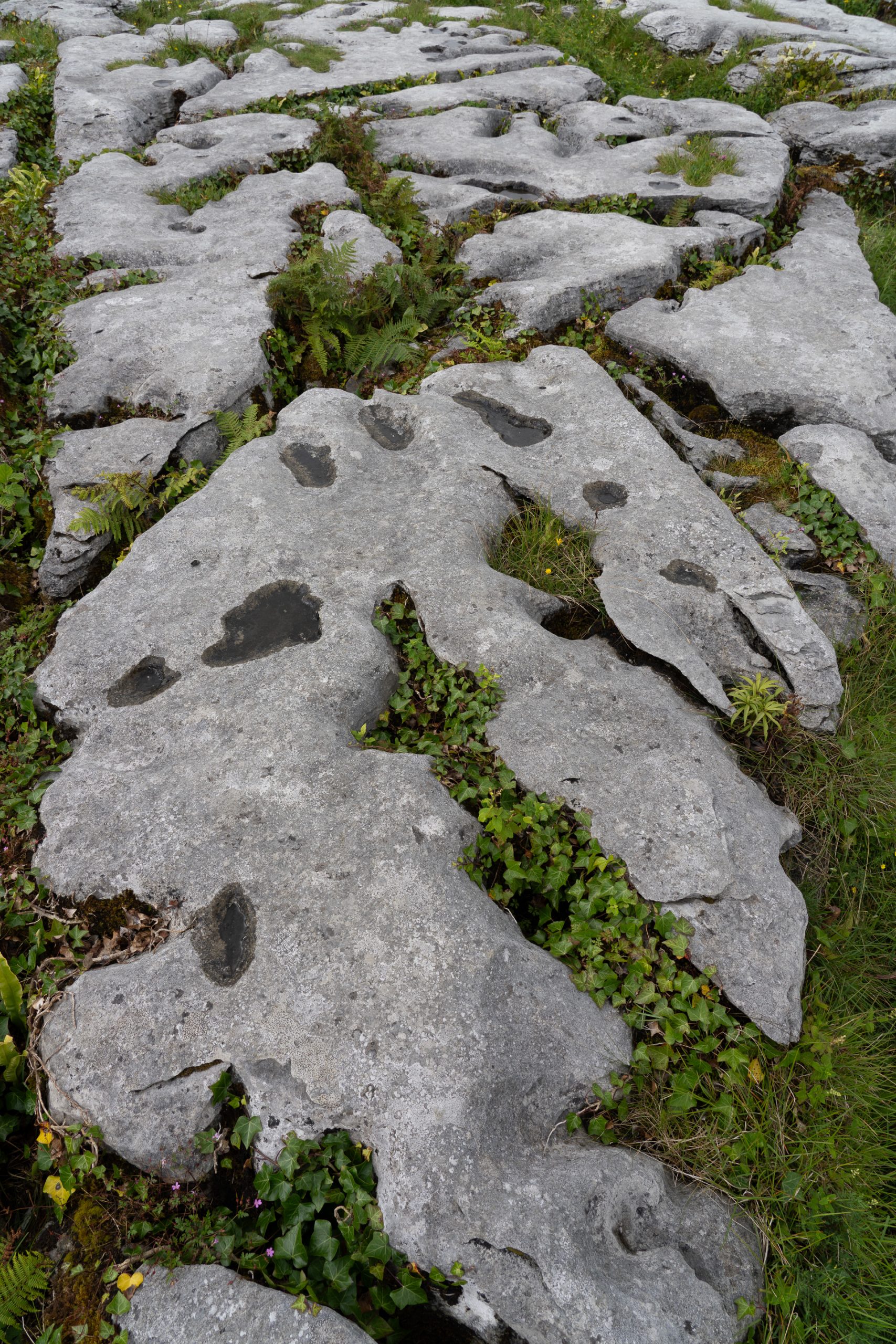
Glacio-karst landscape features, which are the combined result of glacial activity and rainwater dissolution features, are abundant around Poulnabrone Dolmen. The limestone pavement has been scraped clean by moving ice sheets and the blocks of limestone known as clints are separated by fissures known as grikes. The grikes are formed by rainwater dissolving thin calcite veins that permeate the limestone. While the last ice sheets melted here almost 16,000 years ago and the karst process has been active since then, there is evidence that karst processes were operating in warmer interglacial periods before the last ice age.
After visiting the Burren National Park Visitors Center, we drove to the seldom-visited Cahercommaun situated on the edge of a valley. Cathair is the Irish for ‘stone fort’, and this fort contains 3 walls ranging in height from approximately 5-1/2 to 13 feet. It is not certain when Cahercommaun was built, but an excavation in 1934 suggests that it dates back to the early 9th century. However, this date is highly contested, as a number of artifacts that were found within the site pre-date this.
Earlier in the day, we visited the Cahermore ringfort, featuring massive drystone walls up to 9 feet high and thick, with well-fitted limestone blocks and an impressive entrance featuring a complex gateway that could be used to trap would-be invaders.

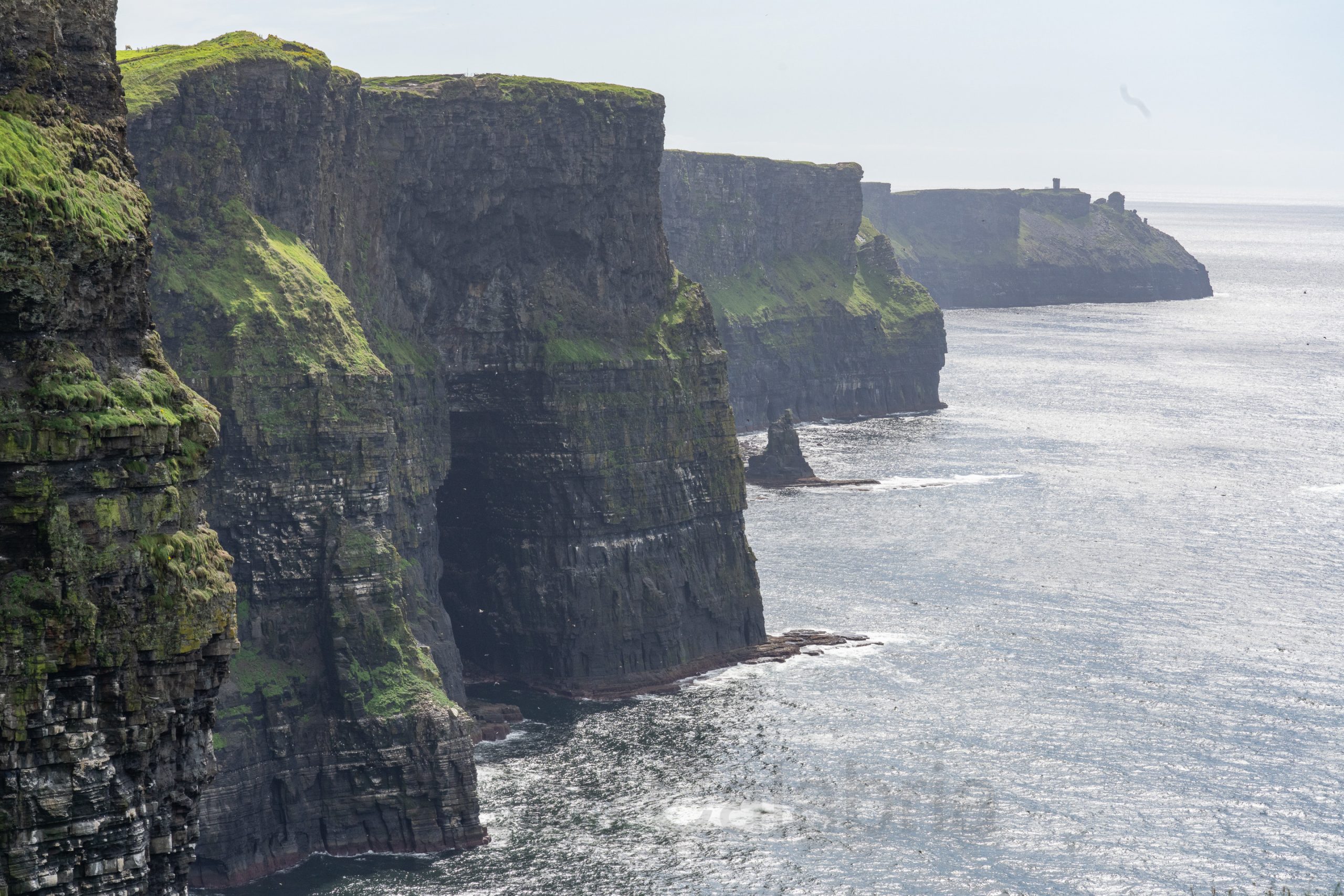
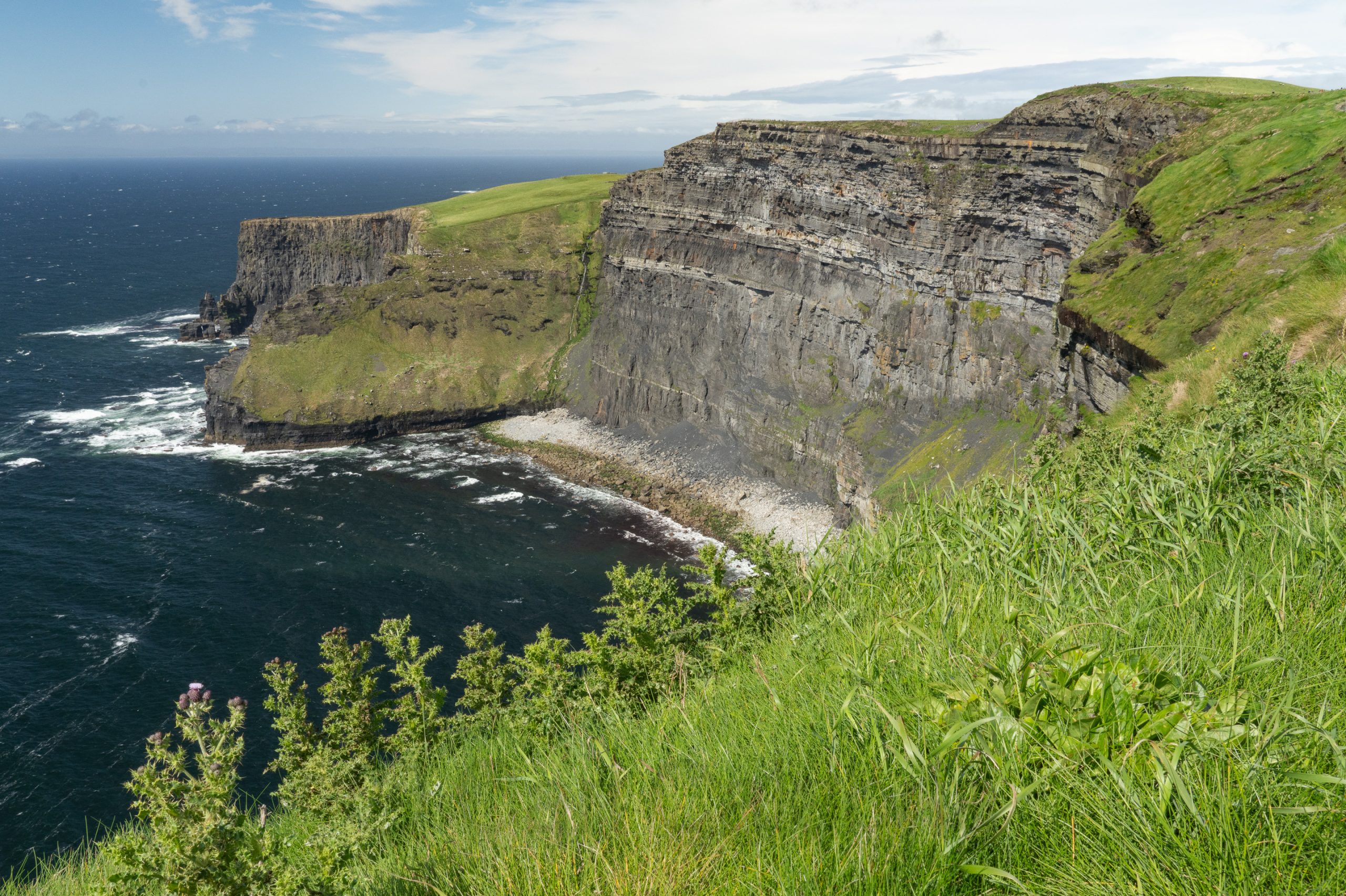
Our final destination for the day were the Cliffs of Moher, which proved to be somewhat of a disappointment for me. Since our last visit, 34 years ago, the site has been dramatically developed to include a $32M visitor center and flagstone barriers installed to physically discourage and prevent visitors from getting closer to the edge. It felt like the difference between seeing a declawed tiger in a zoo compared to one roaming in the wild. The sun angle did not favor the traditional view of the cliffs so I focused my photographic attention on a less dramatic but better illuminated section of the coastline.