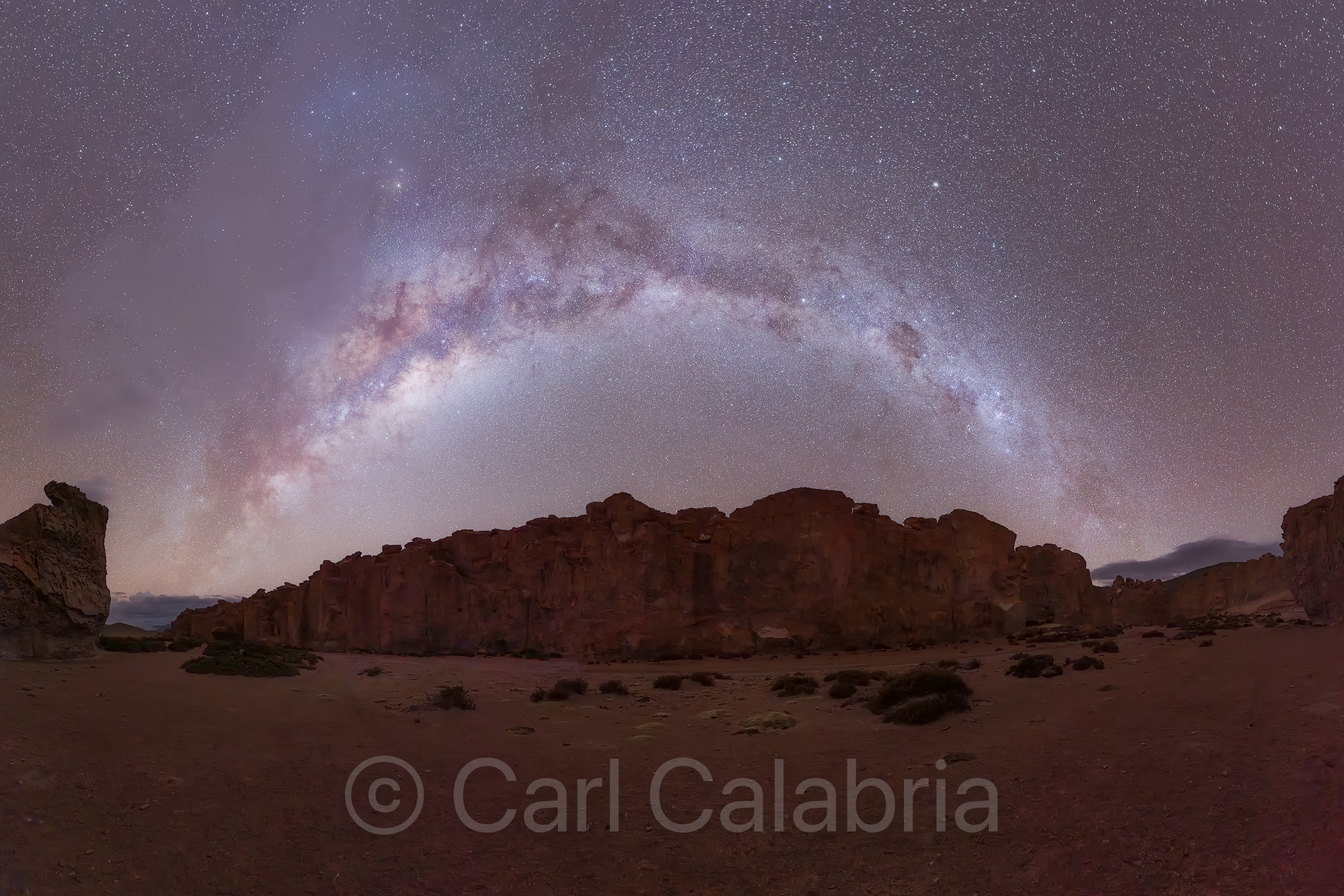
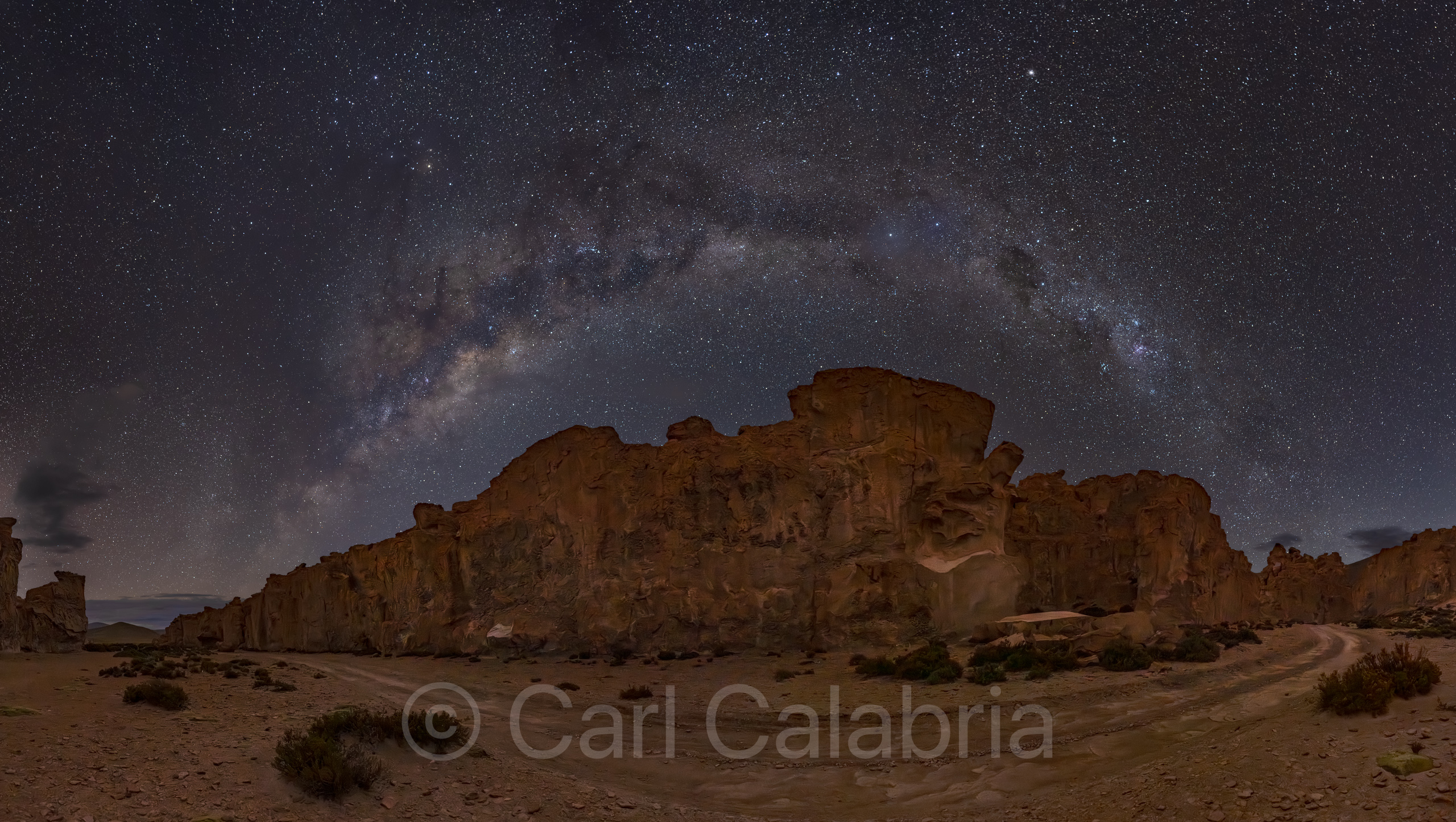
Early this morning (1-3 AM), conditions were ideal for photographing the Milky Way, as was our location, which offered great foreground subjects. The abundance of foreground options allowed members of our group to spread out, allowing each of us to enjoy the experience in total darkness and total solitude. As much as I enjoyed the photography, I felt at one with the universe in these moments in a way I have never before. Both of these astrophotographs are composed of two rows of ten images that are “stitched” together with specialized software to create a wide-angle panorama. The image below is my favorite composition, but I have yet to coax out the colors of the gases, which was done in the image above.
The Altiplano (Spanish for “high plain”) or Andean Plateau, in west-central South America, is the most extensive high plateau on Earth outside Tibet. The plateau is located at the latitude of the widest part of the north–south-trending Andes. The bulk of the Altiplano lies in Bolivia, but its northern parts lie in Peru, its southwestern fringes lie in Chile, and it extends into Argentina. The average altitude is 12,300 feet, and the surface ranges from sand to exposed and/or strewn rock.
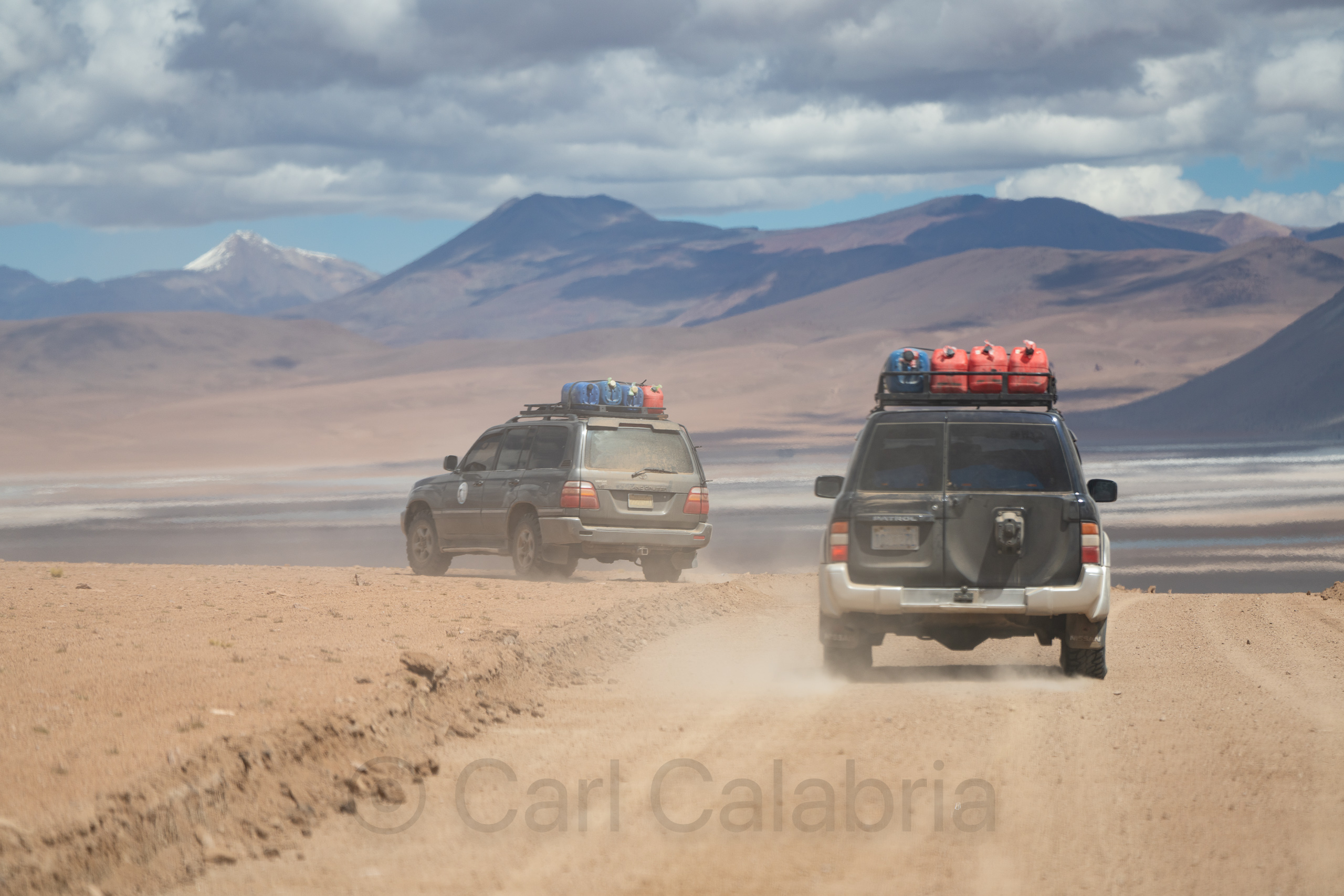
Our caravan includes four high-clearance, 4×4 SUVs. Each carries four five-gallon gas cans on the roof and, in our case, a 20-pound tank of propane. I shuddered to imagine what would happen if we were to flip over, something that often felt possible as we raced along the bumpy surface of the desert.
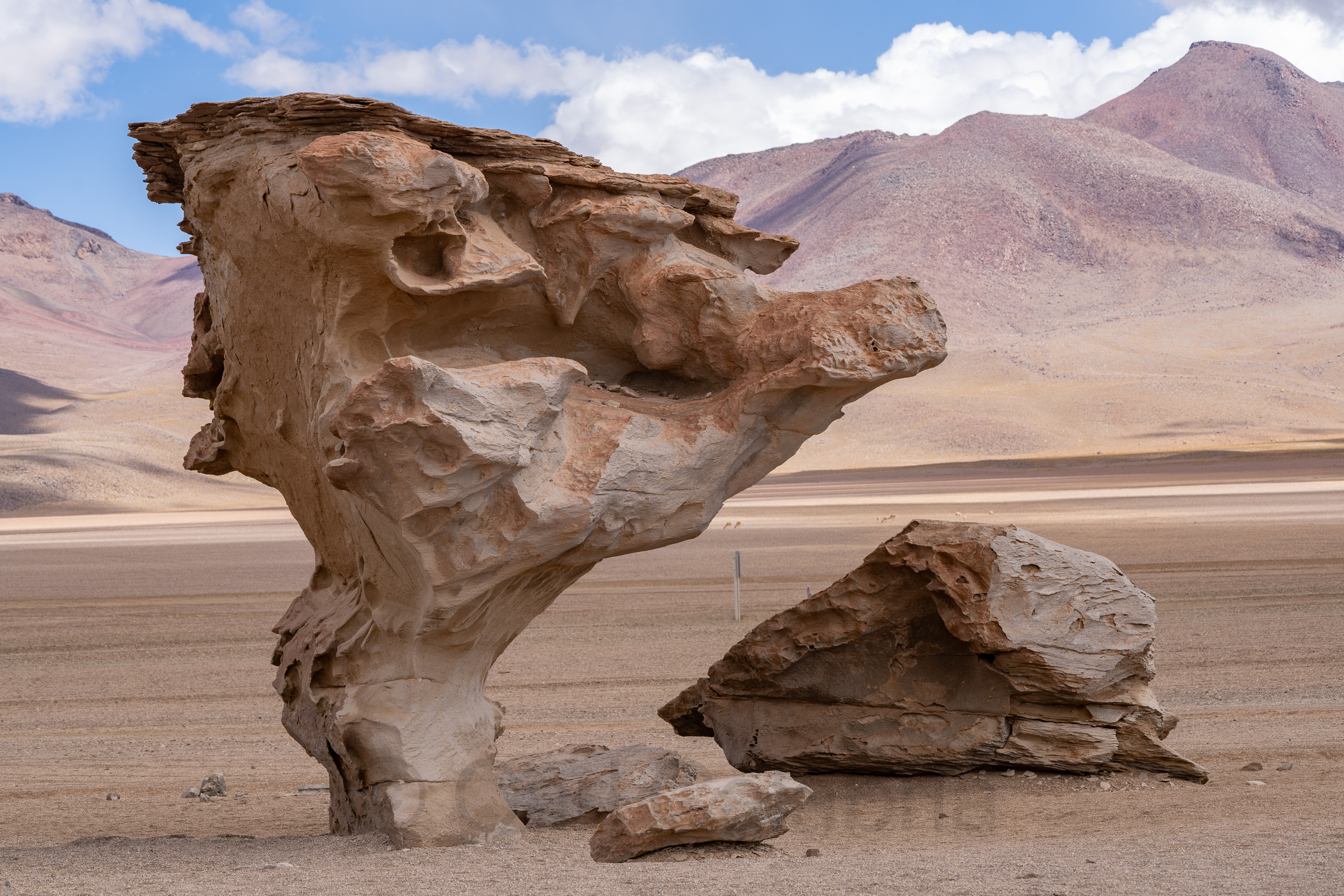
The Árbol de Piedra (“Stone Tree”) is a 5–7 meter tall volcanic rock formation in Bolivia’s Siloli Desert (Eduardo Avaroa National Park). Shaped like a tree with a thin stem, it is a natural monument sculpted over thousands of years by high-altitude winds carrying sand, creating a striking “mushroom” appearance.
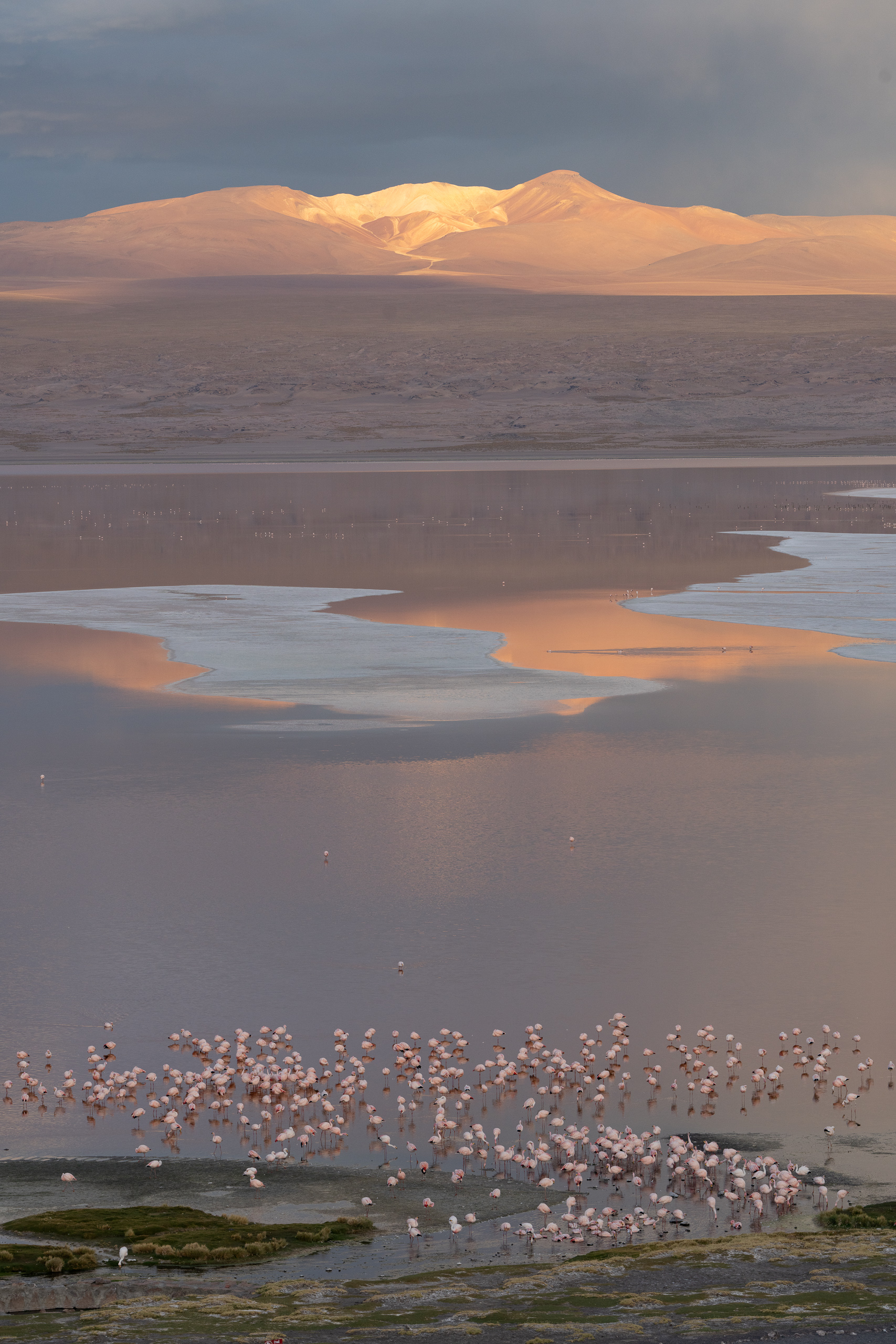
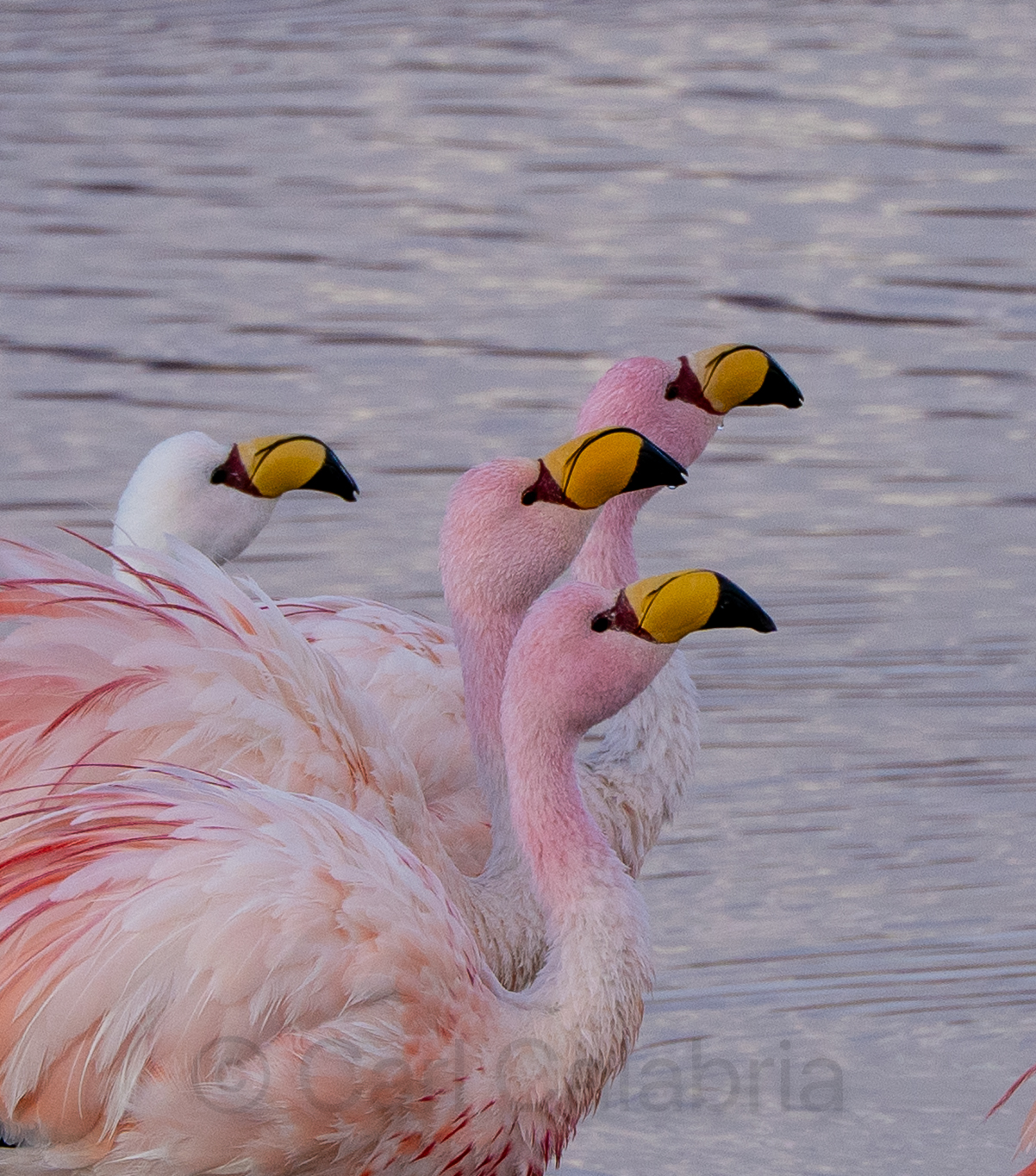
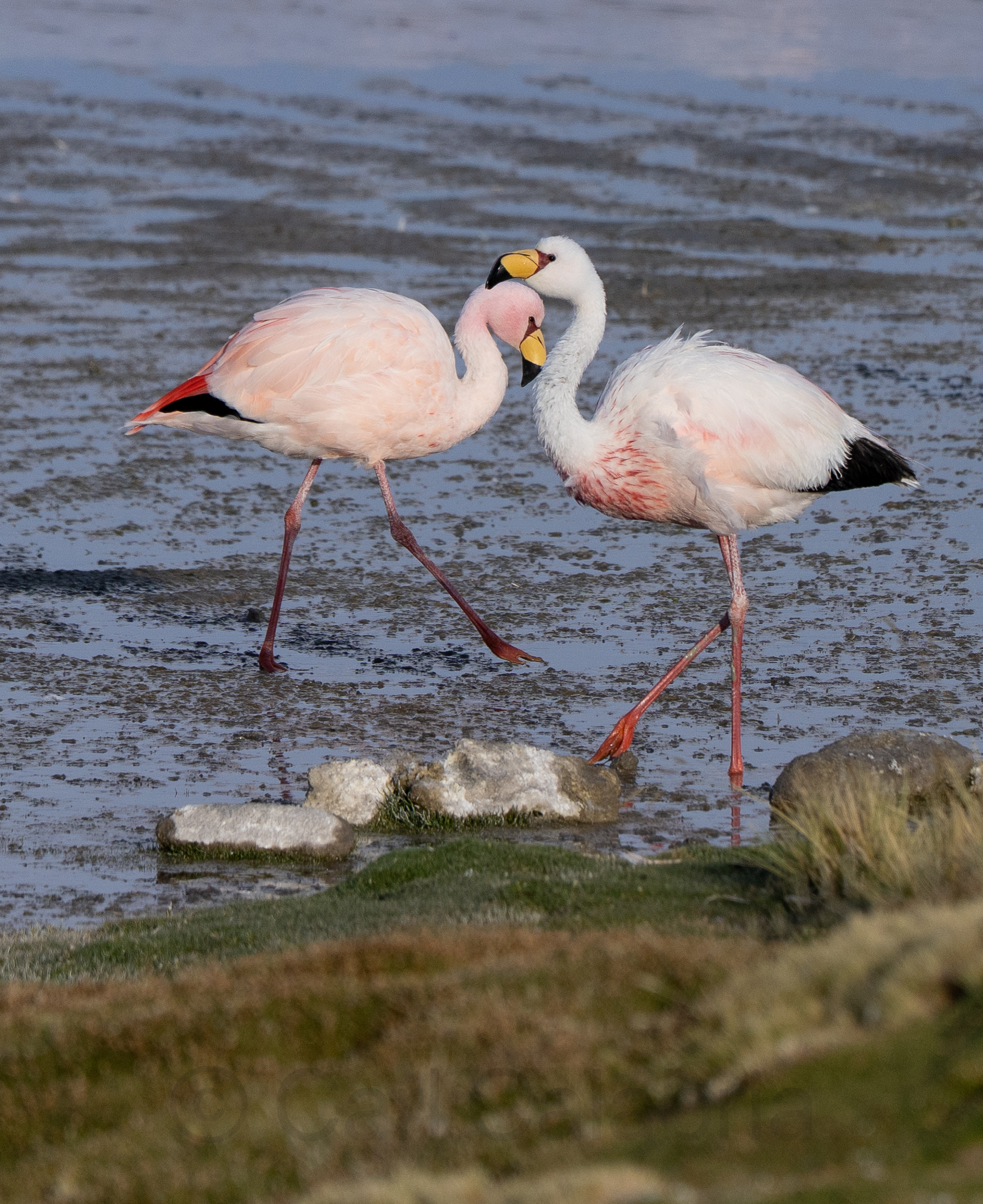
Laguna Colorado (the “Red Lagoon”) is a shallow, high-altitude salt lake famous for its striking blood-red waters and massive flocks of flamingos. Located within the Eduardo Avaroa Andean Fauna National Reserve near the Chilean border, it sits at an elevation of approximately 14,035 feet. I literally took hundreds of photos of the flamingos, but I will have to wait to sort out my favorites on my large-screen monitor. These will have to do for now.
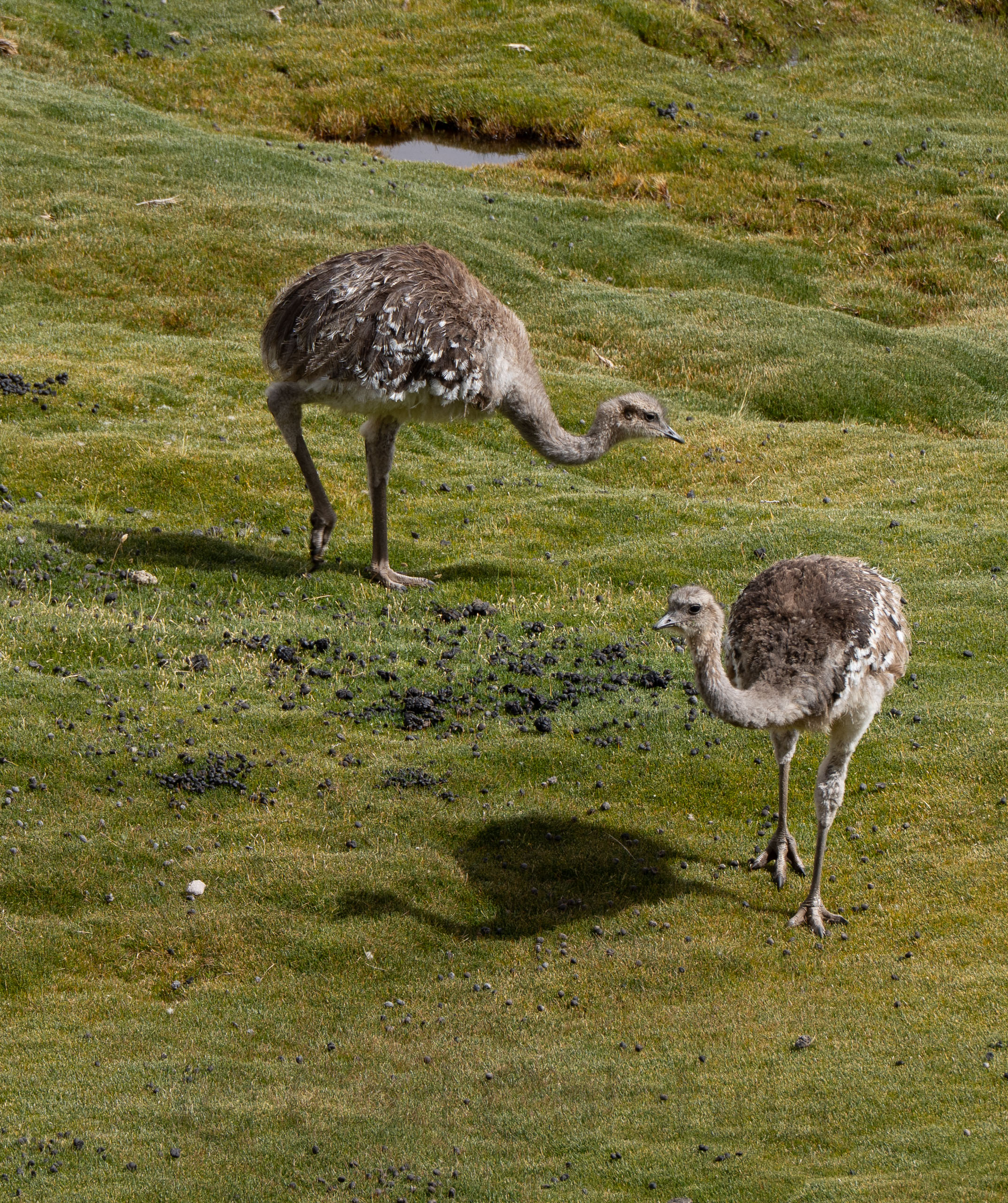
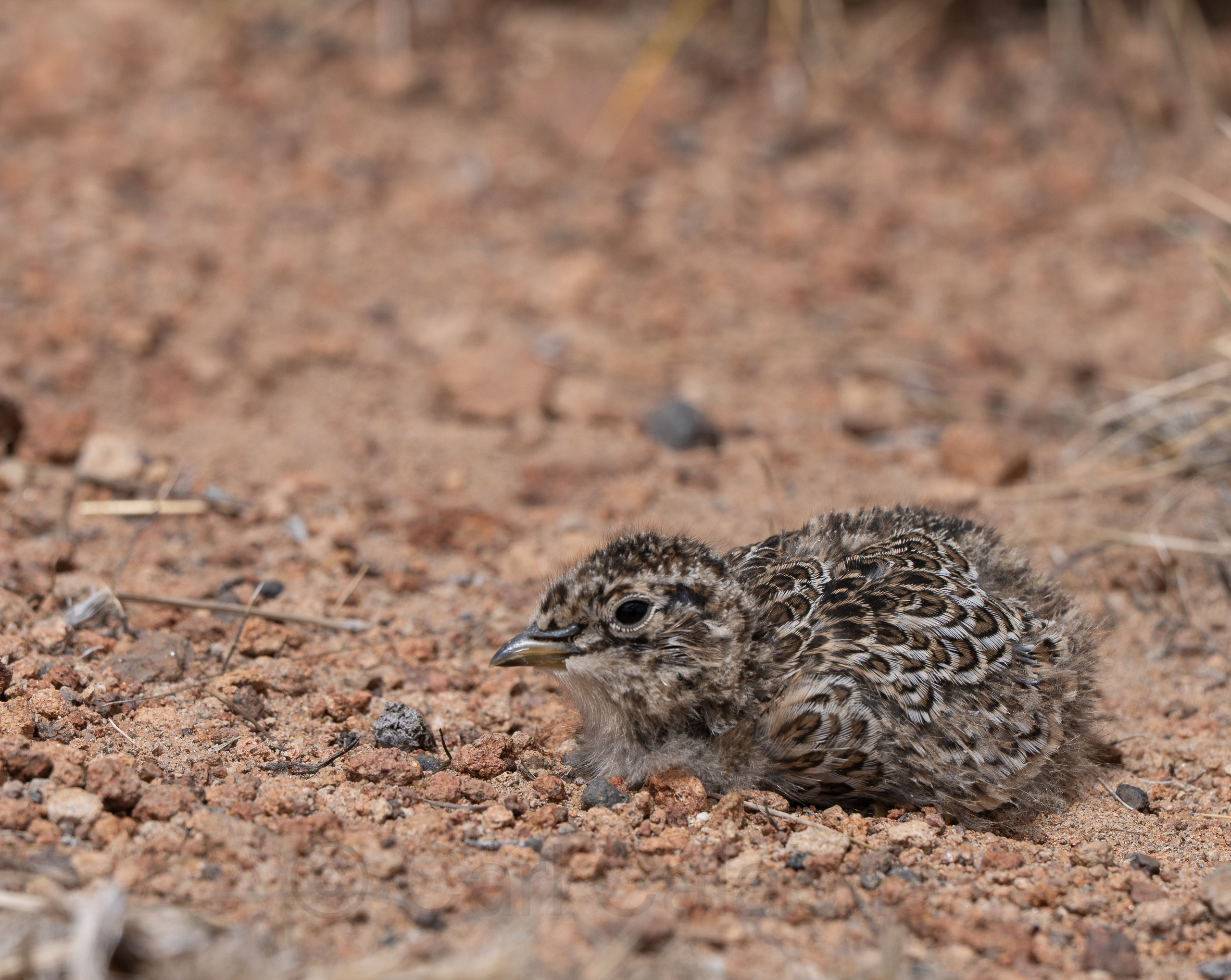
While driving, we encountered a couple of ostriches running about. Later, one of our drivers discovered what I am guessing is a baby ostrich.