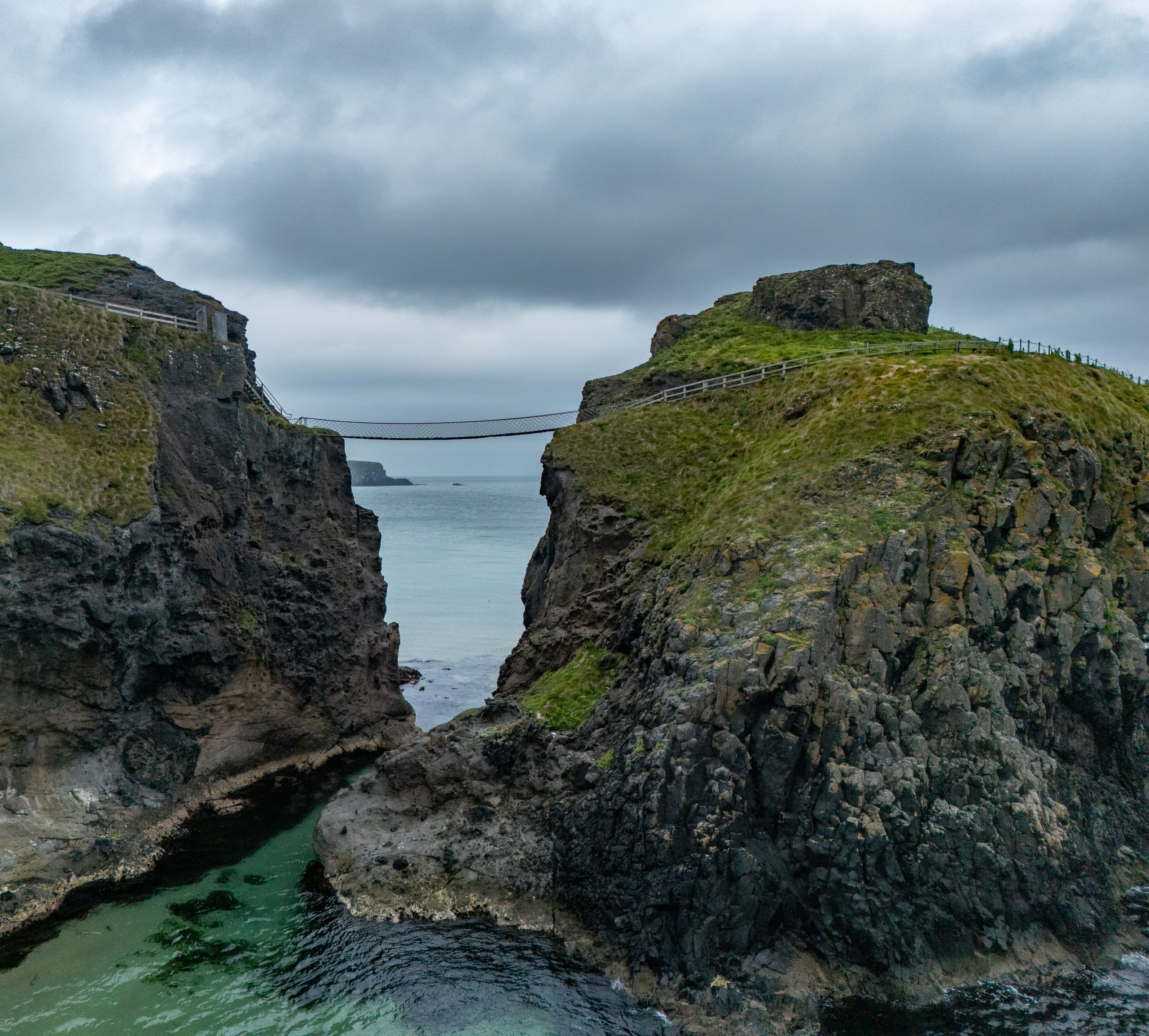
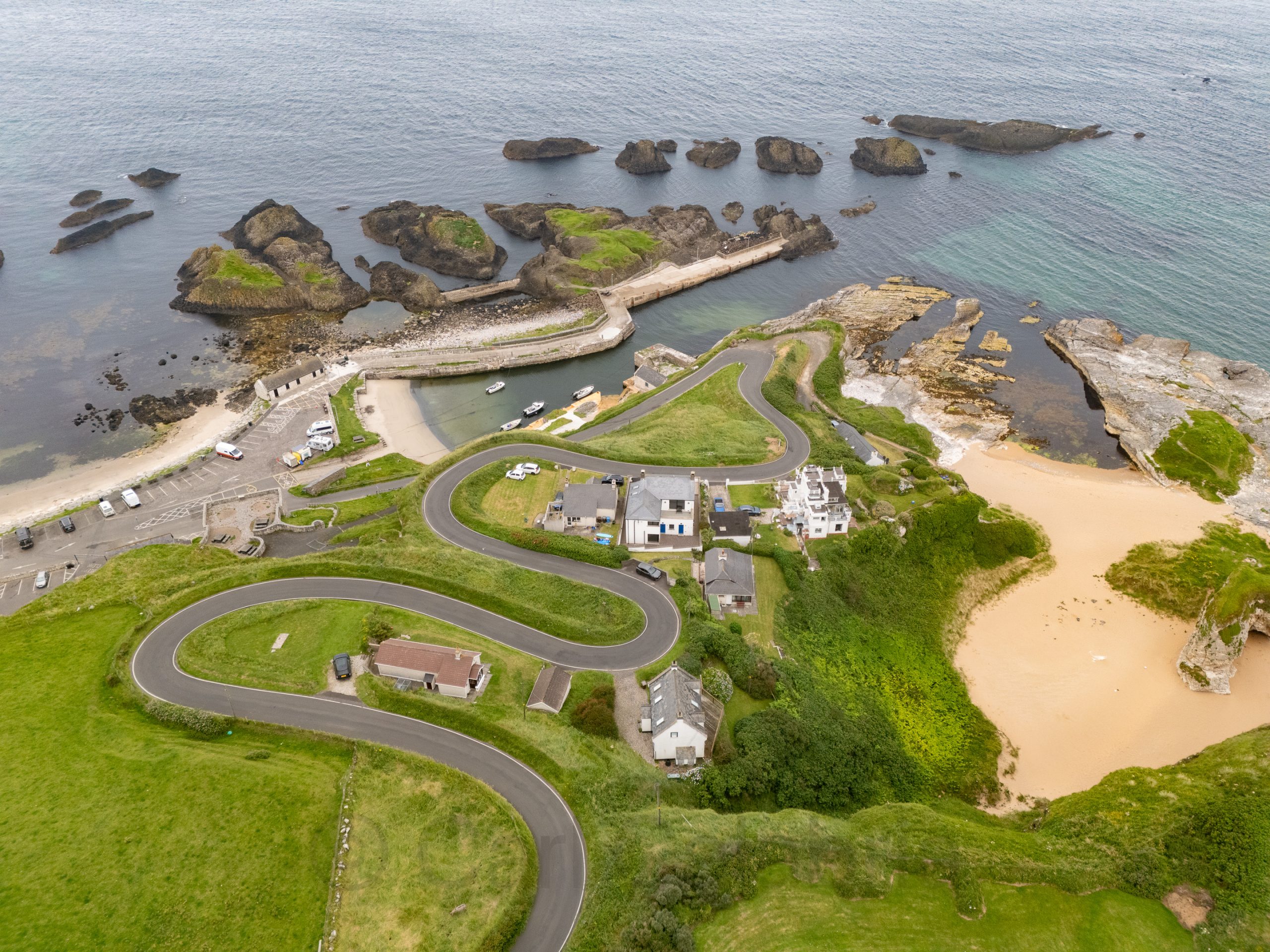
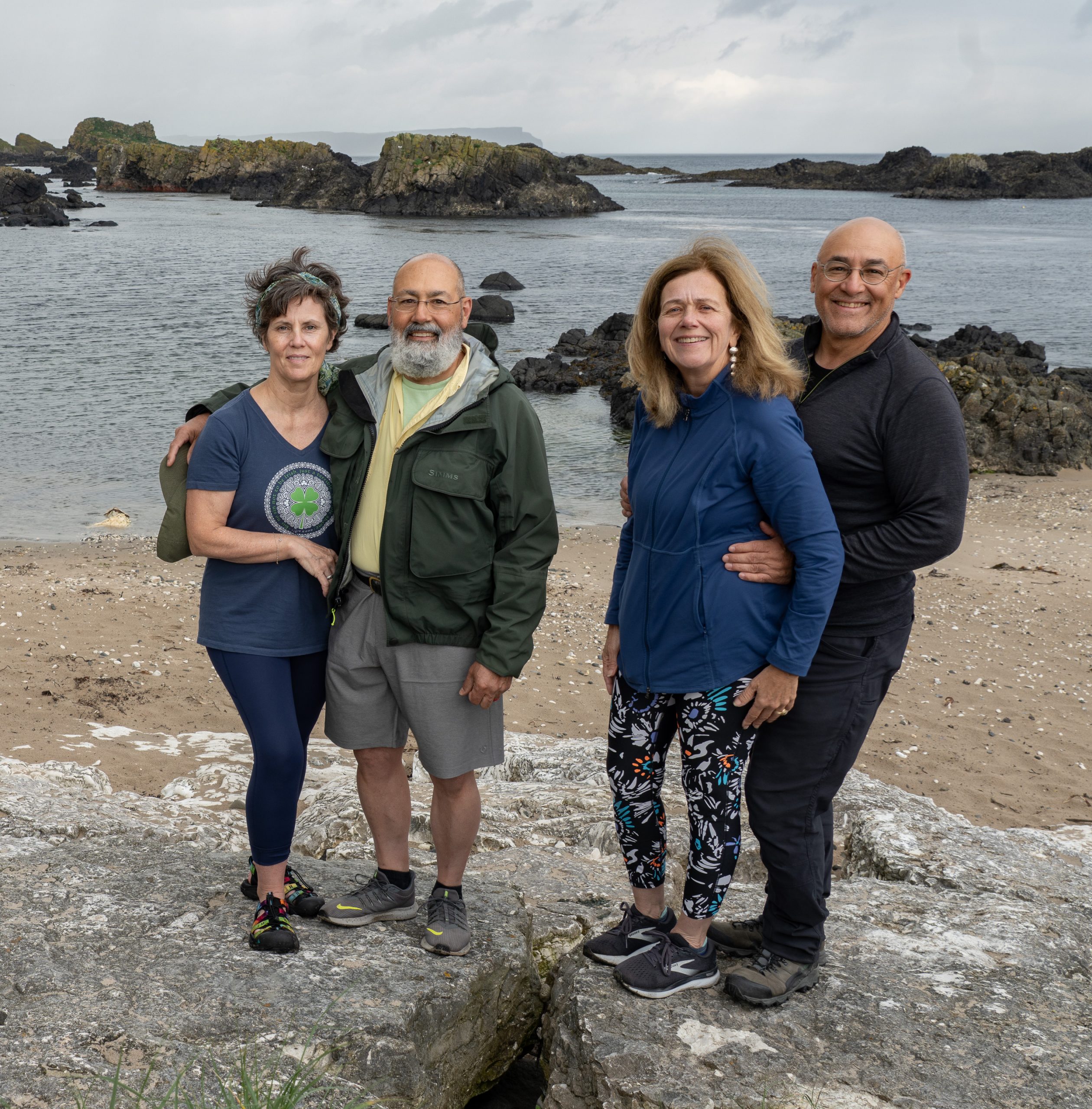
Today, the crew covered a lot of ground, stopping frequently to take in the sights of Ireland’s northern coast. Pictured above is Carrick-a-Rede, originally constructed to provide salmon fishermen with safer and easier access to Carrickarede Island for netting Atlantic salmon, reducing their reliance on boats to reach the best fishing spots. Below, is an aerial view of Ballintoy Harbour where we paused to stretch our legs and take a group photo.
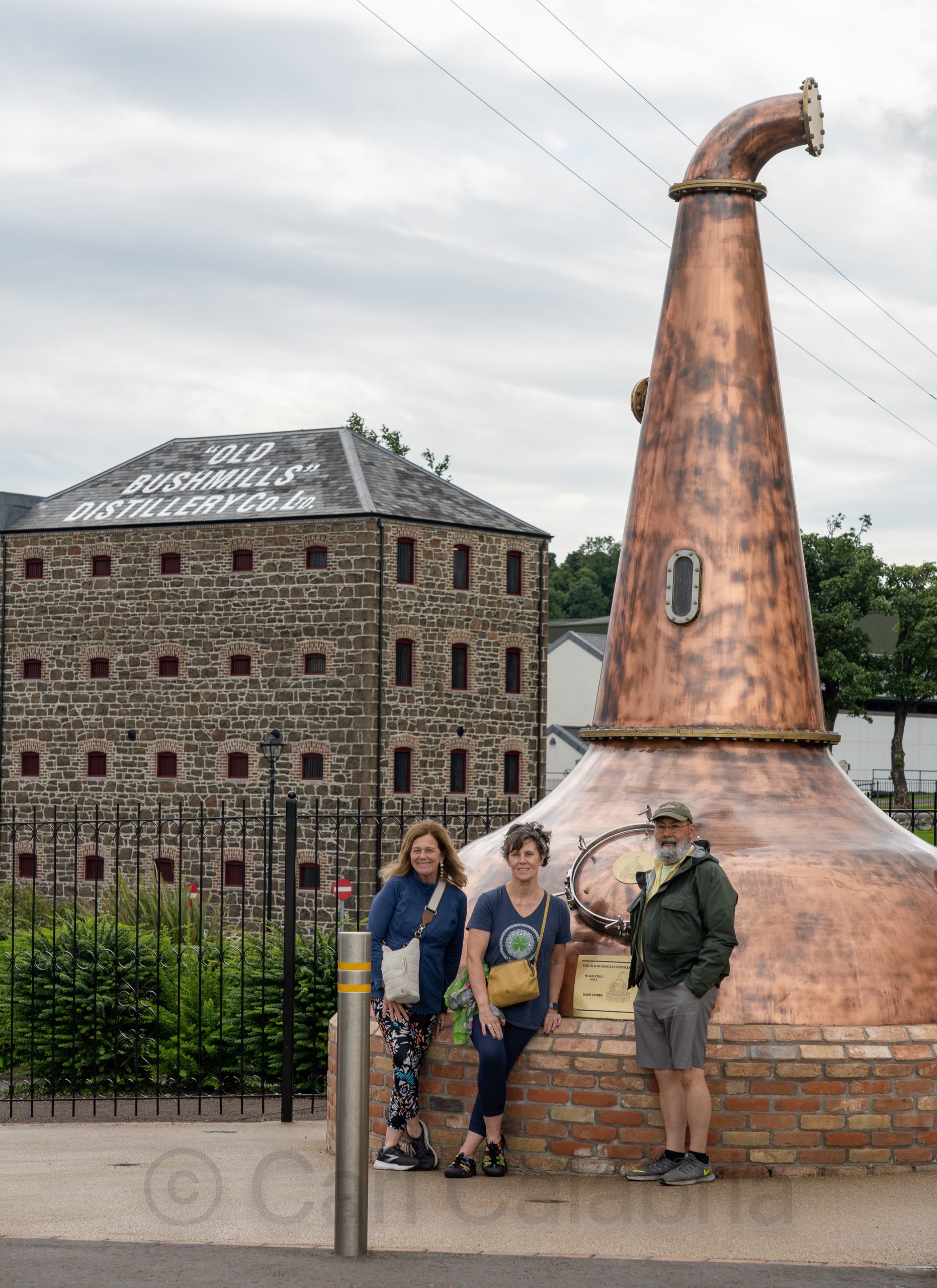
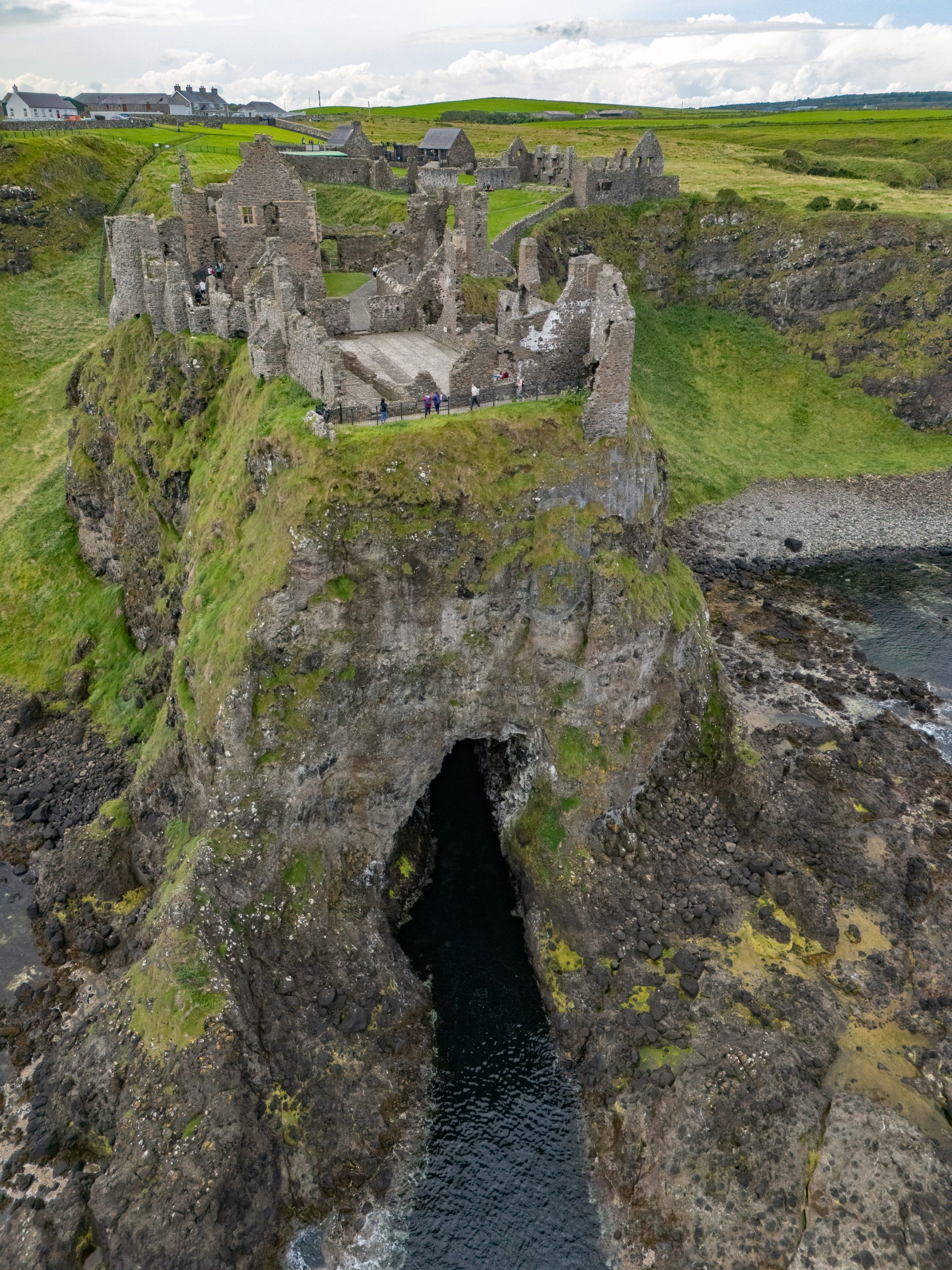
Liquid fortification for the rest of the journey was sampled at the Bushmills Distillery before a brief stop at the ruins of Dunluce Castle, a dramatic, ruined medieval castle dating mainly from the 16th and 17th centuries. It once served as the seat of the powerful MacDonnell clan and the Earls of Antrim.

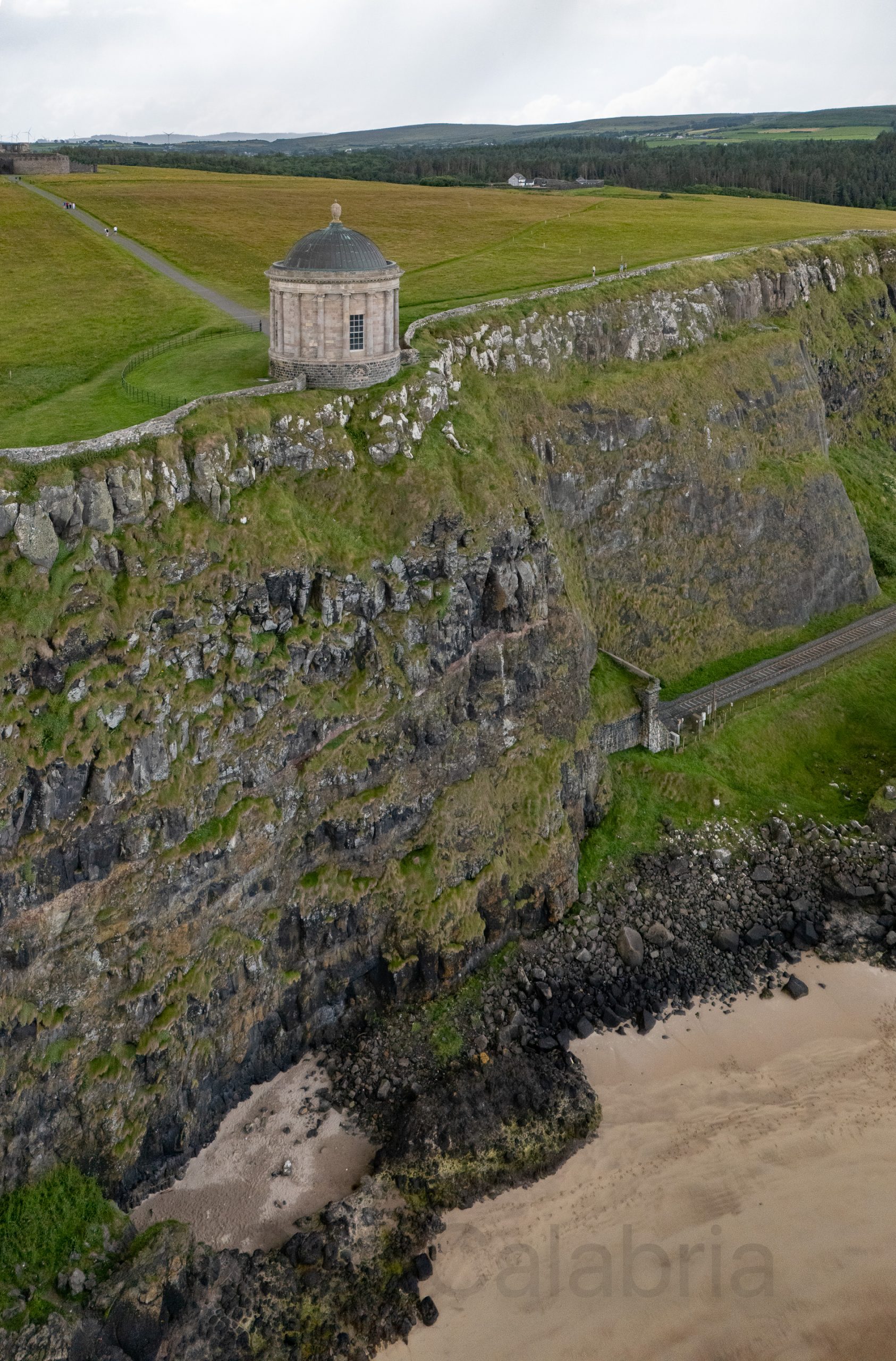
Mussenden Temple is a striking circular building perched on a dramatic cliff edge near Castlerock in County Londonderry, built in 1785 as a library for Frederick Hervey, Earl of Bristol and Bishop of Derry, and dedicated to his cousin Frideswide Mussenden. Inspired by Rome’s Temple of Vesta and renowned for panoramic views over Downhill Strand, it is now one of Ireland’s most photographed landmarks.
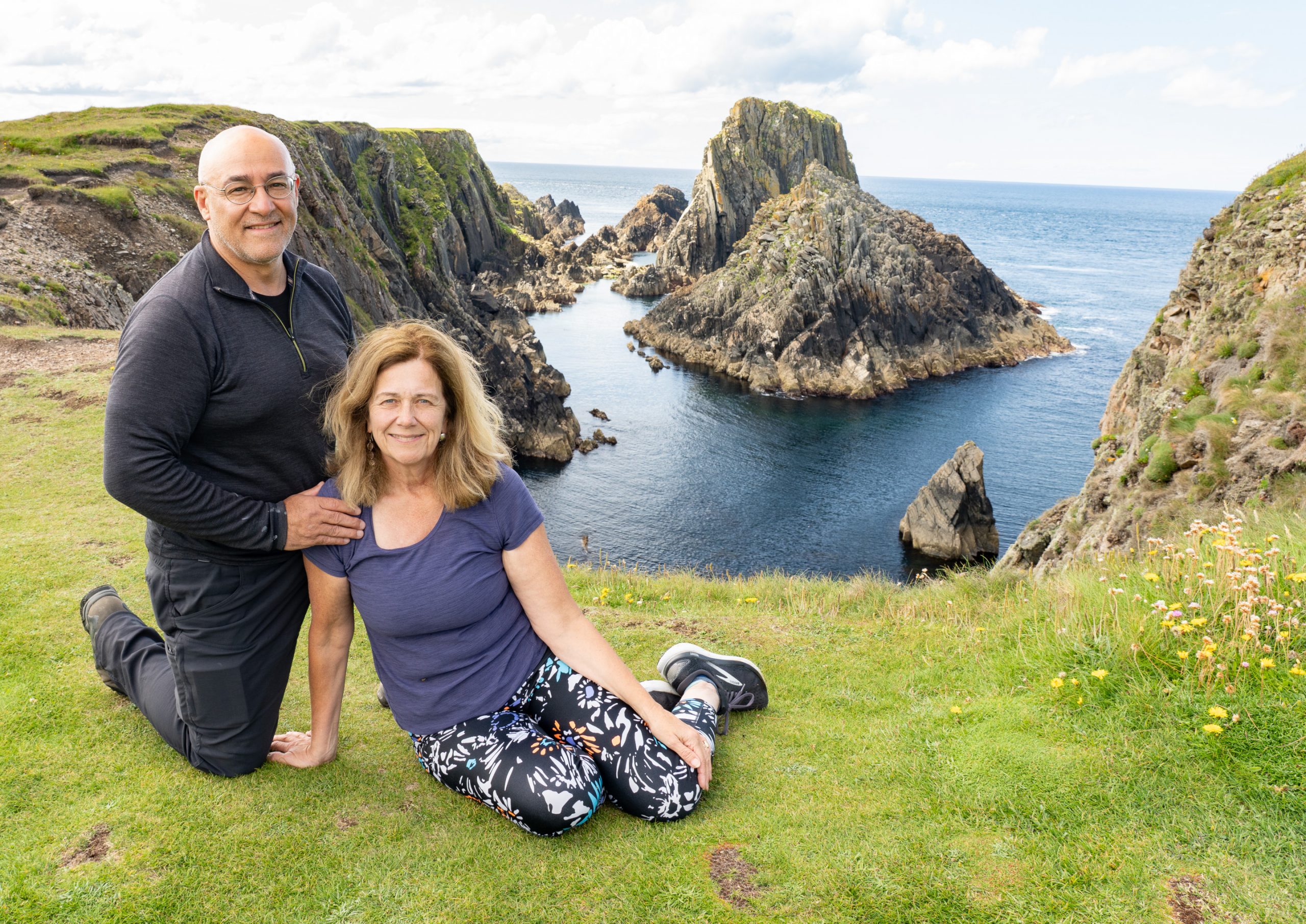
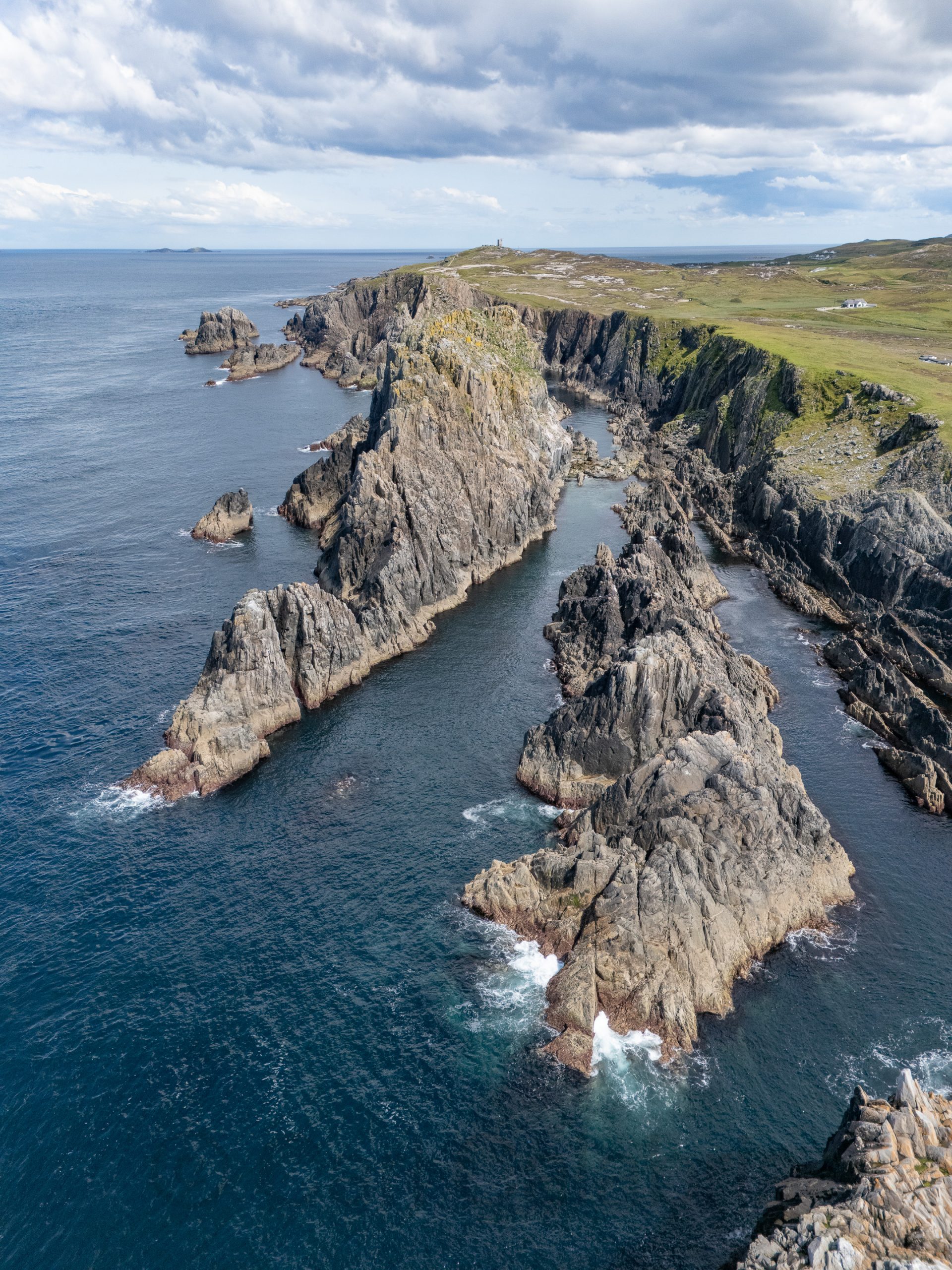
Malin Head is Ireland’s most northerly point, renowned for its wild coastal scenery, geological significance, and diverse marine life. We hiked up to an optimal viewing point where we enjoyed the breathtaking views.
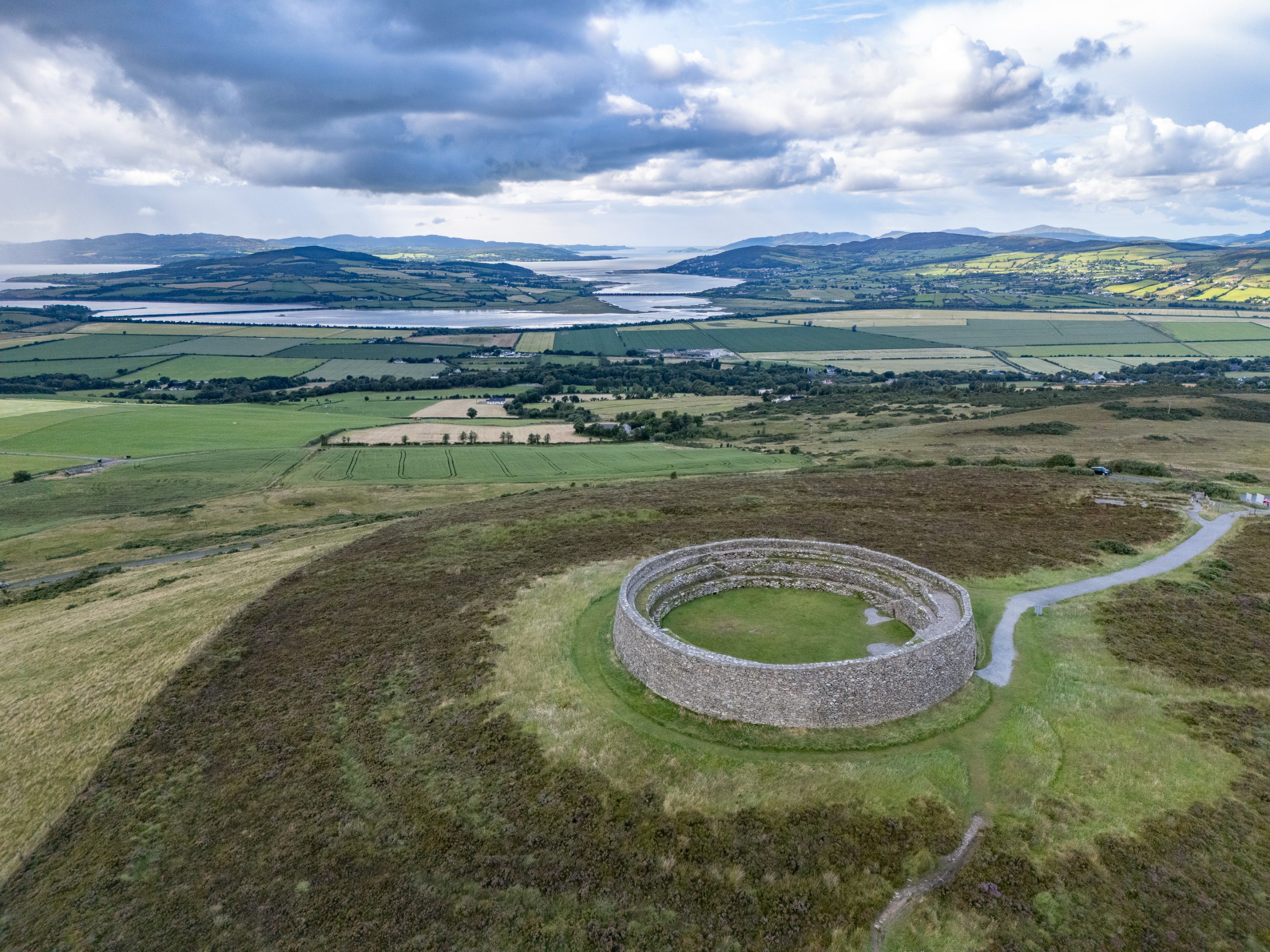
Our final destination for the day was Grianan of Aileach, a large stone ringfort atop Greenan Mountain in County Donegal, dating mainly from the early medieval period, which served as the royal seat of the Northern Uí Néill and is associated with both ancient mythology and early Irish kingship. The impressive drystone structure, originally constructed without mortar and partly reconstructed in the 19th century, offers panoramic views of the surrounding landscape and has stood witness to over 4,000 years of history, myth, and power struggles in the region.